Tagged Under:
AmateurPianists Offers a Community-First Environment
Non-professional pianists enjoy lifelong learning, performance, competition and, most importantly, rediscovering the love of playing piano with abandon.
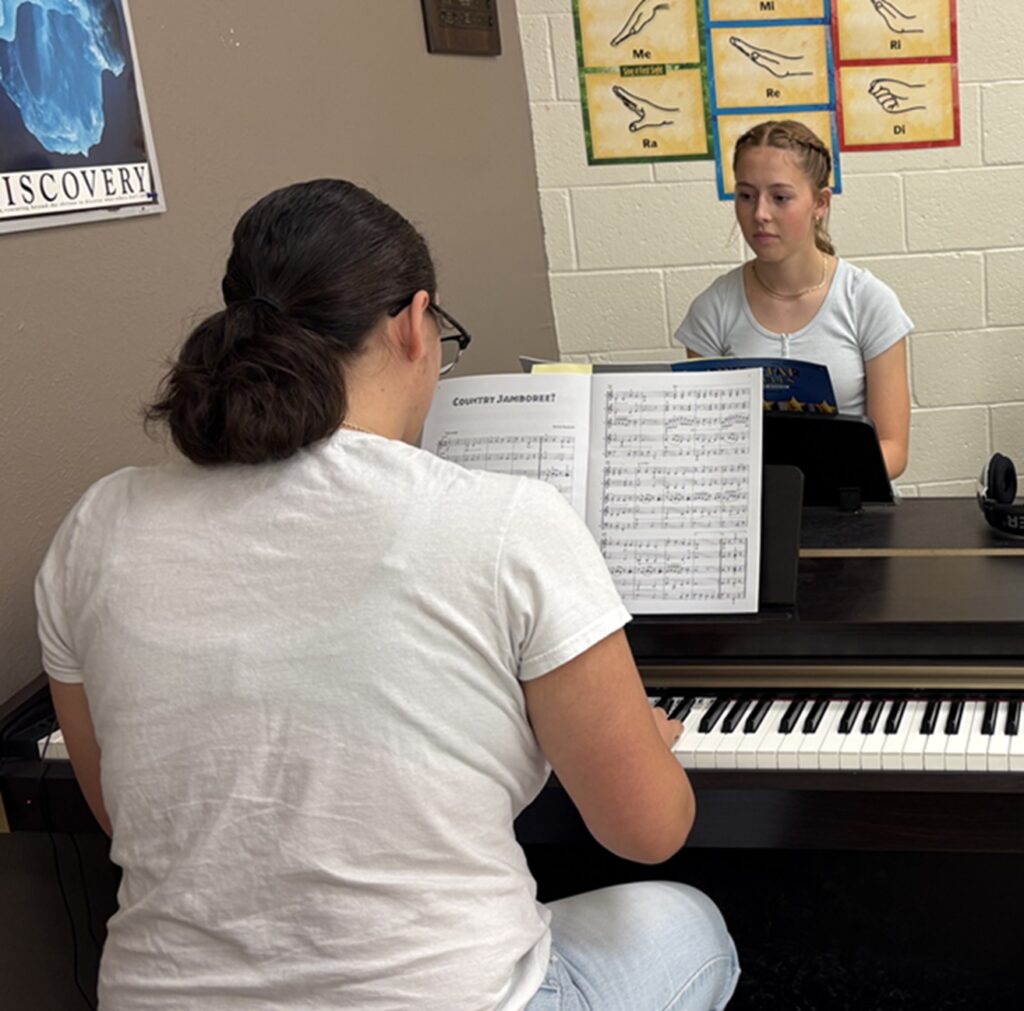
As a pianist, college professor and piano instructor, San Diego State University’s Dr. Sonya Schumann is used to wearing many hats, but it’s her volunteer work that has reignited the unfiltered passion that she had for music as a child. In addition to her role as Lecturer of Piano at San Diego State and her positions as piano faculty and Piano Coordinator for SDSU’s Community Music School – a pre-college program that provides conservatory-level piano education for students ages 4 through 18 – Schumann also serves as the Chair for AmateurPianists.
Founded in 2011 by San Diego musician Glenn Kramer, AmateurPianists provides education, performance and competition opportunities to adults who play piano non-professionally. Since 2016, it hosts the San Diego International Piano Competition for Outstanding Amateurs, which happens every three years.
Schumann started working with the nonprofit AmateurPianists in 2021 and began serving as its Chair a year later. The organization is classified as a nonprofit, but Schumann describes it first and foremost as a community.
Her work with AmateurPianists reflects her desire to bring piano skills to all students, regardless of age, experience or ability. “The world of piano music is so vast and incredibly broad,” Schumann says. “What we offer is a group of people who are eager to learn about the same things.”

Community First
During the past 15 years, AmateurPianists has grown in size and scope, but it has remained a community first. “It came about because of love,” Schumann says. “It went from being a few friends, to a Meetup group, to hundreds of people. It started in someone’s living room, then to the back room of piano stores, to now [having] monthly recitals, masterclasses and an international piano competition.”
Membership is free, and AmateurPianists hosts at least one event per month, often more. Those events include community recitals, masterclasses and a holiday party that Schumann says often turns into a jam. The group seeks community spaces to host free events. “We have used library spaces and churches that have pianos,” Schumann says.
One of the organization’s biggest supporters has been Greene Music, which gives AmateurPianists monthly use of their space for free. “I want to give a huge shout-out to Greene Music, the San Diego Yamaha dealer,” Schumann says.
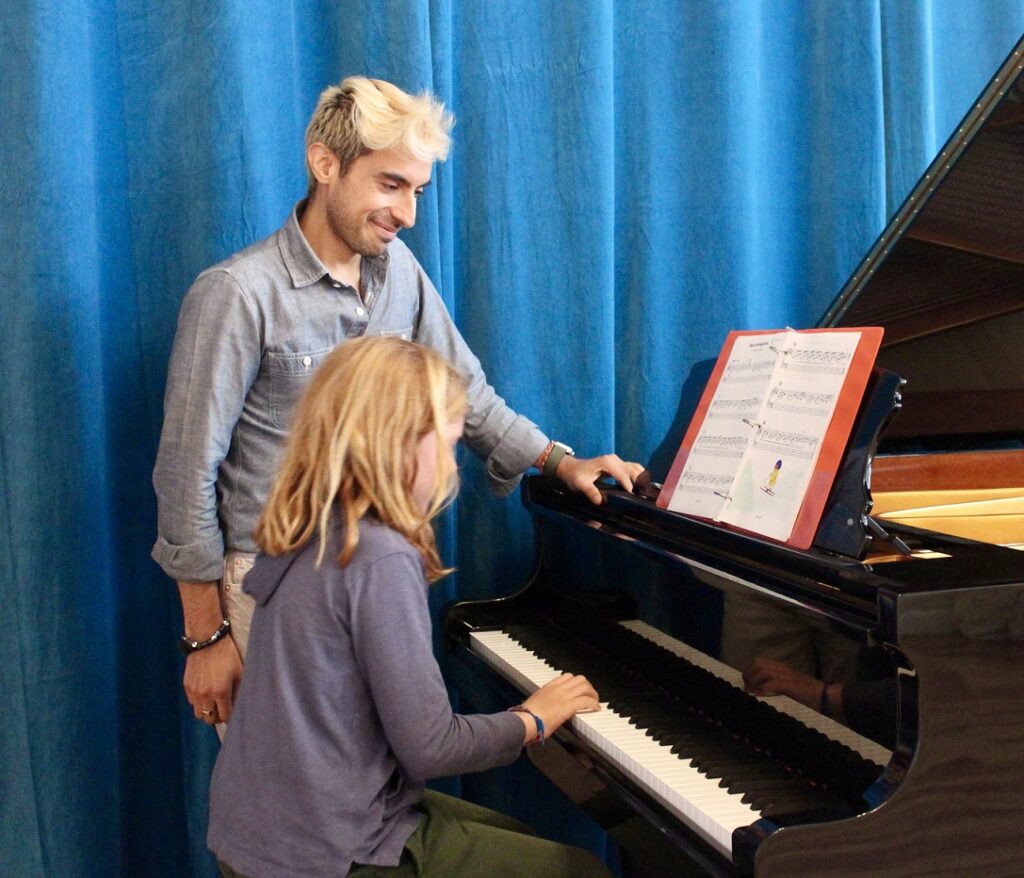
About twice a year, AmateurPianists hosts masterclasses for the public, where a select few students will get the opportunity to work on their skills with a professional. “We bring in a teacher who will work with three or four of our amateur pianists,” Schumann says.
Based on each instructor’s focus for their masterclass, AmateurPianists leadership will choose a few students through a video audition process. Schumann says that the organization prioritizes giving those opportunities to different students each time.

Lifelong Learners
As an educator, Schumann is used to working with students of all ages. “A part of my teaching philosophy for every age range, every person in their journey, is to meet learners where they are,” Schumann says.
By working with children, teens and young adults at SDSU – and then serving an adult student population with AmateurPianists – Schumann sees a wide range of different student goals. “A 4-year-old’s idea of what they want to achieve is sometimes just getting a sticker, or perform well at the recital, or to play a song that they can sing along to,” she says. “Advanced students’ goals have more layers.”
For adult amateurs, Schumann says, the reward is in learning and performing because music is a passion and hobby. They are not seeking to make music a part of their career, so they do not have to deal with that added stress. “At AmateurPianists, I’m really lucky to get to share what I love, and we’re not burdened with that extra [career] expectation,” Schumann says. “We just get to love playing music.”

Seeing other adults enjoying piano performance solely for the love of music helps reflect Schumann’s own passion for the instrument back to her. Through them, she can see and feel the joy she felt for piano as a child, before she thought about making music into a career. “I get to look at the piano for what it was when I first realized that I loved piano before it became monetized,” she says.
Schumann, who was recognized as a 2026 Yamaha “40 Under 40” music educator, loves to see adults learning new skills because “we all have the capacity to continue learning and growing,” she says. “I tell everyone, ‘We’re all learners.’ The best way to get better at something is to be comfortable not being the best right now.”
For some adult hobbyist musicians, being “the best” may not even be on their radar. “Maybe the point isn’t to master a skill,” Schumann says. “Maybe the point is to love something with abandon.”
While some members of AmateurPianists join the organization for the community and the love of music, others set goals for improvement. “For the people who want to push their boundaries and see how far they can go, we have the competition,” Schumann says.

The San Diego International Piano Competition for Outstanding Amateurs
Every three years, AmateurPianists hosts the San Diego International Piano Competition for Outstanding Amateurs. The first competition was held in 2016; the upcoming 2028 competition will be the fifth.
The competition brings in participants and judges from around the globe. Prospective competitors first must pass a preliminary audition round. From that audition, judges select 30 pianists to participate in the three-day event, which is held at the Baker-Baum Concert Hall in La Jolla, California, which is run by the La Jolla Music Society. “Baker-Baum is a gorgeous, state-of-the-art hall with a beautiful piano,” Schumann says. “Some people tell us they would apply just to be able to play on that piano.”
On the first day, all 30 competitors perform their pieces. Each person receives a set amount of time to play and must submit their music ahead of time. Judges narrow the field to 12 semifinalists to compete on the second day. On the third and final day, six pianists perform, after which awards for first, second or third place are handed out as well as honorable mentions and other specialty awards.

For the all-volunteer board of AmateurPianists, putting on the competition is a welcome challenge. “We work feverishly for the month leading up to the competition, but the work begins a year beforehand. We start inviting judges, putting together websites, collecting competition applications,” Schumann says. “This takes a whole team of people, and we come together in solidarity to make sure this continues for our larger global community.”
Even within the competition, the community-first nature of AmateurPianists still shines through. During one competition, Schumann recalls a pianist who did not make it to the semifinal round. Instead of sitting in the audience and enjoying the music for the next two days, he used his competitor pass to go backstage and help the other musicians. He remained backstage for hours, getting water for other performers, whether or not he knew them personally, and regularly checking in with them.
Though that pianist didn’t advance to the finals,, he won the “Spirit of the Competition” award. Because of his community-focused behavior, he always sticks in Schumann’s mind as a memorable musician.
Whether competitive or casual, Schumann’s work with AmateurPianists always prioritizes creating a space for musicianship. “This group provides community. It provides learning opportunities,” she says. “But more than anything, it provides that safe space to love something with abandon.”
Keep reading