Help Elementary Students Find Music Around Them
An innovative elementary school music teacher helps her students see music as a universal language and how to find music in every corner of life.
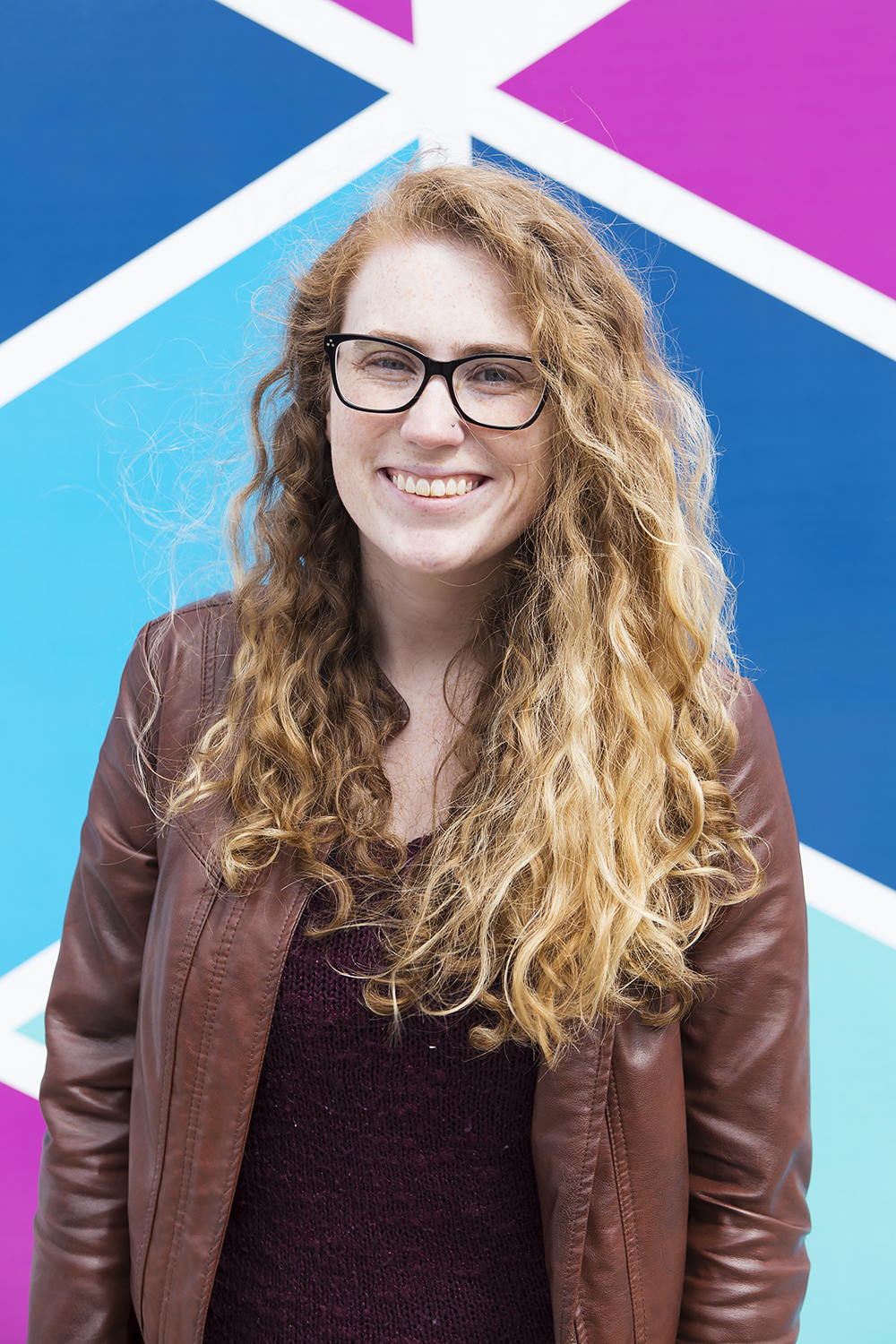
For Elaina Gallas, Music Teacher and Choral Director at Mill Creek Elementary School in Nolensville, Tennessee, making students feel welcome in the classroom starts with a simple hello. But in her classroom, that “hello” might come in a variety of welcome songs in different languages.
Gallas, who teaches music to kindergarten through 5th grade, says, “Some of my kids don’t speak English. I can’t imagine how scary that would be. In my room, music is music.”
At the start of the year, Gallas notes any students who might speak a language other than English at home and then looks for a song in that student’s native language to teach the entire class. “You have to know what the translation is, and you have to make sure it’s something fun,” she says.
Even outside of immediate classroom demographics, Gallas regularly searches for songs in common languages spoken in the community like Spanish and Chinese. “The students may not always get the lyrics, but anyone from anywhere can play a xylophone or a recorder or tap a steady beat,” she says.
Gallas helps students understand the lyrics and pronounce the words. “While it might be challenging, a lot of them think it’s cool to learn another language,” she says.
It’s all a part of helping students broaden their horizons and see music as a universal language. “I want them to see where the music is every day,” Gallas says. “Music is all around us.”
Whether she’s teaching her students how to sing in a new language or collaborating with classroom teachers to bring music education into class units, Gallas wants students to learn how to find music in every corner of life. “I tell my kids that being a music teacher is the best job because I get to teach everything!” she says. “Music lights up both sides of your brain at the same time.”

Find Music in Our School Day
One way students can find the music around them is to add musical elements to classroom projects. At Mill Creek Elementary, 1st-graders throw a yearly Cinderella ball. In class, students read different versions of the Cinderella fairytale from different cultures and time periods. Then, the school puts on an event to celebrate these stories. Kids dress up in costume, and teachers set up tables with snacks from the different cultures represented.
Gallas saw how music could fit in with this celebration, so she asked the 1st-grade classroom teachers to collaborate on adding a musical element. Now, the Cinderella ball features a choreographed song and dance that students learn in music class.
Language arts isn’t the only place where Gallas sees room to add music to the day. She also incorporates music into history and social studies by preparing her 3rd-grade students for an annual Veterans Day performance.
This past year, Gallas taught her students a rap about the 50 states in alphabetical order. “The teachers love that the students are getting tested on the 50 states,” she says.
In preparation for Veterans Day, which includes both an in-school assembly and an evening concert for parents and community members, Gallas teaches 3rd graders a variety of patriotic songs. “I do a balance of older songs that people know and brand-new ones, so it’s fun and interesting,” she says.
Learning the songs comes with a side of history. Gallas provides a lesson about each song’s origin. “We give the history behind where the song was written [and] what the songwriter had in mind,” she says.
Through learning the history of older songs, students see real-world examples of how people used to talk, which helps expand their vocabulary. “In old songs, there are some weird words. We don’t speak the same way we used to,” she says.
Gallas also teaches her students the preamble to the United States Constitution through song. “We talk about the words in the preamble, when the Constitution was signed and who signed it,” she says. “There is power in understanding what we’re singing.”

Use Music For Good
Gallas also ties music to real-world issues. She organizes charity and community outreach efforts for her students.
For example, her 1st-grade students have a yearly food drive alongside their Thanksgiving program. Students ask community members who attend their Thanksgiving concert to bring along an item to donate to the local food pantry. “Our food pantry needed cereal one year, so we brought in 800 boxes of cereal,” she says.
In conjunction with the Veterans Day concert, Gallas’ students work with Operation Gratitude, an organization that sends care packages to U.S. military members, including deployed troops and disabled veterans.
As part of the 3rd-grade Veterans Day show, students make cards and write letters to soldiers. “I try to teach from the concept that music is everywhere,” Gallas says. “It can do a lot of good, so we’re going to do some good with it.”

Make Music of Our Own
Gallas’s mission isn’t only to teach students how to find music everywhere, but also how to create it. For her 4th-graders, that means combining music education with their poetry units in language arts. When her students begin learning poetry in their regular classrooms, Gallas kicks off a songwriting unit in music class. “Our school is located right outside Nashville, which is known as Music City,” she says. “I have friends who are songwriters. I like to teach about the industry.”
The songwriting unit became a perfect opportunity to combine music, language arts and history. Students learn about the elements of a song — the verses, chorus, bridge and hook — and a how those elements came to be when people first recorded pop music in the 1920s.
Songwriting is also a way to reinforce the rhyme schemes students are already learning in their poetry units. Each year, Gallas has her 4th-grade students vote on a pop or country song they like, and then together, the class dissects the song as a piece of poetry.
Students learn how each song utilizes different rhyme schemes, like ABAB or AABB, and how many syllables each line has. “We count out the syllables, which then becomes the number of rhythm notes they get,” Gallas says.
Once students understand the song’s rhyme scheme and rhythm, it’s time to write new lyrics for the song. “Wherever there is a rhyme, we have to replace it with our own rhyme,” Gallas explains. “We replace it with lyrics about the school or what they’re learning.”
Each year, students are excited to work on their new song, which they perform at their concert night.

Sometimes, Gallas is able to secure professional songwriters — including writers who have worked with hit artists like Garth Brooks and Luke Combs — as guest speakers to come talk to the kids. Because so many musicians work nearby in Nashville, Gallas can often use her own connections or reach out to other parents and teachers in the community to find guest speakers.
However, a songwriting education doesn’t end with learning rhyme schemes and changing an existing song’s lyrics. Later in the school year, Gallas teaches her 4th-grade students how to write jingles. “Now, we’re writing music notes and lyrics, but it’s short,” she says.
The following year, in 5th grade, students combine all those songwriting skills. Working in groups, students come up with full-length, completely original songs of their own, including their own lyrics and melody.
So far, songwriting has been a success – the kids love to see how the skills they’re learning can translate to a future music career. “In middle school, you get the kids who want to be in music class,” says Gallas, who was recognized as a 2026 Yamaha “40 Under 40” music educator. “In elementary school, you have to make the kids want to be here. I want to show them how it can connect and relate to a real job.”

Explore Other Cultures Through Music
As part of helping students identify music in every area of their lives, Gallas also focuses on where they can find music in their own homes, within their own cultures and within their own families.
In addition to the multilingual “hello” songs Gallas teaches her K-2 students, she also assigns her 1st-grade students a music heritage project. “Each week, we learn about a new country. What it’s like to live there, where it is on a map, what food they eat, what language they speak,” she says. “We learn a song and a cultural dance from that country, and we get to play an instrument from that place.”
After learning about a variety of different countries, Gallas brings it back home with a lesson on the American orchestra. Then, she segues into a discussion about how the U.S. comprises many cultures within itself. “We talk about how America just celebrated its 250 birthday, and how that’s not that long,” she says.
Because people from all over the world live in the United States, Gallas assigns a take-home project to complete the unit. Students can choose any country to focus on, but Gallas encourages them to ask their families what parts of the world their ancestors are from. Students choose one song from their country of choice, and then the class listens to the song together.

A well-rounded music education includes an education about the importance of diversity, Gallas explains “Different isn’t bad. Different isn’t weird,” she says. “It’s not weird when you listen to a song that sounds different.”
Students in 5th grade get to dive even deeper into this concept with their yearly December Around the World show where they learn about how different cultures around the world celebrate the winter season. Each class learns a new song to sing, with some students playing instruments from those countries.
Each year, Gallas includes songs for Christmas, Hanukkah and Kwanzaa in the performance, but she often includes other holidays as well. Chinese New Year is a popular choice, even though it takes place after December.
Gallas has also featured songs related to the European Feast of Stephen and has taught students to sing “O Tannenbaum” in German. What’s most important is finding new songs each year to keep the program fresh and exciting.
Because Gallas starts giving students a well-rounded cultural education from their first “hello” songs in kindergarten, she notes that by the time they reach 5th grade, they no longer find different languages weird or unusual. Instead, the challenge comes from learning how to pronounce words they’ve never heard before. “We did a song that had a little Chinese, and it was hard,” she says. “Sometimes, we’ll have a student from China, and they love to be a leader and help us learn the words.”
Gallas also knows that being a teacher means being a learner as well — that’s why she doesn’t just teach songs about other cultures, she also seeks feedback from students to learn more about the selection process herself.
One year, Gallas taught her students a traditional Japanese folk song about cherry blossoms. One of her students was Japanese and explained that the song didn’t match their lived experiences. So, Gallas had that student recommend a new song for the class to learn instead.
“If you have students from other cultures, let them teach!” she says. “There’s something powerful in that.”
Keep reading