Tagged Under:
Redefining Success in School Music Programs
Trophies don’t measure the success of a music program. The goal should be developing capable, confident and engaged musicians who appreciate music.
Walk into two different school music programs and you might leave with two very different impressions.
- One program has a wall lined with trophies, superior ratings and championship banners. The students consistently earn all-state recognition and place highly in competitions. Yet enrollment has steadily declined, and many students quietly leave the program after a year or two.
- Another program has fewer accolades. It may not dominate competitions or produce a long list of all-state musicians every year. Instead, its rehearsals are filled with students who genuinely enjoy making music together. Families pack the audience at every concert. Alumni return to perform alongside current students, and graduates continue singing, playing and supporting music long after they leave school.
Which program is more successful?
For decades, school music programs have often been judged by highly visible accomplishments such as competition placements, festival ratings, all-state selections and championship trophies. These achievements certainly deserve recognition. They reflect hard work, musical excellence and a commitment to high standards. However, they represent only one dimension of what music education is designed to accomplish.
If our goal is to educate students rather than simply win awards, then perhaps it’s time to redefine what success in a school music program truly means.

Traditional Measure of Success
Music educators are no strangers to measurable outcomes. Festival ratings, adjudication scores, honor ensemble placements and enrollment numbers provide tangible evidence of a program’s accomplishments. These benchmarks can motivate students, encourage careful preparation and provide useful feedback for directors seeking continual improvement.
Healthy competition has long been a part of music education. Preparing for performance evaluations teaches students discipline, attention to detail, teamwork and resilience. Recognition from respected adjudicators can validate the countless hours invested by both students and directors.
The problem is that these measures sometimes become the only measures that matter. A superior rating tells us how an ensemble performed on a particular day. An all-state selection highlights exceptional individual talent. A grand championship commemorates a successful season. None of these accomplishments fully captures the daily experiences of every student in rehearsals or the lasting impact the program may have on their lives. When success is defined exclusively by external recognition, we risk overlooking the broader educational mission that makes school music programs so valuable.

Student Growth Is the Most Important Indicator of Success
Perhaps the clearest indicator of a successful music program is not where students finish, but how far they have come. Every ensemble includes students with different backgrounds, abilities and experiences. Some arrive with years of private instruction, while others have never held an instrument or sung in a choir before. Measuring all of them by the same endpoint ignores the individual journeys that make music education so meaningful.
For one student, success may mean mastering a difficult scale. For another, it may be performing confidently at a first concert after struggling with performance anxiety. A student who once questioned their abilities may become a section leader who mentors younger musicians. Another may simply discover the confidence to perform in front of an audience. These moments rarely appear on adjudication sheets, but these moments often represent the most significant victories of the school year.
Beyond musical development, students acquire skills that extend well beyond rehearsals. They learn discipline through consistent practice, responsibility by preparing their individual parts, teamwork by contributing to an ensemble, and perseverance through repeated refinement of challenging music. These lessons become part of who they are, influencing their academic success, future careers and personal relationships long after graduation.
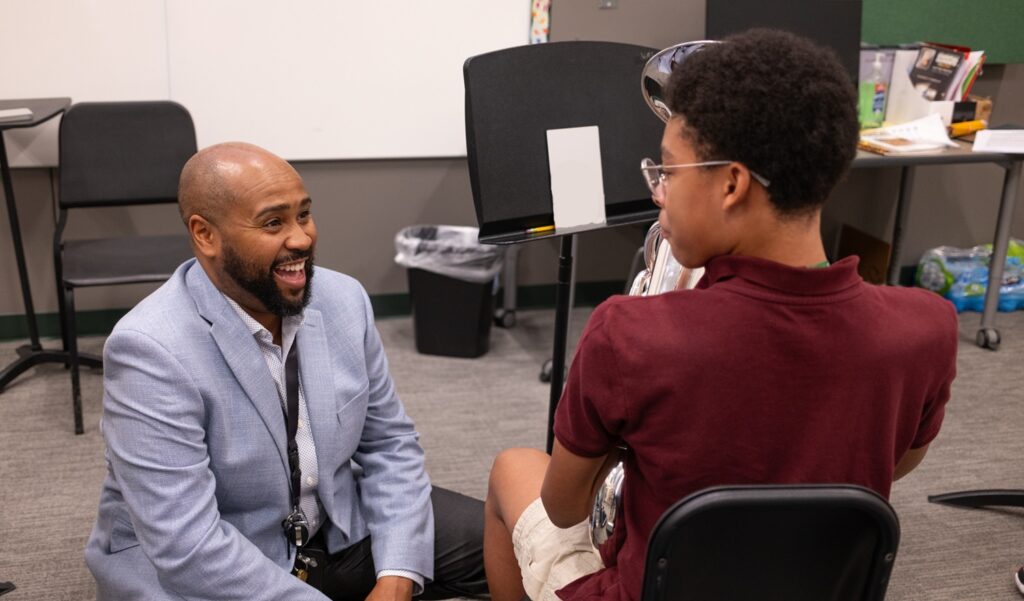
A truly successful program celebrates growth as enthusiastically as achievement. Directors who recognize individual progress create an environment where every student feels valued, regardless of whether they occupy the first chair or the last stand.

Community Engagement as a Measure of Success
Music programs do not exist in isolation. They serve schools, families and communities. One of the most meaningful measures of a program’s success is the positive influence it has beyond the rehearsal room. School ensembles often provide the soundtrack for community life. They perform at holiday celebrations, veterans’ ceremonies, athletic events and school functions. These performances bring people together, preserve traditions and create shared experiences that strengthen community identity.
Strong music programs also foster relationships. Families become invested in concerts and performances. Local businesses offer sponsorships. Community members volunteer their time, donate resources and proudly support student musicians. Performances become anticipated events rather than routine obligations. These connections remind us that music education is not simply about preparing the next performance. It is about enriching the cultural life of an entire community.
The applause at the end of a concert often represents more than appreciation for a well-executed performance. It reflects the relationships built between students and the people they serve through music. When a community rallies around its music programs, success extends far beyond the rehearsal room.

Creating Lifelong Appreciation for Music
Most students enrolled in school music programs will not become professional musicians. That has never been the primary purpose of music education. The true goal is to cultivate people who value music throughout their lives. Students who continue attending concerts, singing in church choirs, joining community bands, playing piano for personal enjoyment or simply introducing their children to great music represent lasting successes that no competition can measure.
Music has the unique ability to remain with people throughout every stage of life. Long after students forget mathematical formulas or historical dates, they often remember the songs they performed with their fellow bandmates. School music programs should strive to create skilled performers, informed listeners, enthusiastic supporters of the arts and lifelong participants in musical experiences. When students leave school with an enduring appreciation for music, the influence of their education continues for decades. That is the greatest legacy a music program can leave.

Balancing Excellence and Perspective
Redefining success does not mean abandoning excellence. High standards remain essential. Directors should encourage students to prepare diligently, perform artistically and pursue ambitious goals. Competitions, festivals and honor ensembles can inspire remarkable levels of achievement and provide valuable learning experiences. The challenge is maintaining perspective.
Awards should reflect the quality of a program rather than determine its value. A successful director can celebrate superior ratings while also recognizing remarkable personal growth. A successful program can pursue competitive excellence while ensuring every student feels welcomed, challenged and appreciated. The healthiest programs understand that musical excellence and educational excellence complement one another.
When external recognition becomes the sole objective, the educational mission suffers. When excellence is pursued as part of a larger commitment to student development, the results extend far beyond a single performance season.

Redefining Success
Years after high school graduation, few people will remember a particular adjudication score or competition placement. However, they will remember the teacher who believed in them, the friendships they formed, the confidence they gained and the joy they experienced making music together. Those are the outcomes that endure.
A truly successful school music program is one that develops capable musicians, confident individuals, engaged citizens and lifelong lovers of music. While trophies eventually gather dust, the influence of a meaningful music education continues to resonate long after the final concert has ended.
Keep reading