Teaching Music at Historically Black Colleges and Universities
HBCUs have embodied a celebration of black excellence in music for almost 200 years.
For much of America’s history, Historically Black Colleges and Universities (HBCUs) have existed in parallel to mainstream institutions of higher education (Wade, 2021). Music has always been at the core of the mission at HBCUs. Since the creation of the first HBCU in 1837 with Cheney University, musical studies have inspired generation after generation of graduates toward social mobility, economic empowerment and community galvanization (Clark, 2019).
While there are many pressing issues within higher education writ large and college music programs specifically, I want to highlight both the remarkable work and the particular challenges currently facing HBCU music departments. I also want to offer opportunities toward the betterment of all music programs within higher education. Whether it is our impressively high-stepping marching bands, exquisite dance teams, phenomenal choirs, swinging jazz bands or cutting-edge and culturally relevant music industry curricula, the music-making and academic experiences that students receive at HBCUs are imbued with historical context, filled with joy, forged through persistence and celebrated in every way possible.
Positionality & Perspective
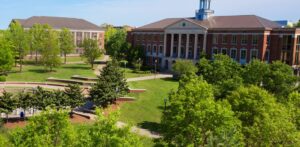
As a proud alumnus of an HBCU — Florida A&M University — who now prepares the next generation of great music teachers at another HBCU — Tennessee State University — I believe my unique lived experience can serve as one of many examples of the power that HBCU music programs have to develop student-musicians who are both exceedingly capable of and astonishingly persistent at transforming the world through the gift of music. The significance of HBCUs is neither abstract nor symbolic to those of us who were trained at one and/or now teach at one. It is thoroughly woven throughout our daily lives.
Because HBCU music programs do not attempt to simply replicate the conservatory model found at most schools of music, we have been at the forefront of student-centered learning and curriculum innovation for generations (Earvin, 204). From the African-American spiritual and gospel to jazz and high-stepping marching bands, HBCUs have greatly contributed to musical offerings at institutions of higher learning.
Some may try to diminish our contributions with claims that our programs do not hold the same high standards for musical quality as our mainstream peers (Hamiel, 2021). However, with more than half of all HBCU music programs actively accredited by the National Association of Schools of Music (NASM), and evidence of HBCU music programs achieving national and international recognition at or above the same level as our mainstream counterparts, the exceptional musicians and ensembles found within our institutions simply cannot be denied.
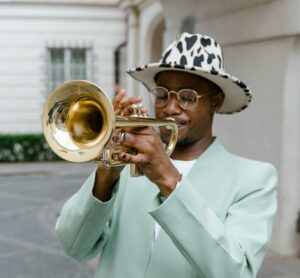
A Closer Look: What HBCUs Do Well
Music has been central to HBCU institutional identity since the 19th century as core academic and cultural infrastructure (Wade, 2021). Early HBCUs understood music as a means of spiritual grounding, communal unity and social legitimacy within a nation that denied African Americans equal opportunities. From this need emerged several achievements and innovations that highlight all that HBCUs bring to the table.
HBCU music programs have been at the forefront of approaches to musicking (Small, 1998) and community engagement that have only recently become jargon in the modern higher education zeitgeist. Terminology that speaks to cultural responsiveness, diverse perspectives, equitable outcomes and inclusive pedagogy has been integrated into the HBCU experience since its inception.
Black sacred music traditions coupled with the pressing need to raise funds for sustainability anchored many early programs, such as the Fisk Jubilee Singers and Hampton University Choir. HBCU choral programs throughout the United States continue to preserve the African-American spiritual while also integrating Western choral traditions in their repertoire. The international success of these choirs highlights not just Black sacred music, but American music, to the rest of the world. The capabilities of these performing ensembles to achieve musical excellence under the larger context of segregation and discrimination in America, while simultaneously generating institutional credibility, financial support and cultural affirmation, cannot be understated.
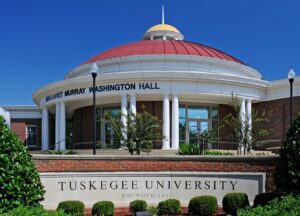
No discussion of HBCU music programs is complete without acknowledging the significant cultural influence of HBCU marching bands. Since the founding of the first HBCU marching band at Tuskegee University in 1890, these ensembles have transformed the marching band from a strict military-derived unit into a high-energy cultural celebration steeped in contemporary performance traditions (Clark, 2019). With the establishment of the Marching 100 at Florida A&M University in 1946, director William P. Foster developed more than 30 innovative techniques from high knee lift and idiosyncratic musical arrangements of popular music to fast marching, dance routines and more, that all other HBCU bands would later adopt into what is now known as the “HBCU band style” (Thomas, 2016). See a recent performance by the Marching 100 in the video below.
Many non-HBCU bands have now begun began to adopt these popularized innovations. The pinnacle of this movement was witnessed by the release of the movie “Drumline” in 2002, which introduced many to HBCU bands and our unique approach to marching music for the first time.
Current Challenges
Despite their contributions, HBCU music programs continue to face persistent challenges, such as:
- historical and chronic underfunding,
- aging facilities,
- inequitable state support
- and heightened accreditation pressures.
As faculty, we are often asked to do more with less — teaching heavier loads, recruiting and sustaining ensembles, mentoring students and maintaining compliance with national standards that were not designed with HBCU contexts in mind. All of this without any additional course release time or pay, of course.
And yet, even within these constraints, HBCU music programs continue to thrive. Many of our institutions have expanded offerings in music technology, sacred music study, music industry studies and even music therapy, responding to shifts in musical interests and needs while remaining rooted in tradition. These adaptations are often framed externally as “catching up,” but in reality, they represent strategic evolution grounded in long-standing institutional resilience.
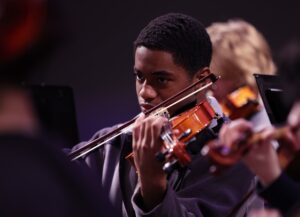
HBCU Music Programs Matter
In an era of declining funding, demographic shifts and the increasing pressure to justify the arts, HBCU music programs offer a compelling case for the intrinsic and essential value of music (Kelly, 2018). Our institutions consistently demonstrate how music can function as workforce preparation, cultural preservation, community engagement and personal transformation simultaneously. More importantly, HBCUs remind the academy that excellence is contextual. The success of HBCU music programs has never been defined solely by endowments or facilities, but by our successful outcomes: trained musicians, prepared teachers, served communities and sustained traditions.
As higher education continues to interrogate issues of access, equity and relevance, HBCU music programs should not be viewed as historical artifacts or niche institutions. We are living laboratories and active examples of musical excellence from which the broader higher education music community can learn.
As I close, I am reminded of a quote that I share with my students that speaks to our common purpose. In the words of the reverend Dr. Martin Luther King Jr., “We are caught in an inescapable network of mutuality, tied in a single garment of destiny. Whatever affects one directly, affects all indirectly.”
It is my hope that this serves as a reminder of our common purpose as we strive to make memorable musical experiences for us all.
References
- Clark, R. H. (2019). “A narrative history of African American marching band: Toward a historicultural understanding.” “Journal of Historical Research in Music Education,” 41(1), 5–32.
- Earvin, W. J. (2024). “Examining disparities between Southern public historically Black colleges and universities (HBCUs) and predominantly White institutions (PWIs) music programs” (Doctoral dissertation, William Carey University).
- Hamiel, J. (2021). “HBCUs: The hidden gem in music education.” National Association for Music Education.
- Kelly, S. N. (2018). “Teaching music in American society: A social and cultural understanding of teaching music.” Routledge.
- Small, C. (1998). “Musicking: The meanings of performing and listening.” Wesleyan University Press.
- Thomas, N. (2016). “The professional career of African-American bandmaster William Patrick Foster.“ “Research Perspectives in Music Education,” 18(2), 19–33.
- Wade, E. (2021). “The history of HBCUs: Lessons on innovation from the past.” In Reimagining historically Black colleges and universities: Survival beyond 2021 (pp. 5–13). Emerald Publishing Limited.
Keep reading