Why Upgrade From CL/QL to Rivage PM Series and DM7 Series

WHY UPGRADE FROM CL/QL TO RIVAGE PM SERIES AND DM7 SERIES

Key upgrade considerations for sound engineers and audio managers in live sound, HoW, Corporate, Events, Education and Theater

Summary For over a decade, Yamaha’s CL/QL consoles defined stability and sound. Today’s productions demand more – channels, DSP, immersive tools, and streaming – without losing familiar workflow. Yamaha DM7 and Rivage PM deliver next – gen power, rider – friendly specs, and legendary sound, plus seamless CL/QL file migration. From touring to worship, education, corporate, and theater, these consoles set a new standard for speed, flexibility, and sonic excellence.

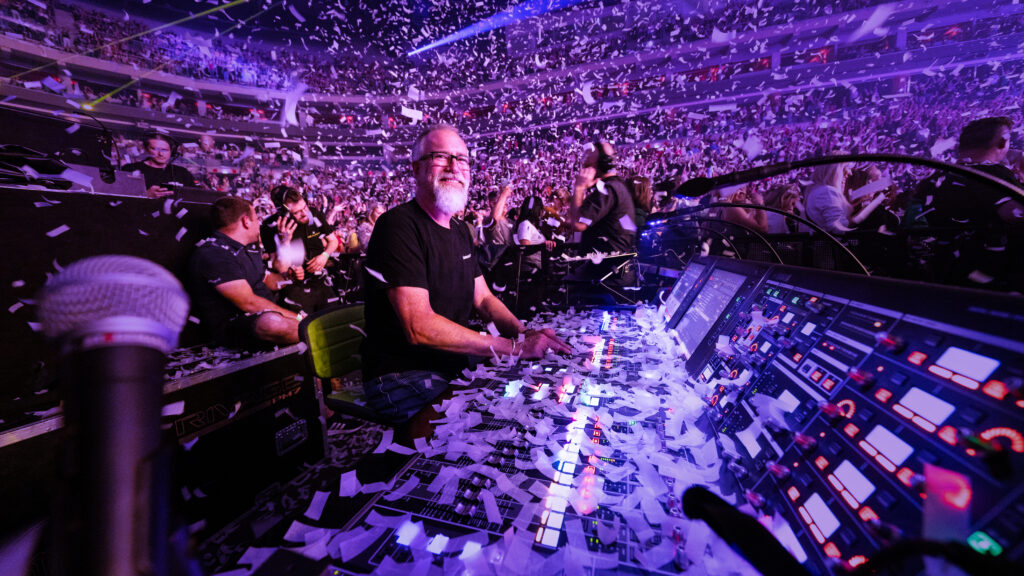
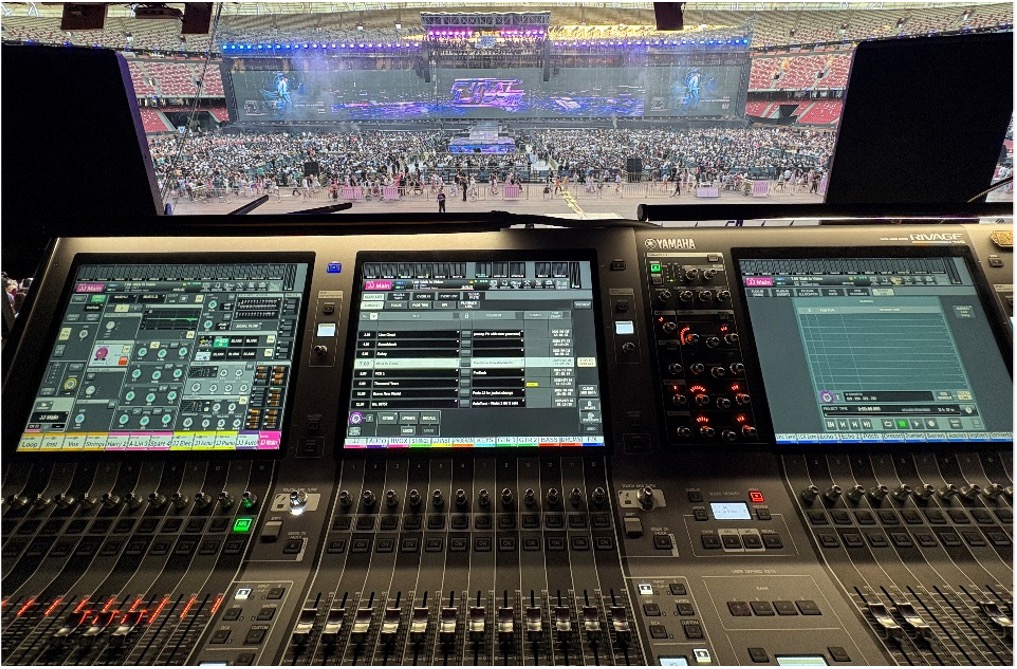
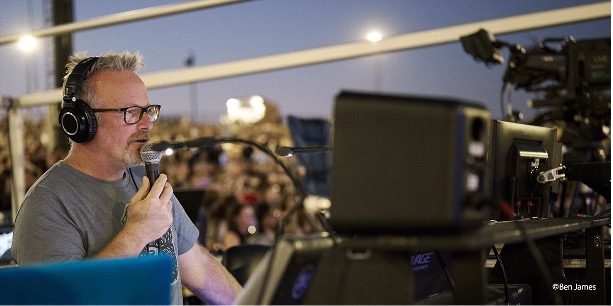
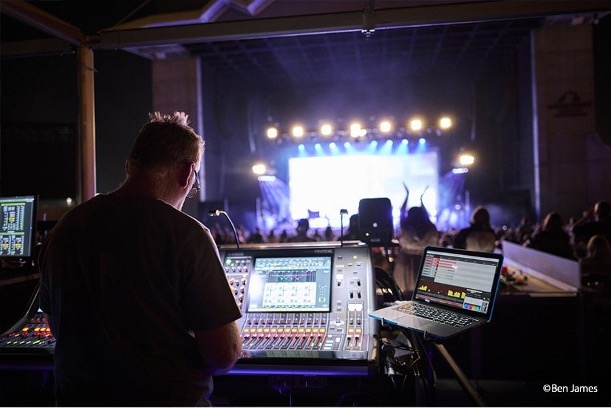
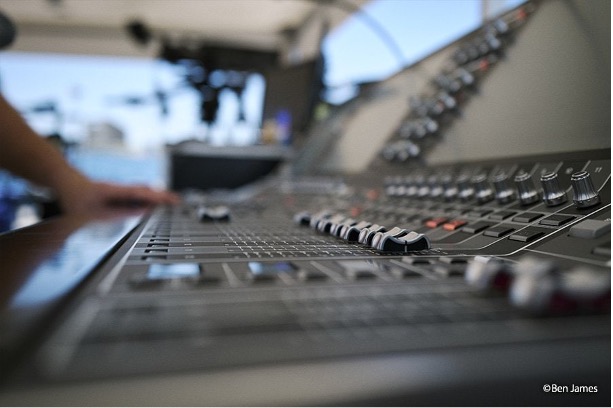
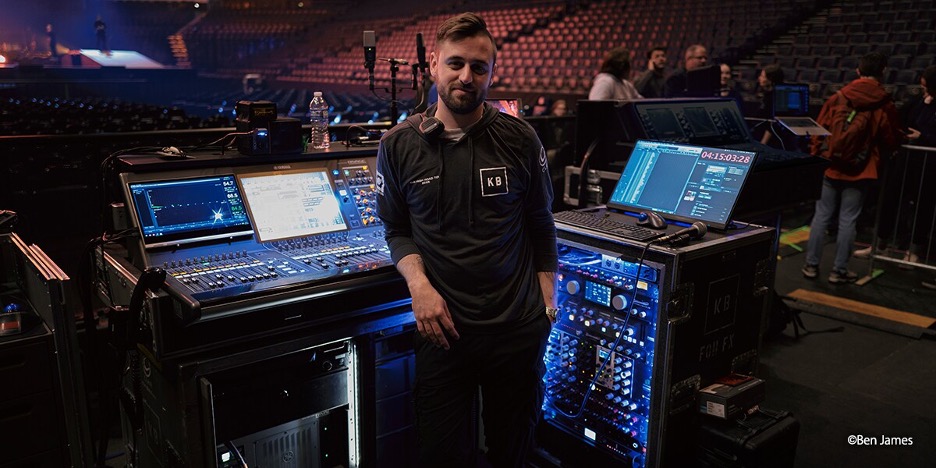
man in front of audio mixerRivage PM: Scottie Baldwin, FOH Lady Gaga, Prince, JJ Lin transitions from Yamaha CL to Rivage

Scottie Baldwin built his reputation on Yamaha’s CL and QL consoles, calling them “the scaffolding for my sonic identity.” He even mixed a stadium tour on a CL – “which everyone didn’t think was possible.” That familiarity made moving to Rivage PM feel natural: “You can feel comfortable moving over to Rivage the day of show – but it’s not the same. It’s just better in every way.” For Baldwin, the upgrade wasn’t just about scale – though Rivage’s 288 inputs and 72 mix buses opened new creative horizons. It was about musicality. “When you want to move up that notch and really get into clarity, depth, focus – everything is wider, deeper – Rivage delivers.” Features like Rupert Neve Silk and Dynamic EQ 6 let him mix stadium shows entirely in the box: “It’s musical, not just technical.” His verdict? “There’s no console before or since that has locked it in like Rivage – I feel completely at home. “It’s a whole different system, but it feels familiar – it’s part of the Yamaha family.”

On upgrading from CL/QL or a mid-sized console to a more powerful mixing desk

For more than a decade, Yamaha’s CL and QL consoles have been the dependable backbone of live sound – trusted for their stability, natural musicality, and effortless Dante integration. But today’s productions demand far more: more channels, more outputs, more broadcast and streaming capability, and more creative flexibility. Engineers need all of that without losing the workflow and sonic signature they already know.

That’s exactly why Yamaha designed the Rivage PM Series and DM7 Series Digital Mixers. Both platforms deliver award-winning and battle-tested next – generation DSP, advanced processing, immersive audio tools, and equipment rider – friendly specs, while preserving Yamaha’s unmistakable natural sound. And with a workflow engineers already know and trust – plus Console File Converter for easy CL/QL show file migration – upgrading is a leap forward in innovation, flexibility, reliability, and sound quality. Rivage PM Series and DM7 Series deliver next-generation power and flexibility without leaving your experience or your team behind.

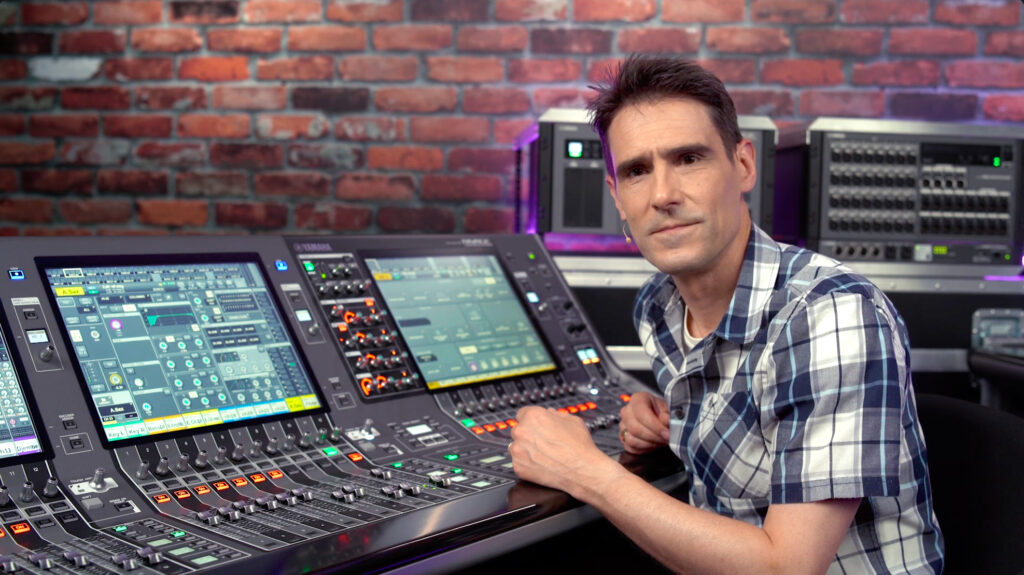
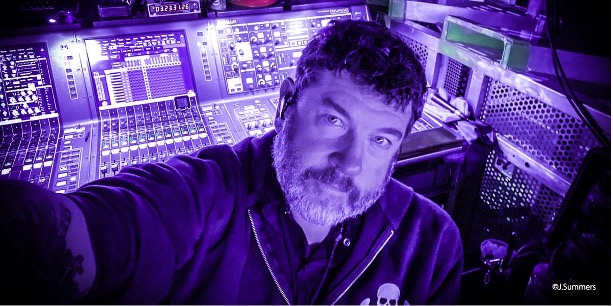
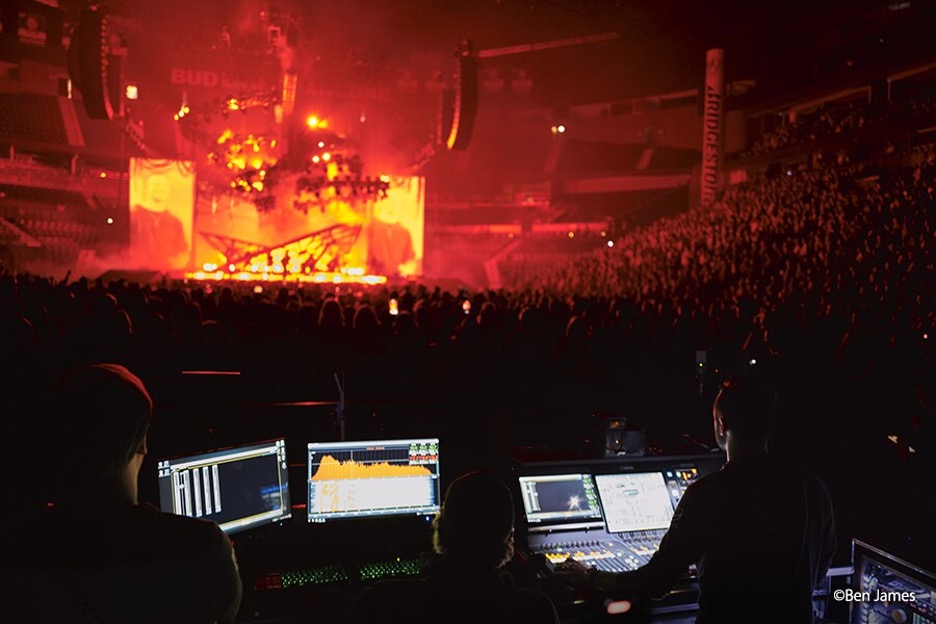
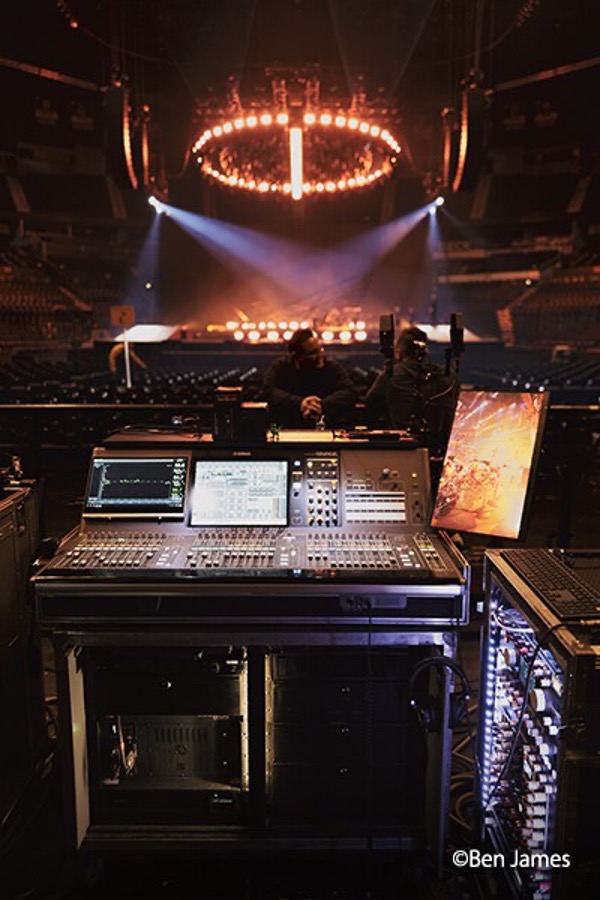
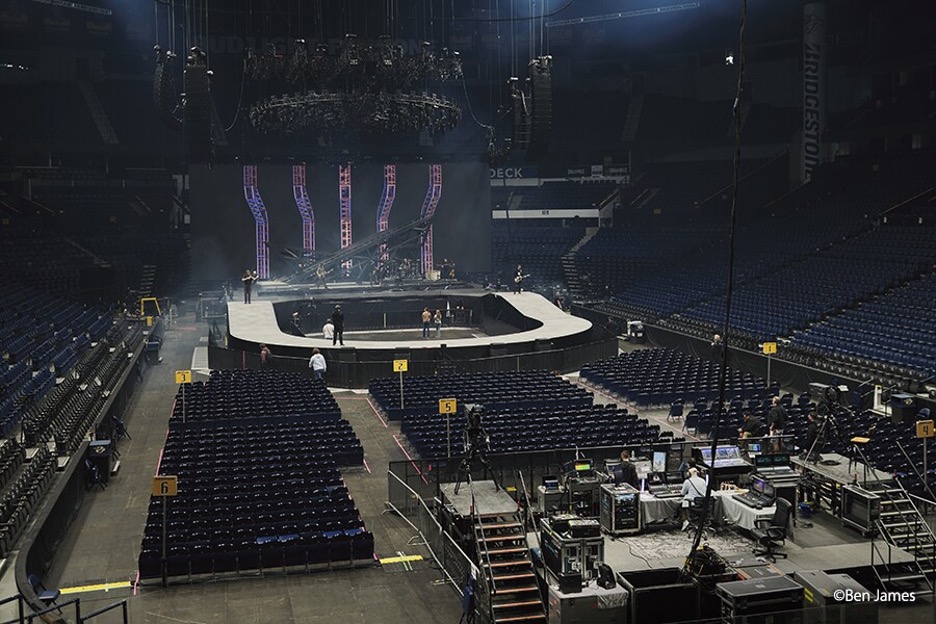
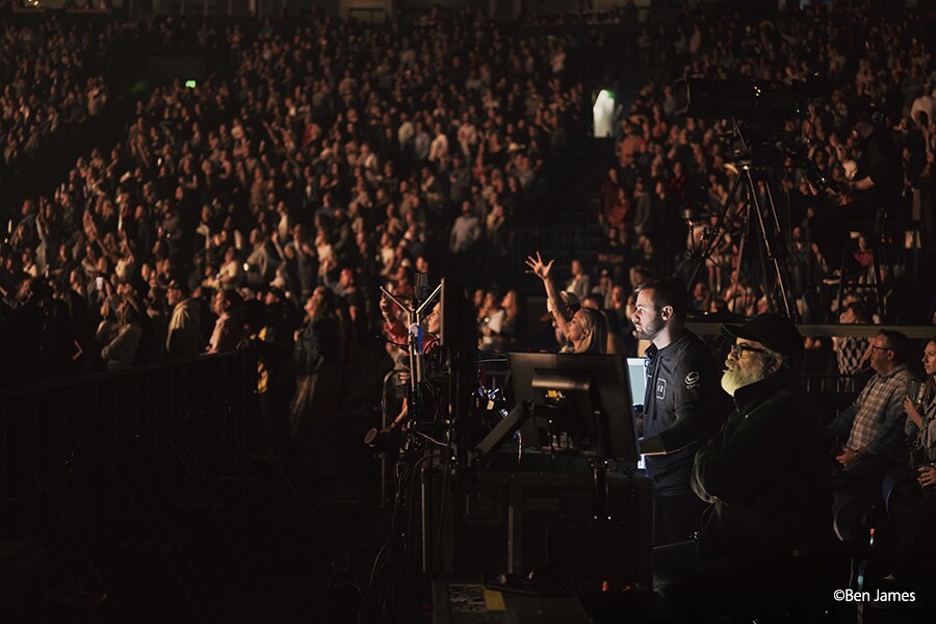
man in front of audio mixerJ. Summers, FOH Jellyroll, Harnesses Yamaha RIVAGE PM 10 for Jelly Roll’s packed arena shows

For Jelly Roll’s arena-sized, guest-heavy shows, Monitor Engineer J. Summers depends on Yamaha’s RIVAGE PM10 to deliver next-generation power without sacrificing the workflow he knows and trusts. “Nothing feels better than to hear my artists smiling,” Summers says, describing his commitment to flawless IEM mixes. RIVAGE PM10 combines Yamaha’s natural sound with advanced DSP, immersive audio tools, and rider-friendly specs. Its intuitive matrix system lets Summers adapt instantly—whether adding extra RF mics, patching new instruments mid-show, or managing multiple rigs across high-profile events. “On this show, there’s no deer-in-the-headlights moment. It is calm and cool—go, go, go,” he explains. For Summers, RIVAGE isn’t just a console—it’s the backbone of a system that transforms organized chaos into surgical precision, ensuring Jelly Roll, the band, and every guest sound perfect night after night.

Live Sound: Speed, Power, and Sonic Excellence

Rivage PM was engineered for the pressure of touring, offering 288 inputs, 96 kHz audio, and Rupert Neve SILK coloration. Engineers describe the move as instantly transformational. Brad Divens, FOH for Enrique Iglesias, Linkin Park recalls realizing right away that “this is it… this is beautiful.” Kane Brown’s FOH engineer David Loy had been searching for something “powerful but stable,” and found the PM3 delivered that balance with its compact size, deep DSP, and consistent connection to the performance. Stephen “Pato” Pattison (FOH for Hozier) praises its completeness, freeing him up from cumbersome outboard gear – the console has “everything I need,” and because of that, “there’s nothing to go wrong.”

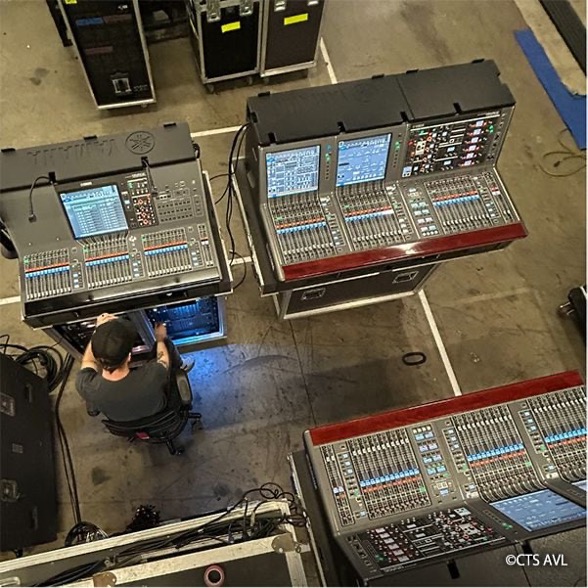
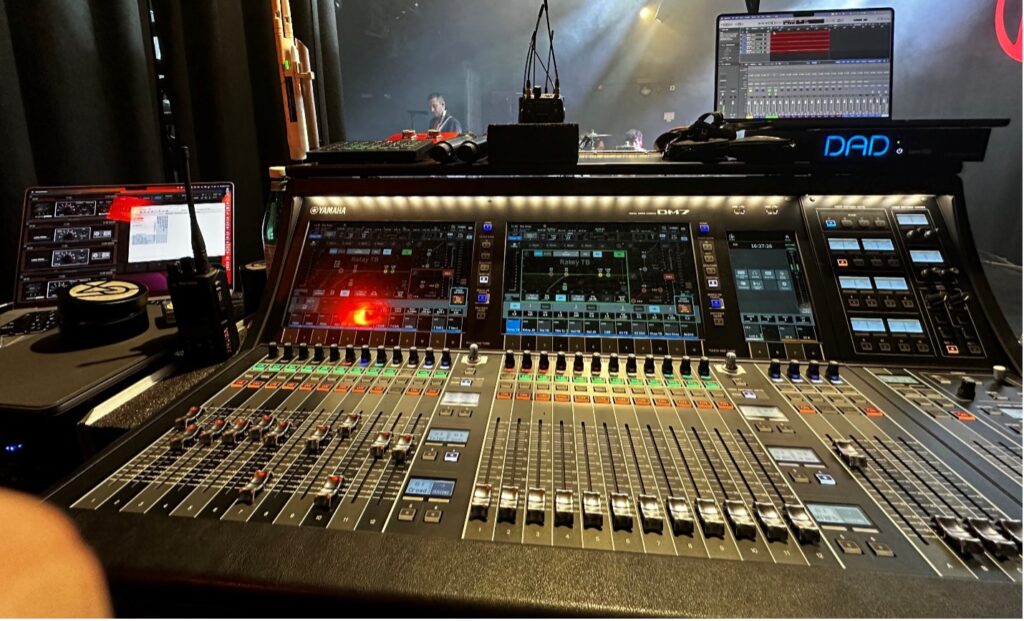
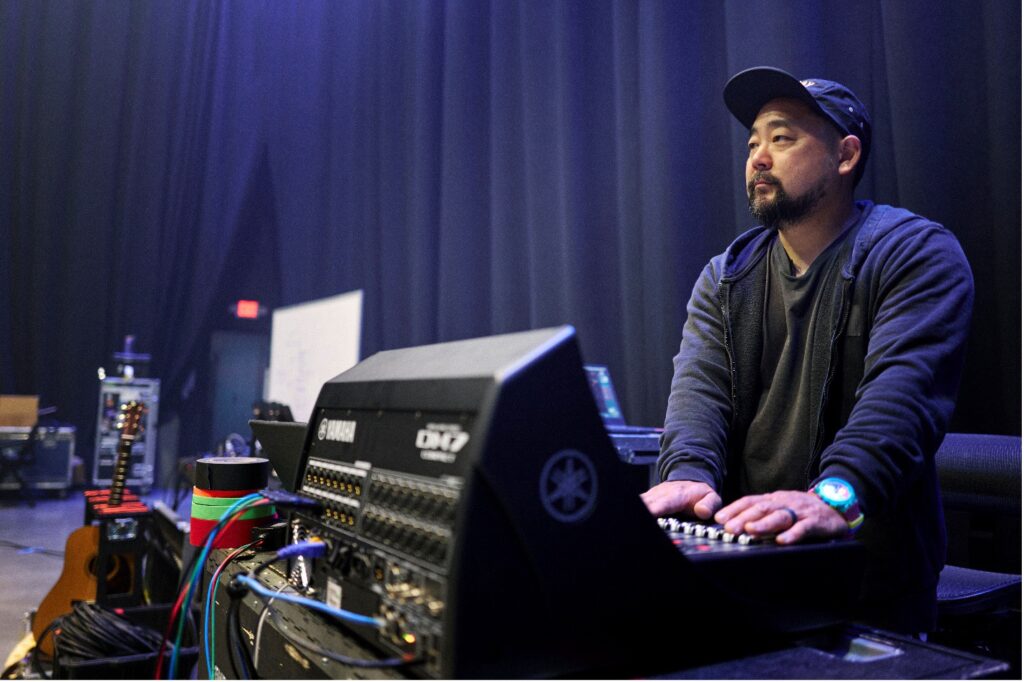
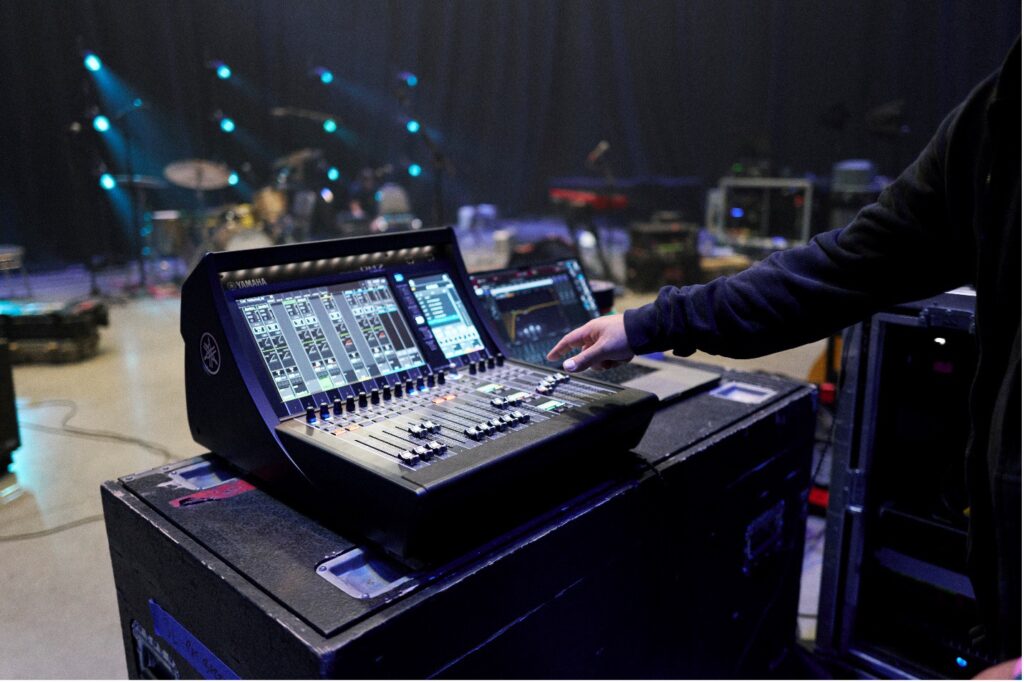
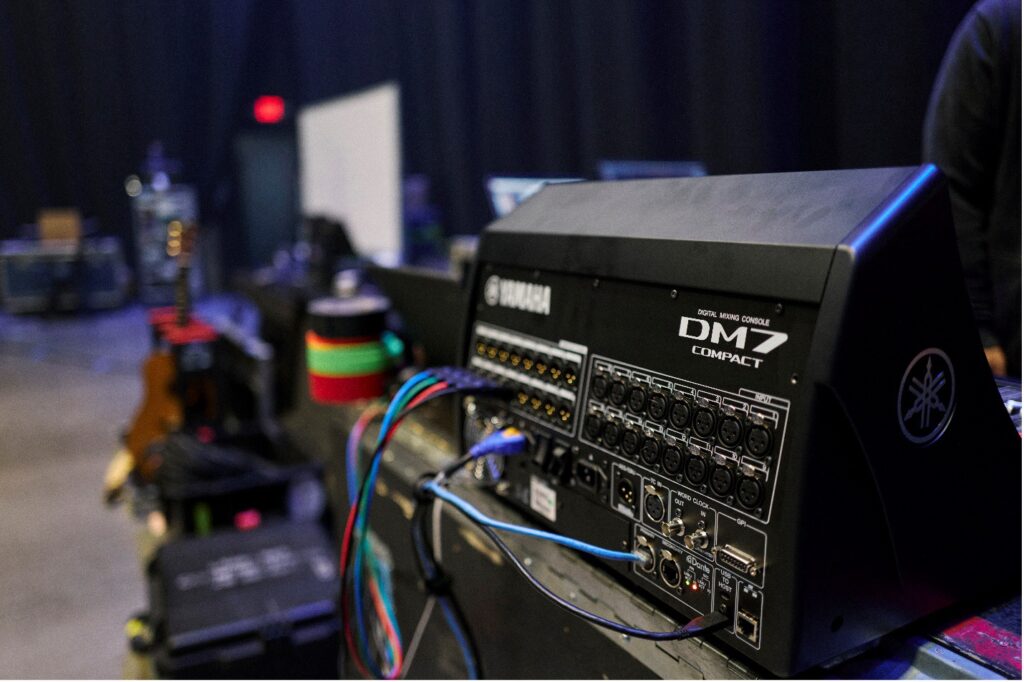
For tighter footprints, DM7 brings impressive muscle: dual touchscreens, split – mode operation, and a 64 – channel Dugan Automixer that lets one console handle FOH, monitors, and streaming at once. Touring engineer Gene Kim notes that the DM7 “really helps because the footprint is small, but it’s packed with output capabilities and local I/O.” That combination proved essential during Tyler, The Creator’s pop – up barge show, where Landon Storey and Paul Wichmann relied on DM7’s near – identical workflow to Rivage PM to deliver seamless, high – quality audio in a notoriously unforgiving environment.
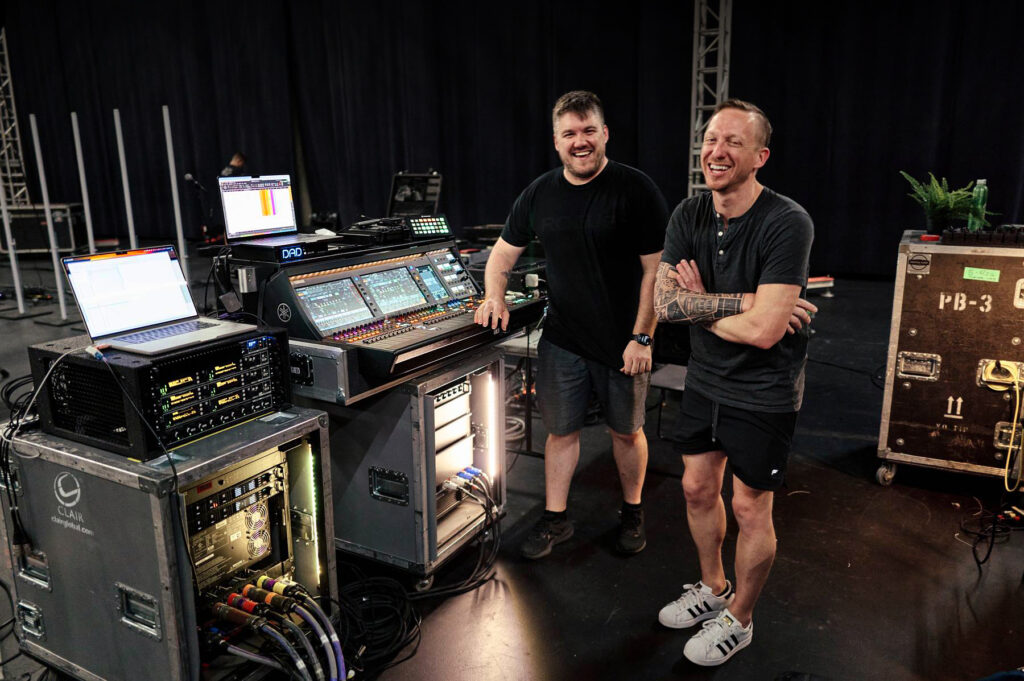
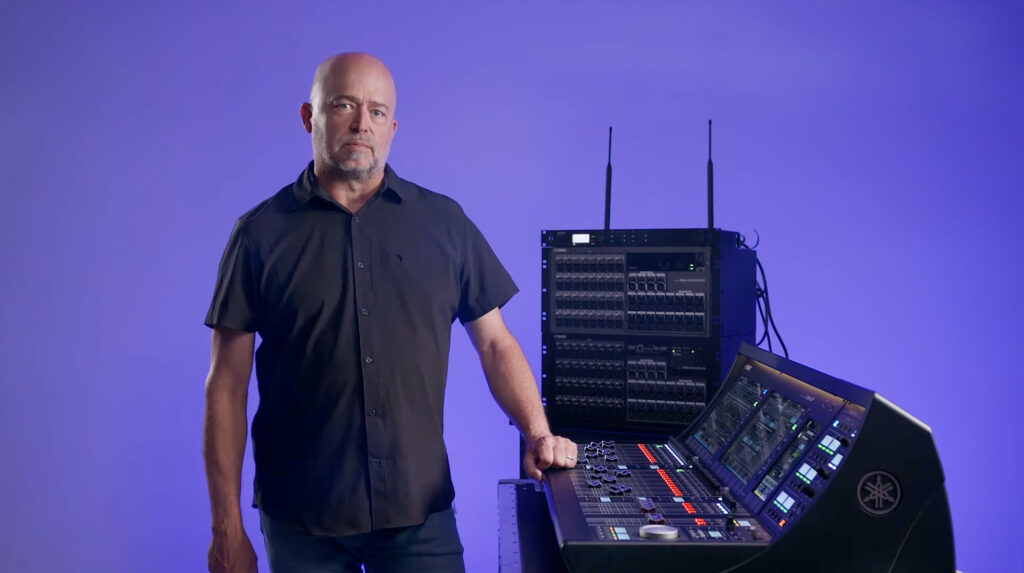
two men standing in front of audio mixer21 Pilots FOH and MON: From Arenas to Clubs – Small can be beautiful
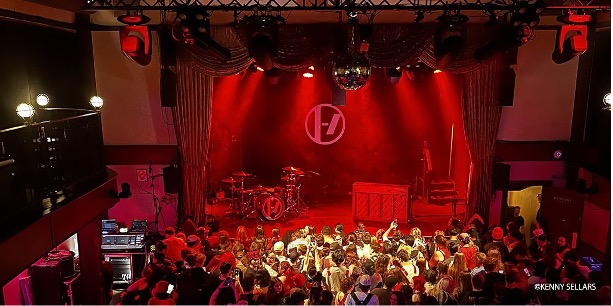
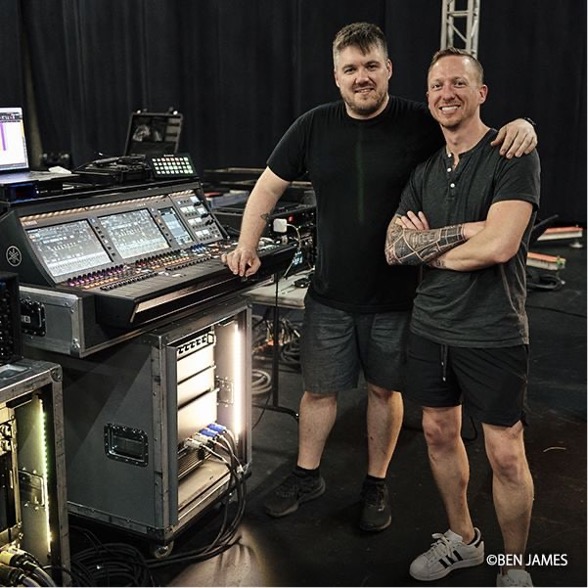
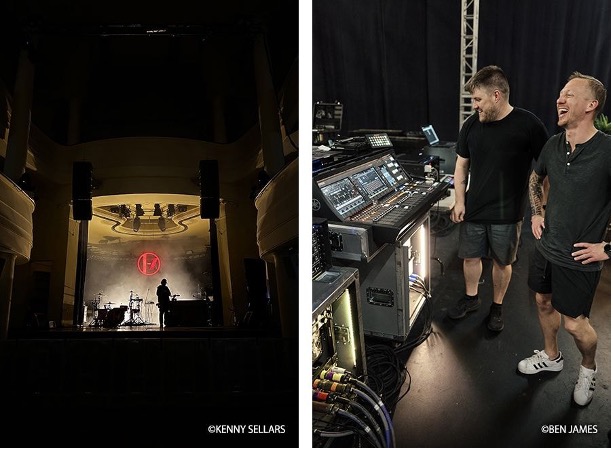
When Twenty One Pilots set out on a secret club tour, their engineers faced a challenge: deliver arena – quality sound in spaces a fraction of the size. FOH engineer Kenny Sellars and monitor engineer Cliff Skinner, accustomed to Yamaha’s flagship Rivage PM systems, needed a solution that was compact yet uncompromising. Enter DM7-EX – a console that mirrors Rivage PM’s workflow while packing serious muscle into a smaller footprint. “The console has allowed us to maintain the highest possible standard in the smallest possible footprint,” Cliff explains. With 120 channels, dual touchscreens, split – mode operation, and a 64 – channel Dugan Automixer, DM7 handled FOH, monitors, and streaming seamlessly across five cities. The transition was effortless thanks to Yamaha’s ecosystem. “My layout’s almost exactly the same as Rivage PM,” Kenny says. “It feels just like home.” That familiarity, combined with Dante networking and local I/O, meant no compromise in quality or creativity – even under tight constraints. “The band didn’t want us to scale down and not be as good. We had to say trust us,” Kenny adds. And trust paid off: every show delivered the clarity and consistency fans expect, proving that small can be beautiful when it’s engineered right.

House of Worship: Broadcast – Quality, Volunteer – Friendly

Modern churches operate like hybrid performance – and broadcast studios, and Rivage PM and DM7 are designed to support that complexity while remaining volunteer – friendly. At First Baptist Church Woodstock, Jamie Karnes describes the new head amps and plug – ins as “huge game changers,” and says the SILK feature in particular lifts every source. Saddleback Church’s team echoes that sentiment, explaining that they needed a system capable of handling worship, broadcast, and translation feeds “without compromise” – and Rivage PM delivered exactly that.

audio mixer

The Ark Church Chooses Yamaha RIVAGE PM7 for Reliable, Warm Audio

The Ark Church in Conroe, Texas recently upgraded to a Yamaha RIVAGE PM7 to serve its 10,000 – member congregation. “Our 7+ year old console was having issues,” says Technical Director Chris Allgood. “We looked at every brand and settled on the PM7. Workflow is amazing and simple… the sonic quality is incredible – so much warmer and easy to listen to.” With RPio racks and SILK processing, Allgood adds, “When you turn on the transformer and dial in SILK, it adds depth and quality that’s awesome.” Future – ready networking sealed the deal: “Yamaha will be our platform of choice across our campus.”

Education & Corporate AV: Reliability Meets Flexibility

Universities and corporate venues must support everything from lectures to concerts with minimal staff and no room for error. DM7’s routing power and flexible interface make it ideal for these constantly shifting environments. The University of Birmingham’s Richard Mitton says the DM7 “ticked all the boxes,” giving the venue confidence that “there’s nothing likely to come… that the DM7 can’t do.” William Paterson University found the same, noting that DM7C expanded their routing and processing while helping a small team maintain high production standards.
finger pointing at audio mixer

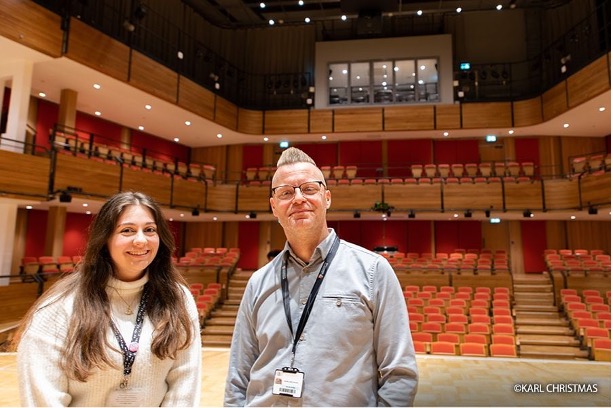
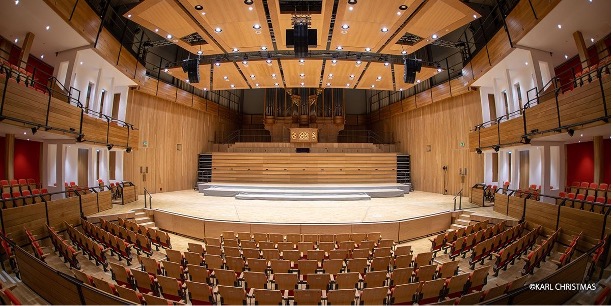
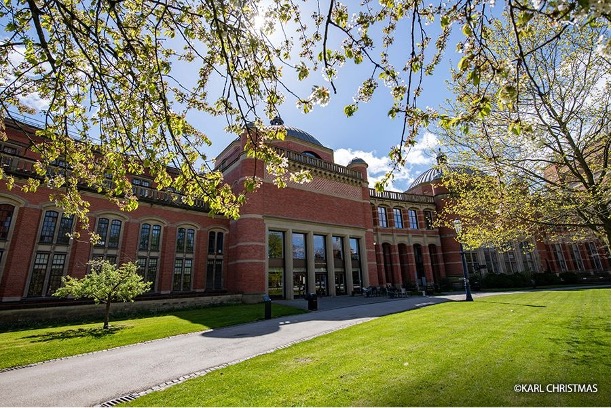
University of Birmingham Powers World – Class Events with familiar workflow and Yamaha DM7 Series

The University of Birmingham’s Bramall Music Building needed an upgrade to match its world – class ambitions. “The previous audio mixer was at the end of its life and massively limiting,” says Live Events Technical Manager Richard Mitton. The solution? Yamaha DM7 with Dante networking. “The capacity of the DM7 made it perfect for us… features like 64 channels of Dan Dugan Automixer and split mode are incredibly useful.” Familiar workflow was key: “You can walk up to the latest model and within 10 minutes you’re up to speed.” The DM7 now powers concerts, conferences, and even BBC Radio 3 broadcasts. “Choosing the DM7 was a no – brainer… there’s nothing that’s likely to come to this venue that it can’t do.”

Theater: Precision for Complex Live Productions

Theater demands fast navigation, accuracy, and absolute reliability. Rivage PM’s Theatre Mode, overlay filters, and immersive tools give engineers control at a level that keeps pace with rapid scene changes and dense sound design. Stephen “Pato” Pattison (FOH for Hozier) puts it simply: the console has “everything I need,” and with that completeness, “there’s nothing to go wrong.” For engineers who cannot afford hesitation, Rivage PM is the trusted choice.
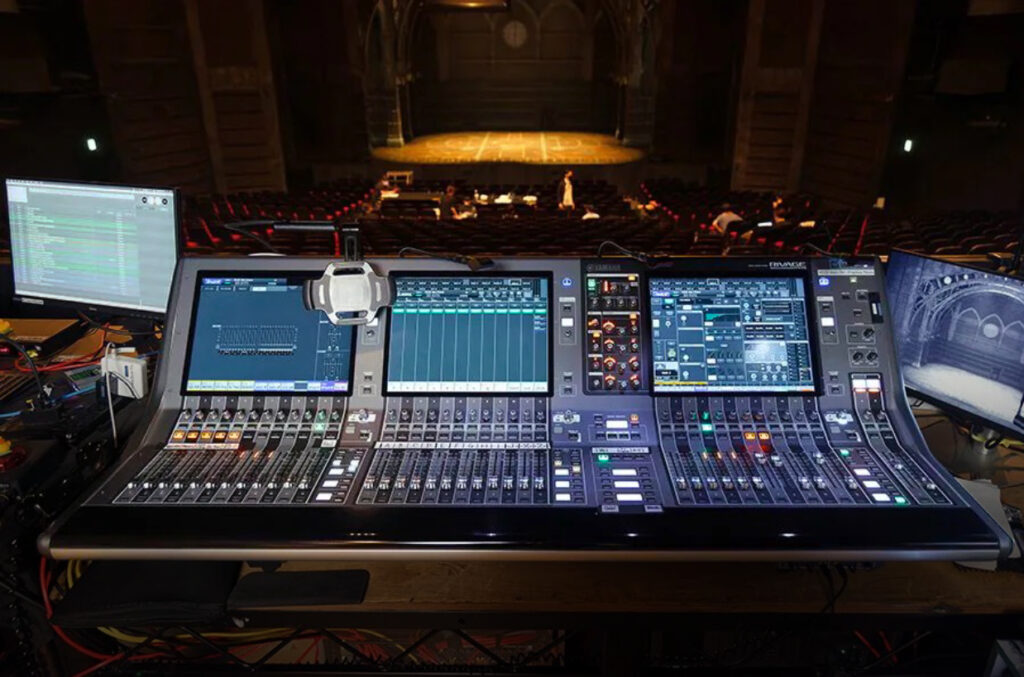
audio mixer

RIVAGE PM5 Brings Magic to Harry Potter on stage

Harry Potter and the Cursed Child live performances demanded a console that could handle 150+ inputs, 500 cues, and full digital audio flow. The solution was Yamaha RIVAGE PM5, chosen for its advanced theatre software and flexibility. “Dual monitor mode made for a much simpler signal flow,” says sound designer Gareth Fry. Performer library proved essential: “You can instantly switch settings for different actors. Without that, this production wouldn’t have been possible.” Local associate Satoshi Tateishi adds: “Having only one mixing surface saved space and made it easier to manage.” With A/B switching and Bricasti reverbs onboard, Gareth notes: “The PM5 combines everything we liked about previous consoles – and more.”

Why Upgrade Now?

CL/QL consoles remain supported – but they are discontinued, and live sound is moving quickly toward platforms with deeper DSP, immersive tools, modern workflows, and rider – friendly specs. DM7 and Rivage PM deliver all of this while honoring the Yamaha sound engineers love. And because of familiar workflow, intuitive operation, reliability and protection of your investment, upgrading isn’t a disruption – it’s a future – proofing decision that captures your audience, preserves workflow and elevates your potential and capability to create amazing and memorable experiences across all applications.

DM7 and Rivage PM aren’t just successors – they are the new benchmark. Created for productions that refuse to compromise, these mixing desks redefine a new standard for legendary sound quality, intuitive workflow, and absolute reliability, all backed by Yamaha’s legacy of support. Rivage PM Series and DM7 Series digital consoles don’t just exceed today’s demands – they inspire what tomorrow will sound like.

We are here to help Ready to connect with our B2B sales team, discuss system needs and Request a Quote?  Click here to get the conversation started: Request a Quote

Rivage PM Series: Redefining Audio Experiences Worldwide

RIVAGE PM SERIES: REDEFINING AUDIO EXPERIENCES WORLDWIDE

The choice of engineers and owners for legendary sound, intuitive control, flexibility and proven reliability

Summary Rivage PM sets the standard for live sound with premium audio quality, advanced control, and Yamaha’s legendary tone. Designed for touring, corporate events, worship, theater and broadcast, it combines intuitive workflow with next – gen power. Built for the toughest environments and proven on the world’s biggest stages, Rivage PM delivers reliability, scalability, and sonic excellence – making every performance seamless and unforgettable.

man in front of audio mixer at concertMichael “Coach“ Conner, FOH Steely Dan, Paul Simon: Recreating Studio Magic Live with Rivage PM

Michael “Coach” Conner, FOH for Steely Dan and Paul Simon, calls the challenge “formidable – what was hard enough to achieve in the studio becomes even more intricate when performed live.” Rivage PM gives him the tools to make it happen. “We use around 55 microphones… I have 25 – 30 instances of DaNSe. It really does change everything. It’s probably my favorite thing on the desk. That’s my game – changer.” Premium plug – ins like Bricasti Y7 and OpenDeck help him achieve mixes that “rival the well – known studio recordings.” Virtual sound check is critical: “It’s both a blessing and a curse… I put on my headphones or in – ears, start soloing up, and realize what I truly heard the previous night.” For Conner, this feature lets him fine – tune every nuance: “Before, whatever happened vanished into space. Now, I can dive in and make it better.” Rivage PM is “the key to capturing that magic live.”

Rivage PM Series – Redefining Premium Mixing

The Rivage PM Series represents Yamaha’s flagship live sound platform, designed for the most demanding productions. At its core are Hybrid Microphone Preamplifiers, combining analog warmth with digital precision, and Rupert Neve Designs SILK processing for rich, musical tone – so voices and instruments sound natural and detailed, with the warmth of classic studio gear and the clarity of modern technology.

man using audio mixer at concert

“This Is It. This Is Beautiful.”  –  Brad Divens, FOH for Enrique Iglesias, Linkin Park, Garbage

Brad Divens, FOH notes that Rivage PM changed everything: “When I tried the RIVAGE PM system, I found there was nothing digital sounding about it… This is it. This is beautiful.” For him, the magic starts at the front end: “The first and foremost feature I really love is the hybrid mic preamps, because to me the front end of a console is everything.” Add Rupert Neve SILK, Portico EQ and compression, plus familiar studio tools like Eventide and Bricasti: “It’s things you know and love from the studio. It’s that familiar sound.” With massive channel capacity, premium plug – ins, and 96 kHz processing, Divens sums it up: “All I need is the RIVAGE PM… everything is ready.”

Key Features That Set Rivage PM Apart

  • Massive Channel Capacity with up to 288 input channels, 72 mix buses, and 36 matrices gives you the flexibility to manage large concerts, multi – speaker panels, or worship teams without adding extra hardware.
  • Premium Plug – Ins like Rupert Neve EQ and compression, Eventide harmonizers, and Bricasti reverbs deliver studio – quality sound shaping and effects right inside the console, eliminating the need for external processors.
  • 96 kHz Processing ensures high – resolution audio for pristine clarity and depth, so every detail of music and speech comes through clean and accurate.
  • Dan Dugan Automixer automatically balances multiple microphones, making it ideal for corporate panels or worship services where consistent levels are critical.
  • Noise Suppression (DaNSe) intelligently removes HVAC hum and crowd noise, keeping speech intelligible and music clear in any environment.
  • Genius.lab accelerates workflow customization, enabling engineers to design tailored control layouts and functions—streamlining complex tasks for faster, more intuitive mixing in any environment.
  • Immersive Audio Tools like AFC Image enable spatial sound design, creating a natural, engaging listening experience for theaters and large venues.

man using microphone and audio mixerDavid Loy Elevates Kane Brown’s Live Sound with Yamaha RIVAGE PM3: Power, Precision, and Creative Freedom

FOH engineer David Loy drives Kane Brown’s genre-blending shows with Yamaha RIVAGE PM3, harnessing its massive channel capacity and premium DSP to deliver pristine, immersive sound. “I was really impressed with the way it sounded,” Loy says after pushing the console to its limits. With up to 288 inputs, 72 mix buses, and 36 matrices, he handles complex setups without extra hardware. Built-in Rupert Neve EQ, Eventide harmonizers, and Bricasti reverbs keep mixes “musical without over-processing,” while 96 kHz processing ensures clarity. Features like Dan Dugan Automixer and AFC Image help tame challenging thrust stages and maintain vocal intelligibility. “I love having a small footprint and a single screen—it lets me stay connected to the performance,” Loy adds. For him, RIVAGE PM3 is a creative engine that transforms every show into an unforgettable sonic experience.

Connectivity & Reliability

  • Dual Network Options – TWINLANe for ultra – high channel counts and Dante for easy integration – allow Rivage PM to work seamlessly with existing infrastructure while scaling for future needs.
  • DSP Mirroring provides redundant processing engines for mission – critical reliability, ensuring your event continues even if hardware fail
  • Touchscreen Interface & Centralogic Navigation combine our familiar layout with advanced control, making the console easy for volunteers yet powerful for seasoned engineers.
  • Theatre Mode & Overlay Filters allow quick adjustments for changing performers or scenes, saving time during live productions.
  • Wireless Integration lets you monitor and control Shure, Sennheiser, and Sony receivers directly from the console, simplifying setup and reducing complexity.

Recording & Virtual Soundcheck

  • 128 – Channel Recording at 96 kHz captures every detail for streaming or post – production without additional gear.
  • Nuendo Live Integration streamlines virtual soundchecks, ensuring faster setup and consistent mixes between rehearsals and live shows.

From stadium tours to corporate, rental, production and worship services, Rivage PM Series is more than a console – it’s a complete mixing ecosystem designed for sonic perfection and operational confidence.

man using audio mixer at concertStephen “Pato” Pattison, FOH Hozier  –  One Desk is Everything I Need

Stephen “Pato” Pattison, FOH relies on Rivage PM to manage Hozier’s lush, layered soundscapes with simplicity and confidence. “No, just one lonely desk – nothing else around it. No extra gear, no extra plug – ins, nothing to worry about. There’s nothing to go wrong because the console already has everything I need.” With Dante networking for flexibility and Yamaha’s intuitive Centralogic interface, Pato can adapt quickly to any venue. Built – in tools like premium plug – ins and hybrid preamps eliminate outboard racks, while 128 – channel recording and Nuendo Live integration make virtual soundcheck indispensable for consistency: “It ensures we have enough time to prepare and perfect the show.” For Pato, Rivage PM means reliability, scalability, and sonic excellence – without compromise.

RIVAGE PM: Confidence for Worship, Events, and Rider-Ready Productions

Rivage PM Series delivers premium sound and intuitive control for Houses of Worship, corporate events, and high-pressure productions. Hybrid mic preamps with Rupert Neve SILK ensure natural warmth for sermons and music, while tools like Dan Dugan Automixer and DaNSe noise suppression keep speech clear in challenging spaces. Centralogic navigation and touchscreen workflow make it easy for volunteers yet powerful for seasoned engineers.

For rental and production companies, Rivage PM is rider-friendly and eliminates outboard racks with built-in Rupert Neve EQ, Eventide harmonizers, and Bricasti reverbs. Dual networking (TWINLANe and Dante), DSP mirroring, and Nuendo Live integration provide scalability, redundancy, and virtual soundcheck for flawless execution.

Whether mixing worship services, corporate panels, or major tours, Rivage PM offers a complete ecosystem—premium audio, operational confidence, and reliability under pressure.

audio mixerFlagship Power for High – Pressure Events

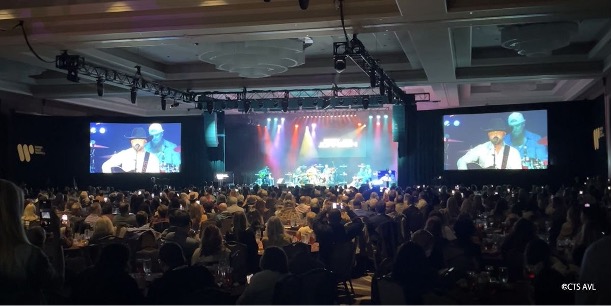
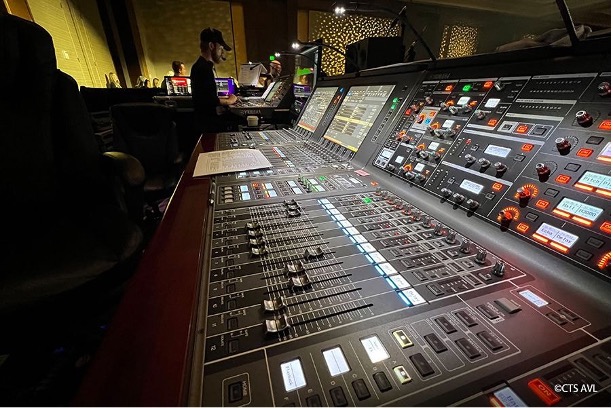
At Nashville’s Country Radio Seminar, CTS AVL faced three days of rapid – fire performances and corporate sessions with zero margin for error. “It’s effectively multiple different events in the same space, with little time between each,” says audio manager Mark Kimmel. For FOH engineer Jonathan Schwarz, Rivage PM was the backbone: “Engineers can bring in a show file, or we have a pre – programmed festival file ready to go – step in and mix.” Dual RPio racks and independent systems ensured flexibility: “If they need their own gain staging or Rupert Neve SILK processing, they can do that without affecting FOH.” Schwarz loves introducing newcomers to Rivage: “It’s exciting to show them features like SILK – unique to this product.” For CTS AVL, Rivage PM means reliability, speed, and sonic excellence under pressure.

We are here to help Ready to connect with our B2B sales team, discuss system needs and Request a Quote?  Click here to get the conversation started: Request a Quote
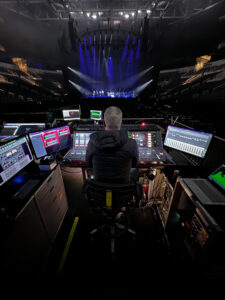
Yamaha DM7 Series – Take Your FOH to The Next Level

YAMAHA DM7 SERIES – TAKE YOUR FOH TO THE NEXT LEVEL

Legendary sound, power and flexibility in a smaller footprint with intuitive and familiar workflow

Summary Yamaha DM7 Series delivers great sound and flexibility for touring, theater, worship, and more – all in a compact, cost-effective design. With dual touchscreens, split-mode operation, small footprint and familiar workflows, it’s easy to use and powerful. Compatible with all generations of Yamaha I/O racks, DM7 makes upgrading simple and redefines digital mixing without compromise.

man using audio mixerCompact Power Meets Big Expectations for Gene Kim, FOH Johnnyswim
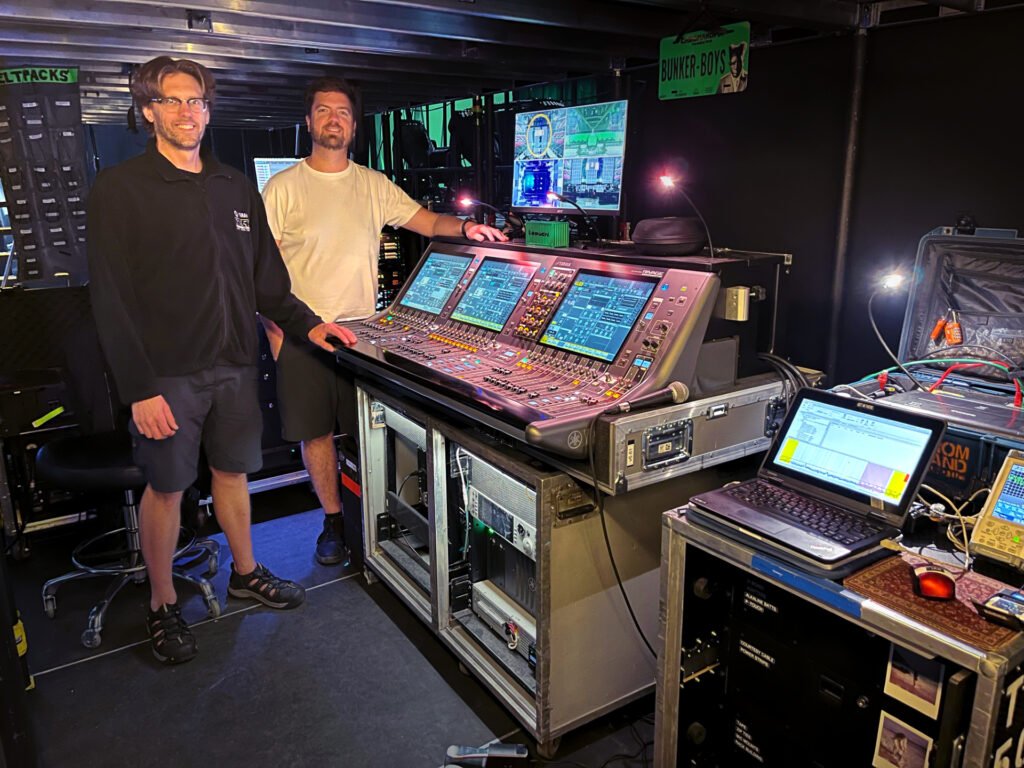
Gene Kim, FOH for Johnnyswim, Phil Wickham and Pat Barrett, knows the pressure of live events where flexibility and reliability are non – negotiable. “For a compact console, it really helps because the footprint is small, but it’s packed with output capabilities and local I/O,” he says of Yamaha’s DM7 Compact – a design philosophy shared by Rivage PM for large – scale productions. Dual power supplies give “peace of mind: if one goes down, the rig keeps running.” Like Rivage PM’s DSP mirroring and Dante/TWINLANe networking, DM7’s portability and robust processing make it ideal for fast turnarounds. “The console lets you start from a good, clean place,” Gene adds, praising onboard Portico tools and multiband compression. Whether FOH or monitors, Yamaha consoles deliver reliability and sonic excellence – no extra gear, no compromise.

DM7 Series: Redefining Digital Mixing

Yamaha DM7 Series redefines digital mixing, meeting the ever – evolving needs of audio professionals with a perfect blend of innovation and usability. Designed for those upgrading from Yamaha’s CL or QL consoles or switching to mid – sized desks, DM7 offers an intuitive, seamless transition. Balancing professional – grade performance with a compact design and accessible price point, DM7 Series is tailored for medium – sized venues and productions, making it a versatile solution for diverse audio needs.

two men standing next to audio mixerDM7 Powers Tyler, The Creator’s Most Unconventional Shows: Compact Design, Big Capability For Tyler, The Creator’s most unconventional shows – including a pop-up on a floating barge – engineers Landon Storey, MON and Paul Wichmann, FOH chose Yamaha DM7 for its compact footprint and powerful features. “The workflow feels like RIVAGE PM, so the transition was seamless,” says Landon. Working inside shipping containers, they relied on DM7’s dual touchscreens and built-in processing to handle dynamic vocals and effects-heavy mixes. Paul even mixed remotely via StageMix: “I literally ran the show off an iPad—it was slick.” Despite tight space, two DM7 consoles and playback fit on a 12-foot table, proving its portability and power. From Hudson River barges to packed arenas, DM7 delivers exceptional sound and flexibility anywhere.
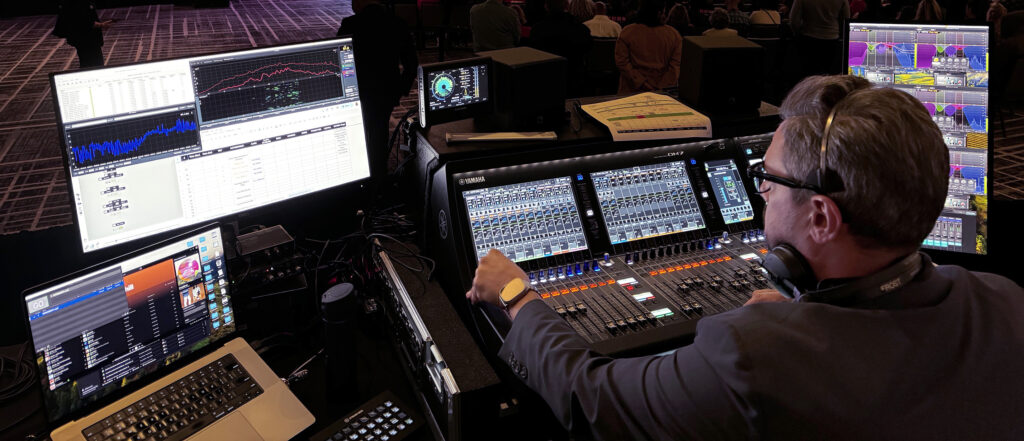
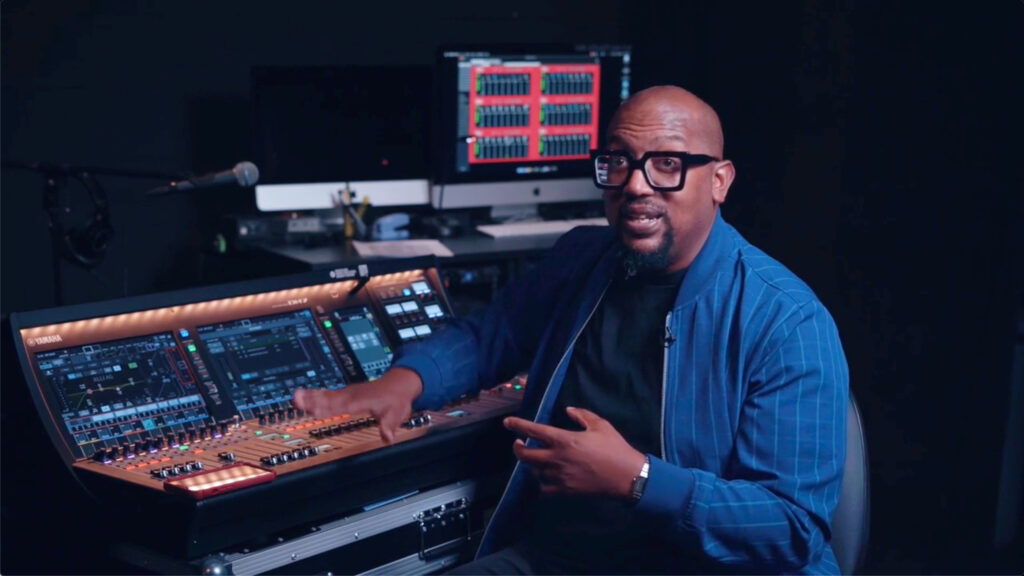
DM7 Design Vision

Representing more than just a mixing console, Yamaha DM7 Series is a step forward in design and functionality. Built on decades of trusted engineering and sonic excellence, DM7 merges familiarity with innovation, offering tools that address modern audio production challenges.

The vision driving DM7 was clear: Create a future – ready platform that embraces existing users, encouraging exploration of new creative possibilities while ensuring an easy and welcoming transition.

man using audio mixer

From Familiar to Future: Brian Frost, FOH Transforms Corporate Audio for Apple, Amazon, and Starbucks with Yamaha DM7

Brian Frost, FOH for major corporate and keynote events, spent over a decade on Yamaha CL5 before moving to DM7. “I wasn’t sure I wanted to add another layer of complexity,” he admits. But the switch was seamless: “Within maybe a minute or two for everything I was trying to find, it just instinctively came.” Dual touchscreens and expanded channel capacity were game changers: “I appreciate the ability to view more information at a glance.” Running at 96 kHz, DM7 gave him clarity and headroom: “It allowed me to push the technology to the edge.” With Dante integration, Brian managed complex setups effortlessly: “I like to have a lot of matrices… going to DM7 now, having twelve was a great step up.” For Frost, DM7 means power, flexibility, and confidence – without the learning curve.

Cost – Effective Integration with Existing Infrastructure

One of the DM7 Series’ most appealing aspects is its ability to integrate with existing infrastructure and improve performance without costly I/O upgrades.

Key Benefits:

  • Compatible with all generations of Yamaha R Series I/O racks
  • Upgrade from 48 kHz CL or QL Series to DM7 for 96 kHz functionality
  • Unlock superior audio performance, reduced latency, and increased channel counts
  • Upgrade a rig that’s more than a decade old without changing I/O – saving tens of thousands of dollars across live sound, events and HoW.

man next to audio mixerLCBC Church: Seamless Transition to DM7
When LCBC Church moved from a Yamaha CL5 to DM7, Broadcast Audio Coordinator Brian Tru was impressed by how intuitive the console felt: “It feels like audio engineers designed it for audio engineers – it just makes sense and is very intuitive, even the first time you sit down.” Volunteers agreed: “They love having two screens instead of one and appreciate the ability to put all the user – defined keys right on the touchscreen.” The upgrade delivered more onboard outputs for monitor mixes – no extra hardware needed – and pristine 96k audio. “My music director told me the mix sounds much cleaner – and I can only attribute that to what’s happening inside the DM7.” For LCBC, DM7 means simplicity, flexibility, and sonic clarity for worship and broadcast.

Innovative Features That Elevate Your Workflow

  • Streamlined Livestreams: Broadcast software package and split – mode operation mix FOH and livestreams from the same surface.
  • Expanded Processing Power: More freedom for reverb, plug – ins, and Automixer. Includes Rivage plug – ins like DaNSe, Dynamic EQ4, Analog Delay, and more.
  • Premium Plug – Ins: Access exclusive plug – ins like DaNSe and Rupert Neve processing, or integrate third – party VSTs (Waves, Universal Audio).
  • Enhanced Usability: Dual 7 – inch multi – touch screens for flexibility and efficiency.
  • Show File Conversion & Rack Mount: CL/QL Series show files can be converted and imported. DM7 Compact is rack – mountable and a great fly-pack choice.

The DM7 Series delivers legendary sound quality and cutting – edge features that audio professionals demand.

We are here to help Ready to connect with our B2B sales team, discuss system needs and Request a Quote?  Click here to get the conversation started: Request a Quote

Training, Support and a Familiar Workflow

TRAINING, SUPPORT AND A FAMILIAR WORKFLOW

Seamless upgrade to Rivage PM & DM7 with training, support, and confidence in every performance

Summary Transitioning from a CL/QL workflow to Rivage PM or DM7 has never been more seamless. Yamaha makes the move simple with intuitive interfaces, comprehensive training resources, and a design philosophy that feels instantly familiar. Whether you’re an experienced audio engineer or part of a volunteer team, the learning curve is refreshingly short.

two men talking

Training Made Accessible
DM7 and Rivage training is available on YouTube and official Yamaha platforms, giving teams the flexibility to learn at their own pace. From quick-start guides to deep-dive tutorials and YouTube videos, these resources ensure that both professionals and volunteers can master advanced features confidently – anytime, anywhere.

man using audio mixer

man posing for photo next to audio mixer

Resources:

Through Yamaha Audio Lab clinics, detailed articles, and hands-on sessions, professionals gain confidence in mastering advanced features – while volunteers appreciate the approachable layout and guided workflows. The result? Faster onboarding, fewer mistakes, and the ability to deliver professional-grade sound without missing a beat.

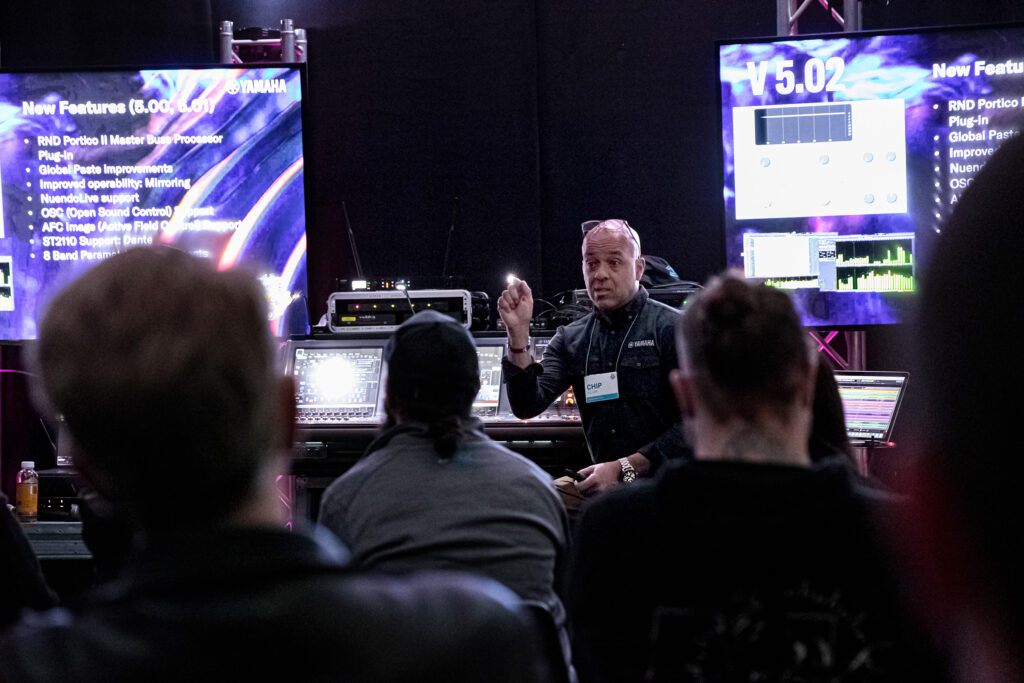
man doing lecture with audio mixer in background

As the only company that designs across the entire signal chain, Yamaha knows what audio should sound like – and what true professionals demand. That expertise is built into every Rivage PM and DM7 Series console, ensuring uncompromising quality from input to output.

For live touring, production and rental companies, venues, theaters, amphitheaters, houses of worship, education and facilities planning permanent installations, Yamaha backs your investment with robust support:

  • 2-Year Warranty via authorized dealers
  • Extended Coverage available through registration
  • Parts & Labor for defects during warranty period
  • Firmware Updates + Advanced Remote Tools included
  • Yamaha Authorized Pro Audio Centers for service and expertise
  • Proof of Purchase Required for warranty claims

man trying out audio mixer

With Rivage PM and DM7, you’re not just upgrading your console – you’re gaining confidence and a partner vested in your success – one beat at a time, every note, every night, every performance, every time.

Yamaha Pro Audio understands every system is unique. Our experienced team is ready to help you design solutions for today and tomorrow. When you’re ready to discuss your needs, click here to start the conversation.

Yamaha Digital Console Comparison and Specs

YAMAHA DIGITAL CONSOLE COMPARISON AND SPECS

Compare Rivage PM Series, DM7 Series, CL and QL features and specs

Summary Upgrading from Yamaha CL or QL Series to DM7 or Rivage PM delivers a major leap in performance and flexibility. With 96 kHz audio processing for superior clarity, advanced DSP for premium plug-ins and Rivage-grade tools, and split-mode operation for FOH and livestream mixing, these consoles redefine efficiency. They integrate seamlessly with existing Yamaha I/O racks for cost-effective upgrades, offer dual multi-touch screens for intuitive control, and provide enhanced reliability with redundant power and DSP – plus Rupert Neve SILK processing for studio-quality sound.
We are here to help Yamaha Pro Audio understands every system is unique. Our experienced team is ready to help you design solutions for today and tomorrow. When you’re ready to discuss your needs, click here to start the conversation.

This chart compares Yamaha CL, QL, DM7, and Rivage PM Series consoles, highlighting key specifications and differences to help demonstrate how DM7 and Rivage PM deliver superior performance for innovative productions. Product page links below for a deeper dive or connect with our sales team to explore solutions.

Feature CL Series QL Series DM7 Series Rivage PM Series
Input Channels Up to 72 mono + 8 stereo Up to 64 mono + 8 stereo 120 mono (DM7) / 72 mono (Compact) Up to 288 (DSP-RX-EX)
Mix Buses 24 16 48 Up to 72
Matrix Buses 8 8 12 Up to 36
Sample Rate 48 kHz 48 kHz 96 kHZ 96 kHz
Local Analog I/O 8 in / 8 out (CL5) 32 in / 16 out (QL5) 32 in / 16 out 8 in / 8 out
Networking Dante Dante Dante (144×144) TWINLANe + Dante
Plug-ins Rupert Neve EQ/Comp Rupert Neve EQ/Comp Rivage plug-ins + VCM + VST support Rupert Neve SILK + premium plug-ins
Touchscreens 1 1 2 × 12.1″ + 1 × 7″ Up to 3 × 15″
Faders 16–32 16–32 28 (12+12+4) Up to 36 (3 bays of 12)
Scene Memory 300 300 500 1000
Redundant PSU Optional No Built-in dual PSU Built-in dual PSU
Advanced Features Basic EQ/Dynamics Basic EQ/Dynamics + Auto Mixing Split-mode FOH/Stream,Dan Dugan Automixing, Rivage-grade channel strip SILK mic preamps, AFC Image immersive audio, DSP mirroring
Reliability Proven Proven Proven – Dual PSU, DSP redundancy Proven – Dual PSU, DSP mirroring
Standard Warranty 1-2 years (varies by region) 1-2 years (varies by region) 2 years via authorized dealer 2 years via authorized dealer
Extended Coverage Available via registration Available via registration Available via registration Available via registration
Service Center Yamaha Authorized Pro Audio Centers Yamaha Authorized Pro Audio Centers Yamaha Authorized Pro Audio Centers Yamaha Authorized Pro Audio Centers
Repair Policy Parts & labor for defects during warranty Parts & labor for defects during warranty Parts & labor for defects during warranty Parts & labor for defects during warranty
Reliability Support Firmware updates, basic support Firmware updates, basic support Firmware updates + advanced remote tools Firmware updates + advanced remote tools
Special Notes Requires proof of purchase Requires proof of purchase Requires proof of purchase Requires proof of purchase

Yamaha Product pages

Yamaha CL Series: https://usa.yamaha.com/products/proaudio/mixers/cl_series/index.html
Yamaha QL Series: https://usa.yamaha.com/products/proaudio/mixers/ql_series/index.html
Yamaha DM7 Series: https://usa.yamaha.com/products/proaudio/mixers/dm7_series/index.html
Yamaha Rivage PM Series:
https://usa.yamaha.com/products/proaudio/mixers/rivage_pm_series/index.html

RIVAGE PM Mixes Country Music Radio’s Big Annual Event

RIVAGE PM Mixes Country Music Radio’s Big Annual Event

Supreme Nashville Sound with CTS AVL

Summary At Country Radio Seminar, CTS AVL relied on Yamaha RIVAGE PM consoles to deliver flawless, flexible sound for three days of performances by country music’s biggest stars.

musician on stage at a concert

Nashville’s annual Country Radio Seminar brings together a wide range of country music artists and industry leaders for three days of performances, seminars, meetings and more. For 20 years CTS AVL has been the event’s audio partner, relying on Yamaha digital mixing consoles to deliver stellar performances from the latest new talent to the industry’s biggest stars.

The 2024 Country Radio Seminar took place at the Omni Nashville Hotel, with its ballroom the setting for everything from breakfast meetings and executive luncheon performances to evening shows which go on long into the night. The show features a wide variety of artists and an intense program of performances. Long-time audio product production partner CTS AVL needs to deliver consistently great sound, yet be flexible enough to suit very different musical styles in minutes. CTS AVL knew that Yamaha digital mixers could satisfy these difficult demands and deliver their long-time motto ‘Move The Room, Move The World’.

“We were brought in by Scott and Julie De Vos of De Lux Productions, who have produced the show for many years,” says CTS AVL president Mike Taylor. “They knew from our track record that we could deliver great sound for any musical style and switch between styles quickly with no loss of quality.

“The key part of the brief is that this is radio’s event. The artists are invited to perform and show the radio personalities and executives what they’ve got, but it has to be a 100% neutral environment, with everybody getting exactly the same opportunity. We treat them all equally, everyone gets the full production.”

The company initially used Yamaha PM1D digital mixing consoles, moved to PM5Ds and now have RIVAGE PM10s at front of house and monitors, plus a RIVAGE PM3 as a production console for video playback and wherever else needed. Two RPio I/O racks take care of all inputs and outputs, with all systems on a shared network.

One of the challenges faced by the CTS team is that it’s essentially a corporate event, but the format of the performances changes continually throughout the three days, with extremely fast changeovers. This puts a lot of pressure on the audio team.

audio mixer

“Every year we spend a lot of time in team discussions about the flow of the event, because it’s effectively multiple different events in the same space, with little time between each,” says CTS AVL audio manager Mark Kimmel, who has worked the Country Radio Seminar for 11 years.

“There are different aspects to each of them that are challenging and different timeframes that things have to be executed within, so we treat each event like it’s the biggest one. And overall, because of the corporate nature of it, everything has to be tidy. Our snakes and delay cabling have to be flown on truss, so we work closely with the in-house rigging team. Through collaborations like that, we can deliver consistently from year to year.”

The variety of scenarios is a particular challenge for Jonathan Schwarz of Schwarz Sound, who manages the CRS front of house sound for CTS AVL.

“They’re constantly rearranging the room. There will be a luncheon with tables, then the next session it might be chairs. Some of the higher profile artists will do a longer set and bring their own engineer, then there are sessions where, for example, a record label may have 10 artists that it wants to showcase, each doing one song and I’ll mix all of them,” he says.

“You can have laid-back songs that are more soulful or twangy, then you’ll have full-on honky-tonk rock ‘n roll. We have to figure out how to give the artist the power and impact that they want from a performance, while recognizing that it’s a corporate-style event. You’re entertaining radio personalities, managers, there’s a lot of networking going on. You have to translate the music and create that emotional impact where people go ‘I want to play that on the radio,’ while not making plates rattle.

“We don’t want to make people spill their soup,” he adds, with a smile.

With a tight schedule, multiple artists and little soundcheck time, as well as delivering great sound, front of house needs a universally accepted mixing console which any engineer can use with no issues.

“The Yamaha RIVAGE PM backbone facilitates that,” says Jonathan. “Engineers can bring in a show file, or we have a pre-programmed festival style show file with their inputs and things ready to go, so all they have to do is step in and mix.

“We actually have two complete systems with separate RPios going through monitors, which can operate independent of front of house. So if they have to make their own gain staging or do anything with the transformer emulation and RND SILK processing, they have the opportunity to do that independently of what the front of house engineers are doing.”


overhead shot of an audio mixer

One of the things Jonathan enjoys about the event is giving engineers who may not have previously used the Yamaha RIVAGE PM series the opportunity to mix on it.

“Some of the younger artists in particular may not have had the chance to mix on a flagship product like the RIVAGE PM system. So it’s exciting for me to show them what it’s like, the features like the Rupert Neve Designs SILK processing. It’s such a cool feature, which is unique to this product,” he says.

“Then we have others with experience on RIVAGE PM and that’s great as well. I love watching other engineers come in, seeing their methodology, their workflow and the little tips and tricks they do for their artists which are unique to their mixing style. Something different than maybe I would do, because there are a lot of really cool ways to do anything on the system.”

Another Yamaha family product which has proved popular is the NEXO PS8, two-way point source speaker.

“The PS8 is fantastic because it sounds great, it’s very low profile and the rotatable horn means we can lay it on its side,” says Jonathan. “The stage is fairly compact, and we have a thrust. Being able to place PS8s on stands around the front of the stage means we can have great functional coverage, with the volume, tone and clarity to keep up with the rest of the PA, but they’re out of the way of the artist.”

With another successful Country Radio Seminar concluded, CTS AVL is already looking to next year’s event, again using Yamaha and NEXO.

components behind an audio mixer

“Every year we look at how can we improve upon on the previous one,” says Mark. “After 20 years we’ve got the production really fine-tuned. And everybody is always relieved to hear that we have the RIVAGE PM system.”

Company president Mike agrees, adding, “The Country Radio Seminar is a very important event for both the country music radio industry and the many artists who are invited to perform. We have a really deep relationship with all of our customers involved and we strive to deliver the highest quality production for both the performers and the audience. Yamaha digital mixing is an integral part of it and it’s always a fun one for us to do.”

Ready to connect with our B2B sales team, discuss system needs and Request a Quote?  Click here to get the conversation started: Request a Quote

Small Is Beautiful

Small Is Beautiful

Yamaha DM7-EX Tours Clubs With Twenty One Pilots

Summary Twenty One Pilots’ secret club tour demanded arena-quality sound in tight spaces. FOH and MON engineers used Yamaha DM7-EX for power, flexibility, and portability.

audio mixer

In May 2024, global superstars Twenty One Pilots played five secret club dates in Berlin, London, Mexico City, New York and their hometown of Columbus, Ohio, in anticipation of their upcoming album release and worldwide arena tour. Sound engineers Cliff Skinner and Kenny Sellars were faced with the challenge of how to shrink the band’s arena-sized audio system into small clubs without compromising audio quality. The answer was built around Yamaha’s DM7-EX digital mixing console.

The short An Evening With Twenty One Pilots tour was booked in anticipation of the band’s new album, Clancy, to be released in late May, and a world arena tour which kicks off in August.

people at a concert

Front of house engineer Kenny Sellars and monitor engineer Cliff Skinner are used to mixing arena shows on our flagship RIVAGE PM5 and PM10 digital mixing systems using our Genius.lab software and the Open Sound Control (OSC) protocol to create highly customized setups. They faced a major challenge because of the band’s commitment to delivering the best sounding show possible.

https://youtu.be/d0fCNK2UiBw

“The band care about being perfect – it doesn’t matter where we are. In the past, whether it’s an arena or a club, we were bringing in triple width racks with full size consoles,” says Kenny. “This time we needed a compact and also cost-effective package, knowing we wouldn’t be selling 20,000 tickets every night.”

Having seen a demo of the Yamaha DM7 at Clair Global’s Lititz headquarters, Cliff realized that the DM7-EX (the DM7 coupled with the DM7 Control expansion controller) would have the capacity and flexibility they needed, in a small, physically manageable format. “Being in the Yamaha family, and with the similarities between it and the RIVAGE PM systems we’re comfortable with, it was the obvious choice,” he says.

“To be honest, I was a little hesitant at first. Sound engineers don’t always like change! But Cliff was like, ‘Dude, you’re gonna love this’,” smiles Kenny.

“I was kind of worried about some of my workflow, but it’s only got a few less faders than a RIVAGE PM control surface. My layout’s almost exactly the same, the layers and center section are the same, and it programs just like the RIVAGE PM system. I was like, wow, this feels just like home.”

two men standing next to an audio mixer

He continues, “The band didn’t want us to scale down and not be as good. We had to say trust us, we feel comfortable making it happen on these consoles. It’s the first time we’ve been able to say that – we can take a smaller console and still give the band what they need, with all the tools to do the things that we need for the show.”

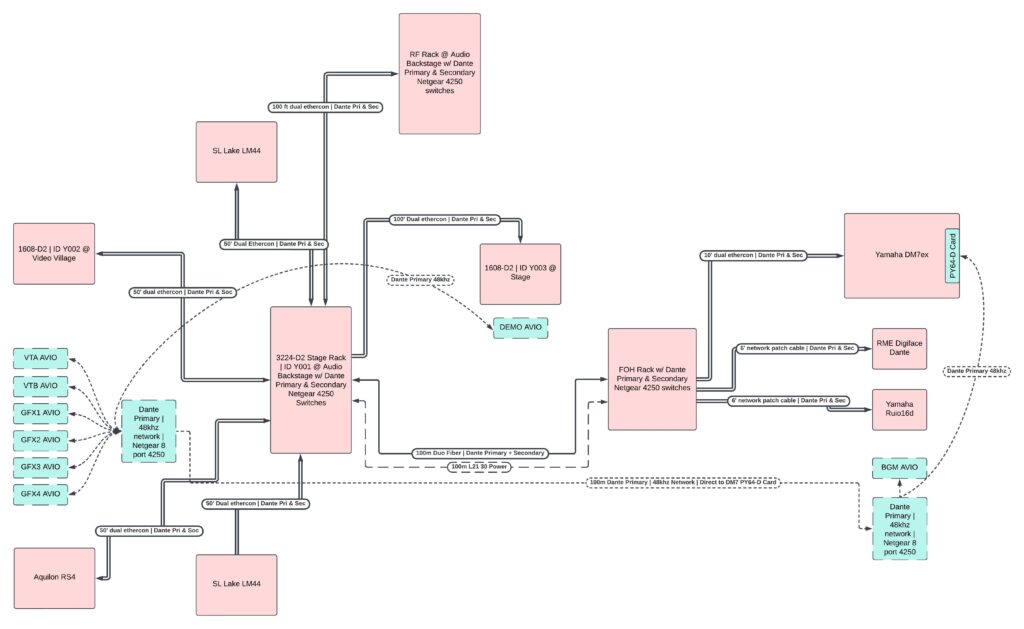
The two DM7-EXs were on the same Dante network, along with a Rio3224-D2 I/O rack, eight channels of Axient digital wireless microphones and playback. Every input in the system was either local I/O on each desk or from the devices on the Dante network.

“There are only two people on stage, but we have a lot of communication between techs and band members. We’re hitting 70 channels before we’re even talking about returns and everything else,” says Cliff.

Meanwhile, Russ Long at Yamaha has been available to help. “Russ will always get an answer for me right away. Working with Yamaha has been a great, great experience,” says Kenny. “Everyone at Yamaha has been great, working with us to help implement things better,” agrees Cliff. “Having that relationship, the trust between us and their support has enabled us to be more creative.”

two men standing next to an audio mixer laughing and a concert

As the club tour ended, both engineers described the experience of using the DM7-EX as completely positive. “The console has allowed us to maintain the highest possible standard in the smallest possible footprint. I never expected to have 120 channels available on something this small, which didn’t feel claustrophobic. The familiarity with the Yamaha ecosystem has allowed the transition between the RIVAGE PM to DM7 and back to be seamless,” says Cliff.
“The DM7-EX has everything I need. It’s the perfect solution to keep me comfortable in the Yamaha world, and fit the bill for these club shows in four different countries,” concludes Kenny.

Ready to connect with our B2B sales team, discuss system needs and Request a Quote?  Click here to get the conversation started: Request a Quote

Scottie Baldwin, FOH

Scottie Baldwin, FOH

From CL/QL roots to mixing icons like Lady Gaga, Prince, and JJ Lin

Summary Scottie Baldwin, FOH for Lady Gaga, Prince and JJ Lin, among others, honed his craft on Yamaha CL and QL consoles before stepping up to Rivage PM – delivering clarity, flexibility, and creative control for some of the biggest stadium productions worldwide.

man sitting on stage surrounded by fire

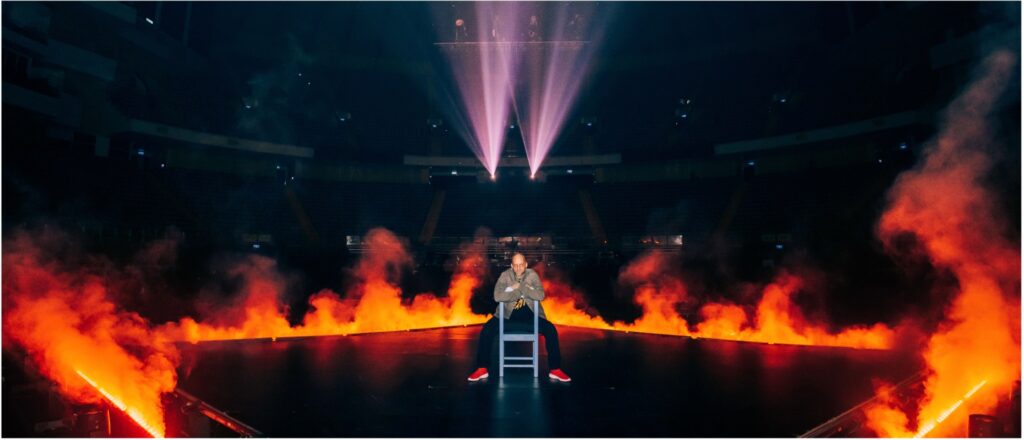
Scottie Baldwin is a world-renowned front-of-house engineer whose career spans global tours with artists including Prince, Lady Gaga, JJ Lin, and Jolin Tsai. Known for his precision, creativity, and deep musical sensitivity, Baldwin has built a reputation for turning complex live productions into immersive sonic experiences. His workflow merges technical precision with musical intuition, and his long relationship with Yamaha consoles – evolving from the CL and QL series into the Rivage PM platform – shows how foundational tools can shape a philosophy, and how innovation in talented hands can unlock new frontiers in sound design.​

Laying the Groundwork: CL and QL as Sonic Stepping Stones

Before Rivage PM, Baldwin’s approach was built around Yamaha’s CL and QL consoles. These systems, with their Dante networking, onboard Premium Rack effects, and intuitive layout, became the scaffolding for his sonic identity. Early in his career, he mixed an entire stadium tour on a CL console – a decision that raised eyebrows at the time. “I mixed a stadium tour on a CL, which everyone didn’t think was even possible,” he recalls.

Those consoles gave Baldwin the confidence to take on virtually any gig, even under tight budgets or demanding expectations. For one tour with The Revolution, he even downsized a CL show file to fit on a QL console, turning skeptics into believers when they heard the result. He laughs remembering stage crews asking where his console was, only to see it roll in a compact road case: “When you can get a big sound out of a tiny console, it’s even more impressive.”

CL and QL introduced Baldwin to Yamaha’s scene management, onboard processing, and workflow logic – tools that made him faster, more consistent, and ultimately more musical. He learned to work almost entirely in the box, saying he’s “never used outboard gear with Yamaha – maybe auto-tune, but that’s it.” That minimalist, efficient mindset became the foundation for everything that followed.

The Leap to Rivage: Expanding the Horizon 

When Baldwin transitioned to the Rivage PM5, it wasn’t just about more channels or processing – it was about expanding visual control and creative space. “I did it live without a net,” he recalls. “New country, new artist, new console – and Rivage made it possible to think in big terms. I said, ‘OK, I can do this.’”

A self-described visual thinker who values order and clarity, Baldwin immediately appreciated Rivage PM’s larger screen real estate and configurable interface. His layout typically places inputs and DCA groups on the left, scenes and dynamics in the center, and EQ and overview data on the right – giving him instant visibility across hundreds of parameters.

“You can feel comfortable moving over to Rivage the day of show,” he explains. “That’s how familiar it is – but it’s not the same. It’s just better in every way.” And when it comes to sonic impact, he adds, “When you want to move up that notch and really get into clarity, depth, focus – everything is wider, deeper – Rivage delivers.”

Technical Expansion: What Rivage Adds to the Equation

Rivage PM didn’t just expand Baldwin’s workflow – it fundamentally redefined it. Moving from the CL5’s 72 input channels to Rivage’s 288 opened up the ability to manage complex multi-input sources, broadcast feeds, and parallel effects chains simultaneously. The 72 mix buses and 36 matrix outputs give him the routing flexibility to design both stereo and immersive configurations without compromising DSP resources.

At the core of that performance is Yamaha’s TWINLANe network – a proprietary coax or fiber system capable of carrying up to 400 channels of 96 kHz audio with sub-millisecond latency. Baldwin describes the difference as “insanely small,” adding that it’s “powerful and reliable – you just have to bring good cables.” Combined with RPio racks, the platform provides modular I/O flexibility and even supports legacy MY cards. “I can still use MY cards I’ve had for 20 years,” he says. “That’s insane in today’s day and age.”

In-the-Box: Plugins That Perform 

One of Rivage PM’s biggest advantages for Baldwin is its fully integrated plugin suite. The Rupert Neve Designs Silk circuit in the RPio Stagebox, for example, has become a staple of his mix template. “The Rupert Neve Silk emulation is stunning,” he says. “The more red I dial up, the less EQ I have to do. It’s musical, not just technical.”

He also calls the Dynamic EQ 6 “the most versatile, most beautiful EQ” he’s used, explaining that it lets him respond to vocal intensity dynamically, keeping the tone consistent whether an artist is whispering or belting. With tools like these running on Rivage’s FPGA-based DSP at 96 kHz, Baldwin is able to mix fully in the box – even for stadium-scale productions – without latency or compromise.

audio mixer at a concert

Scottie Baldwin’s Rivage PM5, JJ Lin tour, Bird’s Nest Stadium, Beijing

Engineer and Artist Collaboration

Baldwin approaches each show as a collaboration between engineer and artist. “There’s no console before or since that has locked it in like Rivage – I feel completely at home,” he says. “I always feel like I’m standing in front of a musical instrument.”

For Baldwin, Rivage isn’t just a control surface – it’s a creative partner. “Yamaha puts the musical things forward,” he explains. “You only look at what you need to work on the most musical aspects of each mix.”

On one tour, he used the PM5 to create a 12-channel immersive mix in which reverb physically moved through the venue. “It sounded like one long reverb,” he recalls, “but it traveled from front to back.” It’s this kind of real-time artistry – using technical flexibility to deepen the audience’s connection – that defines Baldwin’s work.

Real-World Impact: Value for Production and Touring

Baldwin’s approach to Rivage PM also brings tangible value to production companies and touring operations. “I can go anywhere with a USB stick and make shows that sound spectacular,” he says. “You’re saving the tour, the church, the black box theater money on rental. That money should go to you – not the gear.”

That level of portability and consistency makes Rivage an asset across scales – from major stadium tours to regional festivals – proving that sound quality and efficiency can coexist at the highest level.

Familiarity Meets Mastery

Despite Rivage PM Series expanded architecture, Baldwin says the transition felt natural. While he initially experimented with Yamaha’s console file converter to migrate CL show files, he ultimately rebuilt everything from scratch to take advantage of stereo aux sends, expanded mix buses, and the console’s advanced dynamics engine. “It’s a mistake to say Rivage is just a CL on steroids,” he explains.

“It’s a whole different system, but it feels familiar – it’s part of the Yamaha family.”

That familiarity, combined with Rivage PM’s deeper toolset, allowed him to approach mixing with fresh creative intent rather than treating it as a technical upgrade.

A Platform for Sonic Excellence

Scottie Baldwin’s evolution from CL and QL to Rivage PM reflects Yamaha’s core philosophy: to design tools that inspire engineers to make music, not just mix sound.

Baldwin sums it up simply – Yamaha, he says, “listens carefully and responds musically.”

When he steps behind a Rivage, Baldwin doesn’t see a console – he feels an instrument. And with that, every show becomes an act of performance, precision, and sonic storytelling.

Ready to connect with our B2B sales team, discuss system needs and Request a Quote?  Click here to get the conversation started: Request a Quote

Mastering Live Sound on Rivage PM

Mastering Live Sound on Rivage PM

Stephen “Pato” Pattison, FOH Hozier

Summary Stephen “Pato” Pattison, FOH for Hozier, relies on Yamaha RIVAGE PM to deliver pristine mixes of the band’s rich soundscapes, backed by Yamaha’s global support and innovation.

https://youtu.be/Do-TYCJXVT4

In live sound engineering, few names command as much respect as Stephen “Pato” Pattison. Renowned for his meticulous ear and innovative approach, Pato is the sound engineer behind Hozier’s celebrated live performances. Handling the complexity of the band’s lush soundscapes requires not only talent but also the right tools. For Pato, those tools come in the form of Yamaha’s RIVAGE PM Series.

Adopting RIVAGE PM for Hozier FOH

With RIVAGE PM at the core of his setup, Pato expertly balances Hozier’s ensemble, which includes everything from Andrew Hozier-Byrne’s soulful vocals to strings, layered guitars, and dynamic percussion.

The RIVAGE PM Series’ flexibility, superior hybrid preamps, and onboard processing allow Pato to craft a pristine mix that remains true to the band’s sound, no matter how challenging the venue. His configuration also incorporates our Dante networking for added flexibility. He even utilizes a Yamaha MS101-4 on his doghouse as his shout-back speaker.

When asked about using external plug-ins or hardware to shape the sound, he laughs and says, “No, just one lonely desk—nothing else around it. No extra gear, no extra plug-ins, nothing to worry about. There’s nothing to go wrong because the console already has everything I need. Anything I’d get from external plug-ins or hardware is already built in.”

man with microphone

A Relationship Built on Communication

For Pato, the key to our success lies in its open communication and global support.

“The relationship with Yamaha is great because there are people you can talk to and people who will listen and offer ideas or ask questions back,” notes Pato, highlighting that our team doesn’t just respond – they engage, often following up with questions that open the door for collaborative problem-solving.

This level of service transcends time zones. “Doesn’t matter what time of day it is or what time zone I’m in, someone will get back to me, and that’s amazing,” Pato shares. Whether he’s in the US, at his home in the UK, or anywhere else in the world, Our team is still accessible, “offering ideas and solutions no matter the hour. They get pestered with ideas I sometimes have, and they go, ‘Oh, I never thought of that,’ and it might actually become a thing.”

man using audio mixer at a concert

Collaboration Sparks Innovation

Touring with Hozier – a band known for its rich, soulful sound – Pato handles various audio challenges, from balancing Hozier’s baritone to amplifying diverse instrumentation. The performances feature acoustic and electric guitars, piano, percussion, and strings, creating a layered sound that demands adaptability. This is where Yamaha’s open dialogue and gear excel.

Yamaha’s commitment to feedback has led to real improvements. Pato recalls suggesting a stereo overdrive feature for a keyboard, a key element in several of Hozier’s tracks. “I wanted to overdrive a keyboard, but the overdrive was just mono. Then, without me knowing, they implemented a stereo option,” he says, a testament to Yamaha’s willingness to listen and evolve.

“They definitely believe in the product and want it to be the best,” Pato emphasizes. For him, this partnership goes beyond mere functionality – it’s about shared values. “If you have an idea and they implement it, that’s where you want to be.”

Tools of the Trade: Custom Solutions for Unique Needs

Pato is discerning when it comes to equipment. With Hozier’s diverse instrumentation – including everything from carbon fiber cellos to traditional string instruments – achieving clarity is critical. When amplifying strings, Pato uses pickups but adjusts depending on the environment.

man using audio mixer at a concert

“The strings have their own pickups, but in extreme conditions like heat, we might use the carbon fiber cello,” he explains. Despite occasional tweaks, Pato aims for simplicity. “I just roll off some low end and a little around 4K, but nothing drastic.” His approach highlights Yamaha’s ability to elevate natural sound without over-complicating it – a crucial factor when managing the unique blend of orchestral and rock elements in Hozier’s music.

close up image of an audio mixer

Advice for the Next Generation

For aspiring engineers, Pato’s advice is simple: trust your ears. “Don’t mix with your eyes, use your ears,” he says, urging engineers to focus on sound over visual cues. “If it sounds great, it sounds great. No one in the audience cares how much you’ve adjusted the low, mid, or high. “Pato also highlights the importance of hearing the sound from the audience’s perspective. “Go where the audience is and check how it sounds there,” he advises. Finally, Pato urges young engineers to experiment. “Ask questions, turn the dials, play with the encoders—they’re there to be turned.”

Conclusion

For Pato, the partnership with Yamaha is more than a transactional relationship – it’s a collaboration where innovation is encouraged, and solutions are developed together. With a brand that listens, adapts, and continually pushes its products forward, Pato feels empowered to deliver the best possible sound every night. “They only want their product to be the best,” he says—and for an engineer at the top of his game, that’s exactly the kind of partner you need.

Ready to connect with our B2B sales team, discuss system needs and Request a Quote?  Click here to get the conversation started: Request a Quote

Mastering the Monitor Mix for Jelly Roll

Mastering the Monitor Mix for Jelly Roll

J. Summers on Touring, Teamwork and Rivage PM

Summary J. Summers, Monitor Engineer for Jelly Roll, uses Yamaha RIVAGE PM10 and surgical precision to deliver flawless IEM mixes for high-energy arena shows and guest-packed sets.

man taking a selfie with audio mixer in background

With decades of technical mastery and a passion for thriving in live sound, J. Summers ensures every Jelly Roll performance delivers unmatched energy, precision, and seamless connections between the Artist, Band, Guests and Audience. He is the harmony in every song.

Introduction

For J., stepping into the role of Monitor Engineer with Jelly Roll is the culmination of years spent mastering his technical skills, navigating unpredictable challenges, and embracing the ever-changing energy of live performances. Summers comes fully equipped with a whatever it takes, can-do attitude and is committed to delivering the highest-level of sonic nuances to his Artists IEM’s. “Nothing feels better than to hear my Artists smiling.”

Audio Setup and Team Dynamic

The heartbeat of Jelly Roll’s touring success lies in a finely tuned synergy between its Sound Image Crew members and all other departments. Summers describes their seamless teamwork: “Ron Gardner (TM/FOH) mixes the show and is our Captain of the ship, ensuring smooth navigation and Team collaboration. Brendan Hines, our System Designer, System Engineer, Crew Chief and Bus Ambassador, always looks ahead and keeps us informed, our Gibraltar. My role as Monitor Engineer is the setup of Mons World, mixing and making sure everything sounds perfect for Jelly and The 36 Hour Band.” This collaborative, team-first approach ensures every piece of the puzzle fits and keeps things running with clockwork precision.

This precision is put to the test nightly. Jelly Roll performs on a bespoke 3-tiered arena stage, 2 runway thrusts stretching deep left and right into the audience and the B-stage as well, Summers embraces the unique sonic challenges of managing the inputs, room, crowd, and stage. “The energy from the crowd and the intensity of Jelly Roll’s performance pushes us to find new ways to adapt. Having an artist 60 feet in front of the PA isn’t easy—but that’s part of what makes every night special. Dare I say, a more “intimate” evening in an arena. Brendan and I spend time walking Jelly’s RF mic around the stage every day. Keeping ahead of any sonic anomalies.”

Technical Setup and Flexibility with Guests

Sound Image’s meticulous preparation forms the backbone of every performance. At the core of this workflow is the RIVAGE PM10 mixing system. There are 3 mirror image rigs built and ready to gig when the call comes in. “We have done some serious cross-country travel and international flight hops to our A, B and C rigs. In NYC we had all 3 rigs running at once, with multiple gigs in various locations across town. We even had Police escorts in between venues to get us there on time. MSG, SNL, The Global Citizen’s Festival, Jimmy Fallon and then Jelly and I popped over for a Duet with Kelly Clarkson on her programme, all in a 3-day weekend. Full On!”

It’s that spontaneity of live performances—and the revolving door of guest appearances—that keeps Summers sharp. At Nashville’s Bridgestone Arena, a hometown finale for Jelly Roll, Summers and the team faced their biggest test yet. Originally set to end weeks earlier, the tour extended by popular demand. “We can’t end here in Jacksonville, we have to bring it home.” Jelly Roll declared, setting the stage for an unforgettable final night in Nashville.

Summers prepared accordingly: “We always have 2 Guest RF mics and 2 discrete mixes ready to go. For Bridgestone, we added more because we knew it was going to get wild.”

On show day the Guests came fast, “We had Alexandra Kay, Ernest, Struggle Jennings, Skylar Grey, Yelawolf and Snoop Dogg. Keith Urban has his own dedicated inputs in our rig as we’ve seen him along with his Tech Chris Miller so much this year. Shinedown’s Zach Meyers needed an acoustic patched in during the show. No worries. This is why we always need to have a clean and clearly designed stage patch system with plenty of options open. We love options!”

Summers thrives in what he calls “organized chaos, handled with surgical precision.” Thanks to Yamaha’s carefully designed matrix system, Summers ensures flawless execution. “Jelly’s got a main and spare IEM, then there are feeds into the Band spares. Guest mixes are always their own discrete frequencies. Everything’s designed so we can adjust on the fly without blinking.” RF Tech Bill Black plays a crucial role, always one step ahead. “Bill’s got our RF world sorted, he doesn’t miss a beat.”

Summers summarizes it simply: “On this show, there’s no deer-in-the-headlights moment. It is a calm and cool-go, go, go gig. Three extra IEM packs? Gotcha. Darbuka input? Done. More RF mics? Ready. It’s about being prepared for anything and trusting the Team to execute at lightning speed.”

The Bridgestone Arena show proved not only Summers’ technical expertise but also his adaptability—ensuring the on-stage IEM sound matched the moment, leaving the Artist, Guests and Audience with an unforgettable experience.

Touring Experiences and Sonic Philosophy

Summers’ career has taken him across the globe and into a vast array of unique venues. Each space, no matter how unconventional, challenges his understanding of sound and reinforces his deep respect for its power.

“I’ve been to some beautiful places, with Sting we performed in Roman amphitheaters and ancient temples around the world” Summers reflects. “With Sigur Rós, we did a recording in the caves outside of Paris, using the natural reverb of the mined chambers. You can’t forget those moments—they’re alive with sound.”

These extraordinary experiences have shaped Summers’ approach to live sound. For him, it’s about more than technical perfection—”it’s an organic connection with the environment and my Artists that makes the music come alive and immerses the audience in waves of sonic emotions.”

Passion and the Right Tools

Summers credits Yamaha for providing the reliability he needs to perform at the highest-level night after night. “Yamaha gives me the confidence to ensure my artists are happy on stage, which translates to a great performance for them and the audience.”

Summary

Summers’ journey as an audio engineer is one of passion, adaptability, and technical excellence. From managing the IEM’s for Jelly Roll’s high-energy shows to crafting soundscapes in historic, otherworldly venues, Summers combines preparation with artistry to bring music to life. His ability to balance technical precision, team coordination, and an unshakeable understanding of the Artist’s vision ensures every performance resonates deeply with audiences and the Artist.

For Summers, live sound isn’t just a science—it’s an art form, one that bridges the gap between artist and audience, leaving an impact that lingers long after the final note fades.

Ready to connect with our B2B sales team, discuss system needs and Request a Quote?  Click here to get the conversation started: Request a Quote

Live Sound, Simplified

Live Sound, Simplified

Gene Kim’s FOH Journey with our DM7 Compact

Summary Gene Kim, FOH for Johnnyswim, Phil Wickham & Pat Barrett, relies on Yamaha DM7 Compact for pristine sound, portability, and powerful processing across diverse venues.

https://youtu.be/gqIHWOslMHg

Gene Kim, a highly respected front-of-house (FOH) engineer known for his work with Johnnyswim, Phil Wickham and many others, has made our DM7 Compact digital mixing console his go-to for live sound. Now on tour with Pat Barrett, Gene relies on the DM7 Compact to deliver pristine sound and seamless performance in churches, clubs, and iconic venues like Nashville’s Ryman Auditorium.

man using an audio mixer

Features and Portability

Gene first encountered the DM7 Compact during a Trio acoustic show in LA. “For a compact console, it really helps a front-of-house engineer because the footprint is small, but it’s packed with output capabilities and local I/O,” he explained. The console’s portability, fitting easily into a Pelican case, proved invaluable for Gene, who frequently handles fly dates and mobile setups. “It just makes things really easy.” One standout feature for Gene is the DM7 Compact’s ability to simultaneously handle both FOH and MON duties effortlessly. “It’s really easy to get monitors up and going quickly,” he noted, a key advantage on fly dates where he often manages both roles.

audio mixer

The DM7 Compact’s intuitive design also allowed Gene to handle complex setups efficiently. “There are so many user-defined keys, making it easy to manage layers. I haven’t needed a ton of faders,” he shared. This efficient layout has been especially beneficial for larger band shows with choirs. “The GUI is clear, it’s bright, and the touchscreen is really responsive.”

“For a compact console, it really helps a front-of-house engineer because the footprint is small, but it’s packed with output capabilities and local I/O.”

Gene also emphasized an often-overlooked feature of Yamaha consoles: dual power supplies. “It’s not something you immediately think about, but when engineers see two power supplies, it gives peace of mind. If one goes down, the rig keeps running.”

audio mixer

Processing Power and Sound Quality

Gene was particularly impressed by the DM7 Compact’s onboard processing capabilities, including the reverbs, multiband compressors, and the Rupert Neve Designs’ Portico processing tools. “The onboard reverbs, the multiband, the FET limiter, the U76, and I love all the Portico compressors,” he stated. “As far as sound goes, it’s just really flexible and transparent. I really enjoy that because nowadays with music, you’re often asked to add things. You can’t make something clear and clean on a mic pre with a ton of color. “This transparency allows Gene to begin with a clean slate and have the ability to shape the music to fit the artist and venue. “The console lets you start from a good, clean place, which is exactly what I need.“

Flexibility Across Diverse Venues

On Johnnyswim’s tour, Gene mixed at venues of all sizes. In Nashville, shows ranged from the intimate Bluebird Cafe to the renowned 3rd & Lindsley club and the legendary Ryman Auditorium. “We did the Bluebird, a club show, and then the Ryman—same console for everything,” Gene recalled. “The house guys chuckled when I set it next to the Rivage [the Ryman’s FOH console is a RIVAGE PM5]. They asked, ‘Are you sure?’ I said, yeah, and even mixed the openers. It was a lot of inputs, but I did it. It was great!”

man pressing screen on audio mixer

Gene Kim’s experience with the Yamaha DM7 Compact highlights its versatility and adaptability. Whether handling FOH or monitors, Gene consistently delivers high-quality sound in diverse venues, proving the DM7 Compact’s reliability. From intimate church settings to iconic venues like the Ryman, the DM7 Compact empowers engineers to create unforgettable live sound experiences.

Ready to connect with our B2B sales team, discuss system needs and Request a Quote?  Click here to get the conversation started: Request a Quote

Legendary FOH Brad Divens

Legendary FOH Brad Divens

Listen and shape the sound with Rivage PM Series

Summary Brad Divens, FOH for Enrique Iglesias, Linkin Park, Garbage & more, relies on Yamaha RIVAGE PM for warm, intuitive mixing without outboard gear.

man smiling in front of an audio mixer

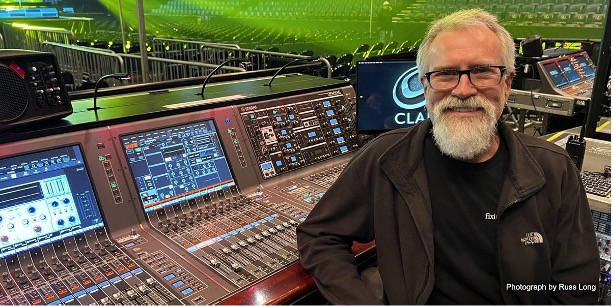
Brad Divens, renowned for his work as a Front of House (FOH) engineer, has forged a legendary career collaborating with major artists such as Enrique Iglesias, Linkin Park, Garbage, Bob Seger and the Silver Bullet Band and Jane’s Addiction, among others. Recently, Russ Long from Yamaha Pro Audio caught up with Brad at Bridgestone Arena in Nashville to talk during a sound check.

Early Career and Transition to Digital Systems

Divens’ journey began with analogue mixers, and over time, he transitioned to various digital systems. His significant shift occurred upon the recommendation of Luke Bryan’s FOH engineer Frank Sgambellone, who convinced him to try the Yamaha RIVAGE PM series. “Frank kept telling me, ‘Look Brad, just plug an SM58 into it and listen to your voice. That’s all you need to do, and you will want to check it out.’ We had a long conversation about it because he’s one of my peers and I trust his opinion when it comes to mixing,” Divens recalls.

Following a demo with Yamaha in Nashville, Divens immediately appreciated the system’s capabilities. A major benefit of RIVAGE PM was the elimination of the outboard racks he previously relied on. “When using other digital desks, I immediately felt that I needed to add something because they are a little on the sterile side. But when I tried the RIVAGE PM system, I found there was nothing digital sounding about it,” he explains.

“Once I was only using the RIVAGE PM system, I was like ‘This is it. This is beautiful. It’s exactly what I knew I could do with it,” he says. “I just feel less is more. All I need is the RIVAGE PM, a USB stick with my show file and everything is ready. It justified the decision, and I knew I’d made the right choice.”

man smiling in front of an audio mixer with a crowd behind him

Technical Approaches and Favorite Tools

Divens is renowned for his use of the Yamaha RIVAGE console, particularly the P2MB Master Buss Processor plug-in. He shares, “I think my favorite plug-in on the RIVAGE I think would have to be the Master bus processor. I can put it on groups; I can choose blue or red silk depending on what tone I want for the guitar groups.” This tool allows him to apply nuanced compression and tonal adjustments, providing flexibility and enhancing the final sound quality.

In addition to the Mix Bus Processor, Divens employs several other technical approaches to achieve his signature sound:

– Dynamic EQ and Multiband Compression: To manage varying frequency content and dynamics, Divens uses dynamic EQ (DynamicEQ4) and multiband compression (MBC4) to keep the mix balanced and clear.

– Parallel Compression: This technique is used to add power and presence to vocals and drums without overwhelming the mix. By blending a heavily compressed signal with the dry signal, he maintains natural dynamics while enhancing impact.

– Reverb and Delay Effects: Divens uses reverb and delay to create space and depth in the mix. These effects help to position instruments and vocals within the stereo field, giving the audience a more immersive listening experience.

Creative Process and Challenges

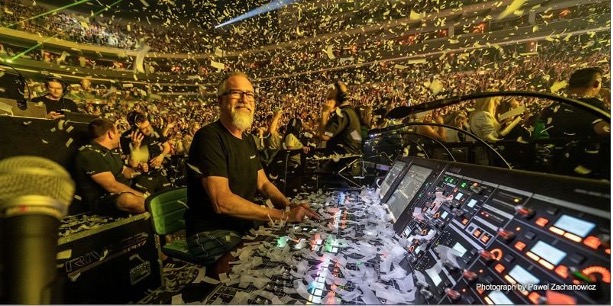
Divens thrives on the creative process of mixing live sound, noting, “The biggest joy I get out of mixing I would have to say is probably the creative process of taking what the band is giving me and putting the music together and then watching the crowd react to something that I’ve done.” However, managing crowd noise remains a significant challenge. He explains, “The biggest challenge for me is probably the crowd noise. I mix at around 98db, 99 tops, maybe peak at a hundred, and the crowd can be at 105 sometimes, and there’s no way I’m competing with the audience. It’s a delicate balance.”

confetti flying at a concert

Favorite Features and Technical Approaches

Divens highlights the hybrid mic preamps as a standout feature. “The first and foremost feature I really love is the hybrid mic preamps, because to me the front end of a console is everything,” he states. He also praises the onboard Rupert Neve Designs processing, including the Portico II Master Buss Processor, the Portico EQ and compressor, and familiar studio tools like the Eventide H3000 and Bricasti reverb. “It’s things that you know and love from the studio. It’s that familiar sound.”

Divens finds the system comfortable to mix on. “The more you get used to something the easier it becomes,” he adds. “I found that it’s a very comfortable system to mix on and get the show to where things just sound good. I never need to look outside of that.”

Advice for Aspiring Engineers

For those new to the field, Divens emphasizes the importance of listening to the music over relying solely on technical tools. “The best advice I can give to somebody starting out that wants to mix and do what I do is don’t forget that you have to listen to the music,” he advises. By focusing on selecting the right microphone, placing it correctly, and using a good mic preamp, aspiring engineers can significantly improve their results.

Personal Routine and Conclusion

After a show, Divens maintains a simple and healthy routine. “I really stopped eating after-show food. It’s probably a handful of almonds and then I go to bed,” he shares. Divens emphasizes the importance of maintaining a healthy level of wellness amidst the demands of his profession, recognizing that proper nutrition and rest contribute to his ability to consistently deliver exceptional performances.

man in front of an audio mixer in darkness

Conclusion

After hanging up his bass guitar in the early days from his time in bands like Kix and Wrathchild America, Brad Divens’ experience as a FOH engineer highlights the blend of creativity, technical skill, and adaptability required in live sound engineering. His utilization of the Yamaha RIVAGE PM system along with his advanced mixing techniques, combined with his profound understanding of music, has enabled him to deliver remarkable and inspiring audio experiences to audiences worldwide. Divens’ dedication and innovative spirit not only continue to inspire, but also to pave the way for the next generation of sound engineers.

Ready to connect with our B2B sales team, discuss system needs and Request a Quote?  Click here to get the conversation started: Request a Quote

Legendary FOH Michael “Coach” Conner

Legendary FOH Michael “Coach” Conner

Capturing the Live Essence of Steely Dan and Paul Simon

Summary Michael “Coach” Conner, FOH for Steely Dan and Paul Simon, discusses Yamaha RIVAGE PM and using its advanced tools to recreate studio-perfect sound for live audiences.

man with an audio mixer

While many FOH engineers refine their mix by playing back Steely Dan’s sounds, Michael “Coach” Conner makes it a reality nightly on tour with the band. Captivating audiences with unparalleled sonic fidelity, he achieves this through meticulous preparation and innovative use of both analog and digital tools. Conner seamlessly translates complex recordings into live experiences that rival the originals, ensuring every performance sounds as close to the studio recording as possible. With a decades-long career working with icons like Donald Fagen, Steely Dan, and Paul Simon, he has earned acclaim from both artists and fans alike.

On reproducing complex studio arrangements

Recreating Steely Dan’s trademark studio sound, renowned for its intricate arrangements and meticulous production standards, live on stage presents a daunting challenge for Conner. Night after night, in various arena-sized venues, he faces the task of translating this complex sound into a live experience.

Through rehearsals, sound checks, and collaborative feedback from the band, Conner leverages both analog and digital equipment, including notable tools ranging from the Bricasti M7 reverb and Summit Audio’s TLA-100A and DCL-200 compressors to Yamaha’s DaNSe, Bricasti Y7 and OpenDeck plug-ins to achieve a level of sonic and tonal fidelity that rivals the well-known studio recordings (Coach recorded 2021’s live Donald Fagen and Steely Dan albums). This dedication garners acclaim from both the band and audiences, who appreciate the seamless transition from studio to stage.

Coach was a quick adapter to Genius.lab having created a macro to switch from external to internal processing allowing him to recover from 3rd party hardware issues seamlessly and instantly.

Microphone Mastery

Another way Coach achieves the sonic perfection of Steely Dan live is through meticulous microphone selection and placement and the precise use of Yamaha’s DaNSe Noise Suppression plug-in. “We use around 55 microphones, with the rest being direct inputs. I have 25-30 instances of DaNSe. Anywhere I have noise floor off an amplifier or a vocal mic there’s DaNSe in play. It really does change everything. It’s probably my favorite thing on the desk. That’s my game-changer.”

different dials on a mixer

“Noise reduction is applied either on the group or individual input, but it’s done very lightly. There’s an art to using it-you can’t be too aggressive, or you’ll create a mess.” Conner continues, “For example, I apply noise reduction to the horn section by routing them to group processing. Again, it’s a delicate balance. Being too aggressive can compromise tonal quality. Once it’s dialed in, I can set it and forget it. Constantly relearning and adjusting thresholds nightly isn’t practical—it introduces too much margin for error.”

man with an audio mixer

Full Sound Checks

Coach and the band allocate time for full sound checks each day. “We do a full sound check each day, usually having at least an hour to do so. Sometimes, we even run through the entire set during sound check for various reasons, such as substituting musicians. This means we often end up performing the entire set twice. It’s pretty handy as it ensures we have enough time to prepare and perfect the show.”

These sound checks are clearly a delight for Coach. During this interview by Russ Long from Yamaha Pro Audio, they shared multiple laughs and insider banter, all while Coach expertly dialed in the sound of Steely Dan. It’s evident that Coach is a master at work, and he embodies the joy that a career in audio engineering can bring. He even jokes about the necessity of becoming an expert at finding laundromats if you’re a touring live engineer… but that’s another story.

Virtual Sound Checks: A Blessing and a Curse

Michael “Coach” Conner also carves out time during his day to regularly conduct virtual sound check, leveraging the on-board recording technology of Rivage PM. This feature allows him to fine-tune the mix and analyze nuances, ensuring optimal sound quality during the live performance.

“Virtual sound check has become indispensable for me now, but it’s interesting to reflect on how I achieved results before. Back then, we relied solely on live shows, blissfully unaware of any imperfections. The combination of the environment and the adrenaline masked any issues.”

“But with virtual sound check, it’s all laid bare. I put on my headphones or in-ears, start soloing up, and realize what I truly heard the previous night—sometimes strange or unexpected. It’s both a blessing and a curse to have an archive of past performances. While it adds work and time to my day, it ensures continuous improvement. Before, it was like whatever happened the other day vanished into space. Now, let’s dive into today and see what happens.”

Even at Coach’s level of experience, he muses, “So much satisfaction… yet it’s never 100% correct,” highlighting the ever-evolving nature of the work and his passion and drive to constantly improve the sonic experience for both the artist and the audience.

Engineering for Paul Simon

Despite his self-deprecating humor and humble approach, Coach’s lauded and sought-after sonic ability to recreate complex in-studio mixes benefitted from demanding engineering challenges in recreating the sounds of Paul Simon. “Paul Simon’s music spans a wide range of styles and incorporates a variety of instruments and vocal arrangements. Achieving a cohesive and balanced sound in a live setting requires versatility and a deep understanding of the music.”

“Paul, like Donald (Fagen), derives immense satisfaction from recreating complex studio arrangements in a live environment. The challenge is formidable—what was hard enough to achieve in the studio becomes even more intricate when performed live. Yet, they persist, striving to capture that magic for audiences. It’s a testament to their dedication and the artistry behind their music.”

Conner customized his approach to suit the unique requirements of Simon’s diverse catalog. This included tailored microphone setups for different instruments and vocalists, as well as specific EQ settings for various songs.

man with an audio mixer

During live performances, Conner constantly monitors and adjusts the mix to respond to the dynamics of the music and the acoustics of the venue. His ability to make precise, real-time adjustments ensure that the sound remained clear and balanced.

Working closely with Paul Simon and his band, Conner’s goal is that that the live sound reflects the artist’s vision. This collaborative approach extends to rehearsals and sound checks, where he fine-tuned the mix based on feedback from the musicians.

The Coach Approach

Nicknamed “Coach” for his leadership and problem-solving abilities, Conner excels under pressure, quickly addressing any issues that arise during live performances. His passion for music and sound drives him to continually refine his skills and stay updated on the latest audio technology.

In sharing his wisdom with aspiring audio engineers, Conner emphasizes, “If you’re passionate about audio, go straight to the people who do what you want to do. It’s easier than you think to get a job – you may not land the one you want right away, but you’ll get a tap on the shoulder because you’ve positioned yourself with the right people to do what you love.”

Michael “Coach” Conner’s career exemplifies the art and science of FOH engineering. His ability to enhance the live music experience through meticulous preparation, real-time adaptation, and collaboration has set a high standard in the industry. As a mentor and leader, his insights and practical advice continue to inspire aspiring engineers, cementing his legacy as a true luminary in live sound engineering.

Ready to connect with our B2B sales team, discuss system needs and Request a Quote?  Click here to get the conversation started: Request a Quote

World Class Solution at University of Birmingham

World Class Solution at University of Birmingham

“DM7 was a no-brainer”

Summary University of Birmingham adds Yamaha DM7 to its world-class music department, enhancing performance, study, and event capabilities.

audio mixer

THE CHALLENGE

Opened 12 years ago, the Bramall Music Building finally completed the 1900 vision of the university’s first Chancellor, Joseph Chamberlain. From the outside, it is a building which visitors would think has been there all the time. Funded by the Bramall Foundation, the £16 million facility includes state-of-the-art teaching, research, performance and rehearsal facilities, with a 450-seat auditorium at its heart.

Designed to be the most flexible performance space at a UK university, the auditorium is suitable for all types of music, from solo voice to a full symphony orchestra, as well as being the home for contemporary audio pioneers Birmingham Electroacoustic Sound Theatre (BEAST). When not being used for music, it is also a high-profile location for prestigious lectures, presentations, conferences and more.

woman and man on stage

“As well as a teaching and performance facility, it is also used for internal and external commercial activity,” says Richard Mitton, the university’s Live Events Technical Manager. “The University is big enough for us to easily facilitate large events – we have our own hotel on site and also the Great Hall, which can hold nearly a thousand people.”

With the University on an ambitious program of expansion, a recent major upgrade to the Bramall Building’s infrastructure has been designed both to improve its teaching facilities and to sell the venue as a world class resource.

“The previous audio mixer was at the end of its life and massively limiting in terms of what we needed from channel counts and so on,” says Richard. “We started by sketching out what we wanted the upgraded system to do. The flexibility and power to easily handle a wide variety of events was vital, as well as the reliability to be in constant use and familiarity of the architecture and control for visiting engineers.”

music stage

THE SOLUTION

The chosen solution was a Yamaha DM7 digital mixing console, with a Dante network installed throughout the building. The DM7 system, supplied by Redditch-based 22live, includes the DM7 Control expansion controller, which allows features like user defined controls, scene memory and monitor control to be accessed even more quickly and conveniently.

“The capacity of the DM7 made it perfect for us,” says Richard. A lot of what we do is very mix bus heavy, with modern corporate events often requiring multiple streams, recordings and video feeds, as well as various monitor mixes and backstage/green room outputs. Features like 64 channels of Dan Dugan auto mixing are incredibly useful – we frequently have conferences that require extremely high numbers of radio mics, as well as multiple lecterns and large panel discussions. The split mode is really useful as well.”

building with green lawn

One of the key purposes of the upgrade has been to build a core infrastructure which technical staff are not having to reconfigure all the time. Here the DM7’s Theatre Mode software is very useful for the university’s many regular presenters. Settings for each one can be stored in the software’s actor library, then Richard’s team can simply recall the event type and the presenters to achieve optimum settings in seconds.

The familiarity of the DM7’s user interface and architecture mean that visiting engineers also don’t waste any time in getting to work.

“The really difficult trick Yamaha has pulled off is to maintain the core workflow across the years. One of the first Yamaha mixers I used was an 02R. But you can walk up to the latest model and within about 10 minutes you’re up to speed,” says Richard. “There is that consistency, everybody knows them. The build quality and reliability as well – it just feels like a step up from all the alternatives.”

Another major benefit of the DM7 is that it allows events to be hosted which weren’t possible before, as Richard explains.

“We had a recent concert that formed part of our Crosscurrents new music festival, which was being recorded for BBC Radio Three. Both direct and ambient microphone feeds from a string quartet on stage were routed to the console, then straight back out for real time processing as part of the performance. From there the feeds were routed back on separate channels to the DM7, for mixing to the main house PA, several effects loudspeakers and on stage monitoring.

A full channel split was then sent to the BBC for broadcast. The DM7 enabled us to quickly and easily route what was effectively three different versions of every input in, out, back in and out again.”

He continues, “The BBC likes the acoustics of the space and, where in the past an outside broadcast truck has been needed, engineers now just bring a small rack of interfaces and hook up to our infrastructure via Dante. It’s a huge saving in cost and time. There is also a permanent four-way PTZ camera system in the hall, so we can sell prospective clients the ability to broadcast, stream and do multi-track recordings of a live event, and do a full multi-camera shoot as well. Everything is all in one place.

“For all of these reasons, choosing the DM7 was a no-brainer. It ticks all the boxes with us. Without it we simply couldn’t support a lot of the concerts or conferences and events we host, which going forward there will be more and more of.

“There’s nothing that’s likely to come to this venue that the DM7 can’t do. It makes us ready for anything.”

Ready to connect with our B2B sales team, discuss system needs and Request a Quote?  Click here to get the conversation started: Request a Quote

LCBC Church transitions from CL5 to DM7
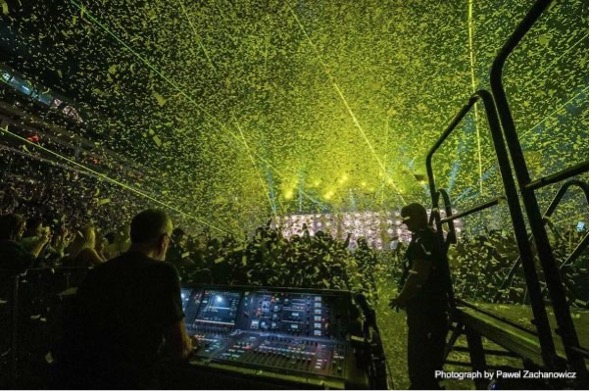
LCBC Church transitions from CL5 to DM7
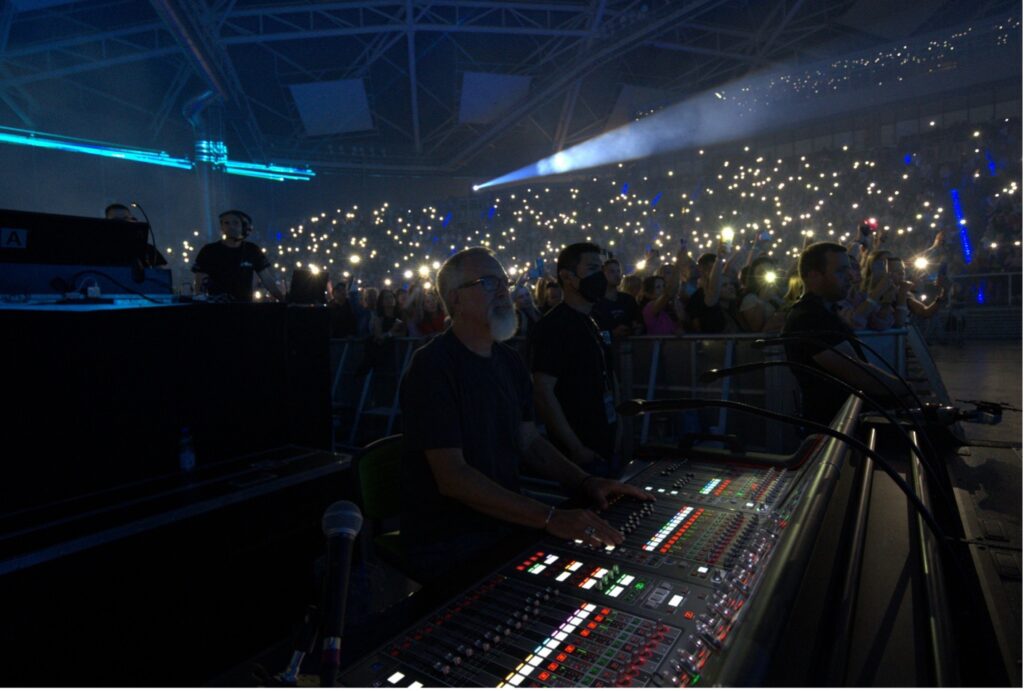
DM7 Road Test at LCBC Church

Summary LCBC Church’s switch from Yamaha CL5 to DM7 delivered intuitive design, dual screens, 96k audio, and easy usability for worship and broadcast.
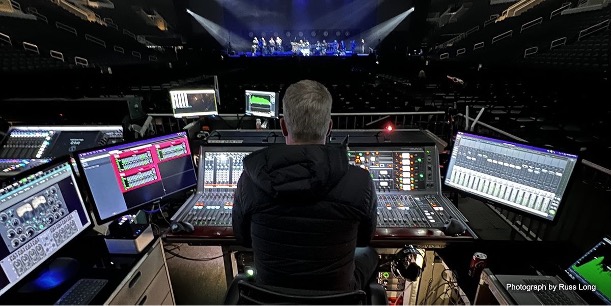
https://youtu.be/ZrgFSIJ4lmQ

“The first thing right off the bat that I really like about this console is the user interface and just the overall workflow. Everything that I need is right there on the home screen in a way that makes sense.”

logo for tech certified

“…it feels like audio engineers designed it for audio engineers …” – Brian Tru, Broadcast Audio Coordinator at LCBC Church, Manheim, PA

The Yamaha DM7 Digital Mixing Console has received the Church Production Road Tested Certification.
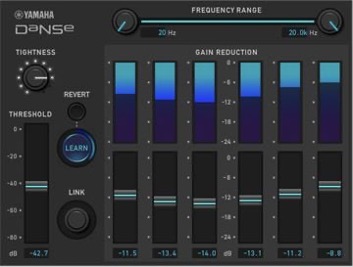
As part of Church Production’s Road Test User Experience, Tru and his team put the DM7 through its paces at LCBC Church’s Manheim, Pennsylvania broadcast campus and during the church’s summer youth camp. Tru serves as broadcast audio coordinator for LCBC, which operates 24 campuses across Pennsylvania.

He immediately noticed the benefits of the higher sample rate.
“I really like that it feels like audio engineers designed it for audio engineers—it just makes sense and is very intuitive, even the first time you sit down,” Tru says.

Coming from a CL5 environment, the expanded outputs stood out.
“Having more onboard outputs let us create several monitor mixes right on the console. On the CL5, you needed a RIO for those analog outputs. With the DM7, we had everything natively, so our musicians and singers could choose onboard mixes instead of personal monitor systems.”

The jump to 96k also impressed him.
“One of the things I loved about moving to the DM7 is mixing at 96k instead of 48k on the CL5. My music director told me just the other day that the mix sounds much cleaner—and I can only attribute that to what’s happening inside the DM7.”

Tru’s biggest concern was volunteer usability at the broadcast campus. Those worries quickly disappeared.

“All the volunteers love the console,” he says. “They love having two screens instead of one, and they really appreciate the ability to put all the user-defined keys right on the touchscreen.”

Ready to connect with our B2B sales team, discuss system needs and Request a Quote?  Click here to get the conversation started: Request a Quote

David Loy, FOH, and Yamaha RIVAGE PM3

David Loy, FOH, and Yamaha RIVAGE PM3

Engineering Unforgettable Sonic Spaces for Kane Brown

Summary FOH engineer David Loy powers Kane Brown’s genre-blending shows with Yamaha RIVAGE PM3, delivering bold, immersive sound night after night.

man next to audio mixer


Kane Brown is redefining modern country – blending genres, breaking boundaries, captivating audiences. At the core of his live shows is FOH engineer David Loy, whose instincts and skill bring Kane’s bold sound to life. Loy honed his craft with Sturgill Simpson, Blackbear and others. Today, his innovation discipline, and creativity deliver immersive audio night after night, arena after arena.

Chasing Something New

In early 2023, David Loy made a bold move. After years of working on other platforms, he made the decision to up his mixing skills. “I chose to go with Yamaha in early 2023. I was trying to find something new. I was trying to challenge myself,” he says. Loy had heard great things from peers: “A lot of my friends had said, ‘You’re gonna love the sound, you’re gonna love the front end, but the software itself is also incredibly stable and really, really powerful under the hood.’”

So, he called Yamaha. Not for a demo or a brochure – but to get his hands on the gear. “I asked if I could come by and program, and if I could learn what the software is like, what the onboard DSP is like.” What followed was five days of full-band rehearsals where he built a show file from scratch. “We said, ‘Okay, hey, let’s sit down. Let’s play the hits.’ I was really, really happy with the product at the end of the week. It made me realize, ‘Okay, you know what? This actually has some legs. I’m gonna take this for the tour and see how it goes.’”

audio mixers at a concert

Designed for the Road

Loy chose the RIVAGE PM3 surface – a decision driven by both sonic goals and practical logistics. “I love a small footprint. I love having a single screen. I love having a space for PA control right on the surface,” he says. With a compact setup that fits on a single PMC pallet, he can scale up or down with ease. “We can do shows like this in arenas, we can do shows in stadiums, we can do shows anywhere we need to and not eat up a ton of space. At the end of the day, your Production Manager appreciates that, and your Freight Logistics appreciate that.”

That flexibility came into play at Nashville’s Bridgestone Arena, where once again, the show ran flawlessly. “I’m watching the stage and watching what’s going on and trying to mix with my head up,” he says. “The PM3 lets me stay connected to the performance.”

audio mixer at a music venue

Taming the Thrust

This tour introduced a particularly tricky stage design: a horseshoe-shaped thrust that wraps the stage around the audience. It makes for intimate performances – but introduces serious sonic challenges. “Those conversations started months in advance,” Loy recalls. “We really wanted to figure out how to get the vocal, which is the most important source of the show, to sound clean and clear without a ton of PSE [primary source enhancer] products on it or having to ring it out so aggressively that there’s no HF left.”

The solution? A strategic rethinking of the PA. “We pushed the PA downstage 16 feet and arced it 10 degrees.” That subtle repositioning dramatically reduced feedback and enhanced clarity for both artist and audience. At Bridgestone Arena, it paid off: “The hottest spots on the thrust are the sides, but once Kane gets in the middle, it’s pretty clean and great.” A center hang of Clair CO-8s was added to reinforce the Clair CF28s surrounding the pit to ensure every fan got the full experience, no matter where they stood.

What really excites Loy is that it works just as well for others. “Every opener, despite console choice and processing technique, has had success on our thrust. That means the math is applying to everyone, not just us. I don’t want people to come out on our tour and have a bad time.”

music stage

In-the-Box to Beyond

Loy’s mix begins in-the-box, a conscious decision to push RIVAGE PM to its limits. “That was important to me. I really wanted to see what it could do. And again, I was really impressed with the way that it sounded.” As the tour evolved, he incorporated select outboard gear but kept flexibility top of mind.

“I’m still summing outboard, still doing inserts outboard, but it’s very easily switched with a button press,” he says. That resilience was tested in Mexico, when damaged gear forced a last-minute shift back to in-the-box mixing. “I was able to bypass all of that and continue on with the show without any issues, and everyone remained happy.”

The Vocal Chain

For Kane Brown’s vocal, Loy has dialed in a finely tuned signal path: Shure Axient transmitter with a DPA 4018VL capsule, hitting the RPio with Transformer Emulation enabled and Blue Silk dialed in, then into a Rupert Neve Designs Shelford Channel. “I use a DynamicEQ as my PSE, tailored to Kane’s voice for clarity,” he says. Every component in that chain is carefully chosen to deliver a clean, punchy vocal that cuts through dense arrangements and diverse venues.

Sonic Signatures and recording

Some venues carry a sonic signature all their own. “Using the Silk processing allowed me to adapt the mix to the natural acoustics. A lot of problems can be solved with Silk before you even touch EQ or compression.” Over time, Silk has become one of his go-to tools, offering a subtle but powerful way to shape the mix. “I’ve really tried to dive into the Silk aspect, changing it per room and input,” he says. “It lets you shape things musically without over-processing them.”

Capturing each show is just as important to Loy as mixing it in the moment. “We’re recording 110 channels straight into Logic, archiving everything for future use,” he notes. The RIVAGE PM’s MADI integration makes this process seamless, allowing the team to easily access recordings for social content, post-show reviews, or even remixes. “It’s all right there,” Loy adds.

Advice from the Desk

For those looking to follow a similar path, Loy stresses the importance of listening – with intention and humility. “Always remain a listener and a student,” he says. “Listen to the source, the people above you, and what’s going on in the room. Do your homework, be observant, and stay one step ahead.”

And perhaps most importantly, Loy believes that a great mix begins with understanding the artist. “You’ve got to know what they’re trying to say. What are they trying to share with the audience? That’s your job – to translate that.”

Conclusion

For Loy, live mixing is a powerful form of storytelling. With meticulous preparation and a relentless drive to evolve, he uses the Yamaha RIVAGE PM system to create rich, resonant soundscapes. “Every time I find something new or discover a new way of doing things, it inspires me to dive deeper into the creative side,” he shares. “When I find a reverb effect, plug-in, or preset I like, it excites me… I love trying new things because it changes the entire sound, and that excitement carries over to the show. It’s incredibly enjoyable, and I think it inspires others to explore the surface more too.” For Loy, each performance is not just an opportunity to mix – it’s a chance to ignite creativity, break through limits, and forge a deeper connection with the audience through the power of sound.

crowd at a concert

Ready to connect with our B2B sales team, discuss system needs and Request a Quote?  Click here to get the conversation started: Request a Quote