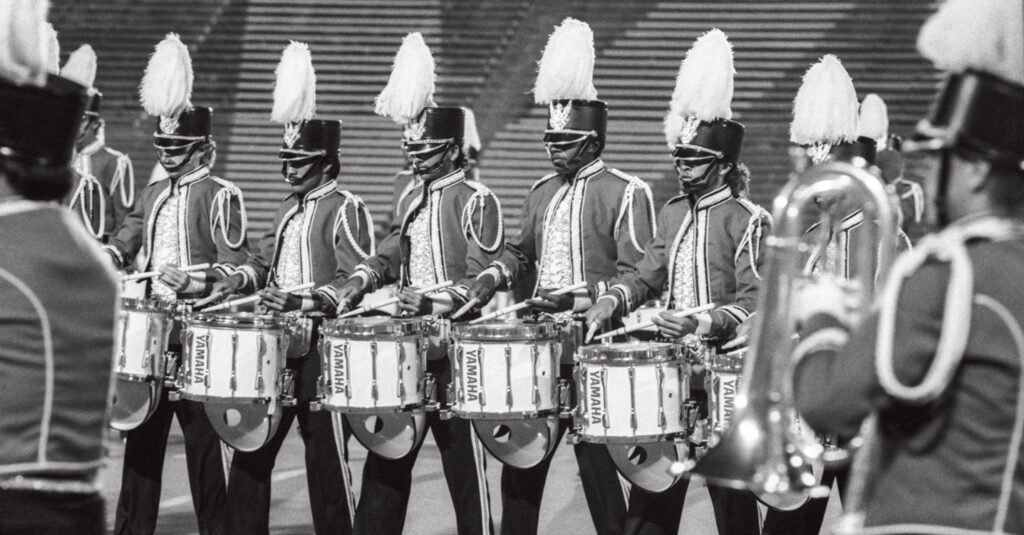
7 Things I Learned from a Mostly Female Drumline
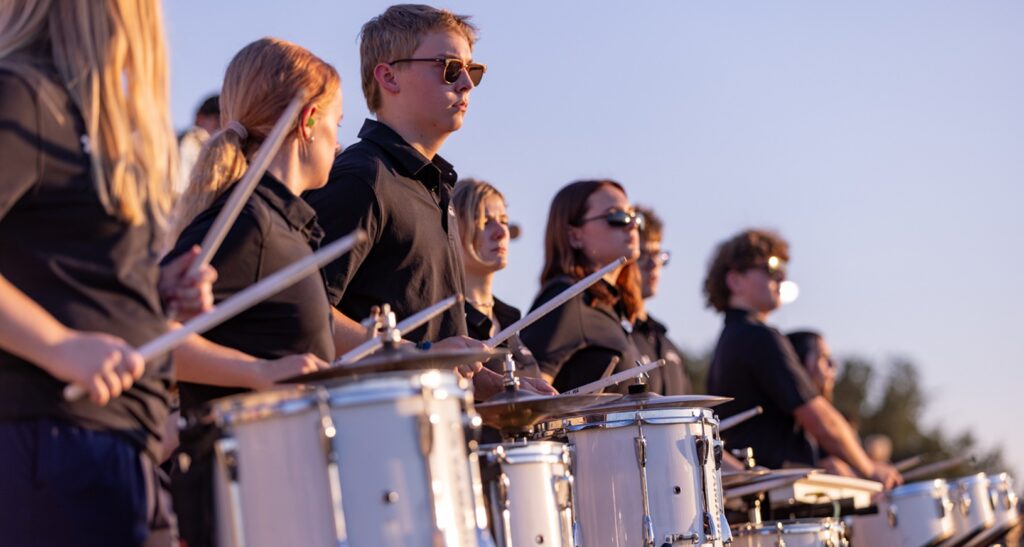
When I started building our drumline at St. Michael’s Catholic Preparatory School a few years ago, I never imagined that it would become mostly female. In fact, I assumed it would look like most drumlines I grew up around: Majority male, built from percussion specialists and shaped by students who already identified as “drummers.” Assumptions have a funny way of falling apart when you give students access, remove the gatekeeping and build a space where anyone can step in and start from zero.
Today, our drumline is one of the most unexpected and inspiring parts of our music program — not because it’s majority female, but because it represents what can happen when you intentionally design a culture where students feel welcomed, included and free to take on roles traditionally not offered to them.
This is the story of how that happened, what I learned and how educators can create similar environments in their own programs.
1. At Small Schools, Culture Is Everything
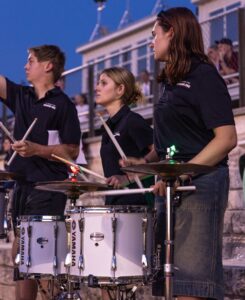
At our school, extracurricular activities are social networks. Students often choose activities because their friends are there — boys join football, girls join cheer, students follow friend groups into robotics, theater or fine arts.
However, not every student fits neatly into those stereotypes. We didn’t have a marching band, but we still wanted to find a way to build energy, community and student involvement at Friday night football games. A drumline — a fun, groove-based, stand-playing ensemble — felt like the right fit for St. Michael’s.
The challenge? We didn’t have enough percussionists to build a traditional drumline, so we couldn’t afford to think traditionally. We needed to build a drumline that everyone could join. That became the first major shift: Accessibility wasn’t an afterthought — it was the model.
2. Starting Everyone at Zero Changed Everything
Because we had students joining from guitar, bass, keyboards, robotics, theater and athletics, we made a simple but powerful decision: Everyone starts from zero. No prior percussion experience needed.
Instead of building chops-driven, competition-style drumline exercises, we built a program around playable cadences, groove-based parts, teamwork, feel, ensemble unity and fun.
This choice — intentionally lowering the barrier to entry — unlocked participation we never expected. And that’s when things got interesting.
3. The Moment I Realized Girls Were Taking Over (In the Best Way)
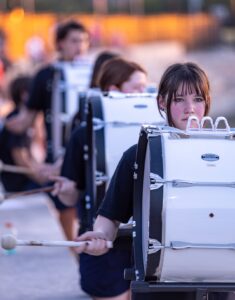
Something happened early on that surprised me: Our girls started gravitating toward percussion. Many of our female students in modern band already had backgrounds in dance, drill team, cheer or gymnastics. Students participating in these sports understand rhythm as full-body movement — they have coordination, timing, spatial awareness and muscle memory. So, when they sat down at a drum set or picked up a drumline instrument, the independence between limbs felt familiar. What followed was early success, early confidence, early leadership.
This one simple observation reshaped my entire understanding of gender roles in music: Girls were not only capable of drumming — many were uniquely equipped for it. Our culture had just never made space for them before.
4. The Drumline Became a Home for Students from Everywhere
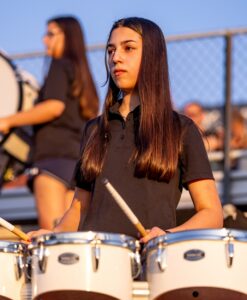
Another surprise: Most of our drumline members are not percussionists at all. They primarily play guitar, bass, keyboards, drums in modern band (a handful) and other instruments across campus. This cross-instrument participation changed the identity of the drumline:
- They play differently. Groove matters more than chops. Listening matters more than flash.
- They rehearse differently. The culture is collaborative, supportive and team-focused.
- They learn differently. We emphasize feeling the music, not memorizing sticking patterns.
- And the biggest shift? Students realized that participating in drumline made them better musicians everywhere else. A guitarist who learns snare becomes better at strumming patterns. A keyboardist who learns cymbals becomes better at coordination. A bassist who learns bass drum becomes better at pocket and articulation.
Opening the drumline didn’t dilute the program. It strengthened every part of it.

5. A Culture of Inclusion Led to a Culture of Female Leadership
Once girls saw other girls comfortable and confident in percussion roles, something powerful happened: They stepped into leadership naturally. Not because they were pushed into it or because we designed it that way. But because the space felt safe, encouraging and open. Once leadership took root, it changed the entire culture.
Today, our drumline is tightly knit, supportive, musically mature, grounded in teamwork, driven by groove and, most importantly, led by strong young women from every corner of campus. This is not an “all-girl drumline.” It’s a student-led drumline where girls feel equally capable, valued and empowered — and that has made all the difference.

6. What My Female Drumline Taught Me (Five Big Lessons)
Reflecting on this experience, here are the lessons I didn’t expect to learn:
- Lesson 1 — Girls don’t lack confidence in percussion; they lack opportunity. Once the barrier was removed, participation soared.
- Lesson 2 — Early success is everything. Students will pursue what they feel capable of quickly — movement-based rhythm gave girls an edge.
- Lesson 3 — Cross-instrument musicians make incredible percussionists. Their musicianship, groove, and ensemble instincts changed our sound.
- Lesson 4 — Culture shapes participation more than skill. If the vibe is welcoming and the entry point is accessible, students will show up.
- Lesson 5 — Inclusion strengthens the whole program. A drumline built on diversity makes every part of Modern Band stronger.
7. Educator Takeaways: What Other Teachers Can Apply Immediately
- Remove gatekeeping: Avoid phrases like “real drummers” or “percussion-only.” If you want inclusion, design for it.
- Build groove-based cadences: Start simple and make them playable. Let students feel successful quickly.
- Invite students from every instrument: Guitarists, pianists, bassists, horn players, singers — groove belongs to everyone.
- Allow students to start at zero: Your drumline doesn’t need prerequisites to sound great.
- Highlight representation: Show girls what female drumming leadership looks like — in history and on your own campus.
- Empower leadership early: Let students count off, lead warmups and manage equipment roles.
- Celebrate musicality over technique: What matters most is feel, unity and confidence — not complexity.
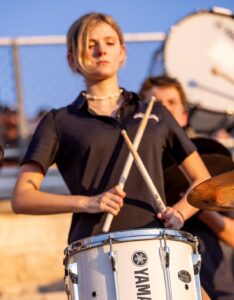
Students Redefine the Space, Follow Their Lead
I didn’t set out to create a female-led drumline. I set out to build a place where every student felt welcome. A place where learning groove made you better at whatever instrument you loved, a place where starting from zero wasn’t embarrassing — it was expected.
When that culture took root, something beautiful happened: Girls stepped into a space they weren’t traditionally invited into — and they reshaped it for the better. They taught me that inclusion isn’t something you declare. It’s something you design. It’s something you build into the culture until students feel it for themselves.
And when you get that right? Students don’t just join the program. They lead it. They elevate it. They redefine it.
My job now is simple: Stay out of their way, cheer them on and keep building spaces where every student — especially those who aren’t traditionally seen — can discover what they’re capable of.
Keep reading