Tagged Under:
No Opportunities, No Problem!
No longer a desert backwater dotted with one-arm bandits hiding everywhere that offers shelter from the sun, the Las Vegas metro area is now home to 2.4 million people. The Clark County School District (CCSD) serves more than 300,000 students and is the fifth largest school district in the country. Las Vegas, or any area, can’t support that kind of explosive growth without some collateral damage. One example is the lack of music education and performance opportunities available for Title I schools like Valley High School.
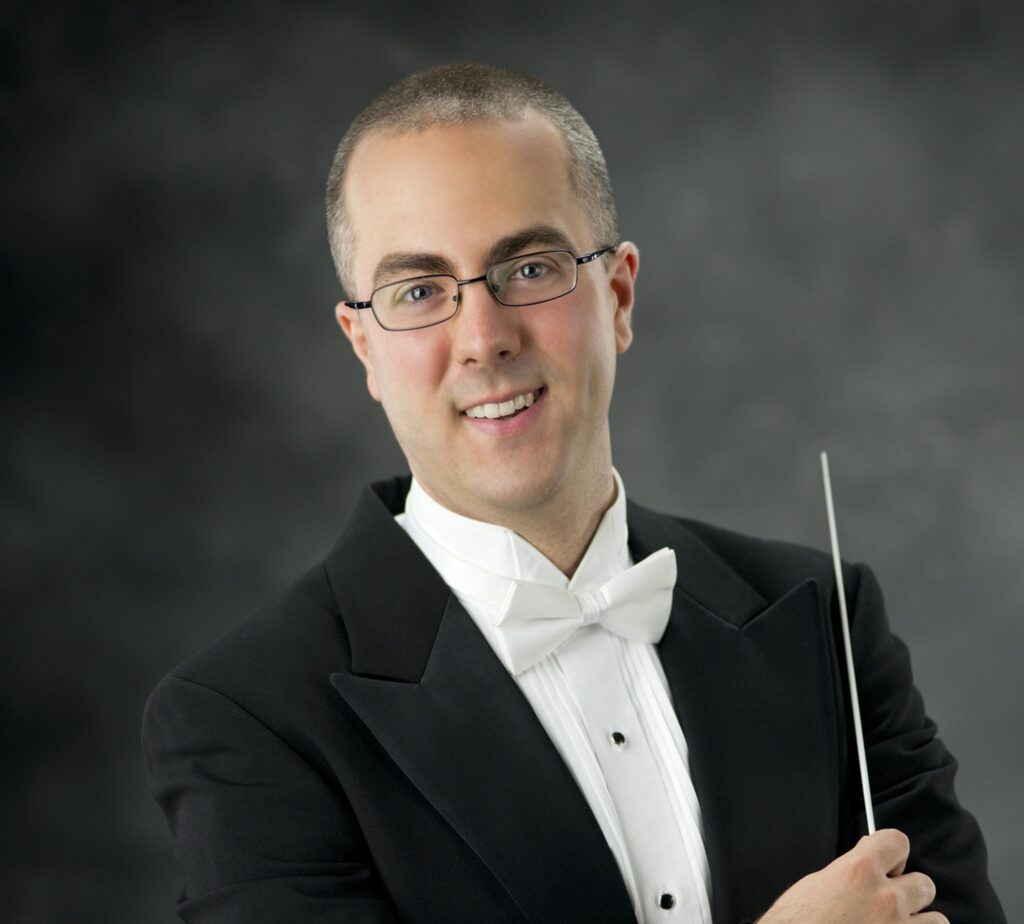
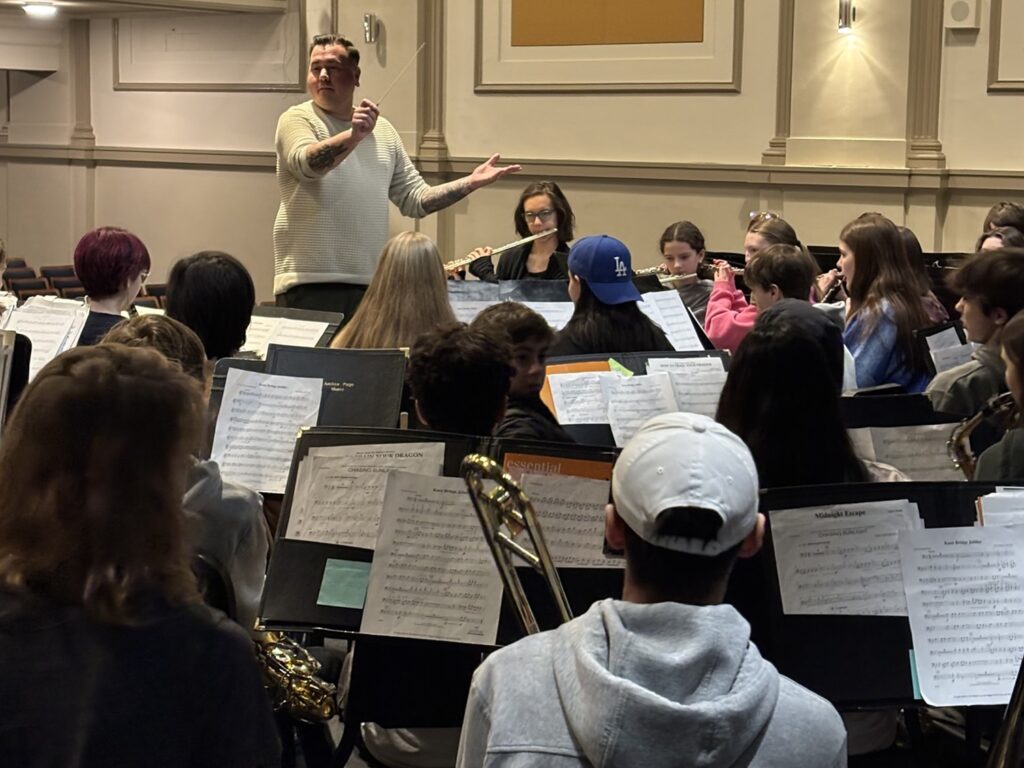
You will find Valley High, home of the Valley Vikings, east of the Las Vegas Strip and the University of Nevada, Las Vegas (UNLV). If you don’t see the high school campus, listen for the music. Follow it, and chances are you’ll meet Dr. Andrew Smouse, the Co-Director of Bands and Orchestras. He helps to lead a loud and proud band program with more than 200 students.
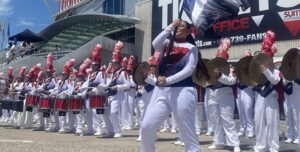
Valley High School hit the jackpot with Smouse. Today, the school boasts a Wind Ensemble, three Concert Bands and two Beginning Bands. In addition to the concert ensembles, Valley High offers a Woodwind Choir, Brass Choir, Percussion Ensemble, Jazz Band, Winter Guard and the competitive marching band, the Valley Vanguard.
A Pennsylvania native, Smouse holds a doctorate degree in wind band conducting from UNLV; he was invited to the DMA program after completing his master’s degree there. His friendly and comforting demeanor mixed with a firm but gentle approach beckons the best his learners are able to give. Case in point: He requires all students to participate in Solo & Ensemble events and advanced band students to audition for the Clark County Honor Band during the school year.
He understands that low income isn’t the only hurdle in the way of Title 1 students. Accompanying obstacles include lack of parental support, having to care for siblings after school, food insecurity or holding down a part-time job to help their families.
Known for his ethos “I teach life but use music to do it,” Smouse doesn’t talk about commitment to students but rather demonstrates it. Which is why he enforces the must participate in two festivals a year rule because he correlates conquering stage fright (even playing something as basic as “Mary Had a Little Lamb” in front of a crowd) to acing a job interview for students. “It’ll be a breeze,” the educator assures his musicians.
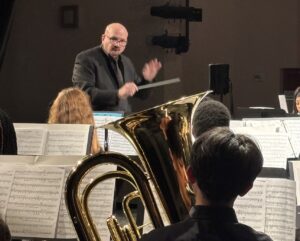
The Southern Nevada Honor Band
Before the Southern Nevada Honor Band (SNHB) was created in 2014, there was only one clinic and audition experience for honor band available for high schoolers in CCSD and Southern Nevada. To give students an added opportunity to have honor band, area band directors created the SNHB — making and keeping its focus on Title 1 students, who didn’t make an honor band audition or who couldn’t make it to an honor band audition. “They get another chance,” notes Smouse. SNHB also gives participants the chance to make music and build friendships with other musicians from different schools.
SNHB mimics similar honor bands protocol. A different out-of-state judge, a professor of music perhaps, is invited each time to offer new and different perspectives. There is no dollar cost to participants, and students use school-owned instruments. (Full transparency and no surprise: Band directors and teachers cover some expenses themselves.) Additionally, generous sponsorships, including from the Yamaha Corporation of America among other corporations and small businesses like local music stores, helped ignite and keep the program humming.
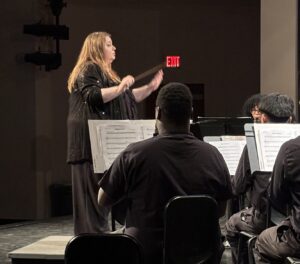
Band directors meet early in the academic year for the first order of business: recruiting music clinicians. Marching band season ends and is followed by the distribution of selected audition etudes. Next, participants learn the location(s) of the clinic and auditions. According to Music for All’s Advocacy in Action, “The directors and their staff serve as adjudicators in blind auditions at one of the participating schools in early January. After auditions on the same day, the ensemble personnel are announced, and directors receive the music for their students. The two-day clinic then takes place in late January, concluding with a public concert showcasing the students’ work.”
Anecdotal and measurable evidence proves SNHB’s success. It has grown from one honor ensemble to two. Retention is solid and new students participate in clinics and auditions. If an educator has an underserved community with little opportunity for students to participate in an honor band experience, Smouse suggests calling adjacent school band programs and building a system that is objective, impartial and educative for the students.
“A little friendly competition never hurt anyone,” he adds.
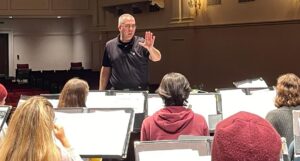
The Solo & Ensemble Festival
“There’s nothing that says you can’t have your own festival. It’s your festival, do what you want,” says Smouse, fully determined that all students are afforded the same opportunities. So much so, he tailored a Solo & Ensemble Festival for his students. “We had to get creative to make it free for them and limited funds for us.”
The big project of the quarter for students, this Solo & Ensemble Festival is not the official state- or association-sanctioned event, but it serves the same purposes of the discipline of rehearsal, improving performance, receiving feedback and building confidence. The festival replicates the official version. “I don’t like reinventing the wheel,” Smouse explains.
Students dress up, judging is from the back of the room, the same rubric is used and medals are awarded. (The medals are a lot of steps up from the goofy prizes Smouse is known for awarding in the classroom — paperclips or a candy bar, to name a couple.)
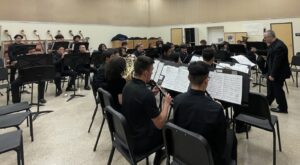
The festival is held on campus and during school time, so there is no need to justify time away from the classroom, no special consideration for travel or collecting permission slips. Smouse asks retired band directors or maybe someone working on their master’s or doctoral degree to judge, paying a small fee out of pocket. Cheaper than transportation costs, he calculates.
It’s great for beginners, students are terrified and they learn to get through it, notes Smouse. “It makes them a better player. It’s not just me yapping at them all the time.”
For both SNHB and the Solo & Ensemble, Smouse has served a variety of roles: administrator, judge, logistics chair, clinician and benefactor. He’s also chief enthusiast with a seemingly unlimited supply of energy to make sure all students have the same access to all opportunities.
“There might not be any funding, but there are always opportunities,” Smouse says proudly.
Keep reading