Tagged Under:
Try These Nontraditional Music Ensembles
Give students an opportunity to create music in a different way with ensembles that focus on rock, pop, country, mariachi, hip hop and more!
I did my student teaching in one of the smallest towns in Wisconsin, and I couldn’t have asked for a better spot. My cooperating teacher, Jackie Goplin, had built an amazing music program in Whitehall, Wisconsin. For aspiring music educators at the University of Wisconsin-Eau Claire, it was the location we all wanted to be placed at because of Goplin, who is a wonderful mentor and teacher of future teachers.
One memorable opportunity I was given at Whitehall was to create a rhythm section that was a jazz combo and a rock band. The students wanted to play an Aerosmith song, and I was excited to try it. I was playing in a cover band as a trombone player at the time and wrote all the horn charts, but I wasn’t as familiar with writing charts for a rhythm section. I soon discovered that there were many ways to approach this. One student only knew how to play tablature. Another wanted traditional notation. Another wanted a lead sheet or a chord chart. And yet another told me they would learn it all by ear.
I was quickly introduced to the many ways students learn music. We worked together to create these parts since this was 30 years ago — long before the wealth of available resources we have today. A few weeks after starting the band, we had a short set of jazz, pop and rock songs, and we were impressing the school and community.
SCHOOL OF ROCK – THE MOVIE
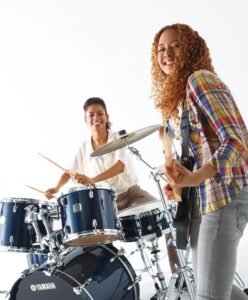
A few short years later, I was in my first (and to this day only) teaching position at Chaska Middle School West in Minnesota when I saw the movie “School of Rock.” Jack Black starred as a struggling musician who pretends to be a substitute teacher and turns his pre-teen classroom into a rock band. My wife, Heidi (who is also a music educator), and I left the movie thinking that this was more than a fun little film. It was our nudge to start a popular music program in our district.
What follows is a description of nontraditional ensembles and classes that we offer and how we teach and present them through our district community education at a middle school level. Most meet for a season (one to four months) or two seasons (during the school year and summer).
THE SCHOOL OF ROCK CLASS
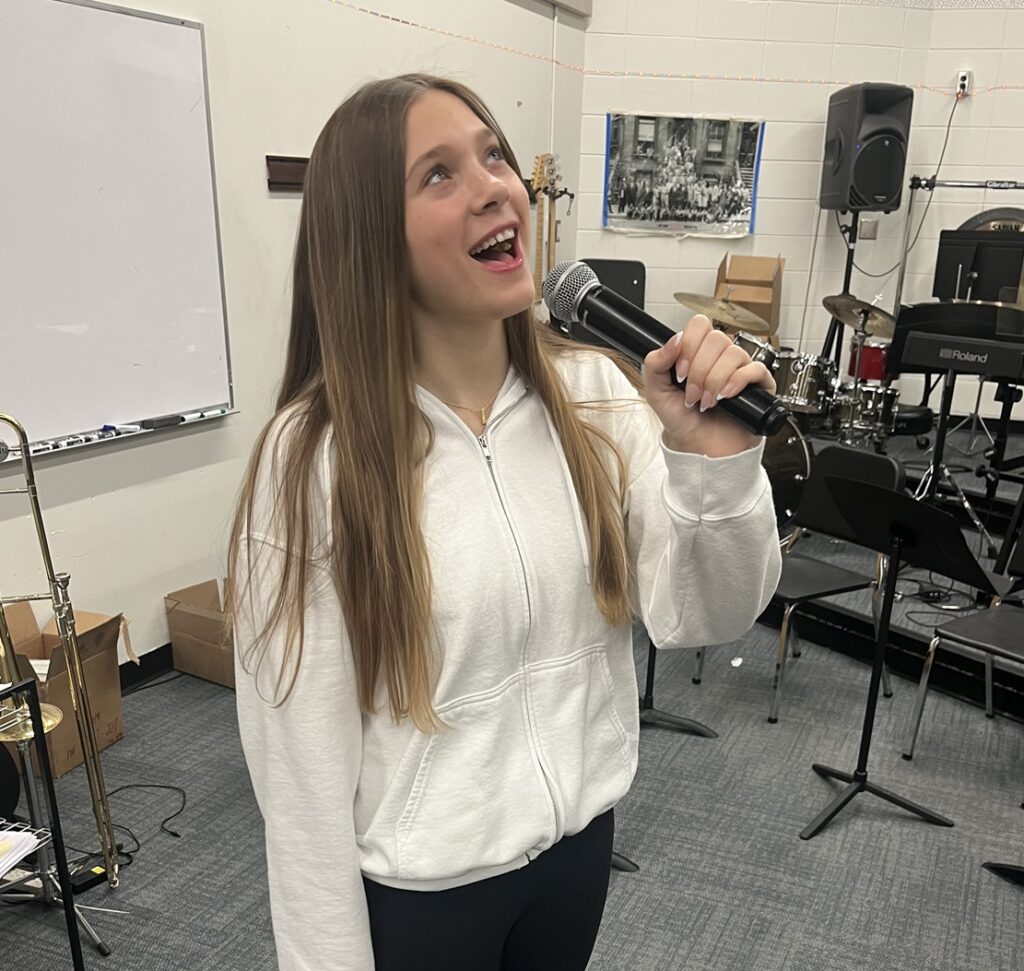
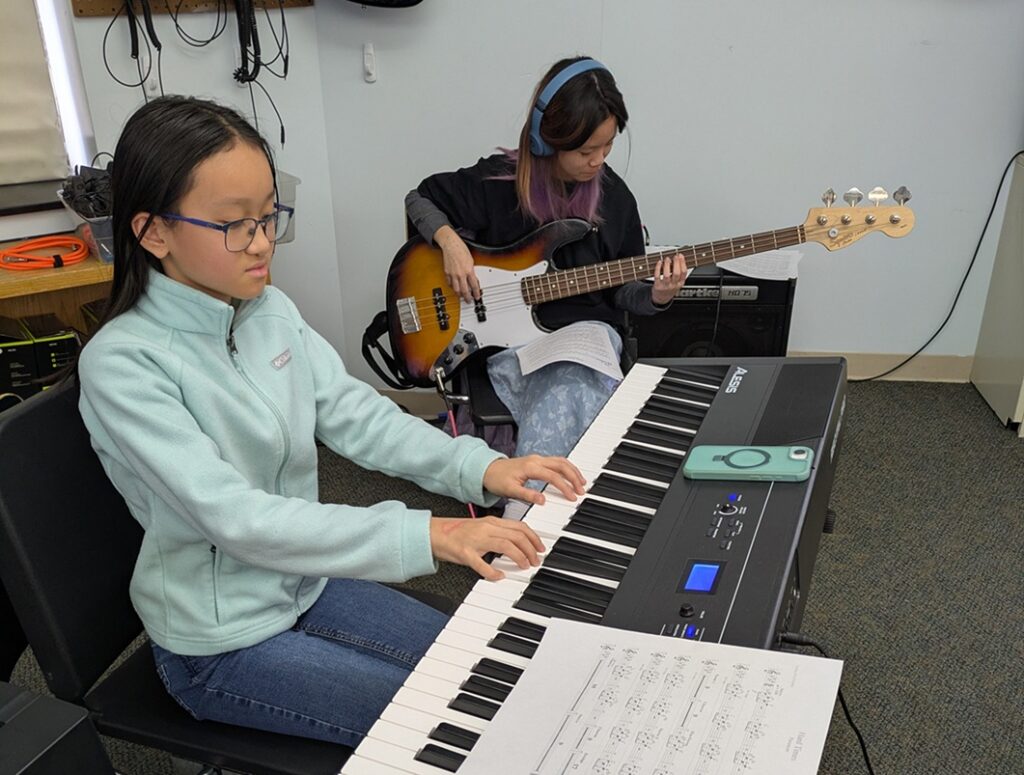
We have been teaching our original class, School of Rock, for 23 years. It meets for five or six one-hour weekly sessions and is an introduction to playing and singing in a popular music ensemble. The course was designed for students who are beginners or who know an instrument well but want to learn others.
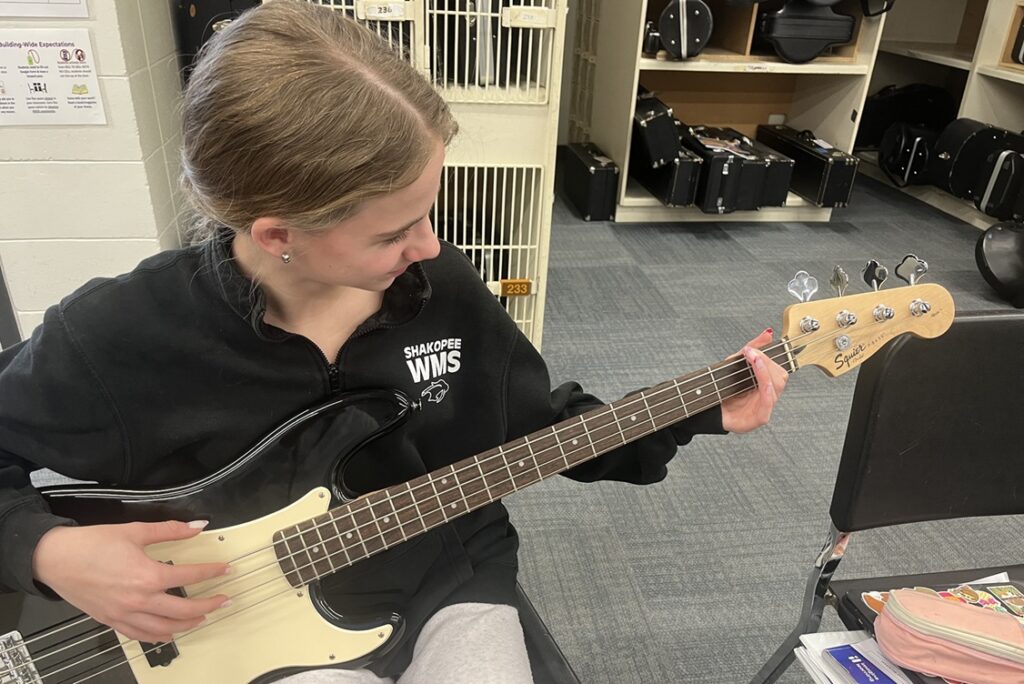
The first two weeks are spent on the very basics of playing guitar, piano, bass guitar, drum set, and singing. Every student tries each one. Then there are small lessons on rock music history, songwriting and gear setup/cleanup.
The final two or three sessions of School of Rock are the most fun. The students form bands, and each band learns basic rock songs like “Seven Nation Army” by The White Stripes, “Smoke on the Water” by Deep Purple and “Smells Like Teen Spirit” by Nirvana. You can find music for these songs on websites like Ultimate-Guitar.com and Songsterr.com. Also check out the book series “Modern Band Method” published by Hal Leonard and the Music Will website.
We often let students pick a couple songs. Often, these songs are challenging, so we simplify grooves, chord progressions and strumming patterns. The students rotate which instruments they play.
There are no performances by this class. Many students start taking private lessons after this class or attend Bonus Lessons during the school day.
GARAGE BAND
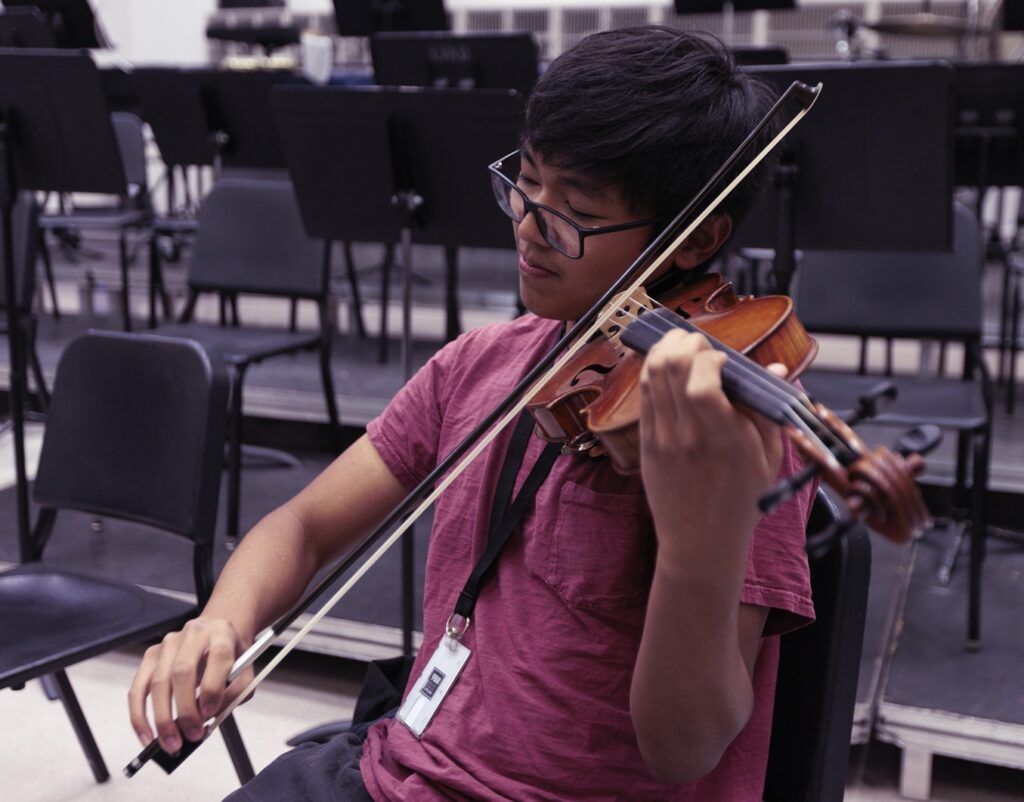
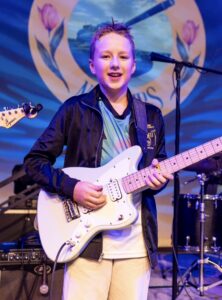
We use the old-school term “Garage Band” for our rock band program, which meets once a week for a couple hours after school during the fall/winter and again in the summer. Students audition on voice, guitar, piano, bass, drum set, horns and strings, and we select enough students to form four bands.
Students and staff collaborate to choose repertoire. We strive to find a variety of songs from different eras and styles that feature different members of the band and challenge students just enough. A good sample of a setlist might include a Motown song from the 1960s, a classic rock or horn-laden song from the 1970s, a metal or synth-laced pop-rock song from the 1980s, a grunge or post-punk song from the 1990s, and something from this century. Music can be found from the same sites listed above in the School of Rock section.
A good way to rehearse a song is to start by listening and identifying the form of the song and focusing on patterns, which could be the lyrics, melodic riffs, chord progressions or rhythmic patterns. Then teach the song by section starting with the intro identifying the number of bars, the tempo, tricky technical passages and balance/tones. Then, make sure each musician understands what they need to practice before the next rehearsal and move on to the next section. Use this same approach for each section.
Go back to the recording often so that students can hear what their goal is. It’s also helpful to note certain tricky sections like a vocal harmony, guitar or piano riff, or drum fill that needs more extensive work. It’s helpful to have a vocal coach or a former student like we do to take a student or group of students into another room to work with them on that part.
Other things that often pop up in Garage Band include discussions on:
- similarities and differences between verse 1 and verse 2 or chorus 1 and chorus 2,
- tags and key changes,
- improvisation,
- how to end a song that fades out,
- and even a history lesson regarding the significance of the song, artist, songwriter or producer.
Give students a chance to run through the song from the beginning to as far as you have studied the song or even to the end so they know the spots that they need to work on and can enjoy the sections that show progress.
Check out my book, “Starting A Modern Band Program,” which includes more in-depth details on all this plus information on gear, booking shows, stage presence and more.
COUNTRY/BLUEGRASS BAND
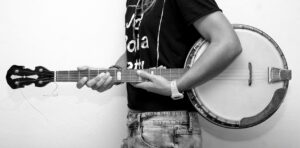
Shortly after the debut of our rock band program, a 6th-grader asked to join. He played the banjo and bluegrass music. I asked him if he would join a bluegrass band if I started one. He was ecstatic.
I had very little bluegrass knowledge, but I thought back to my student-teaching experience and how we all learned together. This student taught me more about bluegrass and playing the banjo than I ever taught him. I simply provided the opportunity and helped find bandmates and running a rehearsal.
For music, I started with the book “Band in a Book: Bluegrass Instrumentals” by Steve Kaufman, which I still use today. It has arrangements of great bluegrass classics like “Wildwood Flower” and “Cripple Creek” for guitar, banjo, mandolin, fiddle and bass. I also use “Bluegrass Fakebook” by Bert Casey, which has 150 bluegrass favorites.
A couple years into running the bluegrass band, several students asked to learn old-school and contemporary country songs as well. So, we started doing some Johnny Cash, Dolly Parton, Garth Brooks and Carrie Underwood tunes.
We changed the ensemble’s name to our Country/Bluegrass Band. We use similar rehearsal techniques, repertoire decision-making and websites for music that were described above for our Garage Band. And both bands often perform together at the same venues.
I still don’t consider myself a bluegrass expert, but I know many of the standards now, and I can get by as a novice banjo and mandolin player. I have learned that you don’t wait until you become an expert before you start teaching something. Having students teach you is one of the greatest experiences you can have.
MARIACHI BAND
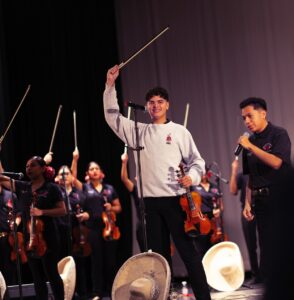
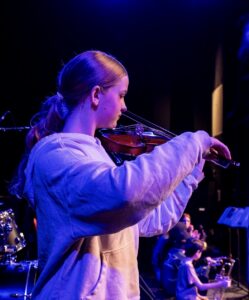
I took a similar approach when it came to starting our Mariachi Band. A small group of students were interested in mariachi, so I taught them some beginning guitar techniques. Then, we found a couple students to play trumpet and violin. I purchased a wonderful book series called “Mariachi Mastery” written by Jeff Nevin that includes arrangements of classics like “La Raspa” and “De Colores” for guitar, guitarron (bass guitar), violin, cello, viola, trumpet and harp. It also teaches technique, history, dance and even has a section on mariachi clothing.
My favorite purchase was a beautiful 6-string acoustic bass guitarron that all the students want to try. Putting together this Mariachi Band has been a highlight of the year. The students learn some basic songs out of the book and perform them at school breakfast or lunch, local Mexican restaurants or summer festivals. The band meets after school in the spring or during our school’s flex time, which are periods during the week when students can choose their activity.
Our after-school Mariachi Band has evolved into a Latin Band that does learns and performs more than mariachi. We will do some Latin jazz like “Blue Bossa” and “A Night in Tunisia,” Latin pop/rock by Santana or Miami Sound Machine or current Latin pop hits by Bad Bunny and Karol G. I find music for these songs out of “The Real Book” or using sites like ultimate-guitar.com or songsterr.com.
HIP HOP CLUB
Our spring after-school Hip Hop Club is run differently than our other ensembles — it’s more of a tour of the four elements of hip hop: DJ, emcee, breakdancing and graffiti.
DJ: I start with DJing but expand this to the creation of beats. Students learn how to beatbox by using this beatboxing tutorial by TylaDubya. The YouTube video invites students to beatbox along.
After beatboxing, students learn how to make beats on learningmusic.ableton.com or using digital audio workstations (DAW) like Cubase or BandLab. Then I introduce the DJ website, Transition DJ, which allows students to learn how to put music on two jog wheels and match beats, fade between two songs, add effects and scratch.
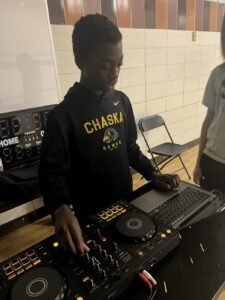
Finally, we’ll take out the real thing — a DJ controller, which you can find for under $200. Make sure to get one that comes with Serato, a pro-level DJ software that is very user-friendly. If you have a controller, two students can come up at a time and spin the hits. For those who really get into the DJ thing, provide opportunities for them to DJ before school, after school, at school assemblies, lunch or after concerts.
Emcee/Rapper: We then move to the second element: the emcee or the rapper. I mentioned some of the fun emcee/rapper activities in my article “Band AND.”
- “I Know a Word”: Try this game where one student at a time says, “I know a word, and the word is …” and they say the word. The next student repeats the same phrase and has to rhyme the last word.
- Board Book Rap: Another fun activity is to rap board books that students read when they were little. A great one is called “The Story of Rap.”
Both these activities are great while using a beat that students learned to create during the DJing lessons. Or better yet, have them create a beat on a DAW and then record themselves rapping over the top. If you really want to get fancy, use a track-separator like Extrack by Yamaha and find a part of a song to sample. This could be a drum beat, a hook, a guitar or keyboard riff, a vocal line or just about anything and make that a part of their song. Now you’re adding elements of production and songwriting into the club!
Ask if students wants to rap their song in a live performance setting by muting the vocals in the DAW file or they may want to just rap or sing some karaoke to an existing hip hop song. Encourage them to think about cadence, presence and style. You can even have one of your student DJs jump in and add some parts.
If this all sounds overwhelming, look in your area for guest artists to come in and help. In the Minneapolis area, I have asked Dave “AGAPE” Scherer to come teach my kids to rap, Terrell X to teach beatboxing, Kenichi Thomas to teach deejaying, Tish Jones to talk about spoken poetry, and Isaac Rohr to teach music production.
Breakdancing and Graffiti: For the final two elements of hip hop, breakdancing and graffiti, I also bring in guest artists. There are also some great YouTube videos you can show as tutorials. For breakdancing, check out FreeFocusDance and their series of video lessons. For graffiti, check out GraffitiSociety. The videos are interactive so students can practice while watching.
For breakdancing, you’ll need a large space, and students must wear comfortable clothing that they can move in. For graffiti, you’ll need paper, pencils, erasers and markers.
When you put all the elements together, it’s really cool! For example, have a student rapping or singing to a beat someone has created or is beatboxing. Maybe you also have a student playing drums and another student or two playing bass or another live instrument. Meanwhile another student is DJing. While all this is going on, there are students breakdancing, while a student or two are creating graffiti art on a canvas. The possibilities are plentiful. This could be in the classroom or for a performance.
POP ENSEMBLE
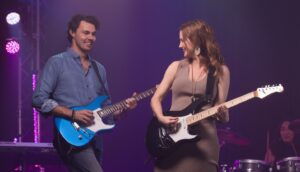
Pop Ensemble is a lot like running Garage Band or the Country/Bluegrass Band. The obvious exception is that the repertoire is more pop-based with songs by Elton John, Michael Jackson, Sheryl Crow, Kelly Clarkson, Benson Boone and Sabrina Carpenter just to name a few. The Pop Ensemble meets after school for three months in the spring. (On occasion, I have offered a similar but separate band that focuses on R&B, and we perform songs by artists like on The Supremes, James Brown, Stevie Wonder, Prince, Boyz II Men, Beyonce and Olivia Dean.)
Another exception of the Pop Ensemble is the instruments and technology that we use — for example, a drum sample pad like a Yamaha DTX-MULTI 12, which provides beats that are more authentic to the songs, are run right into a soundboard or amp/speaker. Another great tool is an effects processor like the Roland VT-4 or TC Electronic M100 — just run any standard microphone through it to create effects like autotune, vocoder and pitch bends. Keytars are also a fun instrument to add because they’re not too big for students and they have all the sounds and effects you need.
I have also experimented with students creating backing tracks that run while students play songs. This is a little tricky because I don’t use an in-ear monitor system for middle school. However, the drummer will wear headphones with the track going through. And I’ll also have monitor speakers stationed throughout the band so everyone can hear.
COMMERCIAL MUSIC
Many students are into performing songs from movies, video games and Broadway. For many years, we offered a summer program called Movie Band, which is a concert band that performs all movie themes. We have talked about expanding this to include video game music and Broadway hits. Hal Leonard provides some great books with repertoire for these bands: “Essential Elements Movie Favorites,” “Essential Elements Broadway Favorites.” Also check out JW Pepper for a list of video game arrangements for concert band.
As great as these resources are, music for these multimedia productions often go beyond the instruments in a traditional concert band or symphonic orchestra. I often have students form their own ensembles to play these songs, and I help them arrange music for their instrumentation. In my next article, I’ll focus on these student-led groups.
____________________________________
Popular music ensembles are a great way to give students an opportunity to create music in a different way. It allows them to expand their musical horizons, learn about new kinds of music, perform music they already know and love, discover new aspects of their musicality and personality, and create more joy for them and their audiences. It also brings more students to music who aren’t in your traditional ensembles and keeps some students in your music program who might not normally stay. Honestly, popular music was the gateway to my love of music. We should celebrate it and include it as a part of our music programs.
Keep reading