Tagged Under:
Why Community Modern Band Ensembles Matters
Reach a wider group of elementary and middle school students with modern band and create new pathways for community music-making.
When I was in elementary school, I participated in the community youth wind ensemble that served students from all districts in the surrounding area. Each weekend, we met at the local university to rehearse with students from across the county. I made friends in the ensemble that I wouldn’t have otherwise met if I restricted my music-making to my school only. The youth ensemble worked with guest conductors on repertoire that I never would have played in my home district. The experience was incredibly meaningful and is part of what inspired me to become a music educator. Years later, I was able to volunteer for the same ensemble as a student teacher and had my first experience on the podium leading real students through warm-ups and learning a piece of music. I credit this community ensemble with my development as a musician and teacher.
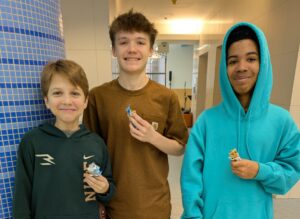
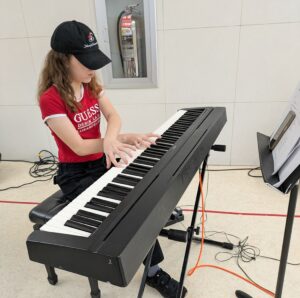
Now as an educator in New York City, I co-direct the Salute to Music All-City Modern Band for students in grades 4 to 8. We serve students from all five boroughs of New York City and help students of all levels (from beginners to shredders) learn how to be in a rock band together. The Salute to Music Program in NYC has provided free musical instruction in chorus, concert band and orchestra to all NYC Public School students for over 60 years. Jazz ensemble joined in over the years, but it wasn’t until 2023 that modern band was added. This ensemble was born out of a need to reach all student musicians in the city, not just the ones who play or sing classically. The need for popular music-making was there, and our students have shown us year after year that this was the outlet they needed to bring out their best inner musician.
Community music-making helped mold me into the educator I am today, which is why I believe it is so important to cultivate community ensembles wherever and whenever possible. Below, I offer some reasons why it is important to specifically include modern band in your community music-making endeavors, as well as some considerations to get started.
3 Reasons Why You Should Start a Community Modern Band
1. Create new pathways for community music-making in your area: In many areas, there are longstanding community-based organizations that provide music education experiences for youth in the form of choirs, orchestras, concert bands, jazz ensembles and wind symphonies. These programs are important, but they sometimes leave out students who do not play classical instruments and those who may not be enrolled in their school music program at all. Opening up the opportunity for students in your area to join a rock band may inspire more students to get involved in music in the first place, and it will create pathways for more students to become lifelong music-makers.
2. Reach a much wider group of students when you include modern band: In a similar thread to reason number one above, there are students who like to rock everywhere! You may never know this fact if your school system doesn’t offer modern band in their courses. Of the students in the Salute to Music Modern Band, 75% do not play their “main” instrument like guitar, bass or keyboard in school. Some take private lessons outside of school, but most simply jam on their own whenever they can. For most of our students, our programming is the only time they get to play in a real band with a real sound system. What an honor to provide that space for them! Creating a way to reach students who fall outside the traditional music canon can only serve to strengthen youth supports and music programming throughout your area and local district schools.
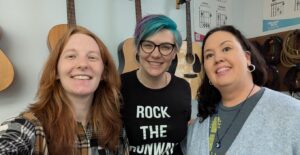
3. Community music-making has the power to bring students and teachers together in ways traditional district-based programs cannot: As a teacher, I personally love collaborating with other educators from different districts and parts of the city as much as possible. When I work with my colleagues from around the city, I learn and gain as much valuable knowledge as our students. Creating a community-based ensemble in your area allows for more connection between music educators across your city, district or county, which can only lead to more shared ideas, more learned techniques and better outcomes for students across your entire area.
Pooling and sharing resources, time and intellectual energy between multiple teachers and schools across a given area can also open the doors for more exciting opportunities for students. You may be able to consider a performance venue for concerts instead of a school auditorium, bring in working musicians for a masterclass with one or more sections of the band, or take students to see live performances. These opportunities become easier to plan and coordinate when you work outside the confines of a traditional school day and in tandem with some of your best colleagues in your area.
4 Steps to Get Started
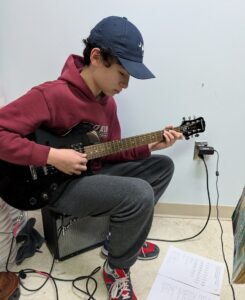
1. Find the space: This may sound like a no-brainer, but there are specific considerations when selecting a rehearsal site for your new modern band. While a concert hall or auditorium is important for the day of the show, you will likely not want to rehearse with one large group in one large room for the entire season. Modern band lends itself well to sectional rehearsals, where students of similar instruments work on the same song together and can lean on each other for support. This is a great time to leverage age differences within your group. Your older and more experienced students can be support systems and mentors for your newer and younger students. Modern band can also be taught in small groups of students who form their own “mini-bands”.
The Salute to Music program has 30 students enrolled, but we almost never have all 30 playing together at one time. We break them into multiple smaller bands that consist of one drummer, one bassist, a few guitars, a few vocalists and one or two keyboard players. This rehearsal style gives students more choice and autonomy over the music they choose to perform, and it gives them more opportunities to shine on their own. Being the only drummer in a group really encourages that student to work hard at learning their part and encourages newer players to step up to the challenge of being a real rock star.
With these rehearsal models, I personally recommend finding a space that allows you to separate students into these smaller rehearsal groups easily. That could mean using common spaces or different classrooms around the school or finding a rehearsal location that has practice rooms adjacent to your main rehearsal hall. You may also want to consider choosing a school or rehearsal site that is already outfitted with a sound system and the appropriate gear you will need. More on gear below!
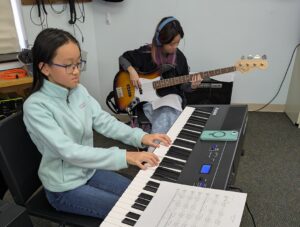
2. Gather your gear: Having the appropriate gear for a modern band rehearsal is essential. You want the kids to be able to hear each other while rehearsing and become familiar with the sound engineering components of being in a rock band. Your gear list will change based on the number of students in your group and which rehearsal models you intend to use. For our program of 30 students, we tend to have students form four mini-bands. This means we need a minimum capacity of four rock band setups to be used at once. Yes, that means four drum sets, four bass amps, many guitar amps and multiple keyboards.
Here are my personal recommendations for one band setup:
- powered PA system and unpowered mixer (This is my favorite way to mix a band. If you have a set of unpowered speakers and a powered mixer, that’s OK, too!)
- 2 guitar amps and electric guitars
- 1 bass amp and electric bass
- 1 drum set (don’t forget the drumsticks!)
- keyboard with 88 weighted keys (don’t forget the pedal)
- a good keyboard amp or a DI box that will allow you to connect your keyboard directly to the PA system
- 2-4 unpowered monitors (for performances)
- 2 vocal microphones
- multiple XLR (microphone) cables
- multiple ¼” (instrument) cables
If you have a larger group, you will need to expand the number of keyboards, bass amps, guitar amps and drum sets you need, ideally so that everyone can be rehearsing in their separate spaces at the same time. It should be a priority to source gear for at least one full band setup that can be used for concerts, and then you can get creative with other rehearsal gear needs. Consider using electric drum sets, having students practice on acoustic guitars or using mini keyboards.

3. Recruitment: You never know who has a student in a neighboring district who loves to rock. Consider reaching out to all the music teachers in your district first, then expanding to neighboring ones. If your local area or state has a music educator’s association, reach out to your local representative who may be able to spread the word via social media and email, and can also put you in touch with more local music educators. This is also the time to reach out to administrators at neighboring schools. Remember, not every music program has a modern band program, and some music teachers may not even know that there are guitar-shredding kids in math class. By reaching out to all educators in the district and neighboring ones, you will broaden your reach and tap into ALL students who want to rock!
4. Rock out! Leverage the powers of modern band by allowing students to choose the repertoire they play, pick out a band name, and brainstorm where and when they would like to perform and share their work with family and friends. Student buy-in to the program should be the top priority during the first few weeks of a new venture, and planning ample time for student bonding combined with student choice in their learning will help everyone have the smoothest and most rockin’ time!
Keep reading