Tagged Under:
Transitioning from Student to Teacher
Navigating the transition from a college music education major to a classroom music teacher is daunting. Throughout our formative years, we are trained as musicians to learn the foundational and aesthetic elements of performance, typically in large group, small group and solo settings. As we mature as musicians, we gain more autonomy and increase our creative expression, all the while staying anchored to our fundamentals and best practices.
Even throughout most of a student’s college performing experience, much of what they prepare musically is guided by applied and ensemble faculty. However, when they enter the classroom as a teacher, a seismic shift occurs. Not only are they the authority on all things music in the program (and sometimes the entire school building), but the novice teacher is now responsible for making numerous performance decisions for what is often multiple grades, skill levels, classroom limitations and ensemble sizes. Thrown on top of all this are the administrative responsibilities that new music teachers have to mostly learn on the job, along with building a comprehensive program. It’s easy to see how a music teacher’s first year can be overwhelming.
This exploration of the student-to-teacher transition will offer music education professors some ideas as to how we can help our music education majors navigate the shift and be as prepared as possible for their first teaching job. In order for music teachers to be sufficiently prepared to handle all of the responsibilities of the job on day one, I emphasize three areas in particular: 1) rehearsal planning, sequencing and pacing; 2) building rapport and mastering classroom management; and 3) recruitment and retention. While there are many more important facets of the music teaching profession, I find that these core tenets are foundational to early success, consistent results and building confidence quickly in new music teachers.
Rehearsal Planning, Sequencing and Pacing
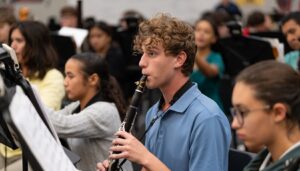
When it comes to music teacher preparation, we ensure our candidates have the necessary content knowledge, musicianship skills and performance ability. However, my student teachers frequently tell me that the most challenging part of the job is to successfully take all that knowledge and teach it in a way that students understand and are able to use it themselves to improve as musicians. To help our music education majors, Tennessee State University implemented an education preparation program that utilizes a year-long residency model for our student teachers.
In the fall semester of their senior year, music education majors take the Residency 1 course, where they go into the classroom on a part-time basis — usually two to three days a week — to observe, shadow and build rapport with students and staff, including their mentor teacher. They team teach and gradually work toward becoming comfortable with teaching a full class independently. Residency 1 allows teacher candidates to try different ideas, take risks and get lots of feedback from me and their mentor teacher. They are evaluated with our state-approved TEAM Observation rubric. This process really helps our student teachers with planning and basic teaching foundations needed to be successful.
In Residency 2, taken during the final semester of their senior year, our candidates enter the full-time, all-day-every-day student-teaching phase. They take the skills they acquired in Residency 1, and continue to refine them while focusing on instructional scope, sequencing and pacing. Because the student teacher is in the same school for both the fall and spring semesters, they have sufficient time to build rapport and develop strong professional relationships with students, parents, administrators and staff, which sometimes is not possible under the traditional student-teaching model.
This year-long clinical model has served our music teacher candidates well. I believe that it has built their confidence and preparation immensely once they transition from student teaching to their first teaching job.
Building Rapport and Mastering Classroom Management
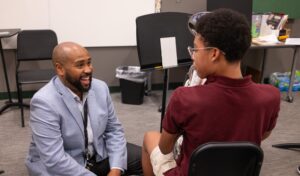
While the year-long residency process helps our teacher candidates in their final year of study, TSU’s curricular sequence of pre-clinical experiences helps students make the mental shift that is necessary to be successful managers of their classrooms. For me, building rapport and managing the classroom go hand in hand. It is impossible to emphasize processes, procedures and protocols in the classroom without talking about building relationships with students. As the common axiom in education says, students do not care how much you know until they know how much you care.
In each year of their study, TSU’s music education majors take courses that require in-field K-12 classroom experiences. During their freshman year, students take Introduction to Music Education. It often confuses students when I call them by their last names — “Ms. Johnson” or “Mr. Thompson” — but this is part of the mental side of getting my students to start to seeing themselves as teachers. The course requires them to complete 20 hours of in-classroom field experience, and we make sure that they are active participants in the classrooms they are assigned to, and not just passive observers.
The same goes for their techniques classes, methods courses and conducting lab — all require K-12 classroom contact time with students. So, before they enter student teaching, our music education majors have already accumulated close to 200 contact hours of active teaching in K-12 settings.
By having them experience a variety of school settings, teachers, students and communities, they are adding to their ever-growing teaching toolkit. We all know that a one-size-fits-all approach to teaching does not exist, so we offer as many ideas and perspectives as possible, which has proven to be very helpful for my students, particularly when it comes to finding creative ways to solve student discipline issues.
Recruitment and Retention
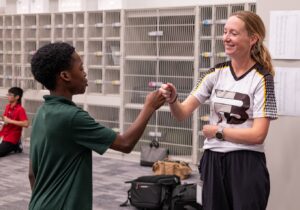
Once the teaching foundations are in place and students have a strong understanding of their role as a teacher, we start to discuss program-building. At the heart of this is recruitment and retention. While a few of my students will inherit programs that are more or less established, the majority of them will be tasked with building a program from the bottom up. TSU’s Music Education Seminar course is the perfect setting to bring in voices from around the country to speak on this subject. I also try to have at least one or two alumni panels so our current students can hear pitfalls and challenges new teachers face and how to overcome them. While a good portion of the panel discussion is focused on rehearsal planning, music selection, teaching and classroom management, a majority of the conversation centers on getting students interested (recruitment) and getting them to stay (retention) in the program. The ideas and activities our guests share are so valuable. I even find myself taking notes from time to time when I hear of a particularly innovative recruitment strategy.
Not too long ago, I visited a student teacher at a high school not too far from the TSU campus. This high school is an entertainment magnet school and has a state-of-the-art recording studio. During one of my visits to observe her, she was leading a mini marching ensemble to record some of their tunes in the studio to share on their social media platforms and promote to the 8th-grade band members at their feeder middle schools who might be interested in joining band. The high school band was also preparing for a major city-wide marching competition, which was already being promoted across the city in numerous ways. The group also performed for one of their feeder elementary schools, led an instrument demonstration, and taught some 5th graders how to conduct.
The community impact was evident, and all these activities tied together many important aspects of the recruitment and retention process. By making performance opportunities active recruiting events, we strengthen the reach of the program. By allowing our students to lead these efforts and be the face of the organization, we empower them, instill ownership and reinforce retention.

Supporting the Future of the Profession
The transition from student to teacher is a major milestone for our music teacher candidates that requires strong musicianship, content knowledge and a mental shift in their view of themselves. If we want our music teacher candidates to be successful classroom teachers on day one, we must be intentional about how we prepare them in all aspects of the job.
Focusing on rehearsal planning, sequencing and pacing helps them translate what they know into what their students need. Building rapport with students and learning how to manage a classroom are essential because none of the teaching matters if students do not feel seen, connected and engaged. The K-12 classroom experiences spread throughout the entirety of our curriculum solidify the identity shift from student to teacher. Once those foundations are in place, we offer a bevy of recruitment and retention strategies so that they can build and sustain strong programs. When all of this is done collaboratively, we set up our music education majors for early success. In addition, we solidify the future of the teaching profession by sending forth caring practitioners who will lead programs with confidence and purpose.
Keep reading