Saxophonist Jeff Coffin on Music’s Relational Power
The accomplished musician and instructor champions the idea that connection through music is a metaphor for life itself
Written by Lisa Battles
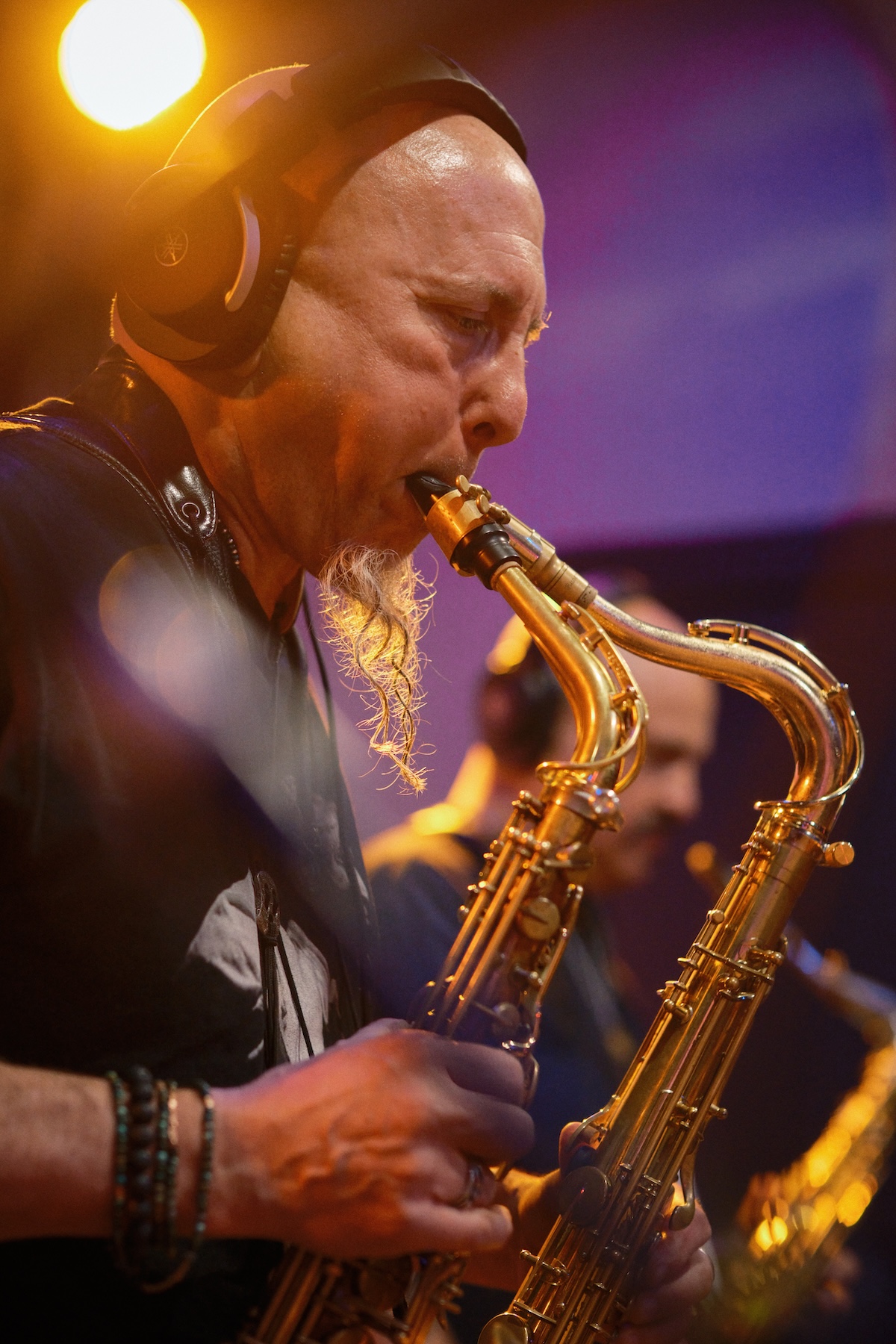
Saxophonist Jeff Coffin is a three-time Grammy Award winner, a member of Dave Matthews Band for almost two decades, a university adjunct professor and record label owner. Even so, and after playing for almost 50 years and teaching over 400 clinics, he “wishes he were better” at combining chords to build harmonies.
Although it usually takes him only one hour to teach high school students chord fundamentals and open up a whole world, the journey into it can go as far as they want. The same goes when covering more advanced material with students in Vanderbilt University’s Blair School of Music, where he shares the same message that fundamentals are the building blocks for everything else: the better we understand them, the better everything else will be, just like with anything in life.
He holds himself to the same standard, always learning, evolving and improving.
True to his heart for teaching, Coffin is all about relatability and a master of metaphors about music, art, life and how they all relate. He aims to stay malleable “like wet clay” when tackling new creative projects. His calendar is overwhelming at times, so he reminds himself that with meaningful commitments, he’s “pouring water into a cup,” not onto a flat table.
Coffin shared with us some of his latest pursuits and philosophies, including where his own fundamentals began.
Building a foundation
Coffin grew up in Dexter, Maine, “a small town in the dead center of the state, along the 45th parallel,” he says. He began playing saxophone in middle school, and the summer before entering eighth grade, his local band director chose him to play in a professional combo that gigged on weekends. By the time his family moved to New Hampshire the next year, he had bought his first horn with the money he made from gigs.
He began his college career part-time at the University of New Hampshire before transferring to the University of North Texas, where he earned a degree in music education in 1990. While he learned to practice at the former, he learned commitment at the latter.
“I was in the practice rooms, you know, every day for over three years, between eight and 12 hours a day, absolutely every day. I felt like I had a lot to catch up on, and it was my time to be very self-disciplined. It was work that I found I really enjoyed doing, which also served me well,” Coffin says.
After graduation, he briefly considered New York and San Francisco before landing in Nashville in 1991. He’d spent about a week there on his way driving back to New Hampshire after school in Texas, liked the vibe and happened to have a friend who needed a roommate.
Finding a fit
Not a fan of country music or even interested in doing studio work long-term, he picked up some work gigging and as a private music instructor and substitute teacher, ultimately finding a home, many friends and collaborators in Music City.
“This is where I met the Flecktones. Béla [Fleck] was living here, all the Wooten brothers were already here, and I thought, ‘Wow, okay, you know, there’s this going on, also.’ And then slowly, people started moving in, I call ‘the misfits,’ and we would all find each other. I had a jam session that cats would come to, and we would meet, play and start groups together. That continued to expand.”
Coffin met Béla Fleck in 1996 and joined the band a year later, staying on for 14 years. It was during that time he met members of Dave Matthews Band, with whom he began playing in 2008. He initially subbed for the band’s original saxophonist, LeRoi Moore, after an accident and complications from it that ended Moore’s life several weeks later. Coffin kept commitments with both groups for a while, also continuing to write and record his own music.
Entering a new energy
When Coffin joined the Dave Matthews Band, he stepped into one of the biggest live acts in American music, one that still draws well over 13,000 fans on average per show, each of which lasts two and a half to three hours.
“It is amazing, and it also has a particular anonymity to it, which is interesting. I get more nervous if I am playing where people are right up on us, and there’s like 75 or 80 people there. With the [Dave Matthews Band] shows, the energy that we get back from the audience is palpable, and what we give is palpable. It’s a very high-energy band, and every show is different; that is why people keep coming back,” Coffin says. “That’s what we dream about as musicians. When you play Little League, you dream that you’re in the World Series, and you win the game . . . [It’s magic] being in a group that feels like every time we play, we win the World Series.”
Coffin describes the band’s 2024 induction into the Rock and Roll Hall of Fame as an overwhelming honor, adding that he’s thankful for recognitions and accolades, like this and his Grammy awards, while keeping it all in perspective.
“I try to have a healthy relationship with those things, and, as I tell my students, ‘Give yourself a little pat on the shoulder and a little kick in the ass, but don’t do either of them too much. If you start to get a big head, well, we’re gonna talk about it,’” Coffin says.
Teaching life through music
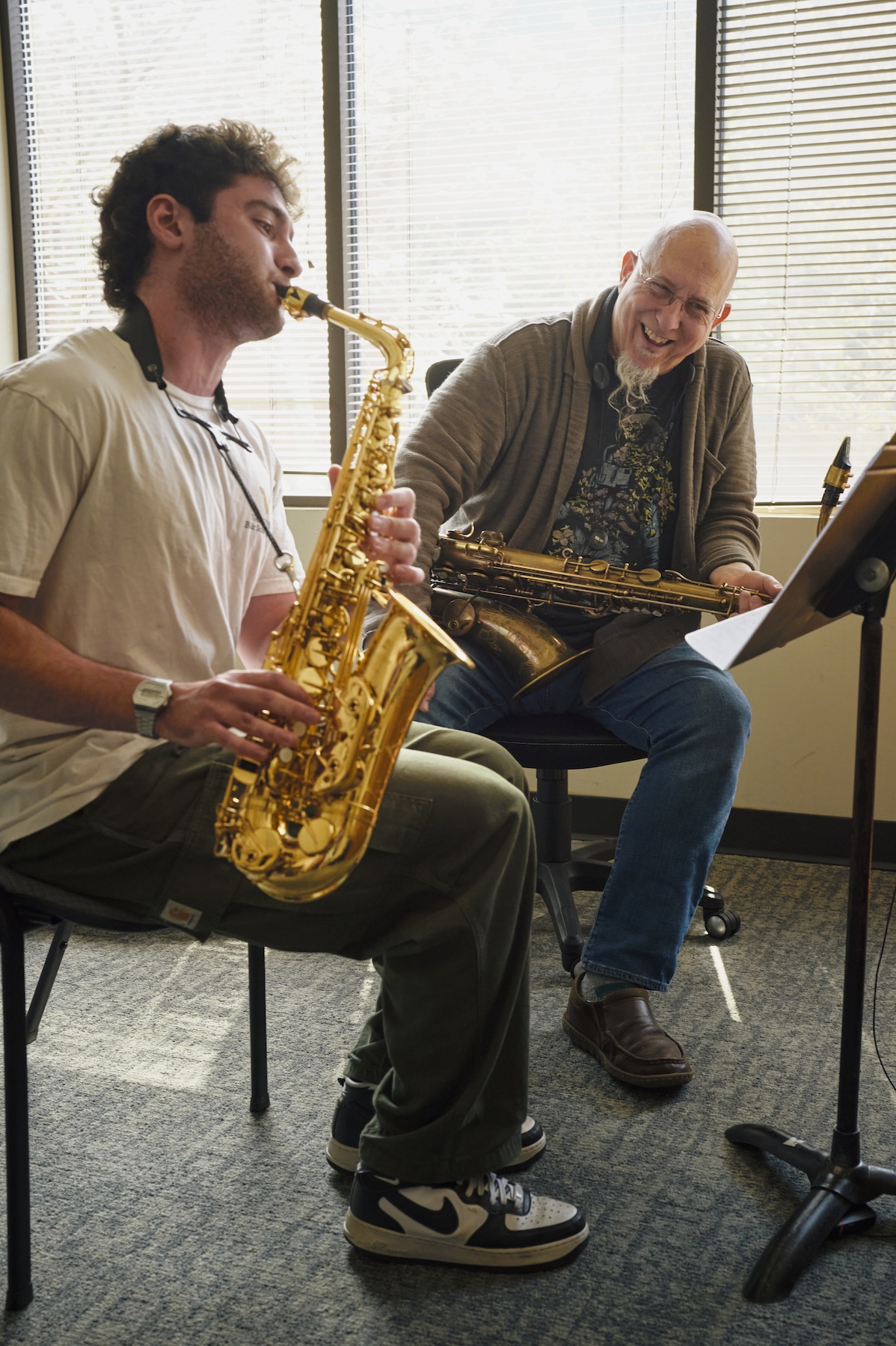
When he’s not on the road, Coffin teaches clinics to high school and university students while also working with his students at Vanderbilt, a role he took on in 2015. Acknowledging the range of experience across these groups, he always seeks to present the material through practical applications.
“At the end of the day, we are teaching life, just using music as the metaphor to get to these different things,” Coffin says.
He points to fundamentals and how mastering them serves students, whether or not they pursue music as a career. If they do not, the discipline will set them apart in any field. If they do, it takes more than talent to stand out in an extraordinarily competitive field.
On that note, sometimes plumbing is his metaphor of choice, too.
“I was telling someone the other day, ‘If you want to be a plumber, you damn well better know how to fix a toilet, right?’ So it’s the same thing with a musician. If you wanna be a musician, you’d better be able to play. It’s all the other stuff that gets you called back. That’s the stuff we talk about a lot, the relationships that they have with people,” Coffin says.
Some of the concepts he covers with students at all levels include being an asset and how listening to be considerate of others is as important as listening to music. He underscores that by sharing how the word “listen” can be rearranged to spell “silent.” He asks them to raise their hands if they’ve ever had goosebumps from hearing music. When everyone’s hands are up, he asks them to look around and consider the shared experience of music and its collective power.
“Being at Vanderbilt, these kids are off-the-charts smart and self-disciplined. They learn really fast, and they get it,” Coffin says. “Every lesson is patterned to help facilitate the best possible outcome, not only how they learn but with what’s going on in their lives. There have been times when my student will come in, and we don’t even play. We just talk the entire hour because that’s what they need. Communication is a lesson in itself.”
Serving through music
Coffin says he also teaches music as a service industry, first serving the music, second the musicians he plays with, and third, the audience.
“So I’m at least fourth on the list, but by serving those others, I, in turn, get served. And so I think that this, this philosophy has helped me align my priorities in a way that worked for me,” Coffin says.
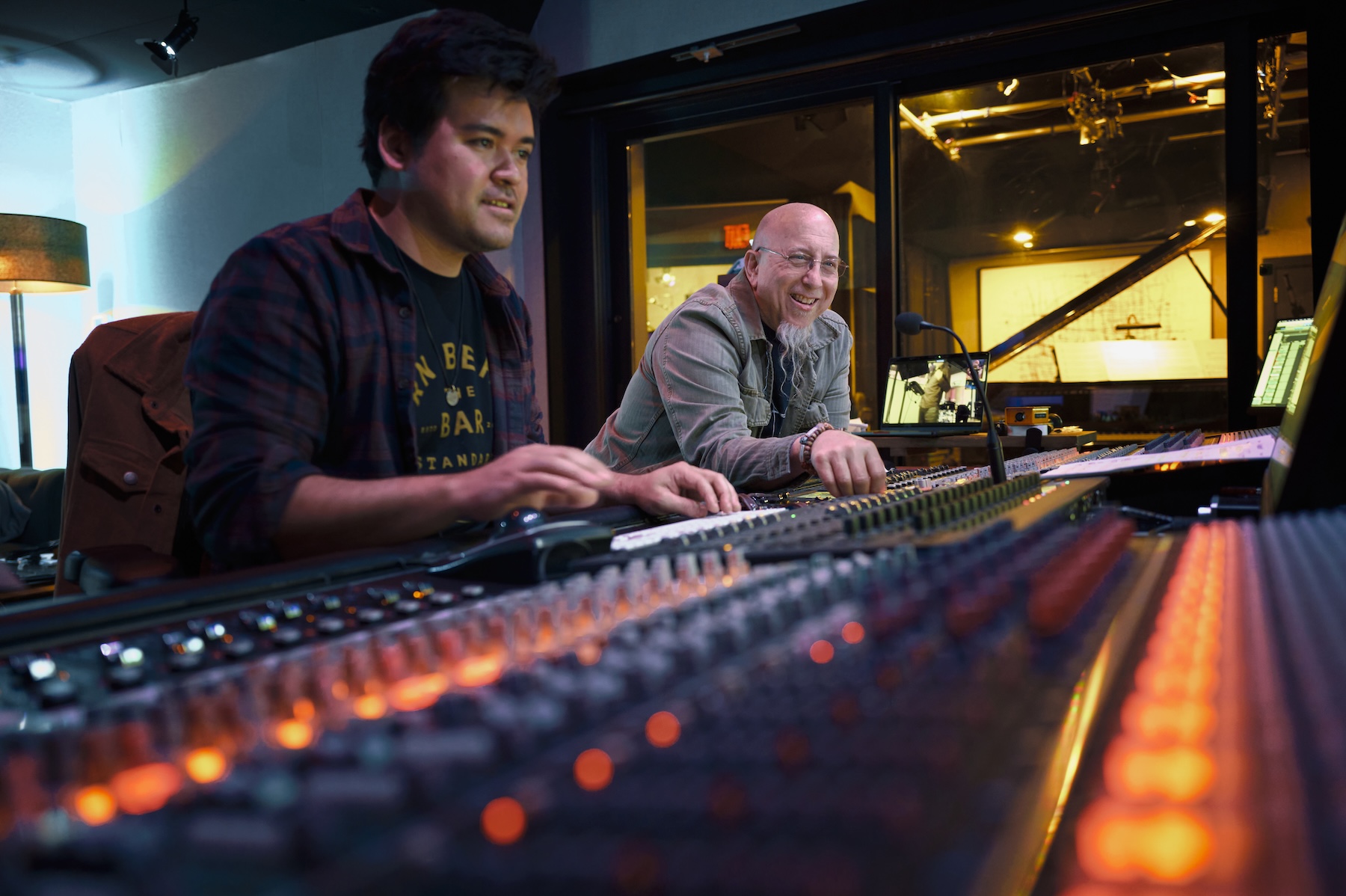
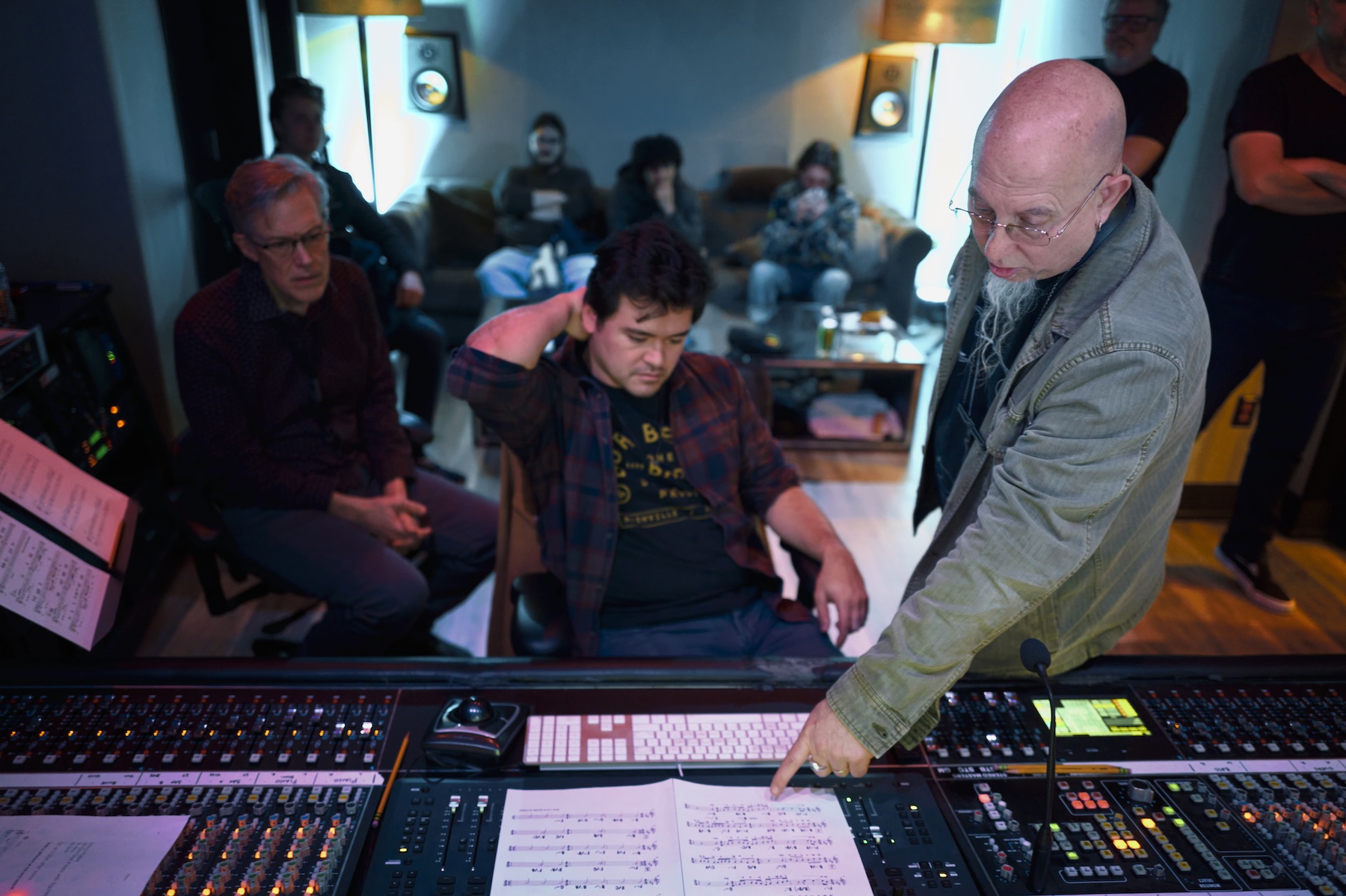
To that end, Coffin has built a creative life with many moving parts. He launched Ear Up Records about 14 years ago and has 24 solo records to date. He writes, engineers and occasionally mixes. He’s published books and has a children’s series in the works, co-created with trumpet player and illustrator Augie Haas. The series introduces kids to instruments with a sense of humor and a rhyme scheme he describes as what you’d get “if Dr. Seuss and Thelonious Monk had a child.”
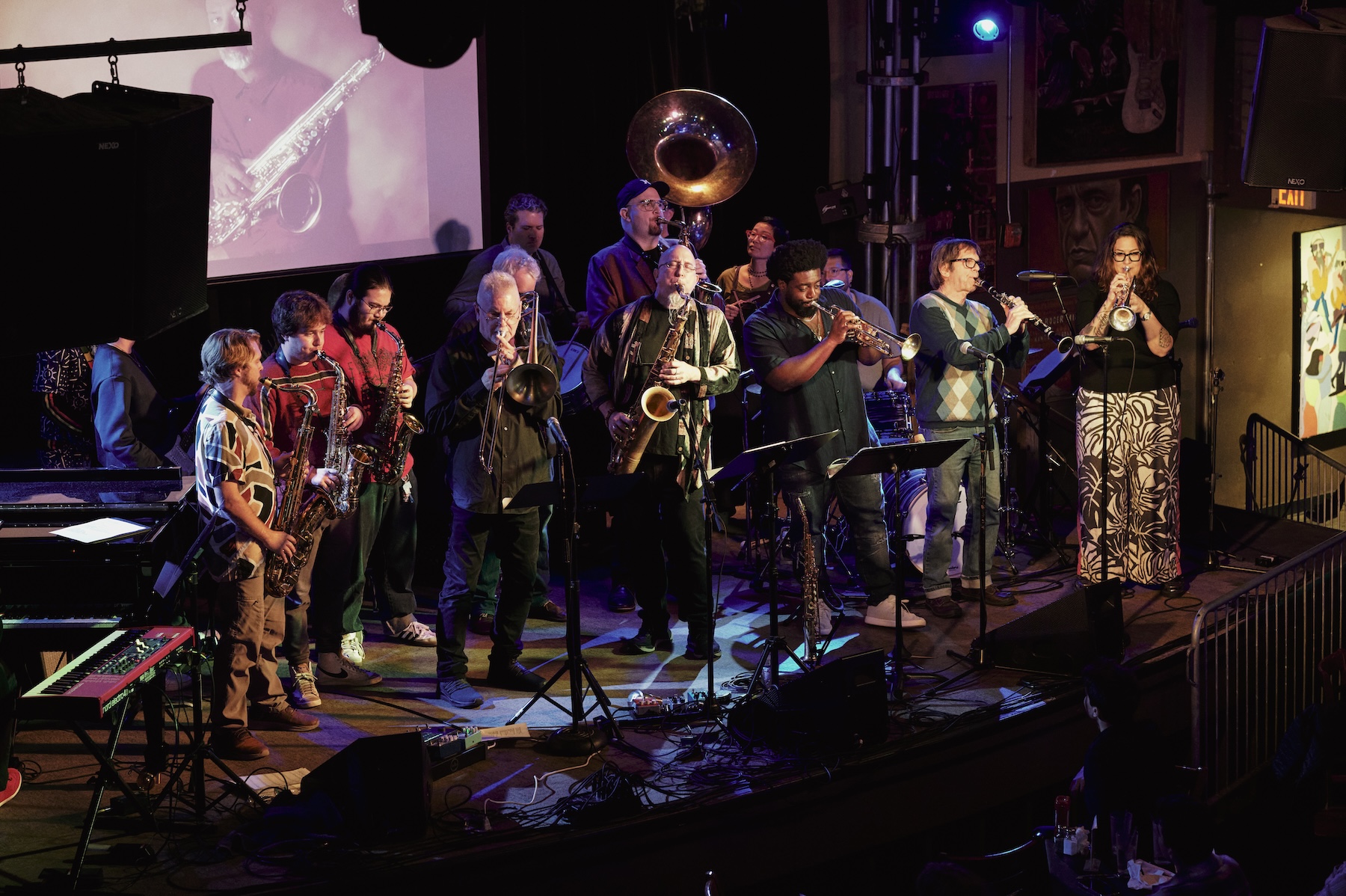
He co-founded AfricaNashville, which brings master drummers from West Africa to the city, and serves as artistic director of the Nashville Jazz Festival, with the second iteration set for October 24-15, 2026. Last year’s inaugural edition employed 71 local musicians. This year, he’s working earlier, building in student workshops and exploring a live radio broadcast partnership.
Exploring art with intentionality
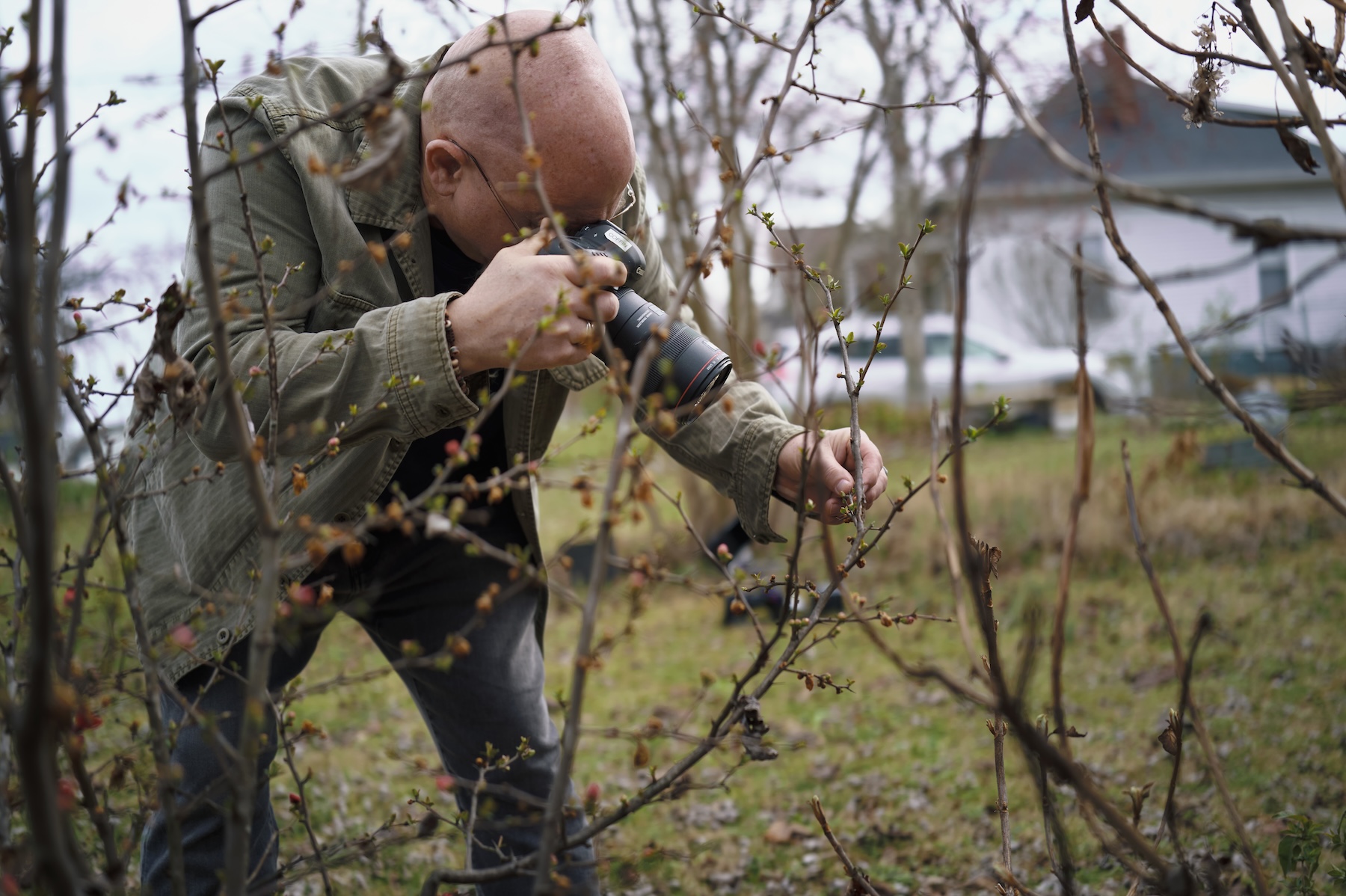
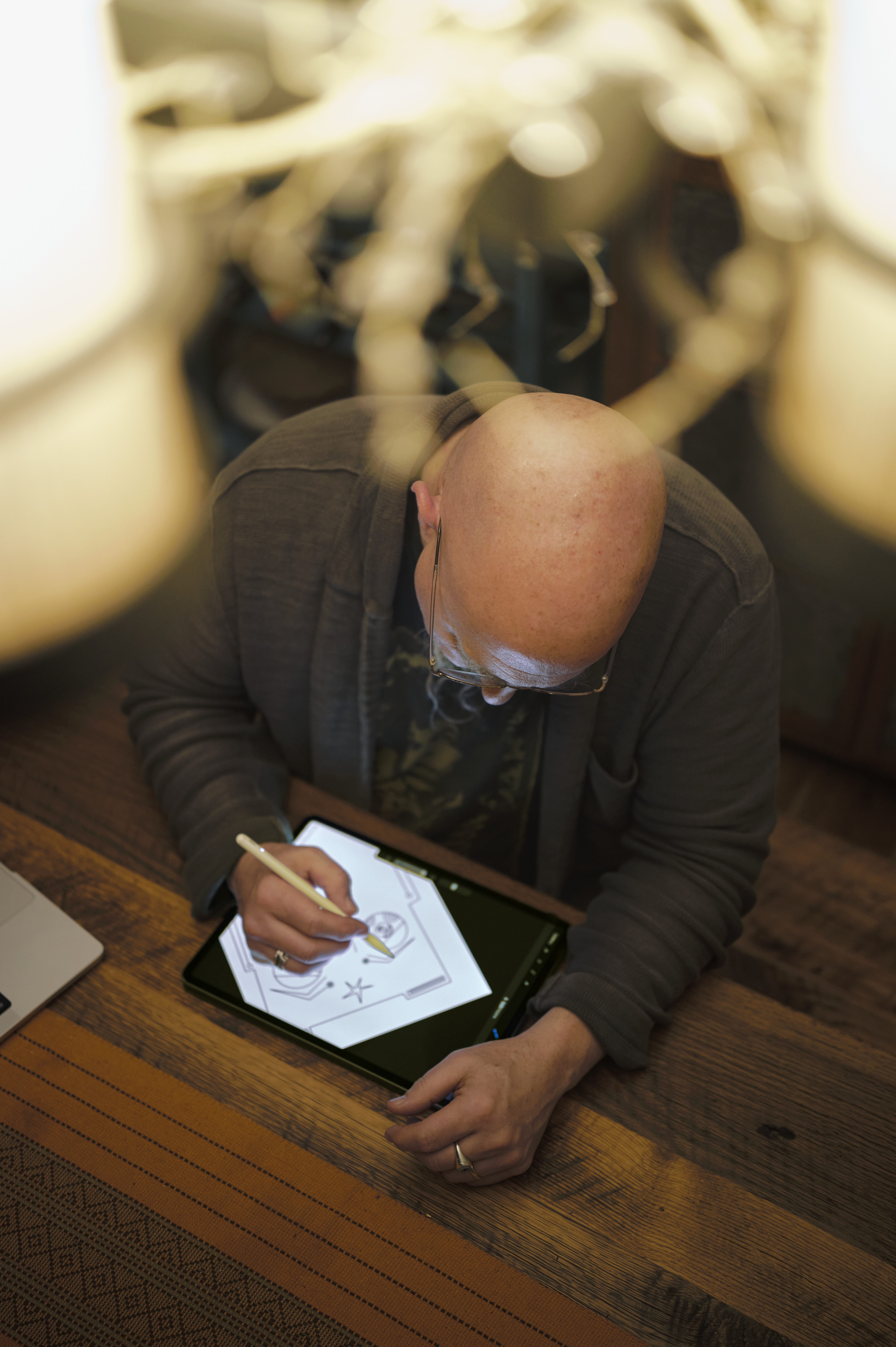
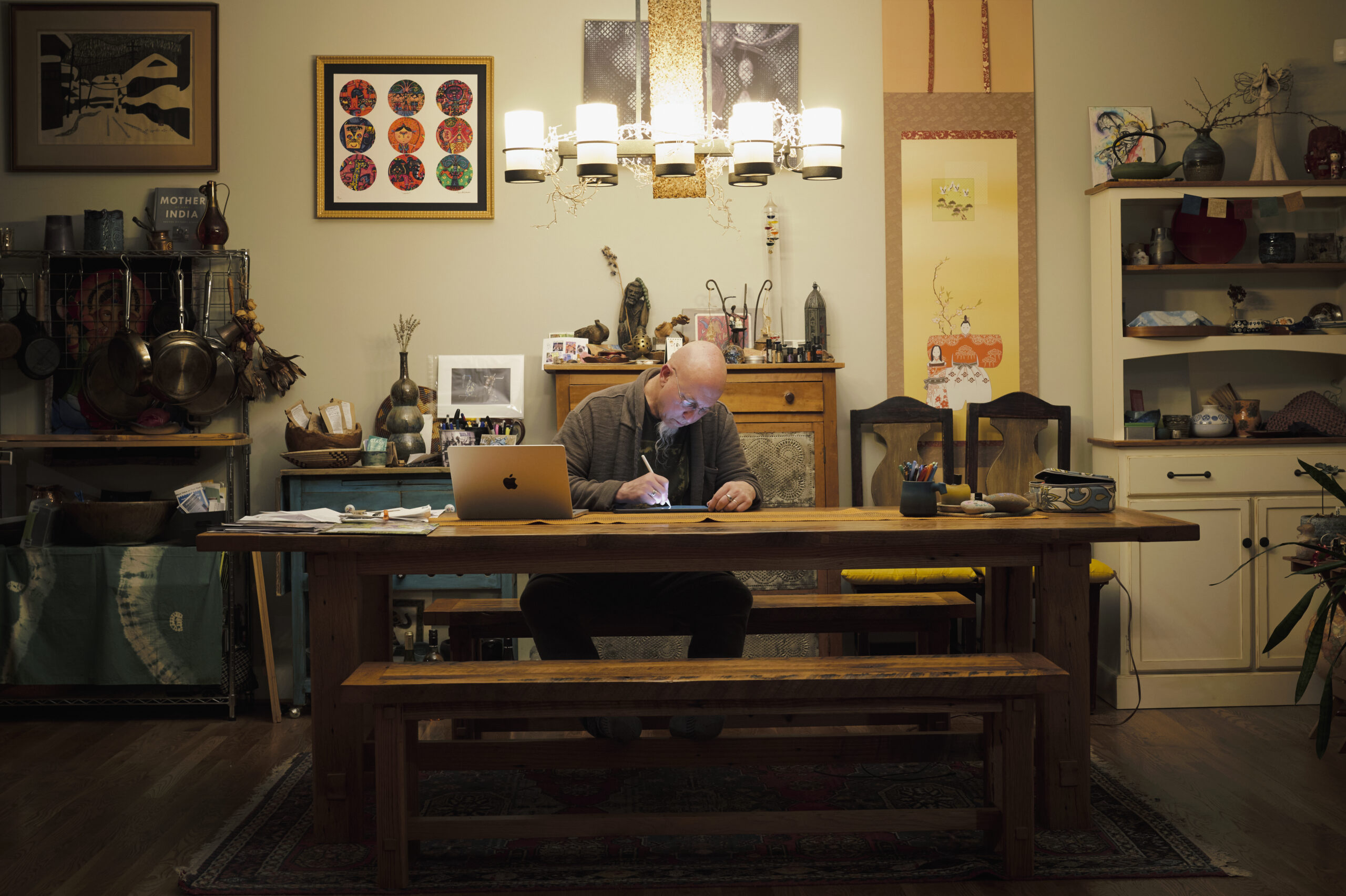
Coffin also makes art, including a longtime passion for photography and a growing collection he wants to exhibit someday, ranging from macro shots of frozen raindrops on fallen leaves to archival images from his years with the Flecktones and Dave Matthews Band. Most recently, he’s been creating other forms of visual art, using an iPad app.
He continues to tour while keeping a list of other musicians he’d love to collaborate with on recordings. Music education and advocacy on a national platform also holds a lot of appeal, Coffin says. It all runs on the same principle of intentionality.
“For me to go after a bone, it has to have some meat on it. I’ve played a lot of gigs and toured a lot, and I love it. But I don’t want to go out and do gigs just to do gigs; I want it to be meaningful,” Coffin says. “When people who are Dave Matthews Band fans talk to us about how they feel the music has literally saved their lives, it doesn’t get any heavier than that, you know? That to me is as deep as it gets. When there is music that affects people like that, it’s a whole different perspective. It makes you realize that there is truly a power in music, there is truly a healing in music, and those are things that I consider every time I play.”
The Three440 Artist Story Series takes you beyond the spotlight and into the real lives of Yamaha Performing Artists. Each story is a window into the creative process, pivotal moments, setbacks and victories that define an artist’s path.