Creating Well-Rounded Percussionists
The natural, optimistic view of aging is that as we grow older, we gain perspective. As percussionists, most of us have gone through some compulsory stages of development, ranging from an inferiority complex to overconfidence, percussion nerd-dom and finally acceptance of being somewhat void of an “instrumental” identity. It’s clear to me that we need to consistently confirm that our own percussion pedagogy is serving our students as developing musicians, not simply percussionists. This, of course, has been the subject of many of my lectures, articles and presentations, but there is always room to find new ways to focus on and serve our students.
At every turn, our instrument family gives us many opportunities to get caught in the details. Percussion encompasses multiple instruments, multiple techniques and serves multiple genres of music, which makes it increasingly difficult to stay grounded in the same foundational skills of music-making that other artists can more easily contextualize. Part of this challenge is simply the hyper-information age that we live in combined with an instrument group that is so ubiquitous and broad. We can easily suffer from option paralysis as we scroll through instructional videos, watch and listen to the world’s best percussionists, and sort through seemingly endless resources. It’s all too easy to spend more time watching, searching and listening rather than playing. How do we train our young percussionists to be musicians as well as cultivating excellence on an instrument that is so broad?
What is a Well-Rounded Percussionist?
Since the 1990s, the term “well-rounded percussionist” has been the focal point of percussion pedagogy. Creating the well-rounded percussionist became the lens through which we based all our percussion pedagogy. Performing specialists pushed back, rightfully so, arguing that a “jack of all trades, master of none” scenario would stifle the quest for excellence, creativity and innovation. Educators would convene at conventions, sharing stories of students who can barely find middle C, or could not decipher the lines and spaces if their lives depended on it.
The good news is that we have benefitted from this debate, and numerous performer-educators have helped us evolve faster than any other instrument family. What followed was two decades of new repertoire, more focus on chamber percussion and an amazing output of contemporary music for our instrument.
What does it really mean to create well-rounded percussionists? For me, as an educator who teaches many non-percussionists, this means creating percussionists who can think, hear, perform, create and experience music on an equal level with their instrumental and vocal peers. If done correctly, music education should be a holistic endeavor, where the instrument is secondary to the internal musicianship of the performer. On many occasions, I have witnessed a student performing on a secondary instrument who has the maturity equal to, or even excelling beyond that of a primary player on the same instrument.
Building the Foundation
I reflected on what it means to know music? Here is a short list:
- Music Theory
- Pitch
- Rhythm
- Aural Skills
- Physical/Idiomatic
- Tone
- Expression
- Timekeeping
- Mechanics/Technique
- Performance
- Repertoire Study
- Sight Reading
- Recovery/Confidence
- Creativity
- Interpretation
- Composition
- Improvisation
Before trying to include everything on this list for every student, two large-scale questions must be asked of every music educator. Are your students experiencing music to a deep enough degree to:
- Come back to your classroom next year?
- Continue music when they leave your classroom?
Less than 5% of our students will go on to teach and/or perform music as a career. So, what and how we choose to teach must align with the end in mind. For all music educators (specifically public school teachers), the main goal should be music enrichment.
Music Enrichment
For the percussion section, there are two big challenges in creating a pedagogy that focuses on music enrichment.
UNEQUAL FUNCTION: First, the default vehicle for music education is the large ensemble. Although this has improved tremendously over the last three decades, historically, the function of the percussion section has been one of accompaniment, color, timekeeping and support. These are all noble functions of a section player, which we are still very proud to approach with artistry! However, this paradigm has made it very difficult to create well-rounded percussionists (and musicians) in an academic setting.
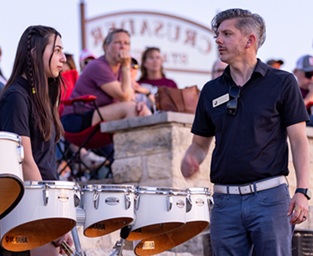
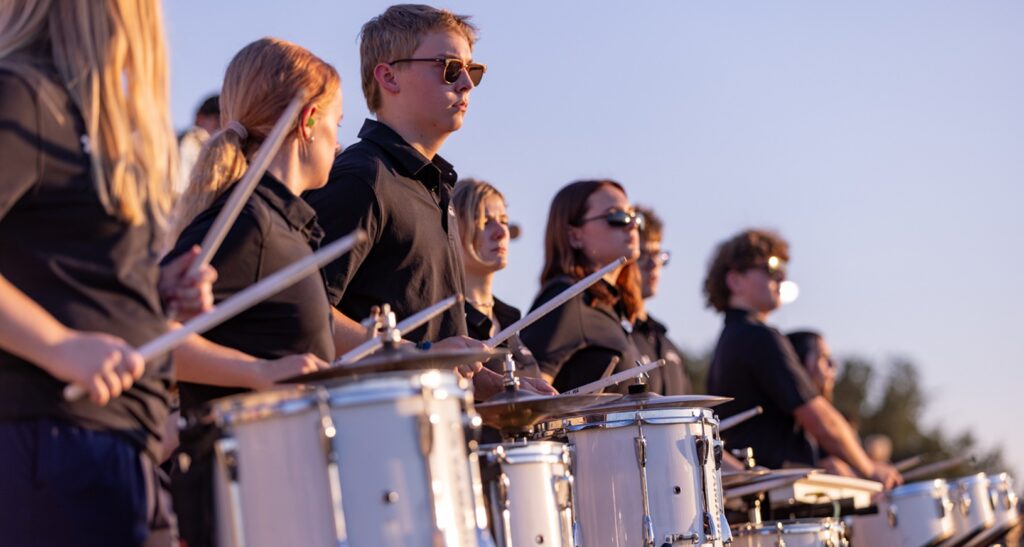
JACK OF “NO” TRADES: Second, our instrument family, which has, admittedly, evolved at least in part in such large ensemble environments, does not offer the opportunity to learn music on a single instrument. In sampling the average middle school percussion folder, you might see these parts for any given concert:
- Piece 1 – Snare Drum
- Piece 2 – Shaker
- Piece 3 – Tacet
- Piece 4 – Cymbals
In comparing this list to any trumpet/clarinet/violin or choir folder, you will see a drastic difference in how students experience their music ensemble. The obvious remedy for this inequality is chamber music. Unfortunately, most teachers don’t have the staff, space, time or players to design their entire band/orchestra curriculum around chamber music. As far as promoting the creation of a percussion ensemble at your school — the answer is yes. Yes. YES!
Being mindful of how you teach the fundamentals of each percussion instrument can yield results that can achieve one of the most important things in percussion education — transfer value (shout-out to Jeff Moore!). If you find yourself teaching a percussion skill that cannot be transferred somewhere else in our instrument family, adjust and adapt immediately! Aim to create young musicians who happen to have sticks or mallets in their hands!
CONTROVERSIAL OPINION ALERT!
I think young percussionists should exclusively focus on learning pitch, rhythm, ear training and movement. “Wait, how can you leave out the triangle, tambourine, cymbals, concert bass drum, castanets, maracas, etc.?”
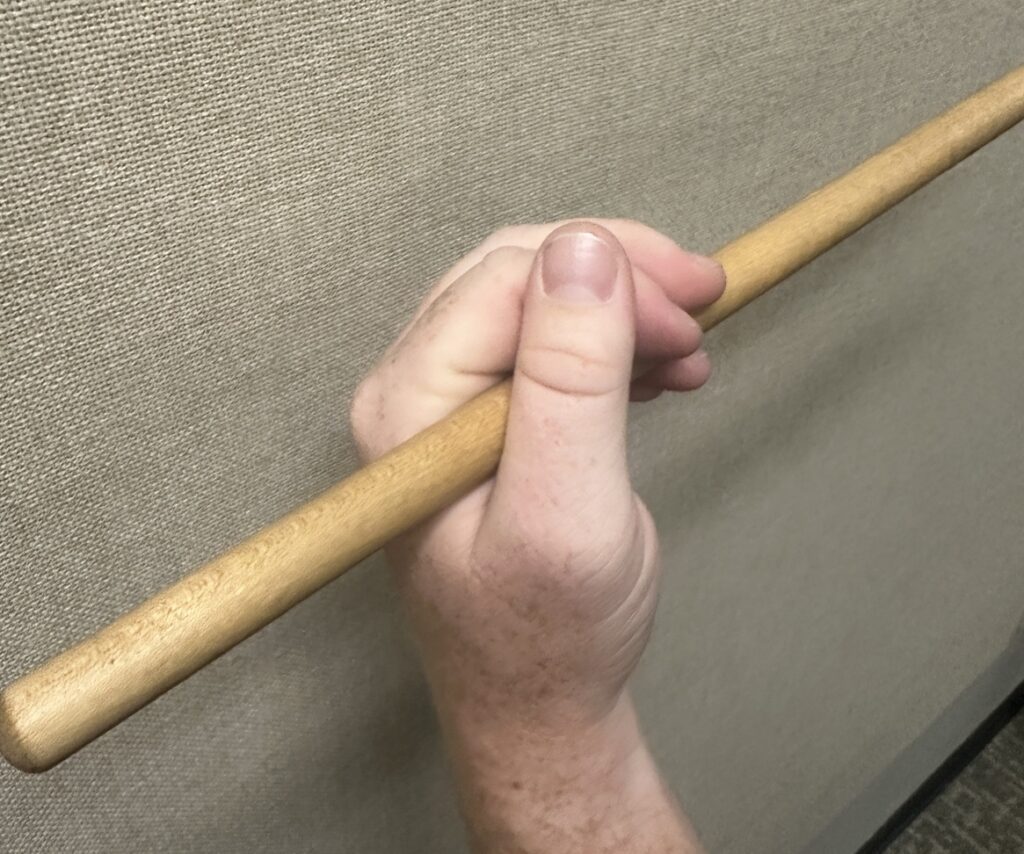
We cannot exclude teaching students these instruments. However, because of the limited time we have, it becomes a refined game of prioritization. A student who has a strong foundation in pitch, hand development and ear training will be able to prioritize tone, time and feel when shown the basic techniques of these difficult instruments. How, when and where to implement these techniques is the difficult job of the ensemble director or percussion teacher. However, if we are teaching skills that can be transferred to other parts of our instrument family or even to other instruments, the focus has to be on these foundational skills of musicality.
For example:
- Teaching Keyboard Percussion becomes Fundamental of Pitch through Keyboard Percussion-Specific Skills
- Teaching Snare Drum becomes Fundamentals of Rhythm and Movement through Snare-Specific Skills
- Teaching Timpani becomes Fundamentals of Ear Training before Timpani (contextual ear training)
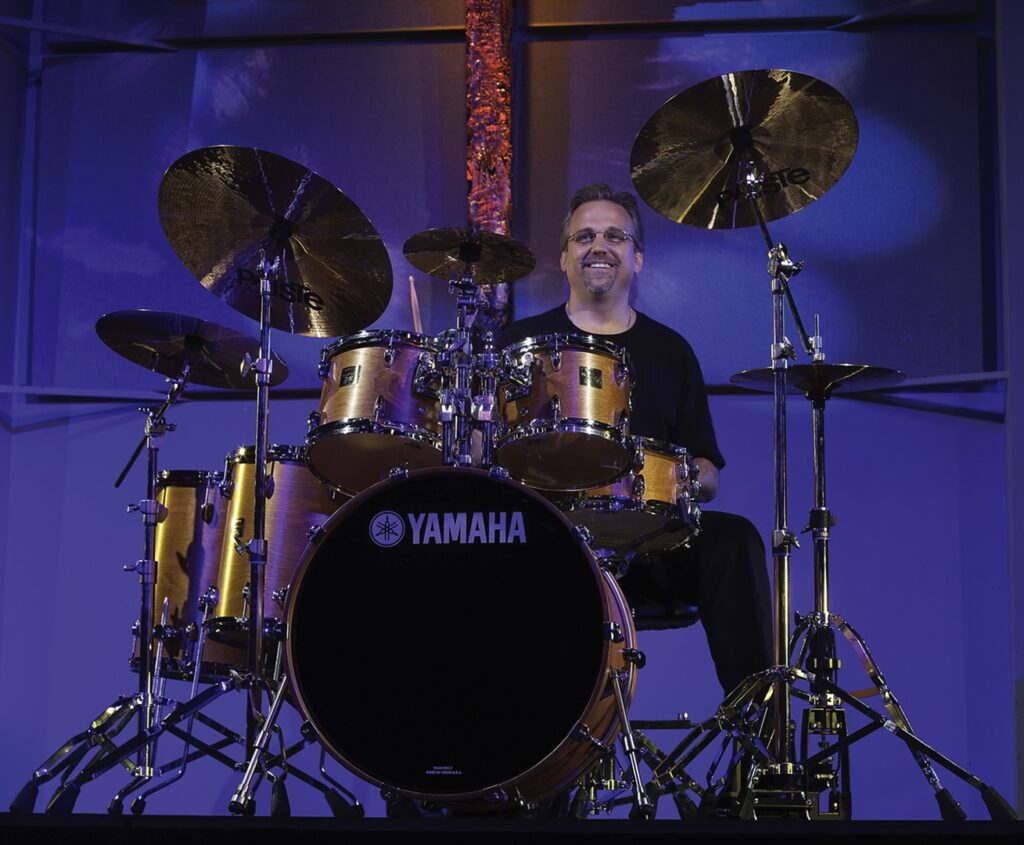
- Teaching Drum Set becomes Fundamentals of Movement and Rhythm through Drum Set -Specific Skills
In the next series of blog posts, I will provide techniques in each of these areas that are engaging, idiomatic, creative and most importantly, transferable. The goal is to make everything we teach in percussion foundationally sound while carefully balancing efficient, creative ways of teaching idiomatic techniques. This will serve our students by making connections across our own instrument family, as well as prepare them to be enriched through music with any instrumental vehicle they may choose in the future.
Keep reading