All In, Every Note
The pursuit of purpose through music.
Why do some people become musicians? Why chase music when it’s hard, demanding and an uncertain career path?
In this posting, we’ll explore the shared pursuit of purpose through music and talk about the reasons why musicians push forward, even when the odds sometimes feel stacked against them.
THE FIRST SPARK: WHERE IT BEGINS
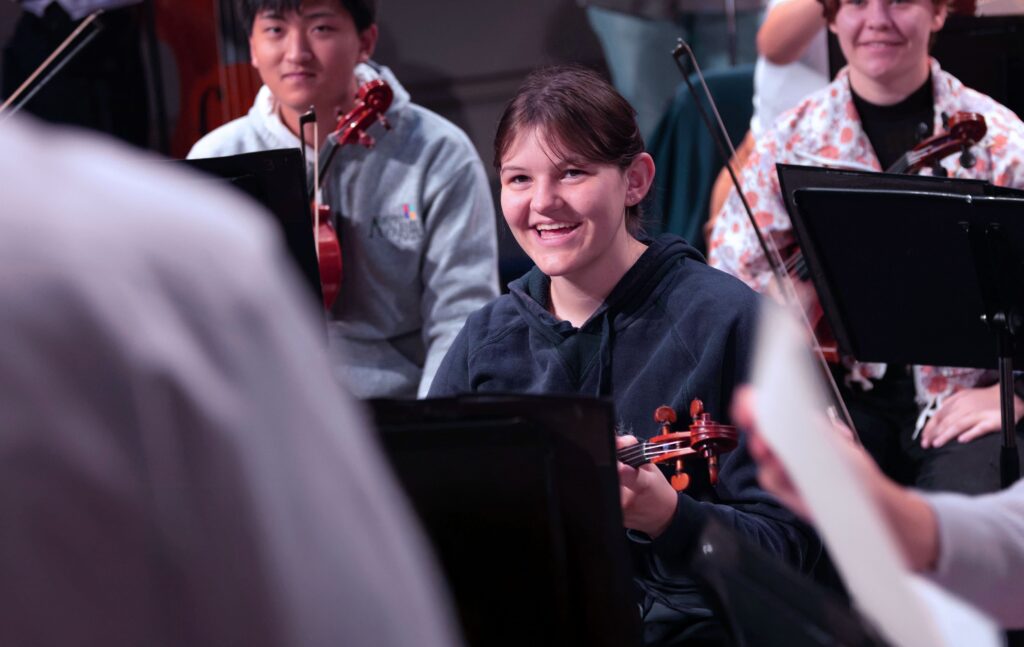
Most musicians have a clear memory of the moment music first “clicked” for them. “When I was in fifth grade, there was a day where we all got to try any instrument we wanted and I tried three,” recalls student Sarah Heimberg. “I tried the horn, I tried the clarinet, but when I tried the trumpet … I instantly knew I was never going to put it down.” Sarah says that she soon became obsessed with playing the trumpet. “I always wanted to be practicing, I was always learning new things. And I loved taking lessons.”
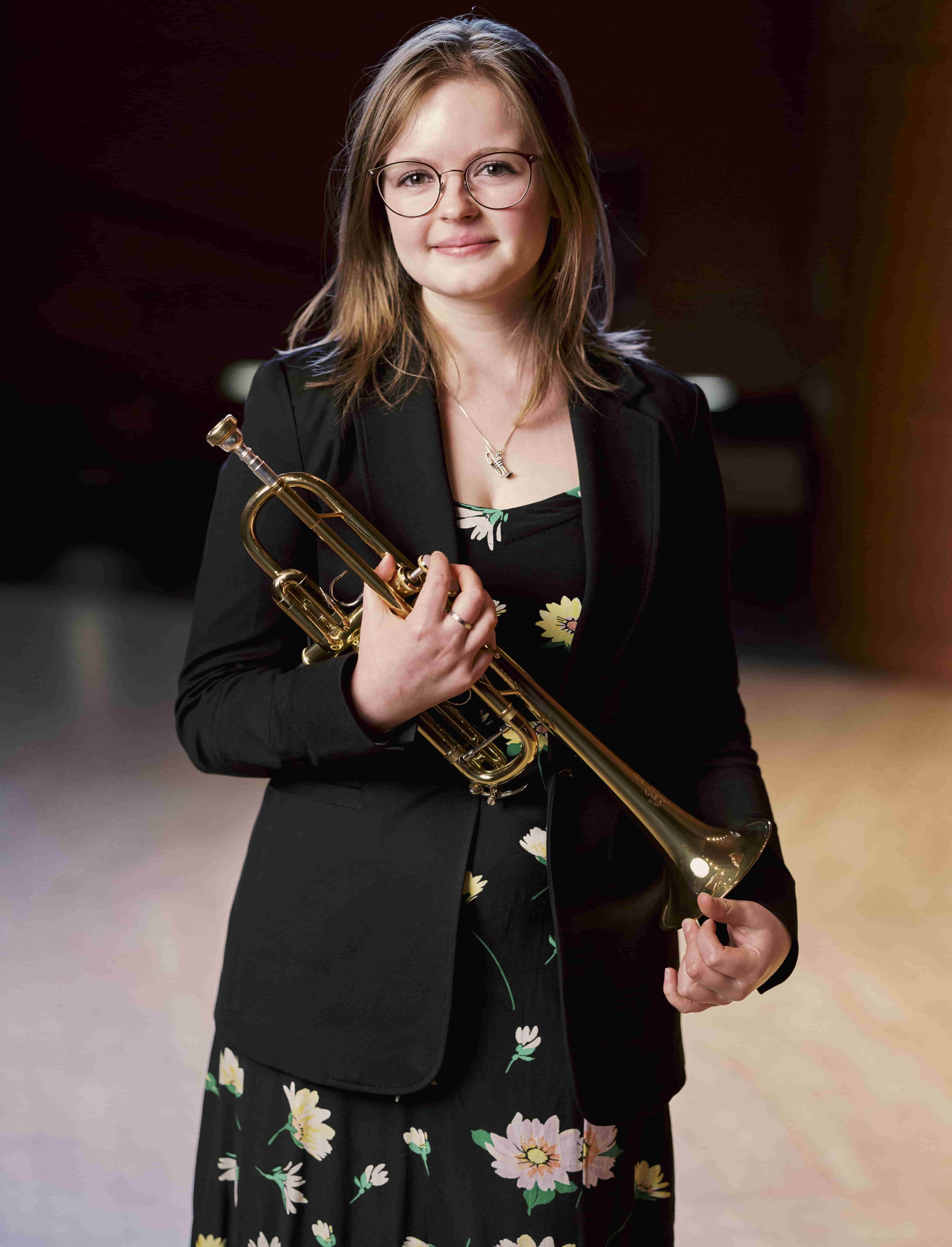
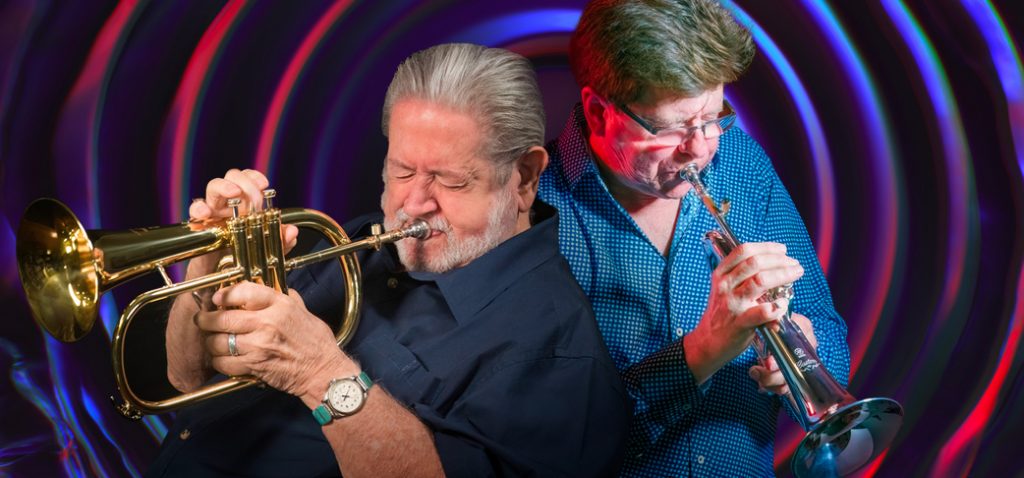
“They say that we don’t pick music, music picks us,” adds Tower of Power trumpeter Sal Cracchiolo. “My parents said I used to sing all the time when I was a newborn. Both of [them] were music teachers and they [started] me on piano at four years old. I learned how to read music before the alphabet.” Nonetheless, he soon decided that piano was not the instrument for him … and neither was accordion, violin or drums. It wasn’t until Cracchiolo was 12 years old that he discovered the trumpet and, like Sarah, quickly fell in love with the sound of the instrument.
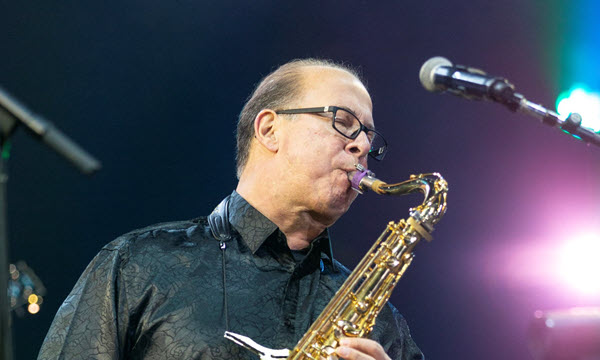
Early parental encouragement seems to be a recurring theme for musicians. When Grammy®-nominated producer, singer, composer and woodwind player extraordinaire Scott Mayo decided to take up saxophone at a young age, his father got him a sax “like the next day.” A couple of years later, Scott wanted to learn to play flute too. Again, he recalls, his father’s reaction was “‘Okay, no problem.’ He just went out and bought me a flute.”
Interestingly, many musicians start out on a different instrument than the one they eventually adopt. Pianist (and long-time Adele accompanist) Eric Wortham started as a drummer, for example. Tower of Power founder Stephen “Doc” Kupka began as an oboist but switched over to baritone sax in his college years because he wanted to play rhythm and blues. ToP’s famed drummer David Garibaldi initially wanted to play trumpet but found himself practicing violin instead because his elementary school band had run out of trumpets to give out. It was only when that didn’t work out that he discovered the joy of drumming.
Many musicians have similar stories, but wherever, whenever and however it happens, there is one indisputable fact: Once music grabs you, it rarely lets go.
LISTENING TO FIND YOUR VOICE
Musicians often credit their early influences — the artists, genres and sounds that shaped their musical identity — as having a major impact on their lives. On violinist Kev Marcus’s first day of lessons, his teacher gave him a tape featuring jazz violinist Stuff Smith. “It really changed my life,” says Marcus. “He was playing, but he was doing it in a way I had never heard before. I felt like when he played violin, it spoke to me. It had soul … I could hear him. I could feel him.” He shared the tape with classmate Wilner Baptiste — with whom he would found the pioneering duo Black Violin — and the sound stuck with them both. Drummer Nikki Glaspie cites the first time she heard the Nirvana album In Utero when she was in 10th grade, and recalls the musical connection she felt at that young age for artists as diverse as Van Halen, Eve 6, Rage Against the Machine, the OJ’s, and The Gap Band. Guitarist Butch Walker has a clear memory of asking his parents to take him to a KISS concert when he was just eight years old. The over-the-top performance and spectacle had a pronounced effect on the young Butch, who quickly decided to devote his life to playing rock and roll.
Perhaps the most important skill any musician needs to master is learning to listen — not just to music, but to themselves. Guitarist/composer Rich Tozzoli recounted his personal journey in that regard in this Yamaha blog posting, describing how, as his comprehension of what he was listening to improved, his tastes broadened too. “I had long loved rock, jazz, funk and reggae, but I [soon] started taking an interest in classical music as well,” he writes. Understanding the range and timbre of each symphonic instrument and the ways they interacted to form a cohesive sound was, for him, like turning on an “aural light bulb.” Educator/arranger/composer Omar Thomas explains it this way: “I would hear something and say, ‘What is that chord? What is going on there?’ I’d want to work with that chord progression and understand how it worked and see if I could manipulate it for my own uses.”
Sarah Heimberg is a firm believer that, especially in the early years, listening is crucial. “I was always listening to classical music as a kid,” she says. “One of my earliest memories was hearing Copland on the radio when I was going to preschool.” She also feels that listening is the key to crafting individual style. “So much of developing style is figuring out what you like and taking everything you can from that,” she explains. “And, as you get older, you learn to listen to yourself with wider ears.” In other words, evolving a personal sound comes from identifying, chasing and building on the music you love.
MENTORSHIP
Guidance from teachers and peers — or sometimes even unexpected mentors — is another common theme when musicians talk about their musical journey. Sarah Heimberg describes the influence of teacher David Bilger (Philadelphia Orchestra, Emeritus) as being transformational, saying that he enabled her to regain her musical voice when she felt like she had lost it at one point.
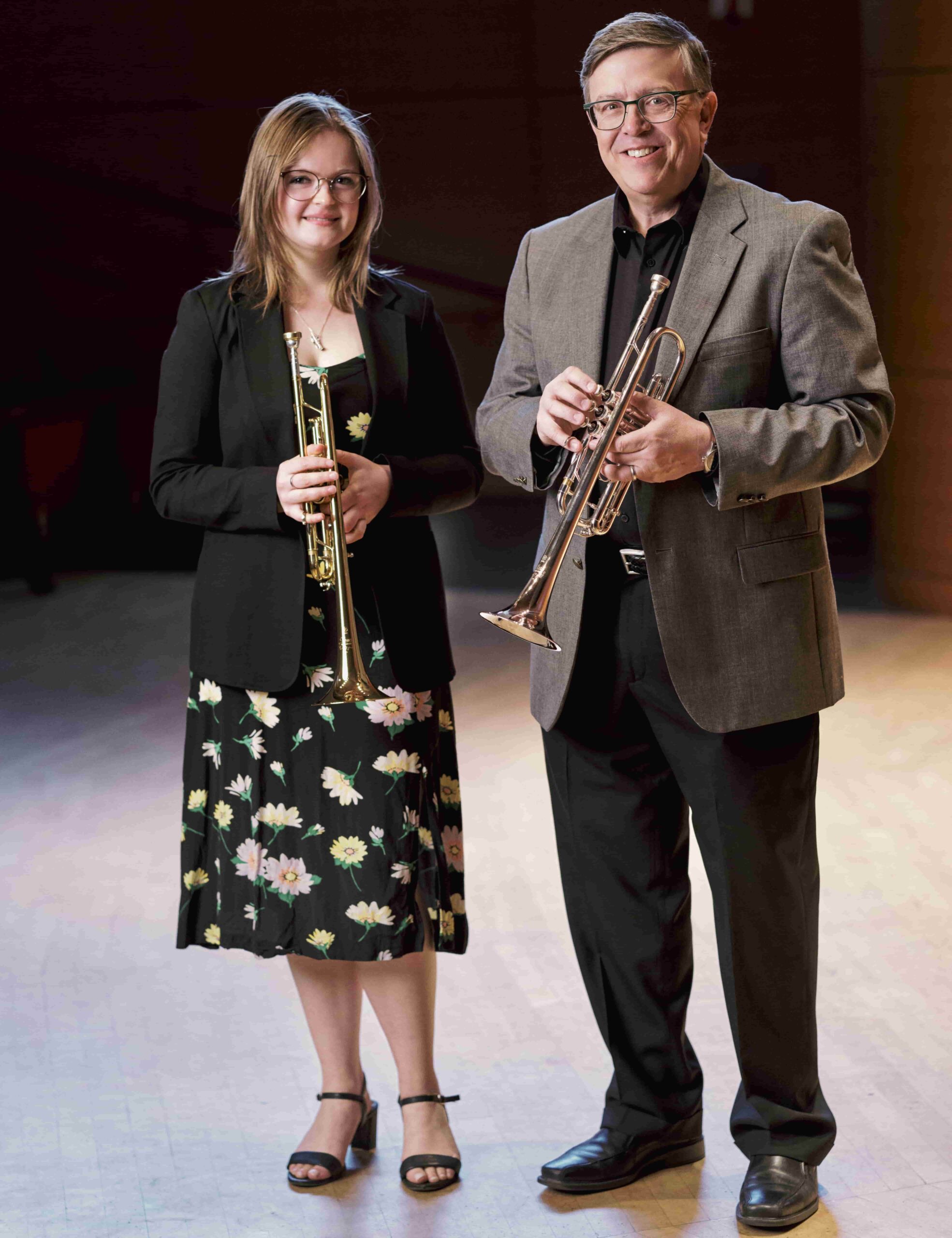
“There have been a-ha! moments for sure,” she continues, “where he’ll say something about how I’m using vibrato or how I’m articulating or how I’m using the color of my sound, and it just clicks in that instant. I go, ah, that’s it — I get it now, and then I can kind of take that and run with it.”
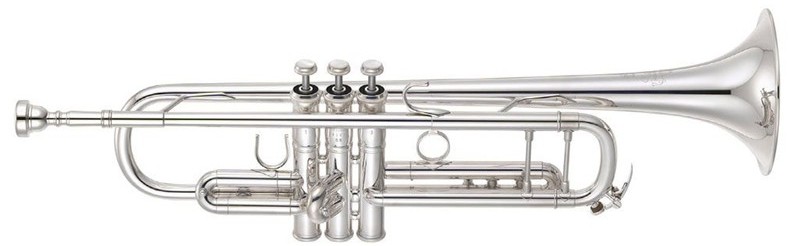
David Bilger was also responsible for Sarah discovering what she terms the “perfect trumpet for me” — the Yamaha Xeno Artist Model BR (which Bilger had a hand in developing, along with fellow artists Thomas Hooten and Thomas Rolfs). “It has everything I could ever dream of,” she says. “It’s in tune throughout [its entire range]. I can think a sound color, and it just comes out the bell. I remember when I first picked up this horn, I just started playing some random excerpts and I thought, oh my gosh, this is what I sound like. I felt like I sounded like me, completely.”
The rediscovery of your musical voice through growth and refinement can also lead to passing wisdom forward in a fulfilling cycle of learning and teaching. Sarah feels strongly that her teacher’s influence has led her to mentor others. “In the lessons I give to my students, I’m constantly repeating things that I learned,” she says, citing as an example Bilger’s simple yet inspiring explanation of music as simply being sound organized over time. “That was an a-ha! moment for me, and it’s one that I’ve repeated to my students countless times.”
FACING DOUBTS: WHEN QUITTING FEELS EASIER
It takes a thick skin to be an artist of any stripe, whether you’re a musician, a writer, a painter, or are trying to succeed in any creative discipline. You need to be able to cope with failure and rejection, as well as the sometimes crippling self-doubt that can follow. When Black Violin first started out, the idea of hip-hop violin was completely foreign. Club promoters would look at Marcus and Baptiste, instruments in hand, and often turn them away without even listening to their music, yet they persevered and eventually found success. “There are moments for everyone when something comes your way and it’s not the outcome you wanted,” observes Heimberg. “You say, well, I guess I should just quit. Clearly. I’m not good enough. I can’t do this.”
But that’s the easy way out. The harder path is to make the commitment to waking up the next day still wanting to play. “Roadblocks are very common and very normal,” observes Butch Walker. “We’ve all been there as guitar players, and songwriters especially, where it’s not easy to force any sort of inspiration.” As clinician/guitarist Robbie Calvo points out, “We aren’t machines, and as humans, our performances will fluctuate on a daily basis.” That’s why, he advises, you should “always refer to yourself kindly, knowing that you are always improving, one practice session or gig at a time. Beating yourself up won’t fix the notes or the outcome, so just move on and laugh about it over coffee with friends.” Even when a Black Violin performance doesn’t go as well as he hopes, Kev Marcus keeps his head up. “I just practice, just keep trying to be better,” he says. “Those [tough] moments may seem long [at the time], but they’re really quick moments in life, and you move on.”
GIVING MUSIC YOUR ALL
The importance of musicians delivering their best every time cannot be overstated. The power of performance when you give your whole self — the shared energy that then occurs between musicians and audience — can be truly astonishing, yet achieving that synergy is not easy. “The hardest lesson is giving it your all, even when you’re afraid,” says Heimberg. “It’s so easy to hold back, to keep your voice inside, not just because it’s scary to put your voice out there, but because there’s so much judgment in what we do. That’s why learning to go for it, learning not to hold yourself back, is really hard.”
With the benefit of hindsight, Sarah admits that she sometimes failed in that endeavor. “I can think of things I’ve recorded and auditions I’ve done where I did not prepare to my fullest and I did not give all I had because I was scared that even if I did, it still wouldn’t happen.” In sharp contrast, she remembers walking away from a performance one day that hadn’t gone completely her way, “but I knew I had given every ounce of my musical voice to what I had done, and I was so proud of that, the outcome didn’t matter.
“I used to think that I would know that I made it as a trumpet player when people either really loved what I did or really hated what I did,” she continues. “I want to be so very myself when I’m playing the trumpet that people can’t help but have an opinion.”
The goal is to be so authentically yourself that people can’t help but feel something, to put your music so front and center that it inspires others to find their own voice. For musicians, that is the very definition of success.
THE DAILY GRIND: RITUALS, FRUSTRATIONS AND JOY
To some degree, becoming a musician is part ritual. It’s important to develop self-discipline and rigorous practice routines that incorporate repetition, sometimes to the point of frustration. Yet musicians eventually learn to embrace frustration as a part of growth and to find joy in the process, even when it’s messy.
“I have my routine,” Sarah reports. “I have to warm up at the beginning of the day or I actually do not know how to function as a human being. I know some people joke about that, but for me it’s really true. Maybe that’s something I should figure out, but … I have this giant array of things that I do as a routine, though sometimes I find that different things work well for me. Sometimes I need to go into the nitty-gritty of the coordination of the fingers and the tongue and the air. Other times I just need to work on pure in-tune sound with a clean, good articulation.”
“When you practice, listen intently, identify problem areas, and make the adjustments needed until you are happy with the results,” counsels Robbie Calvo. “Practicing mistakes just solidifies the problem, so identify and eradicate them before they become untamable monsters.” Eric Wortham concurs. “You know the saying, ‘practice makes perfect’?”, he says. “I had a teacher that said, ‘perfect practice makes perfect.’ You could practice doing the wrong thing and develop a lot of bad habits. But if you practice doing the right thing [over and over again], it’ll become [a good] habit.” According to Kev Marcus, it comes down to quality versus quantity. “My teachers always said, ‘It’s not about how much you practice, it’s about how you practice.’”
SO WHY DO IT?
Ask musicians why they persevere in the face of all the odds against them and you’ll likely get a variety of answers, but perhaps none so cogent as the one given by internationally acclaimed classical pianist Sara Davis Buechner. “Music is the one constant that I’ve come to depend on, especially in times of difficulty, struggle or stress,” she explains. “It’s good to have an anchor in life, and I don’t have any better anchor than music.”
“The scariest thing is to be true and vulnerable to yourself,” Eric Wortham points out. “It takes a lot of bravery, a lot of character and courage.” So if you want to be a musician, don’t just play. Don’t just perform. Ask yourself why you chose to go down that difficult path and let the answers inform your decision-making. And remember this one guiding principle: We make music to make ourselves heard … and because it’s who we are.
Check out the video:

Keep reading