
A Four-Phase Approach to a Self-Care Plan
Self-care is often viewed as a collection of individual tips, temporary routines or occasional wellness activities. Many people associate self-care with short-term actions such as taking a break, practicing meditation or spending a relaxing evening away from stress. While these strategies can be helpful, they are often applied inconsistently and without long-term structure. As a result, many individuals struggle to maintain healthy habits once life becomes busy or stressful again.
The challenge with many self-care approaches is that they focus on isolated moments rather than sustainable systems. True self-care requires more than occasional motivation or temporary routines. It involves creating intentional habits and structures that support physical, emotional, mental and social well-being over time. Instead of reacting only when stress becomes overwhelming, individuals benefit most from building a consistent plan that promotes balance and long-term growth. A structured self-care plan shifts the focus from quick fixes to intentional personal development. Rather than attempting to change everything at once, a long-term approach allows individuals to gradually build habits that become part of their daily lives.

The Concept of a Progressive Self-Care Plan
A progressive self-care plan views wellness as a layered approach rather than a checklist of isolated activities. Instead of trying to master every area of self-care instantly, you gradually build habits over time in a way that feels realistic and manageable. Each stage of the plan intentionally builds upon the previous one, creating a stronger foundation for long-term success. This approach encourages steady improvement rather than perfection.
One of the most important aspects of a progressive self-care plan is habit formation. Sustainable self-care is not about completing every task perfectly or following rigid routines every day. It is about developing small, repeatable behaviors that eventually become automatic parts of daily life. Consistency and adaptability are often more important than intensity.
There are two common approaches to a long-term self-care plan. A six-month plan focuses on establishing the core foundations of wellness in an accelerated timeframe. A 12-month plan allows for deeper reflection, stronger habit integration and more advanced personal growth. Both approaches can be effective depending on your goals, lifestyle and personal needs.
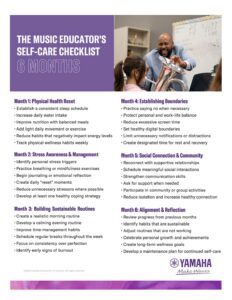
Download the Yamaha Self-Care Plan — 6-Month Checklist
Month-by-Month Framework Overview
A structured self-care plan works best when it is divided into manageable phases and monthly focus areas. Each month should introduce one primary area of growth or self-care strategy while reinforcing habits developed in previous months. This approach prevents overwhelm and allows you to focus your energy on meaningful, sustainable progress.
A month-by-month structure also creates clarity and direction. Rather than trying to improve every aspect of your life simultaneously, focus on one category at a time. Common progression models often begin with physical health foundations before expanding into stress management, routines, boundaries, social support and long-term reflection.
As new habits become more consistent, additional layers of self-care can be added naturally over time. This progressive framework helps individuals develop self-awareness while creating systems that support both personal and professional well-being. Over time, self-care becomes less about temporary motivation and more about maintaining intentional routines that promote stability, balance and resilience.

Phase 1: Building the Foundation (Months 1–2)
The first phase of a long-term self-care plan focuses on creating a strong and stable foundation. During this stage, you should prioritize the most essential areas of wellness, including physical health and stress awareness. Establishing these core habits early provides the stability needed for future growth and consistency.
Month 1 should focus on a physical health reset. This includes improving sleep consistency, increasing hydration, developing balanced nutrition habits and incorporating light daily movement into everyday routines. Physical wellness directly affects energy levels, mood, concentration and stress management. Small adjustments such as maintaining a regular sleep schedule or taking short daily walks can create meaningful improvements over time. The goal during this phase is not perfection, but awareness and consistency.
During month 2, focus on stress awareness and management. Many people operate under chronic stress without fully recognizing the impact it has on their mental and physical health. In this phase, identify personal stress triggers and begin implementing simple coping strategies such as breathing exercises, journaling, stretching or mindfulness practices. Creating intentional “reset moments” throughout the day can help reduce emotional exhaustion and improve overall balance. Learning how to manage stress effectively is a critical step in building a sustainable self-care system.

Phase 2: Strengthening Structure (Months 3–4)
Once the foundation has been established, the next phase focuses on creating structure and consistency through routines and boundaries. This stage helps individuals transition from occasional self-care practices into more organized and sustainable habits that support long-term well-being.
In month 3, focus on building sustainable routines. Morning and evening routines can provide structure, improve productivity and reduce decision fatigue throughout the day. This phase may also include improving time-management skills, creating realistic schedules and learning how to pace responsibilities to prevent burnout. Sustainable routines should support wellness rather than create additional pressure or unrealistic expectations. Flexibility and balance remain essential components of long-term success.
Month 4 should focus on establishing healthy boundaries. Boundaries protect mental and emotional well-being by helping you manage your time, energy and responsibilities more effectively. This may include learning how to say no without guilt, protecting personal time from constant work demands and limiting unhealthy obligations. Digital boundaries are also increasingly important in modern life. Reducing unnecessary notifications, limiting social media use and creating designated times for email communication can help decrease stress and improve focus. Healthy boundaries create space for rest, recovery and personal growth.

Phase 3: Expanding Support Systems (Months 5–6)
As healthy routines become more established, self-care should begin expanding beyond individual habits to include support systems and meaningful relationships. Long-term wellness is strengthened when you feel connected, supported and emotionally grounded within your communities and relationships.
Month 5 should focus on strengthening social connection and community support. This includes investing time in healthy relationships, reconnecting with supportive individuals and building networks that encourage personal growth and emotional well-being. Many people attempt to manage stress independently, but strong support systems often improve resilience and reduce feelings of isolation. Learning how to ask for help, collaborate with others and communicate openly are important parts of sustainable self-care.
During month 6, focus on alignment and reflection. At this stage, you should evaluate your progress and identify which habits have been most effective and which areas still need improvement. Reflection helps your recognize patterns, celebrate growth and adjust routines when necessary. Self-care plans should remain flexible and adaptable rather than rigid. The goal is to create systems that can realistically support long-term well-being through changing seasons of life.

Phase 4: Deepening Self-Care (Months 7–12)
If you follow a 12-month self-care plan, the second half of the year provides an opportunity for deeper growth, refinement and long-term habit integration. By this stage, many foundational habits should have become more familiar, allowing you to focus on advanced areas of emotional, mental and personal development.
This phase may include strengthening emotional resilience, improving physical wellness goals, developing mindfulness practices and creating more intentional opportunities for creativity and joy. Activities such as meditation, reflective journaling, creative hobbies, therapy or personal development work can help deepen self-awareness and emotional balance. The focus shifts from simply managing stress to intentionally creating a lifestyle that supports fulfillment and personal growth.
The final months of a long-term self-care plan should also reinforce earlier habits to help them become more automatic and sustainable. Repetition and consistency help transform temporary routines into long-term behaviors that support overall wellness. Self-care becomes less about effort and more about maintaining a balanced lifestyle that aligns with personal values and long-term goals.
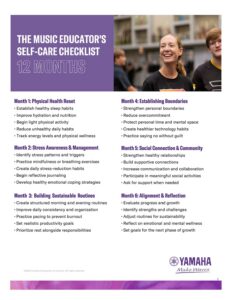
Download the Yamaha Self-Care Plan — 12-Month Checklist
Tracking Progress and Staying Flexible
Tracking progress is an important part of maintaining a successful self-care plan. Sample six-and 12-month checklists can be found at the end of this article to help track progress. With regular reflection, you can evaluate what is working, identify areas for improvement and make necessary adjustments. Monthly or quarterly check-ins can help you stay connected to your goals while maintaining realistic expectations.
Journaling, habit trackers or simple self-assessments can provide valuable insight into emotional well-being, stress levels, energy patterns and personal growth. Tracking progress should not become a source of pressure or perfectionism. Instead, it should serve as a tool for self-awareness and intentional adjustment. Flexibility is also essential because life circumstances, responsibilities and priorities naturally change over time.
Self-care plans should be adaptable rather than rigid. Missing a routine or experiencing setbacks does not erase progress. A sustainable self-care system allows room for rest, recovery and change while continuing to prioritize long-term growth and well-being.

Common Pitfalls in Self-Care Planning
One of the most common mistakes in self-care planning is attempting to change too many habits at once. While motivation may be high at the beginning, unrealistic expectations often lead to burnout and inconsistency. Sustainable growth usually happens through gradual change rather than extreme transformation.
Another common pitfall is overcomplicating routines. Self-care systems should feel supportive and manageable rather than overwhelming. Don’t overlook the importance of rest and recovery or focus too heavily on productivity or constant self-improvement. True self-care allows time for restoration, reflection and emotional recovery.
Many people also abandon self-care plans after experiencing setbacks or disruptions. However, progress is rarely perfectly consistent. Long-term growth requires patience, flexibility and the ability to restart without guilt or discouragement. Temporary setbacks should be viewed as opportunities for adjustment rather than reasons to quit entirely.

Self-Care as a Structured Growth Journey
Self-care is most effective when it is approached as an intentional and gradual process rather than a collection of temporary solutions. A structured six-month or 12-month self-care plan allows individuals to build sustainable habits that support long-term physical, emotional and mental well-being. By focusing on steady progress and manageable growth, individuals can create routines and systems that remain effective even during stressful or demanding seasons of life.
Long-term self-care is not about achieving perfection or maintaining rigid routines every day. It is about creating a lifestyle that consistently supports balance, resilience and personal growth. Starting with small changes and building steadily over time allows self-care to become more natural and sustainable. When approached intentionally, self-care evolves from a reaction to stress into a lifelong foundation for overall well-being and personal development.
Keep reading