How to Find the Best School Activities for Your Child
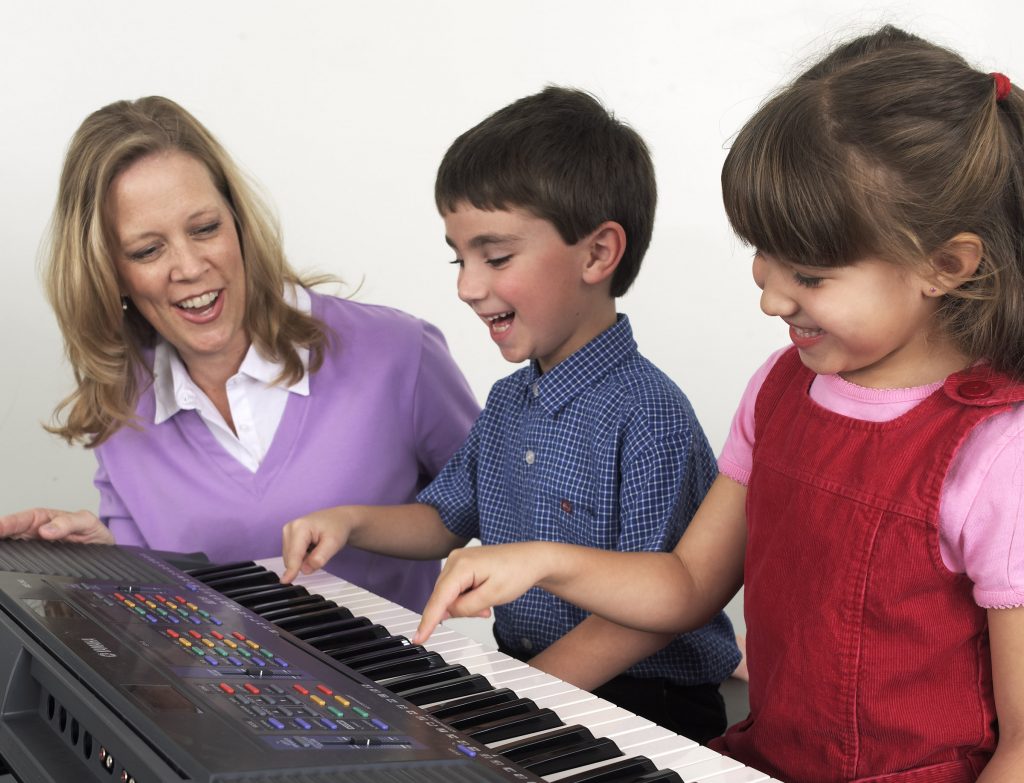
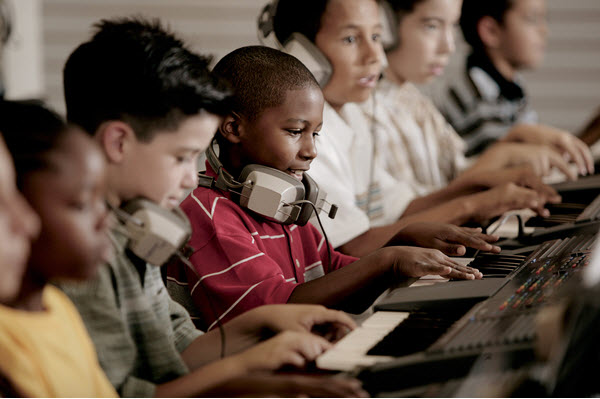
School is the place where kids get to try new things and discover what they enjoy doing and are good at … all while having fun at the same time! When students participate in a consistent after-school activity routine, it strengthens their focus and study habits, and helps them develop the skills needed to succeed in life. Creative electives provide essential opportunities for kids to build social confidence, strengthen emotional regulation, and find healthy outlets to express themselves.
Most parents tend to start with sports first, which generally enhances physical health, teamwork, and school spirit, but have you or your child considered trying music? The good news is that you don’t have to choose! In this posting, we’ll share one parent’s story about how his children played sports as well as engaging in school musical activities — a decision that not only brought them great joy but will continue to benefit them in a variety of ways as they grow up.
A REAL-WORLD STORY


Joel Tetzlaff is a former percussionist and the Product Marketing Manager for Drums & Percussion at Yamaha Corporation of America. His two children, Seth and Sydney are now high-schoolers, but both started their musical journey when they were in sixth grade. We asked Joel to share his experiences in getting them involved in the world of music at a young age.
Like many parents, Joel’s kids started with sports because, as he explains, “it was easy — you can get in pretty early and at minimal expense.” Being a musician himself, he wanted to get them involved in music too but unfortunately COVID caused a delay in those plans. However, by seventh grade they had joined their school band and, in his words, “that’s when both of them really took a liking to percussion and to learning music.”
“They had a great music educator at their school,” Joel adds. “His attitude was, music is fun, so let’s not overthink this. I think he realized he was competing for their time. You know, it’s not only sports, but Xbox too — all these other things that kids get involved in. But my kids definitely benefited from being in both sports and music. They had different friends in each activity, but in both sports and music, they all have to learn to work together.”
We asked Joel what it was that made him want his kids to explore music, even while they were active in sports. “Well, I didn’t want to push music on them,” he explains, “but I played sports and music in school myself and I just felt that music was something that had more longevity. Music has been important to me throughout my entire life — it’s the one thing that’s been continuously with me, especially throughout COVID. So I came to realize that sports is limited, but music will always be there.”
Musical activities can in fact give your kids something unique that sports cannot. “Music is more cognitive, while sports are more physical,” Joel says, adding with a laugh, “and music is definitely safer than sports!” On a more serious note, he states that music offers a safer place to make a mistake, and can give your kids a sense of accomplishment both as an individual and in a group. But he points out there are also some similarities with sports. “When you look at a football playbook, for example, there are lines showing the places the player has to go, and when you look at a piece of sheet music there are dots showing the notes the musician has to play. But a page with black dots on it doesn’t come to life without our energy, and it’s the same thing with a playbook. Athletes bring the play to life, just as musicians bring music to life.”
THE IMPORTANCE OF TEAMWORK
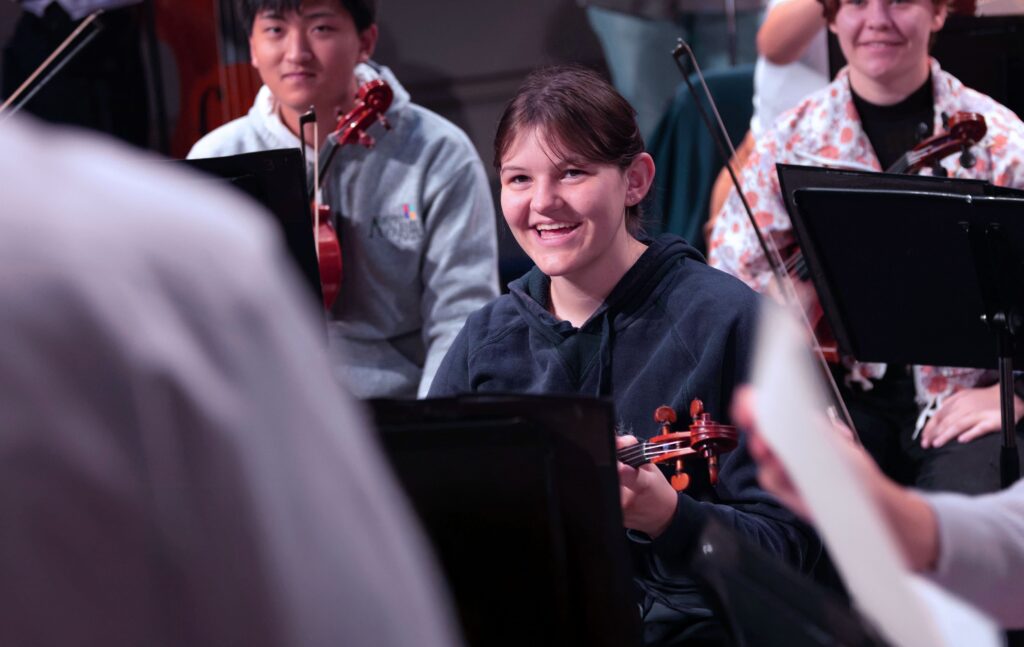
School sports are renowned for helping build teamwork skills, but the same is true of musical activities: Every player in a school band or orchestra has to respond to and provide support for their fellow musicians in order to play a piece of music correctly. Joel recalls his son Seth having such a moment when he was performing in a concert. “His buddy was off by a measure and Seth helped him find his place. Seth looked over at him and he was like, ‘I got you.’ Then they just came in together. It’s something they still talk about today.”
In both sports and music, it’s about being a part of a community, about children feeling like they fit in — and, as every parent knows, that’s something that’s especially important to schoolkids. In turn, fitting in serves to boost their confidence — a vital skill as they grow up. Joel notes that having his kids involved in both sports and musical activities helped their social life. “They had more friends because they were in both worlds, and they learned to respect people for their different skills: One kid might be a really talented musician, while another might be a gifted athlete.”
BREAKING THE “EITHER/OR” MYTH
Joel Tetzlaff’s experience is that music can fit into your kid’s life without added pressure, even if they participate in sports activities, and he found that it was something that was perfectly manageable. “Scheduling was one of the concerns we had early on,” he says, “but there really weren’t a lot of conflicts. There might be the occasional concert while there was some sort of athletic event, but schools usually balance the event schedule so they don’t have a basketball game and concert at the same time.” A few conflicts did arise — for example, his son was on the football team and also in the school’s marching band, which meant that he wasn’t able to play at halftime shows, but Joel reports that it “didn’t detract from his enjoyment at being part of the band.”
At the end of the day, it comes down to logistics and time management. Asked what a typical week looked like for his family when his kids were juggling sports and music, Joel points out that musical activities tended to happen in a classroom during regular school hours, while athletics happened mostly in the evenings and on weekends. “Games during the week would sometimes take away from music practice, he says, “but our kids would resume practice on off days.”
Joel found it best to set a regular time for practice every day — he suggests an hour after school or before dinner — and to make it fun by allowing his kids to invite their friends over to practice together. The key, he says, is to “allow them time to relax and have time to themselves as well.”
TWO ACTIVITIES ARE BETTER THAN ONE
There are many studies that support Joel’s anecdotal experiences. For example, according to an online posting by the New Song School of the Arts, “Children involved in both fine arts and sports experience a unique combination of benefits. Research from the National Center for Education Statistics reveals that students engaged in both types of activities often outperform their peers academically and socially. They benefit from the creativity and discipline of the arts while also enjoying the teamwork and physical health advantages of sports. These well-rounded experiences prepare children for diverse challenges and opportunities in life.”
Kathy Kucsan, Ph.D., is the Education Director of the Center for Musical Arts in Lafayette, Colorado, and a strong advocate for students getting involved in both activities. She makes the important point that there are many athletes who are also musicians, as well as musicians who are athletes. “Kids have so much to learn and explore, why insist that they make the impossible choice between sports or music?” she asks in this online posting. “Over many years of teaching, I’ve seen students balance soccer or softball and music lessons. They grew up, went to college, and most have careers that don’t involve either. But they play in community orchestras, softball leagues, jazz combos and take Pilates classes, among other things.” (Kathy’s posting includes a chart that shows generalized benefits and a comparison for both music and sports participation in elementary school.)
As an added bonus, there is evidence that doing both activities can even help your child get into the college of their choice. According to this online article by Spark Admissions, “a well-rounded [extracurricular] profile demonstrates versatility, adaptability, and a capacity to balance multiple responsibilities. … Admissions officers often value students who can participate in leadership positions, take on a variety of extracurricular commitments, and enrich the campus culture in multiple domains.”
LET YOUR CHILD FORGE THEIR OWN PATH
We asked Joel what he would say to a parent who’s hesitant to add music because they’re worried about their child being overwhelmed. His answer was quite revealing. “School is the perfect —and sometimes the only— place for kids to experiment and try different hobbies. The opportunity that music brings can be life-changing to your kids. For me, sports was great, but music changed my trajectory in life. The important thing is that you let your children find their passion. Open your mind to the idea that they can do whatever it is they like doing, that they don’t have to become famous or great at it. Let them forge their own path.”
“Music doesn’t take away from sports,” he adds. “In fact, it often can complement it. The time expenditure is minimal, and the cost can be too, since there are options like renting instruments.” There are many fun ways that parents can introduce music to their children in a low pressure, fun way. For example, play them some of your favorite songs. Joel’s daughter — who plays softball year-round — bought a vinyl record player a couple of years ago, prompting him to play her a bunch of his old records. To his great delight, she took a liking to some of the music Joel used to listen to when he was her age. “We listened to Thriller probably eight times from front to back!” he says with a laugh.
Music has continued to play a role in Joel’s kids’ lives as they’ve grown. They still listen to music; in some cases 90’s music, in some cases rap. One of his sons, for example, is interested in making beats, while his daughter leans more towards vintage sounds. “All my kids use music to hype themselves up for games,” he says, “but also as a way to relax themselves. It helps them to both connect and disconnect.”
IF YOU COULD GO BACK AND GIVE YOUR KIDS ONE PIECE OF ADVICE …
We wrapped things up by asking Tetzlaff, “If you could go back and give your kids one piece of advice when they were younger, what would it be?”
“Don’t be afraid to fail,” was Joel’s reply. “Sometimes it’s hard,” he adds, “but music doesn’t have a wrong answer. When you find yourself feeling down about how you sound, that’s how you learn. Whatever doesn’t work, you fix and get better at it. No one is perfect — in fact, being imperfect is what makes a sound unique. There is imperfection in being human. Hitting wrong notes sometimes sounds great.”
Tetzlaff’s advice to other parents is equally straightforward: “Don’t put pressure on your child when they start any school activity, be it sports or music. Let them enjoy the process. Let it be a release for them. And don’t count it out before they get a chance to try it, because you never know what their passion will be.” The bottom line is this: Students shouldn’t have to choose between music and sports. They should do both!
To learn how to incorporate learning an instrument into your child’s routine, download our Parent’s Guide to Making Music Work (Without Adding to the Chaos), and be sure to check out these related blog postings:
Piano Lessons Can Improve Your Child’s Language Skills
Survival Tips for School Music Parents
Five Benefits of Joining School Orchestra
The Benefits of Playing Piano … At Any Age
A Guide to Parent Resources for Beginning Band and Orchestra
A Parent’s Guide to Renting and Buying Musical Instruments, Part 1
A Parent’s Guide to Renting and Buying Musical Instruments, Part 2
Keep reading