Tagged Under:
The Three Rs: Recruitment, Retention, Relevance
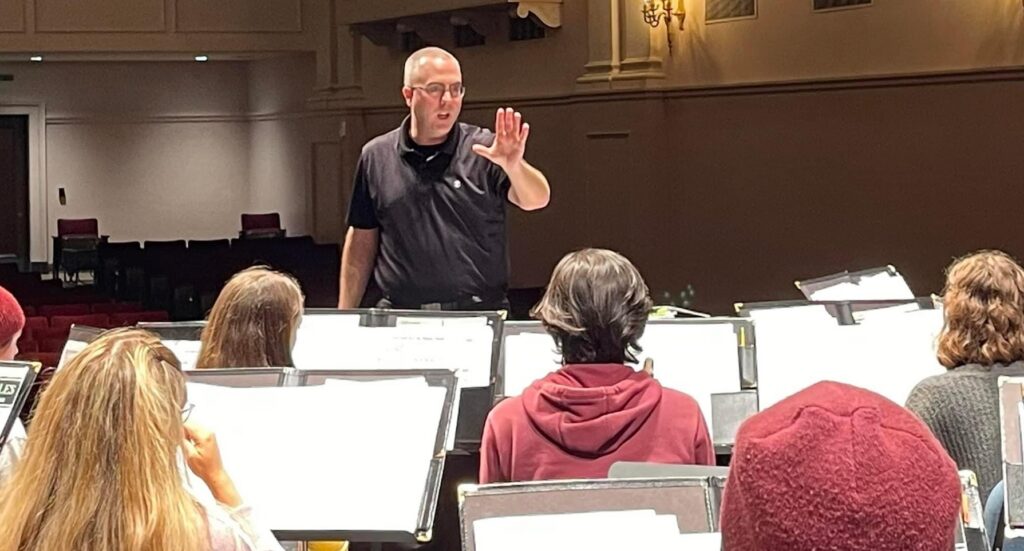
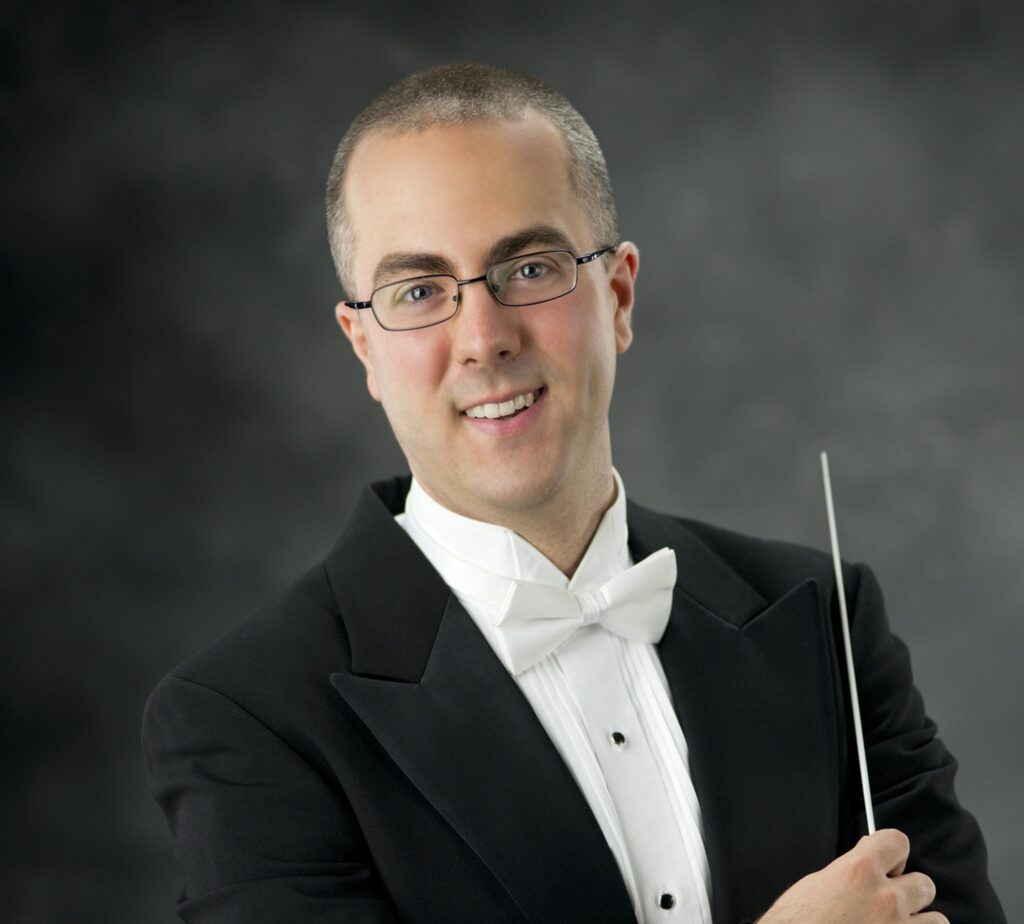
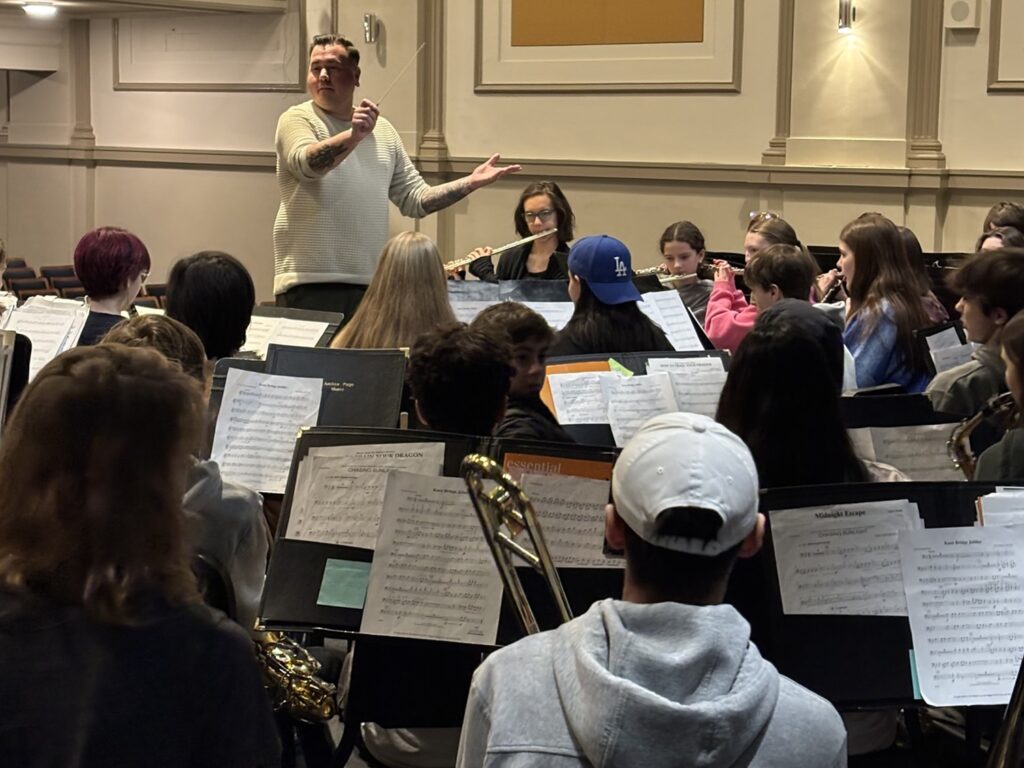
Bet you didn’t know that Sir William Curtis, aka Billy Biscuit, is credited with coining “The Three Rs: Reading, Writing and ’Rithmetic” back in the early 19th century. Do you know who minted “The Three Rs of Building a High School Music Program?” Dr. Andrew J. Smouse, Co-Director of Bands and Orchestras at Valley High School in Nevada, that’s who!
His three Rs stand for Recruitment, Retention and Relevance, and he has used this formula to build the music programs at not only Valley High School but also at several schools in the Vegas metro area and Southern Maryland. A feat made even more remarkable considering that Valley High is a Title I school.
The First R: Recruitment
You can’t have a music program without musicians, and an intentional and active recruitment strategy is the best way to fill the roster. The best recruiters? “Students,” Smouse says in his unassuming style. “If your students tell other kids that band is fun, they’ll do it.”
Home turf recruitment is an ongoing, year-round process. Smouse encourages his students to talk up the band on campus, in different classes, when talking to friends. “Most of it happens organically, but we’re always planting seeds,” notes Smouse.
However, recruiting is best at the middle school level, which allows younger students to become familiar with the program before entering high school. For recruiting at a middle school campus, Smouse suggests taking high school band members who attended the middle school as recruiters whenever possible. “These middle school alumni are able to prove that we did it, and so can you,” he says.
On active recruitment days, Smouse splits up his high school students to meet new middle schoolers and answer questions like “Will my grades slip?” or “Do you have time to do other activities?”
Smouse says, “Student recruiters do very well. I always learn something from them during these middle school visits. They offer a different point of view that resonates with the middle school students.”
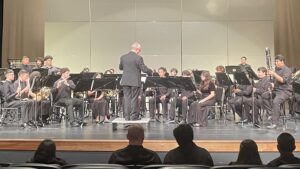
For Valley High’s pre-festival concert, Smouse invites middle schoolers to attend, play on stage and receive feedback. The high school performance follows. “It’s important for the older and younger students to see each other play. That’s key,” he says. “It’s a learning experience and it gets students on campus.”
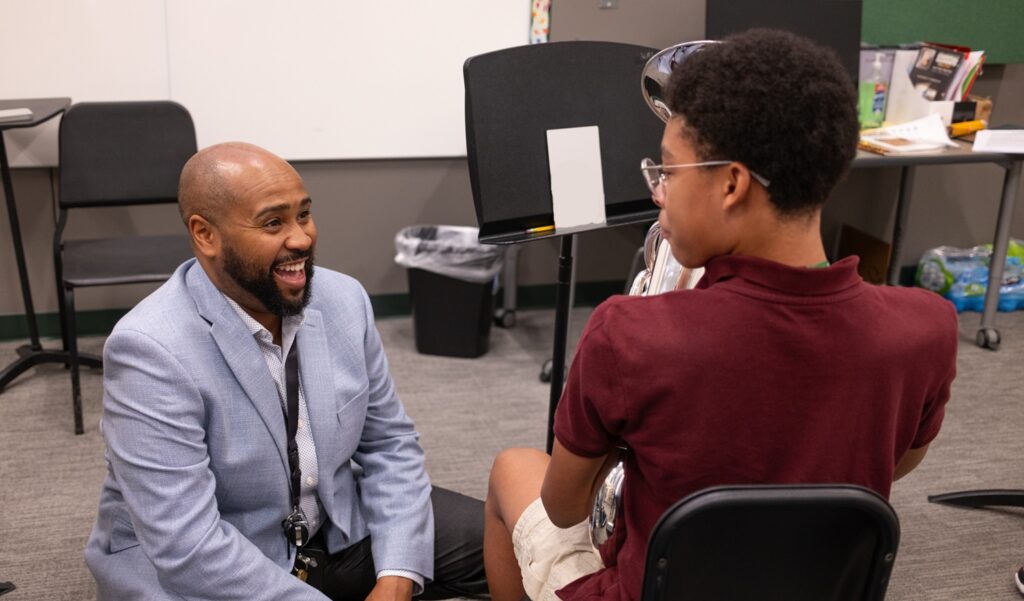
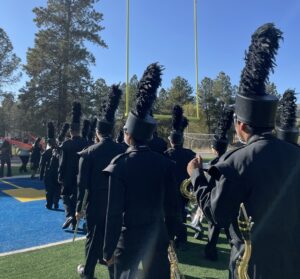
His recruiting pièce de resistance is the Middle School Band Night Football Game, where typically three middle schools — the majority of Valley High’s feeder programs —participate. Smouse begins coordinating with the middle school band directors on the first day of the semester. He also begins coaching his students and telling them, “Be a buddy. Teach the middle school students how to unfreeze their valves. Make a friend.”
During the Middle School Band Night, band prospects from middle school are invited to a football game dedicated to them. Their parents and band director(s) are also invited so they can get on campus, visit the band room and see the football game.
Involve the booster club, Smouse suggests. Not only can parents invite other parents, but they can help with a before-the-game meal. At Valley High, a local small business or band parents help sponsor the food and bottled water for the game.
Smouse chooses an accessible piece of music, providing it to the middle school band directors early so students can practice. Pre-game day, he visits the middle schools along with the high school student band leaders for an after-school rehearsal, to answer any questions and to make expectations clear.
On game day, middle schoolers go straight to the high school after the final bell for a short rehearsal. Then it’s off to the stadium before kickoff to secure seating and eat dinner together.
For the pre-game show, Smouse offers two options depending on the year and amount of time to prepare: 1) Have the large block of high school and middle school kids play an easy piece together for the half-time or pre-game show or 2) Have the high schoolers perform their field show with middle schoolers watching from a specially designated area on the track or bleachers near the 50-yard line. Throughout the first half of the game, middle and high schoolers play together in the bleachers. Middle school students return to their trackside seating at halftime to watch the marching band.
Smouse tells the middle school band directors, “Make sure your social media person is there. Photo opportunities are fantastic!”
The Second R: Retainment
Recruitment and retention are equally important — it’s anyone’s guess which is more challenging. Retainment involves educating students and administration about how and why music benefits students.
First, music is open to all and gives students a way to express themselves. “They want to be heard and can express themselves through their instruments without judgment,” says Smouse, who was recognized as a 2026 Yamaha “40 Under 40” music educator.
For students to be successful, they need to help each other, which fosters cooperation. Leadership skills are sharpened, too — the shy percussionist becomes a section leader, then a drum major, followed by a band officer and even joining the regional band.
“Tell your students that colleges love to see four years of something. It shows commitment and offers something measurable like a top rating for solo and ensemble,” says Smouse.
A big part of band is instantly being part of a team and having friends. “It helps with attendance and gives students a purpose for going to school,” Smouse explains. “By simply showing an interest in each band member as a person, not just a band member, they feel seen and part of an activity that is bigger than themselves. Band is like a sports team.”
In keeping with the sports analogy, Smouse incorporates competition in the classroom. Prompts such as “Who gets first chair this week?” and “Woodwinds, brass is kicking your butts!” bring out the best in students and keep them engaged. Give a little goal and let them succeed.
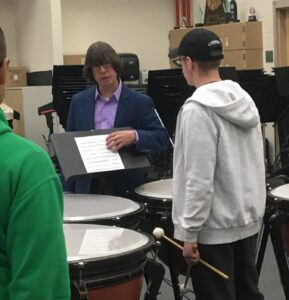
Guest clinicians, performers and travel — to football games, competitions and camps — also are incentives. “Get kids on a bus if you can,” he says.
Other suggestions:
- Switch a rehearsal with a middle school teacher. Smouse finds that other music teachers are usually enthusiastic, cooperative and enjoy a day with different students.
- Have a visiting professor teach a masterclass. Don’t pay for the visit, Smouse says, it’s usually part of their job.
Lastly, don’t forget, music is considered an academic class and is a GPA booster. If students show up and do the work, the grade they get may help even out that C in organic chem.
The Third R: Relevance
The challenging part of the third R is explaining, demonstrating and proving the relevance of music to administration, the district office, the school board and other decision-making entities that are not involved in actual music-making or teaching.
Administrators may need to be reminded that band is the most expensive and most visible of all school activities. “Football is the fall. Band is year-round with games, parades, concerts. … We are the reason many kids come to school,” explains Smouse.
The academic relevance is manifold. Anatomically speaking, music requires full use of both hemispheres of the brain — the left side for rhythm, the right for melody — and the hippocampus for memory. Music develops and hones a variety of skills, such as motor skills of the fingers and lungs; math skills thanks to rhythm; auditory skills by distinguishing and interpreting intricate sounds, rhythm and pitches; and emotional skills by the safe space music provides to experience strong feelings and encourage social connections, which helps to reduce cortisol and stress.
A music program is teamwork personified. The sound of a single student’s instrument is part of an ensemble unified in purpose and expression. Smouse puts it another way: “There are no benchwarmers in band. No second string. Every kid counts. Kids see how we have to work together. We practice what we preach.”
With teamwork, students learn accountability to themselves and to each other.
Music also can raise a school’s status. Music education raising SAT and ACT test scores is a well-researched and -documented fact. Music supports larger class sizes — 200 or more students for marching band isn’t unheard of. These positive factors foster school spirit making a day on campus much more enjoyable for students, faculty and staff.
The gift of music is not strictly a priceless one. College scholarships are measured in dollars, and the chances are far greater of receiving a music scholarship over an athletic one. Plus, a music scholarship is not major dependent. A student can be a kinesiology major and play in the marching band.
Smouse’s impact on his students is demonstrable. Interest in band continues to grow at Valley High School as does student retention in the programs. “I teach life but use music to do it,” says Smouse. And he uses The Three Rs to do both.
Keep reading