Tagged Under:
Flow Theory in the Classroom
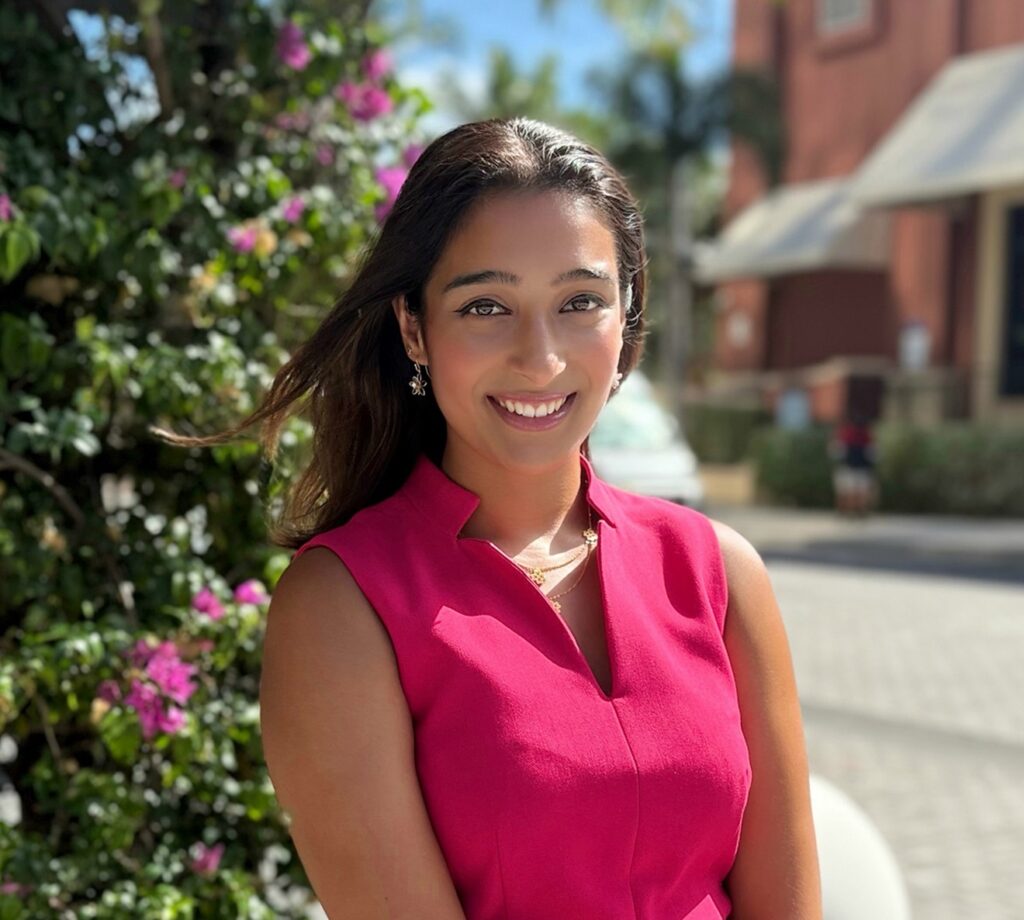
The late Mihaly Csikszentmihalyi, a Hungarian-American psychologist, discovered a phenomenon he called “flow theory,” which is a state of optimal experience when people are completely immersed in and focused on an activity. Often described as being “in the zone,” flow naturally aligns with music rehearsal and performance, and Amrutha Murthy, Band Director at Park Vista Community High School in Florida, has had great success using this in her classroom.
While at the University of North Texas, Murthy wrote her undergraduate thesis on flow theory. As a music educator, she uses flow theory to design rehearsals that maximize engagement and motivation, and to build a sense of psychological safety and musical accountability with students. She noted that when professional musicians are asked to describe how they felt after a concert, many describe it like this: “I don’t know; I was just in the moment.”
This shows that flow theory rings true in a musical performance, and Murthy’s challenge was to mimic this in every day rehearsal settings with teenagers.
Short Bursts of Focus
A key component of her teaching is to direct students to focus intently for short bursts of time, like three to five minutes, followed by a few minutes of more relaxation. Not only does this strategy combat boredom, Murthy says, it creates a situation where “flow” feelings can sprout — and for many kids, that’s what often happens.
“Once they can replicate that feeling, it leaves them wanting more and more,” she says. “That’s the cool thing because flow is rooted in self-discovery. I can’t induce it for you, and you can’t induce it for me … but I can give you parameters and create the conditions to make it possible.”
She explains that when you engineer the conditions you want for your rehearsal room, “you keep students challenged without being burned out at the end of the day.”
Students often tell Murthy that they experienced a flow moment, and describe it as being “so locked in.”
Murthy goes on to explain that with flow theory, “you become fully immersed while maintaining enough awareness to stay focused and purposeful.”
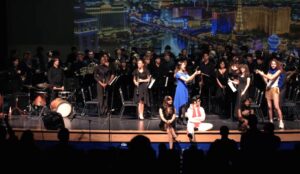
The success of her teaching method shows. Park Vista Community High School concert band was one of only 20 nationwide selected for the Music for All National Festival in the spring.
Murthy acknowledges that while flow is generally a positive experience, sometimes students might still leave a rehearsal unhappy, or wish there was more they could have gleaned from an experience.
“[I ask myself] did you give them the skills and prepare them enough that they want to come back the next day and get better?” Murthy says. She leans on a motto her own band directors taught her: “Be better tomorrow than you were yesterday.”
Making It Personal
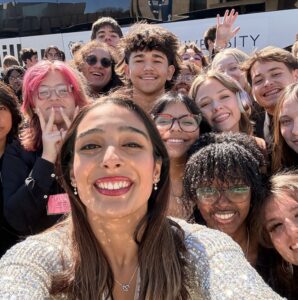
Murthy guides her students toward self-discovery and encourages them to take ownership of their group and the music they make.
“I tell kids that the ensemble they’re a part of is not mine; it’s theirs,” Murthy says. “There are 40 (or in cases like marching band, 120+) of you and there’s one of me. What is bigger?”
She makes the effort to get to know her students as people and as individuals. At the beginning of the year, Murthy gives them a note card and tells them to write down three goals — one for themselves, one for the section they are a part of and one for the whole ensemble. She tells them to be specific, which is an important aspect of effective goal-setting: “I want to get better” is too generic.
At the end of the school year, Murthy returns the students’ written goals and discusses whether they achieved those goals. Meanwhile, every day, Murthy gives students a targeted objective to keep them on track — the “how” is up to them. The targeted objectives give students goal posts. It is similar to approaching a marathon thinking “it is just a five-mile segment … five times and slightly more” instead of being daunted by the 26.2 miles. At the end of the day, the distance is the same, but the mindset shifts.
“It’s all these little specific, measurable things that humanize any task at hand, the task can always be broken up and given some pauses as long as the main objective of the day, concert cycle, and year is at the forefront of your planning,” says Murthy, who often encourages fun between rehearsal segments by asking: “Anybody know any good jokes?” or any other random polls.
Murthy’s office is a comfortable, fun place filled with Squishmallows, and it functions as a safe-space for students to talk to her or her co-director, Mr. Chris Rodriguez. “This building of relationships with students is based on trust. Knowing that they are cared for, and WHO cares for them leads to a better music and school experience for students,” she says.
“They have to know that I’m a human off the podium,” Murthy says. “There’s an opportunity to be humanistic on the podium, but off the podium my job is to get to know you as a person. What makes you interesting and not just flute player number 4?”
Lead and Learn From Trust
“If you’re going to ask people to do something for you, you have to make sure they trust you,” she says. “Flow is not something created by accident; it’s learned by trust. Even if I was the best teacher, if I didn’t have a relationship with these students, they wouldn’t strive to be their best. My students know who I am off the podium. They know I am a distance runner, they know my favorite songs, books, random anecdotes. They won’t trust me as a musician if they do not know who is pushing them to strive for excellence.”
The band’s Instagram hashtag is #onebandonefamily, which describes the atmosphere of Murthy’s music classes, where students learn not just about music but about life in general.
“They’re contributing to something that’s larger than themselves,” Murthy says. “Anything we can do to (nurture) their passions and their hobbies — the things that may not turn into careers but will teach them so many life lessons — is good.”
Murthy’s style aligns with her ultimate teaching goal: “I just want to send beautiful music into the world.”
“That’s been my philosophy since I started teaching,” she says. “More than 90 percent of my students may not touch instruments after high school, but after their time with me, they can look back on this and say, ‘I had a great time and I maximized what I could learn.’ I want to send beautiful humans into the world and beautiful music into the world.”
Relatable and Productive
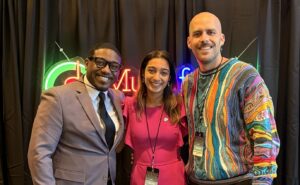
Chris Rodriguez, Park Vista’s Co-Band Director, says using flow theory is a component that’s “her thing,” but that all music students and teachers at the school benefit from it.
“I don’t know if the kids even realize it’s happening; it just ends up being a good class and a good rehearsal, and everyone is just in a better place,” Rodriguez says. “I think it’s just the way that she structures the rehearsals and the pacing of it.”
Rodriguez says he is super excited for and proud of Murthy for her Yamaha “40 Under 40” achievement, which is not surprising to him.
“She’s awesome,” Rodriguez says. “The kids clearly see her passion, and they feed off that. She is very relatable with the kids, and students look up to her. … She’s a ball of energy from minute one, and I think the kids all feed into that and respect that.”
Keep reading