Tagged Under:
Make Music History Fun and Interactive
I took my first music history class during the second semester of my junior year. We went in chronological order and got about halfway through the Baroque period. When the end of the semester arrived, it was like turning off a movie when it was just starting to get interesting. Yes, I was that nerdy student who loved music history. There was no way I was going to wait four months for the next lessons.
That summer I worked as a performer at the circus at Great Escape in Queensbury in upstate New York. We had three shows a day with breaks in between. Every day during my first break, I found a quiet, shaded little corner of the amusement park and read my music history text and listened to CDs that I ordered from the Columbia House “12-for-a-penny” deal. It was under these trees with the Adirondacks behind me, the smell of funnel cakes in the air and fresh off a performance with elephants that I fell in love with the music of Mozart, Haydn, Beethoven and Mahler.
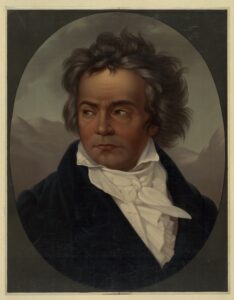
Launching Composer of the Month
When I began teaching middle school, I wanted to share my love of the classic composers and their music with my students. I created a “Composer of the Month” program where I featured a different composer each month during rehearsals. Each week, I spent 10 to 15 minutes to talk about the composer and play a recording. I created a three-year rotation of nine composers each year, which meant that during my students’ middle school years they would learn about 27 composers.
Taking It To Another Level
After a couple times through the three-year rotation, I tweaked the curriculum. At the beginning of the year, I assigned a composer to each student. When their composer’s month arrived, they prepared and delivered a presentation for the band, such as:
Presentations: Students often gave biographical information or played recordings of their composer’s most well-known pieces. Sometimes, students would get more creative and dress up like the composer and act out scenes from their lives. Or, students might perform one of the composer’s songs on the piano or their band instruments.
Videos and Podcasts: Over the years, students have made videos or podcasts using a digital audio workstation (DAW) like Cubase or BandLab and a video-editing app like WeVideo or iMovie. I especially enjoyed podcast projects where students pretend to interview an expert or the composers themselves. Sometimes, students actually interviewed an expert. (So far, nobody has interviewed the actual composer of the month!)
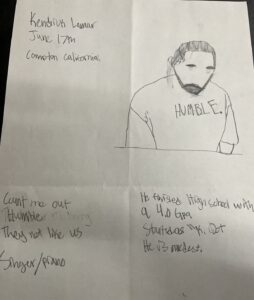
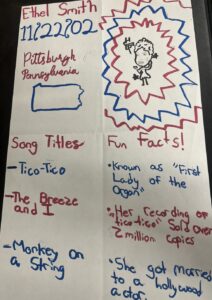
Posters: Another fun project — and one that works really well when you need plans for a substitute teacher — is to have students create a poster on one of the composers of the month that includes their name, biographical information, famous song titles, compositional techniques, what instrument they played, their inspirations, pictures and artwork. I usually display the posters around the band room.
Concerts: We have featured Composers of the Month in concerts. Students perform their repertoire either as a full group, solos or chamber ensembles. Students introduce the songs and share some information about the composers. Slide decks or videos can be shown while the ensembles are performing.
Composing: A more advanced project that I have only started exploring is having students try to write music in the style of the Composer of the Month. This is pretty advanced for middle school where I am just trying to get the students to learn how to compose in general.
Making it a Cross-Curricular Project
Composer of the Month is not just an activity in my band classroom. I also teach it in my general music classes. In the past, my choir and orchestra colleagues have done it as well. The other two middle schools in my district have also been on board.
Composer of the Month has even been a cross-curricular project with language arts, social studies and art departments participating. We have scrolling announcements on monitors around the school where the Composer of the Month is featured. We have bulletin boards and display cases where you can also find information on the various composers we study. These displays are often put together by students.
Diversifying the Project
Fast forward to right before the pandemic. I was working with two amazing music colleagues — Mari Rathke and Maggie Zeidel — who were very involved in the Composer of the Month project and suggested a significant change. Most of the 27 composers we studied were European male composers who lived between 1600-1900. Mari and Maggie did some extensive research to diversify the list of composers.
Mari, who is now teaching orchestra in suburban Chicago, remembers, “We were trying to make it more diverse. We looked for new composers that students could learn from but also composers who students were familiar with like Lady Gaga and Kesha who did more than sing on stage — they had a background in music.”
Maggie, who has since built an amazing program in Eau Claire, Wisconsin, adds, “We knew that we would hit the male African American demographic with jazz artists, and we wanted to make sure we caught more than that when diversifying the program. I recall wanting to include Latinx and LGBTQIA+ composers, as well as female composers and female composers of color. We really dug deep into the underrepresented demographics, not just stopping at the surface level.”
Mari and Maggie’s research was amazing. They created a list of 27 composers from around the world and included amazing musicians who don’t get the attention and credit they deserve. The list also includes a number of genres and eras. Here is the list of composers we are learning about this year:
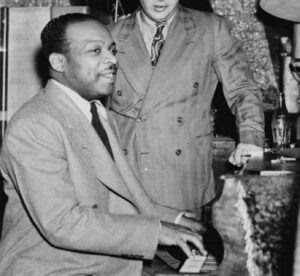
- September: Count Basie
- October: Louise Farrenc
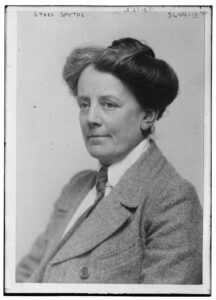
- November: Ethel Smyth
- December: James Brown
- January: Isang Yun
- February: Astor Piazolla
- March: Kendrick Lamar
- April: Diane Warren
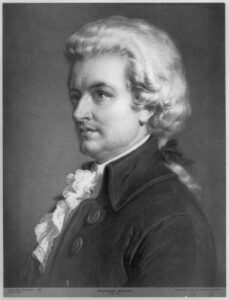
- May: Wolfgang Amadeus Mozart
In April, I really enjoyed talking about Diane Warren, who has written nine No. 1 songs and dozens of Top 40 hits. We listened to several of her songs including Starship’s “Nothing’s Gonna Stop Us Now” and Aerosmith’s “I Don’t Want to Miss a Thing.”
A discussion followed about things like: 1) artists who write their own songs versus those who don’t, 2) how Warren is one of the greatest songwriters of her generation without being “famous” and 3) if Warren had lived during Mozart’s time, she would probably be remembered more because composers from that era are better known than performers (which will lead into our discussion about Mozart in May).
Composing A Curriculum
We cover several continents, eras, genres, genders and styles with our Composer of the Month list. After three years of band, choir or orchestra, it’s as if our students have taken a world music history class, too.
The projects, discussions, performances and compositions add so much to the music education my students are receiving. A huge shout out to Mari and Maggie for all the hard work they put into this project as well as contributing to this article.
Keep reading