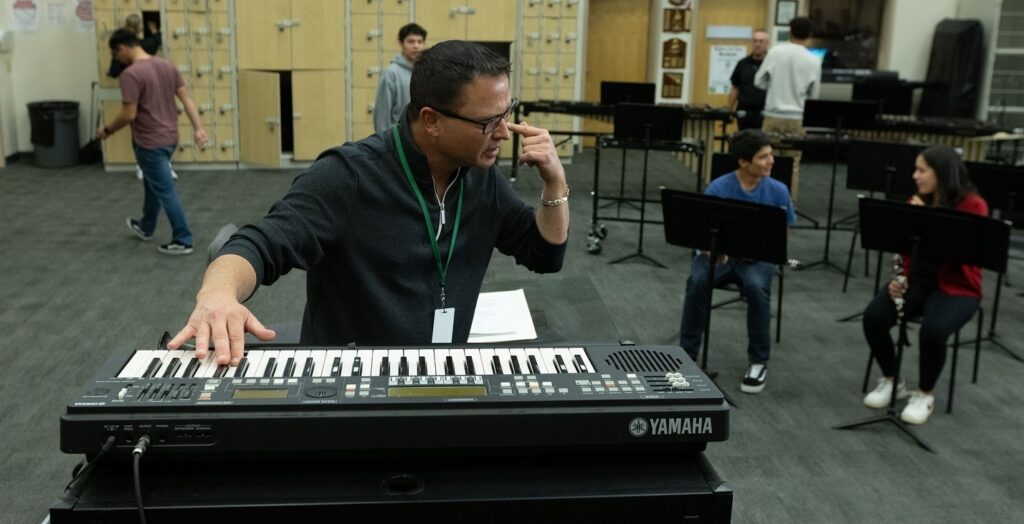
11 Things Strong Music Programs Do
Strong music programs are not successful by accident. They’re built through a series of small, repeatable decisions that add up over time and shape what students experience every day. If you’re early in your career, this can feel frustrating because you’re looking for something that suddenly makes your program “work.”
Unfortunately, that’s usually not how it happens. What you’re building is slower and more practical than that. And you can make it happen on purpose.
1. They Know Their Purpose
Stable programs know what they’re trying to do. Not in a mission statement that no one remembers. Instead, the day-to-day decisions that shape every rehearsal.
You can usually tell when a program doesn’t have this. Rehearsals feel scattered. One day is about tone, the next is about notes, the next is about just getting through the piece. Nothing is wrong, but nothing is really sticking either.
When a program has a clear purpose, things tend to line up. You have a lot of directions to choose from:
- Are you building individual players?
- A strong ensemble?
- Trying to keep kids coming back?
- Preparing a smaller group at a high level?
Most programs want all of that. The ones that grow, pick a direction — at least to start. When that happens, decisions get easier:
- What music gets selected.
- How rehearsal time is spent.
- What gets corrected — and what is removed.
The lesson: Have a clear plan and work toward it.
2. They Honor Tradition (Without Getting Stuck in It)
It’s cliché for a reason: Nearly everything that could ever be said about what’s important in music has already been said. There’s a reason certain things keep showing up. Tone. Balance. Blend. Intonation. Rhythm. None of that is new, and none of it is optional. Strong programs put fundamentals as part of the routine.
Tradition is not an excuse: There’s a difference between honoring tradition and defaulting to it.
“This is how it’s always been done” feels safe. Then you realize that the students in front of you don’t match the system you inherited. The programs that adjust better ask a different question: “What actually helps these students, in this room, right now?” Sometimes the answer still looks traditional. Sometimes it doesn’t. The difference is that it’s a choice — not autopilot.
3. They’re with the times
Programs that hold attention over time leave space for connection. It’s not about being trendy. Instead, they may:
- Let students bring in music they like (even briefly).
- Program one piece each cycle that feels familiar.
- Make quick connections to music they already recognize.
It doesn’t take over the program — but it does provide something for students to connect with.

4. They Look Ahead (Not Just to the Next Concert)
Some programs are living the musical equivalent of paycheck-to-paycheck. Get through this concert. Then the next one. Then the next one.
The ones that build over time think beyond the concerts. Not a perfect curriculum map — just simple questions:
- What should a first-year student be able to do by May?
- How does the second year feel different than the first?
- What habits are we building that still matter in two years?
You’ll still have weeks where you’re just trying to get through rehearsal. That doesn’t go away. But having some direction makes even the tough days feel like they’re going somewhere.

5. They Program for the Students They Actually Have
It’s easy — especially early on — to pick music based on what a “good program” should sound like. You hear other groups. You see state lists. You want to get there.
The problem is when that vision doesn’t match the students in front of you. Pieces that are too challenging or don’t promote growth start frustrating kids. Rehearsals move to trying to figure out how to patch this thing together.
Stronger programs don’t lower standards. They define success more realistically.
Sometimes the best choice is not the hardest piece. It’s the one that:
- Provides opportunities for growth.
- Fits your rehearsal time.
- Gives more kids something to do.
- Has a real shot at sounding good.
When something starts to sound good, kids lean in. When it never quite gets there, they start to distance themselves.
6. They Build a Reliable Rehearsal
If rehearsal only works when you’re controlling every second, that’s a lot of pressure on you. The programs that feel different have structure — not rigid, but predictable. Students know:
- How rehearsal starts.
- What warm-up looks like.
- What happens when something stops.
- How transitions work.
They require less explaining. There’s less waiting around. This is built through repetition over time. It’s built by stating expectations and then following through. The teacher is still important, but if a drum major, guest clinician or substitute stands in front of this ensemble, the kids know what is expected of them.
7. They Don’t Work in Isolation
A strong program is rarely one person doing everything alone. Even if you’re the only music teacher in the building, there’s usually some connection. Quick conversations. Messaging colleagues. Sitting in the back of someone else’s rehearsal and watching.
Trying to figure everything out alone slows things down. Not because you can’t — but because you don’t have to. Ask for help and feedback — this is one of the quickest ways to improve.
8. They Balance Standards with Reality
There’s a line between pushing and overreaching. Aiming high is not the issue. The issue is when everything feels just out of reach for too long. Or when there are too many commitments. Eventually, kids disengage or burn out.
Programs that hold the balance well make expectations clear — and reachable. These teachers understand that students may have commitments outside of music.

9. They Think Long-Term
Not every year feels like progress. Some groups need a little more care in certain areas. Some schedules don’t help. Some years feel like you’re rebuilding.
A strong program recognizes this but stays the course with what works. Goals stay intact every year:
- Expectations
- Routines
- Core fundamentals
Programs that are consistently strong don’t reset everything every time things get tough.
10. They Value the People in the Room
Strong programs care about outcomes — but not at the expense of the people in front of them.
These teachers learn names quickly. They keep instructions clear and concise instead of turning everything into a monologue. They don’t embarrass kids who make mistakes.
It’s not all about the repertoire.

11. They Make the Work Visible
Strong programs show off. They don’t gloat. Instead, they make sure their hard work is visible.
They have great concerts, but they’re also a part of the school. They perform at student functions. They share clips of performances with friends and families. Administrators have an open invitation to rehearsals.
People support what they can see and hear.
What This Adds Up To
There isn’t one move that builds a strong program. It’s a collection of smaller things.
- Clear purpose
- Consistent routines
- Realistic programming
- Willingness to adjust
- Attention to people
- A little patience
All of this gets built one rehearsal at a time.
Keep reading