Incorporating Mindfulness into Rehearsals
Rehearsals and performances are most successful when the performers have the right mindset. We’ve all had really great rehearsals and really bad ones. No one has the answer to making every rehearsal great every time. However, I do see an improvement when I incorporate mindfulness in a meaningful way.
I’ve invited a dear friend and colleague, Andrea von Oeyen, to contribute to this article because she is very knowledgeable about this topic and incorporates it into her own rehearsals. In addition to being the Orchestra Director at Oyster River High School in Durham, New Hampshire, Andrea has served as the President of the New Hampshire Music Educators Association.
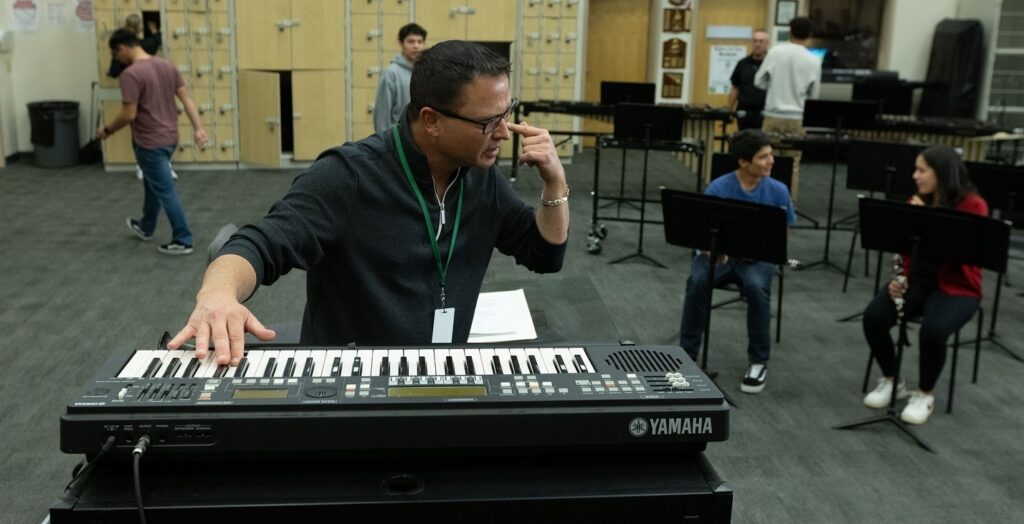
First, here are ways that I use mindfulness during rehearsals at Brunswick High School in Maine.

Using Mindfulness in Your Warm-up
I incorporate mindfulness into warm-ups for a couple reasons. First, it makes the most sense. You could find moments of zen throughout rehearsal, but once rehearsal starts, you might find it difficult to stop. However, if you find rehearsal veering off course, try using some of the mindfulness tricks detailed below to reel it back in.
Second, mindfulness helps develop a routine. One of the most important steps to a productive rehearsal is a clear and consistent routine. Once mindfulness is added to your routine, it will increase the productivity of your rehearsal.
You will see a clear difference in rehearsals when you take time to incorporate mindfulness — you and your students will feel more focused and productive. My rehearsal is during the last block of the day, so students come from all over the building — from lunch, from PE, from history or other academic classes. They all have very different mindsets when they step into my room. I take the time to bring everyone back to earth and start them (as close as I can) to the same spot mentally.

“Meditation”
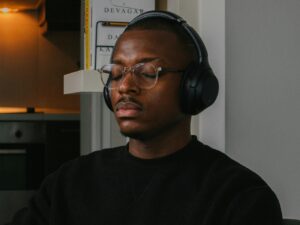
During warm-up, I have students “meditate.” I use “meditation” in quotes for a reason. I really don’t know how to meditate. My push for this in rehearsals came after I saw a presentation by Dr. Jason Caslor from Arizona State University. His presentation “Squirrel! Being Present in a World That Doesn’t Want Us to Be,” discusses this very topic and much more. If you have the opportunity of catching Caslor present this session, you will not be disappointed.
During the hour-long presentation, Caslor asked us to close our eyes and meditate, which is very difficult and takes hours of consistent practice. However, during the session, he encouraged us to focus on our breathing. Anytime he saw us losing focus, he told us to consciously bring it back to breathing. How refreshing it was for someone to explain how to meditate instead of just saying, “Do it, and do it now!”
Of course, my mind wandered, but I would then focus on my breath, sometimes thinking in my head “in, out, in, out.” My skills are probably not enough to impress the Dalai Lama, but it’s enough for me.
What I learned from Caslor’s session (and what I described above) is exactly how I introduce and explain it to my students. From then on, our rehearsals often begin with: “Everybody close your eyes.” When eyes close, so do the mouths. It might be the quietest moments in your rehearsal room! Students might have their own way to center themselves and focus, and that’s okay. My hope is that for those who don’t know how to “meditate,” they can try what I’ve learned and always focus on their breath.
During this time, I take a moment to observe them. You can see their energies change. Then I begin to speak to them. I’m not using the time to tell them that there’s a fundraiser starting tomorrow or that we’re playing at the basketball game on Friday or any other announcements. That happens before.
Speaking in a calm and low voice, I give them reminders to focus on their breath. I might ask questions like: “How can you be a positive contributor to rehearsal today?”
I try to have them imagine what a productive rehearsal looks like, and how we can achieve that today. Some days, I don’t say anything at all. The important thing to remember is that by taking a few moments, you can start your rehearsal in a calm and positive spot.
Breathing Exercises
Many of my mindfulness tools revolve around breathing. You can use breathing exercises for mindfulness, as well as for breath-control training. They both help students strengthen their lungs! Breathing exercises are a great tool to kill two birds with one stone.
There are endless options for breathing exercises that you can find online. I’ve used various types of box breathing where you breathe in, hold, breathe out, hold and repeat. I’ve also used techniques to increase the number of counts you inhale and exhale each time.

Music Begins and Ends with Silence
Every piece of music (for the most part) begins and ends with silence. You would never begin a performance while the audience is talking or applauding, so why would we begin rehearsing while students are talking and individually warming up? Getting students into the right mindset for a rehearsal gives you the opportunity to start the music the way it is meant to begin. I often remind students about the importance of silence while they are centering themselves at the beginning of rehearsal.
Try it in Your Class
You can use any of the above techniques to help begin your rehearsals, or you can incorporate them throughout rehearsal to provide more focus for students. For example, when you change pieces is a great time to do more breathing and settle the room from all the chaotic, overstimulating noise.
If you aren’t using mindfulness during warm-ups, I encourage you to begin. Sure, it adds a few minutes to your warm-up time, which takes time away from digging into your repertoire. However, the focus that comes from mindfulness will gain you those minutes back and then some.
When I first started class “meditation,” I noticed a difference right away. One day, I thought we just didn’t have the time because it was an early release day. Afterward, I wondered why that rehearsal wasn’t as good as the long chain of great rehearsals. It didn’t take long to figure out what was missing.
Another Perspective on Mindfulness
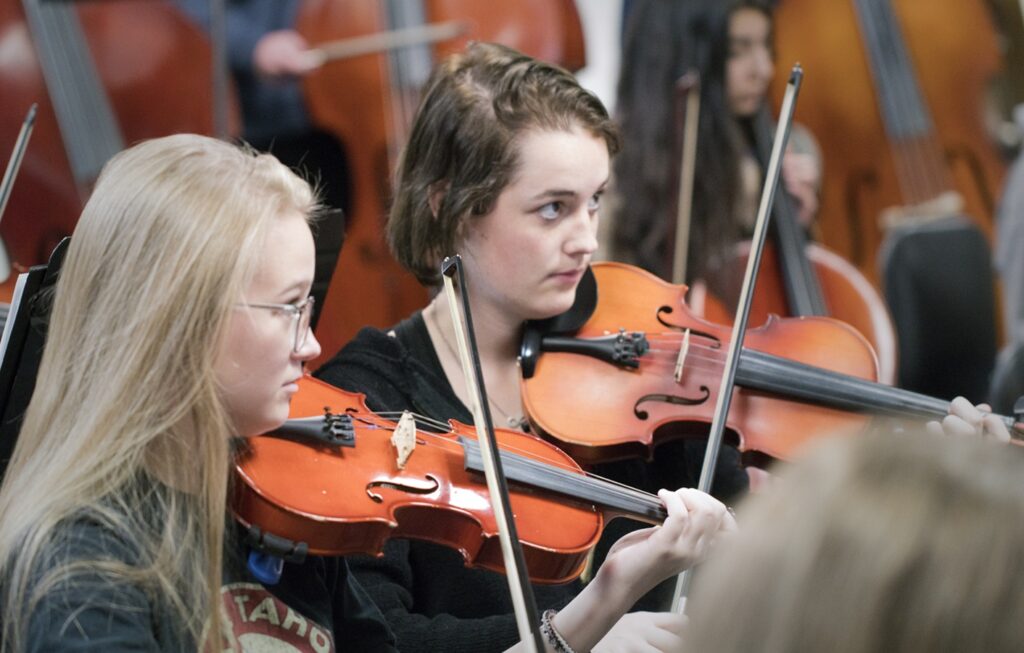
Orchestra Teacher Andrea von Oeyen has been using mindfulness in her classroom since she started the orchestra program at Oyster River 12 years ago. Here are her thoughts on why mindfulness is a must for her students.
Mindfulness has so many benefits in the classroom and in life. As a music educator, one of my goals is to bring passion for music to my students. I also firmly believe that a teacher’s main job is to help foster humanity and create lifelong contributing, kind citizens. In order to do this, you must have students’ trust and provide a safe classroom community. The best educators harness these two things and are able to get high-level results as well as help students foster relationships, be kinder to each other and gain empathy. All this can all be done through mindfulness practices.
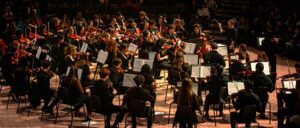
Terminology Doesn’t Matter: I don’t always use the term “mindfulness.” Instead, I often call it “present moment thinking,” “focusing on the present moment” and “meditation.” Because these practices and activities were present from the first day they set foot into the orchestra classroom in middle school, they are very comfortable with the concepts and with each other. Most music educators have an advantage because our ensemble students are together for a number of years, so the opportunity to build trust in one another and from teacher to student is natural. Concepts like closing our eyes and breathing together, mindful and present moment practice activities, and yoga are normal occurrences in my music room, and our students feel comfortable and free from the normal “embarrassment” that might occur.
Use As Needed: In orchestra, some of these activities are planned and purposefully put into the lesson for the day. On other days, they are added due to the energy in the room. There are days when we take 30 of our 80 minutes to get out yoga mats and breath, stretch and meditate. Other days, when I notice that students are having an “off” day and aren’t able to execute musical concepts as they usually do, I will add an activity like breathing together, which takes some time away from music to think mindfully about what is happening within the ensemble. This timeout also helps students focus on individual, purposeful, practice time on passages.
There are many factors why a rehearsal doesn’t go exactly as you expect or why students are unfocused on any particular day. It is usually never personal, but the flexibility of changing the lesson according to what your group needs is extremely important. Many colleagues have asked how I devote this much time to mindfulness when there’s music to be learned and time is always short. Whether it’s a planned mindfulness activity, or a spur-of-the-moment pivot, I find that these practices build trust and end up saving time in the long run.

Feeling Good: Our Oyster River orchestra students agree that these practices are extremely important in making them a more cohesive ensemble that is free to take musical risks. When I asked them why they feel this way, many of them said that the environment is very different from their other classes, that mindfulness has been integrated into their music education experience from the beginning, and that it’s been normalized here. They acknowledge that when we do things like yoga or just closing their eyes for a few moments as a group, it centers them and takes them away from the stress they have in other areas of their lives. They fully recognize that it creates a culture and space where they can be their best selves and mentally reset when their brains become too active for the moment. Overall, the most common comment I hear is that mindfulness exercises simply make them “feel good.”
Keep reading