First Look: Yamaha TAG1E / TAS1E
Yamaha launched the very first TransAcoustic guitars at the 2016 NAMM show. The groundbreaking LL-TA and LS-TA models that were shown there were the first guitars to feature Yamaha proprietary TransAcoustic technology, which allows acoustic instruments to generate reverb and chorus effects in the air (in the case of TransAcoustic guitars, emanating from the sound hole), without the need for external amplification.
Since then, the range of TransAcoustic guitars has grown to include a wide range of body styles, both with and without cutaways. There are even premium models (such as the TAG3 C and TAS3 C) that add an onboard tuner, delay and full-featured looper.
Every TransAcoustic guitar comes standard with a pre-amp and an under-saddle piezo pickup system that allows the guitar to be used for recording direct to DAW (Digital Audio Workstation) or amplified through a P.A. system for live performance, and the aforementioned onboard effects can also be blended with the pickup output for extra versatility.
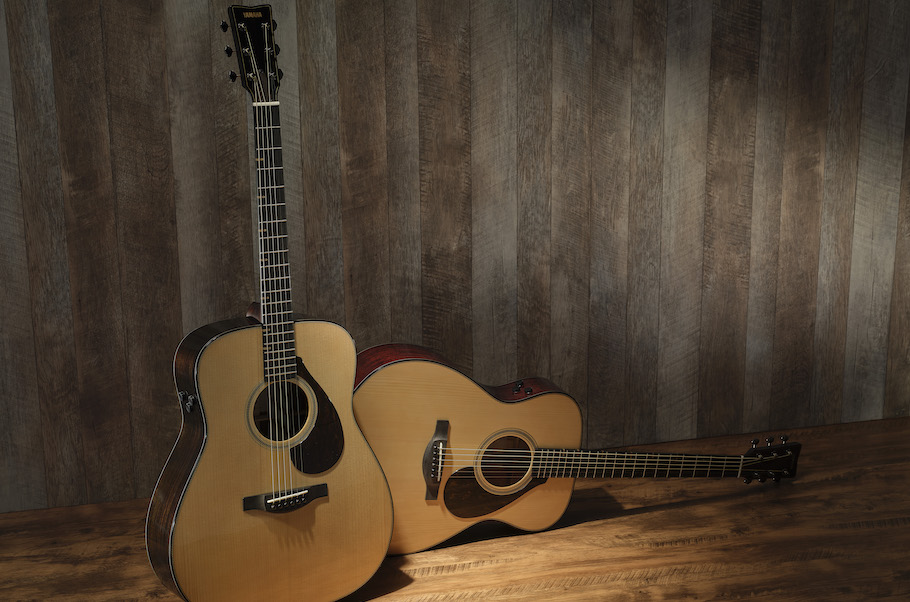
Recently, Yamaha debuted two new second-generation TransAcoustic guitars: the dreadnought TAG1 C and the concert body TAS1 C, both of which were detailed in this blog posting. And now these have been joined by two even more budget-friendly models — the TAG1E and TAS1E. The only difference between the two is the body style and size: The TAG1E has a large dreadnought body, while the TAS1E has a smaller, concert body. In this posting, we’ll take a closer look at the main features of each.
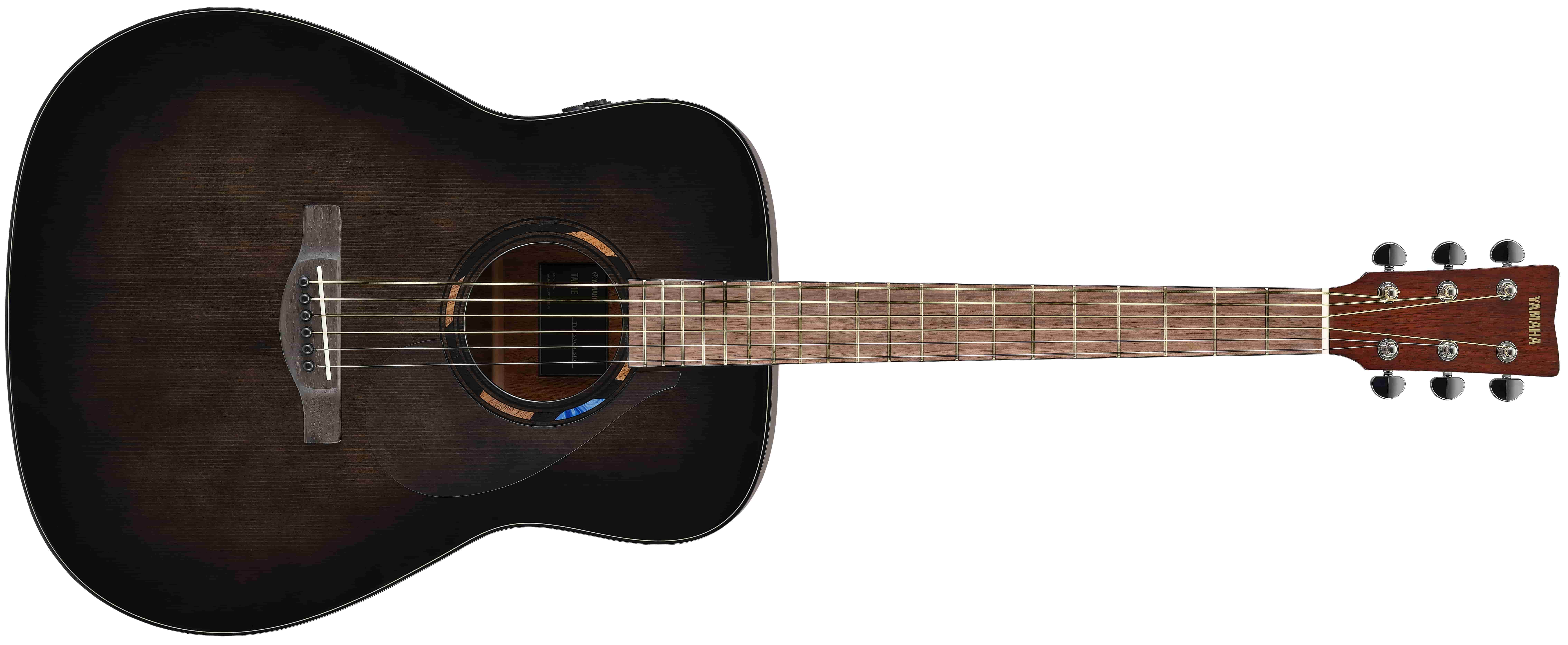
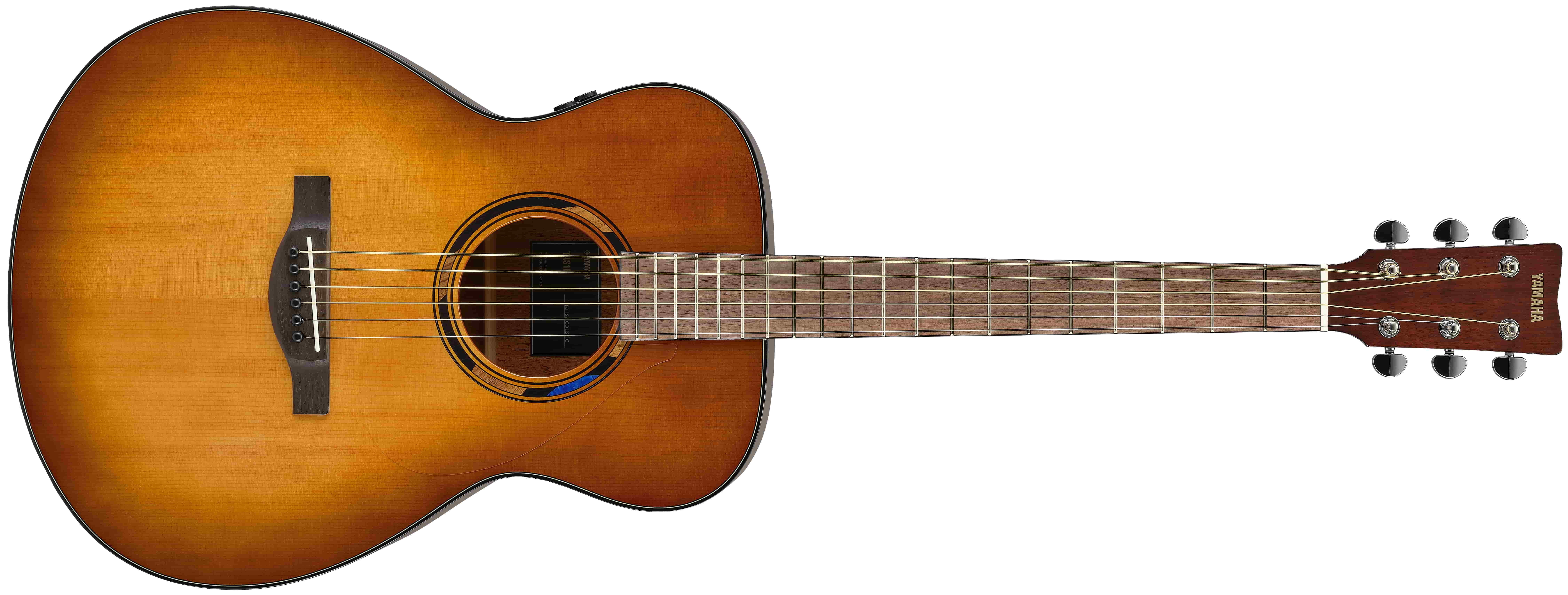
PHYSICAL ATTRIBUTES
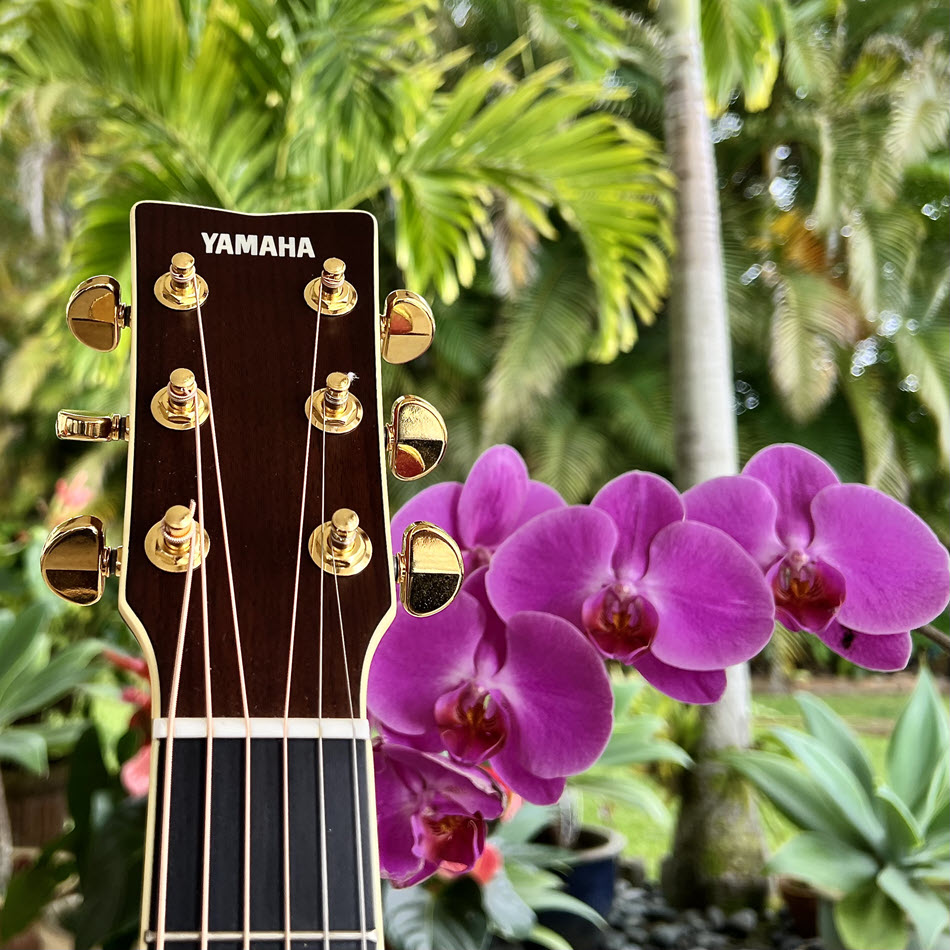
The TAG1E and TAS1E both have a solid spruce top, mahogany back and sides, and a mahogany neck. The fretboard material is walnut, which is a nice departure from the typical rosewood or ebony. The bridge and bridge pins are made of ebony, while the nut is made of urea. The headstock tuners are open gear, with a chrome finish.
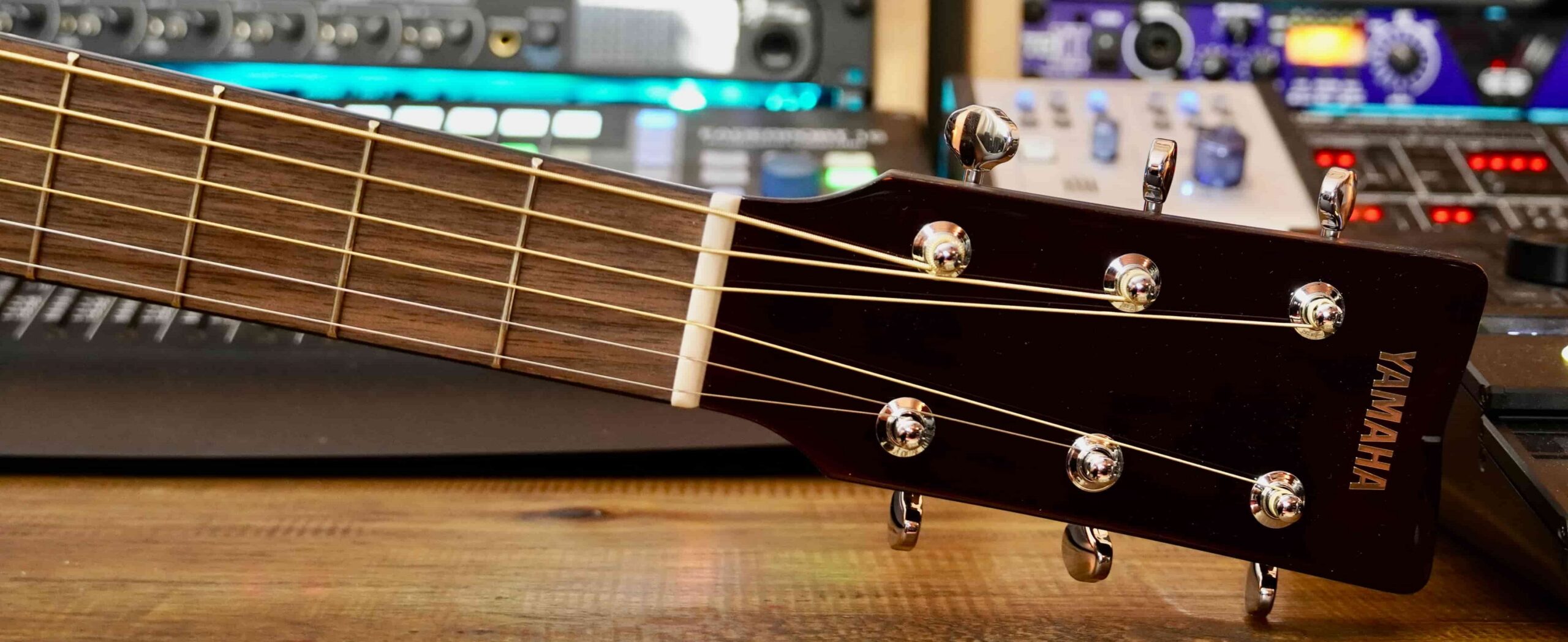
The scale length is 25 – 9/16″ (650mm) and the nut width is 1 – 3/4″ (44mm). A gig bag is included.
BUILT-IN EFFECTS
Installed on the inner surface of all TransAcoustic guitars is a device called an actuator.
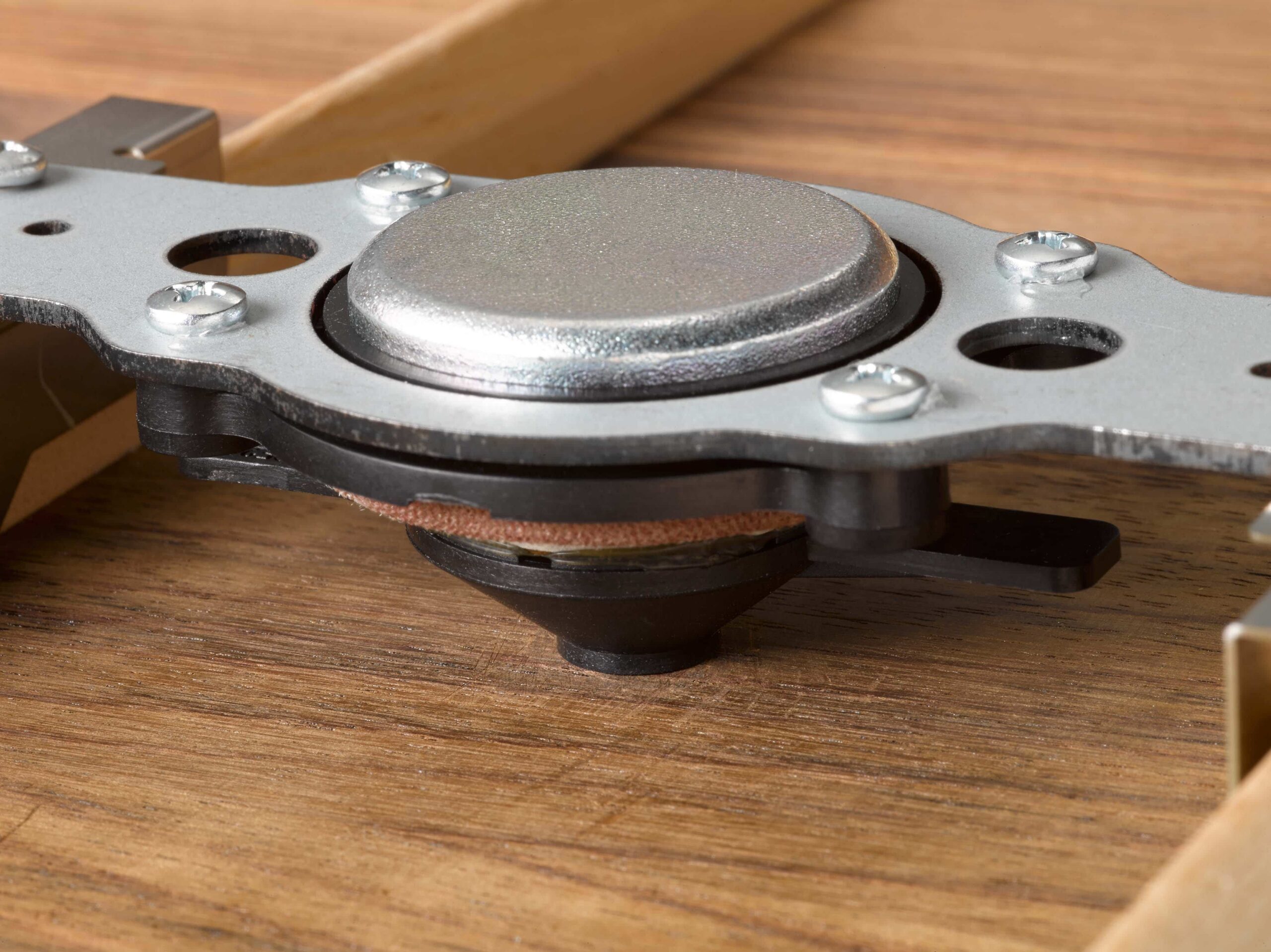
This device resonates in response to the vibrations of the strings. In turn, the vibrations generated by the actuator are transmitted to the body of the guitar, and to the air in and around the guitar’s acoustic chamber … resulting in an authentic reverb and chorus sound that radiates from within the body, and outwards through the sound hole. Players experiencing this for the first time often think that there is a speaker system installed in the guitar chamber, but it’s actually this innovative device that produces the effects.
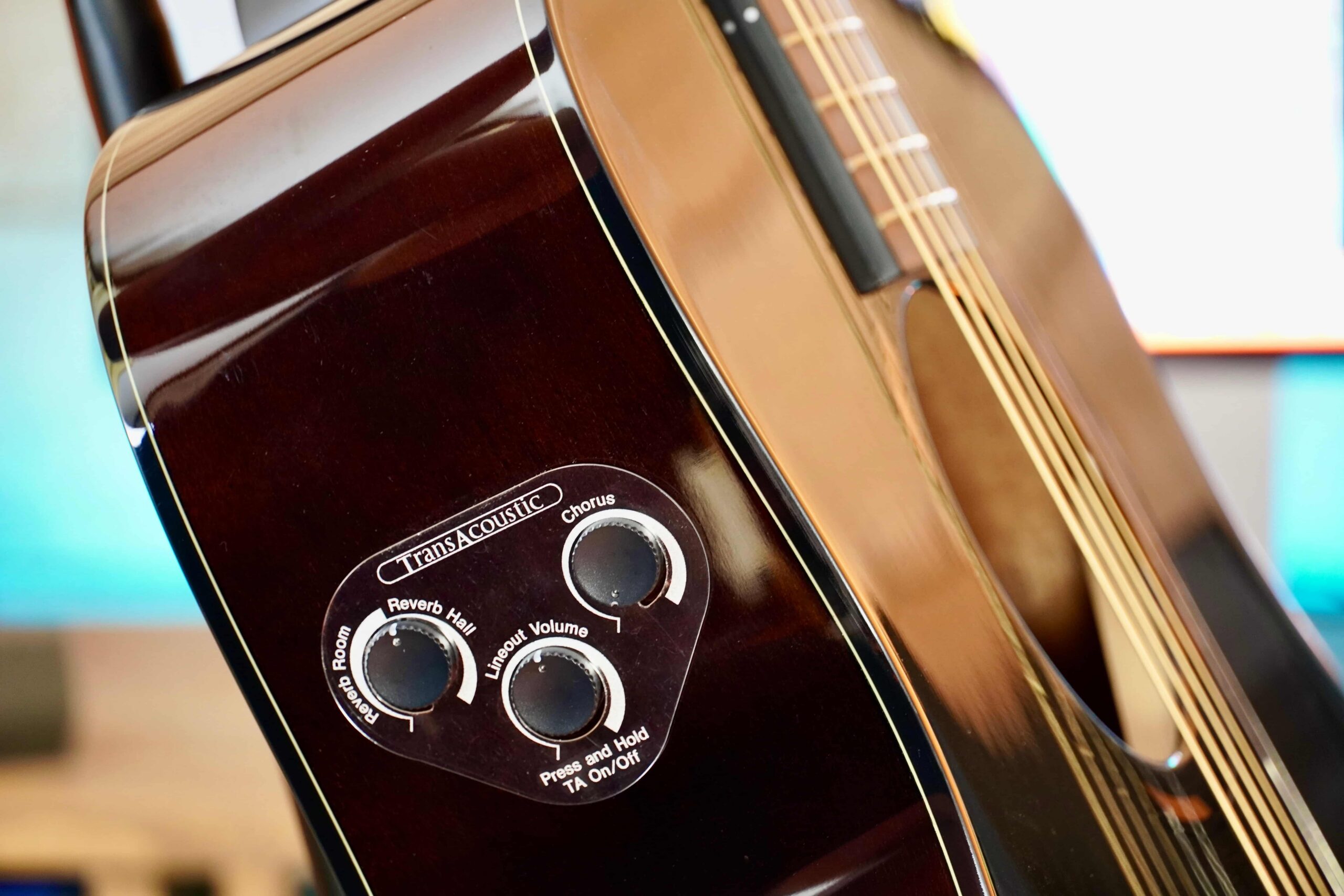
The TAG1E and TAS1E offer three effects: room reverb, hall reverb and a variable chorus. Three rotary dials facing the player on top of the upper bout of the guitar are used to adjust these.
Reverb
The reverb dial allows you to select the amount and depth of room or hall reverb that is produced through the sound hole of the guitar when played acoustically, and through the end-pin jack when amplified.
The dial rotates from fully counterclockwise (completely off) to midway (12:00) when adding incremental amounts of the room reverb, and from midway to fully clockwise when adding hall reverb. It couldn’t be easier to find the perfect type and amount of ambience for your music.
Chorus
The amount of chorus is sweepable from 0 (completely off) to fully clockwise. A really subtle doubling effect similar to that of a twelve-string guitar is produced at the lower settings, while more extreme modulation can be achieved as you move past the center detent of the rotary.
Volume
The volume dial serves two purposes. First, it activates the reverb and chorus effects when pressed and held down for three seconds. (This applies even when playing the guitar acoustically.) To disable the effects, simply press and hold the volume knob down for another three seconds.
This dial also serves as the master output for the under-saddle piezo pickup system and determines the overall output from the end-pin jack. Note that the volume control does not affect the volume or depth of the effects blend, which is a nice feature.
AUTOMATIC POWER-DOWN
The TAG1E and TAS1E power down automatically if the guitar hasn’t been played for about 30 minutes. This saves the battery life of the two AA batteries installed below the end-pin jack. If you are amplifying the sound, remember to unplug the cable from the end-pin jack to preserve the battery life.
PLAYABILITY
Overall, the TAG1E / TAS1E are incredibly well made, and the satin-finished mahogany neck is slim and fast for easy fretboard transitions. The fret-ends are well dressed, with no sharp edges, while the die-cast chrome tuners have a very positive feel and keep everything in perfect pitch, even after hours of jamming.
The setup on these guitars is also exceptional. The nut and bridge have been cut to allow for a low, buzz-free action, and the intonation is spot-on for both complex open chords and voicings further up the fretboard.
AESTHETICS
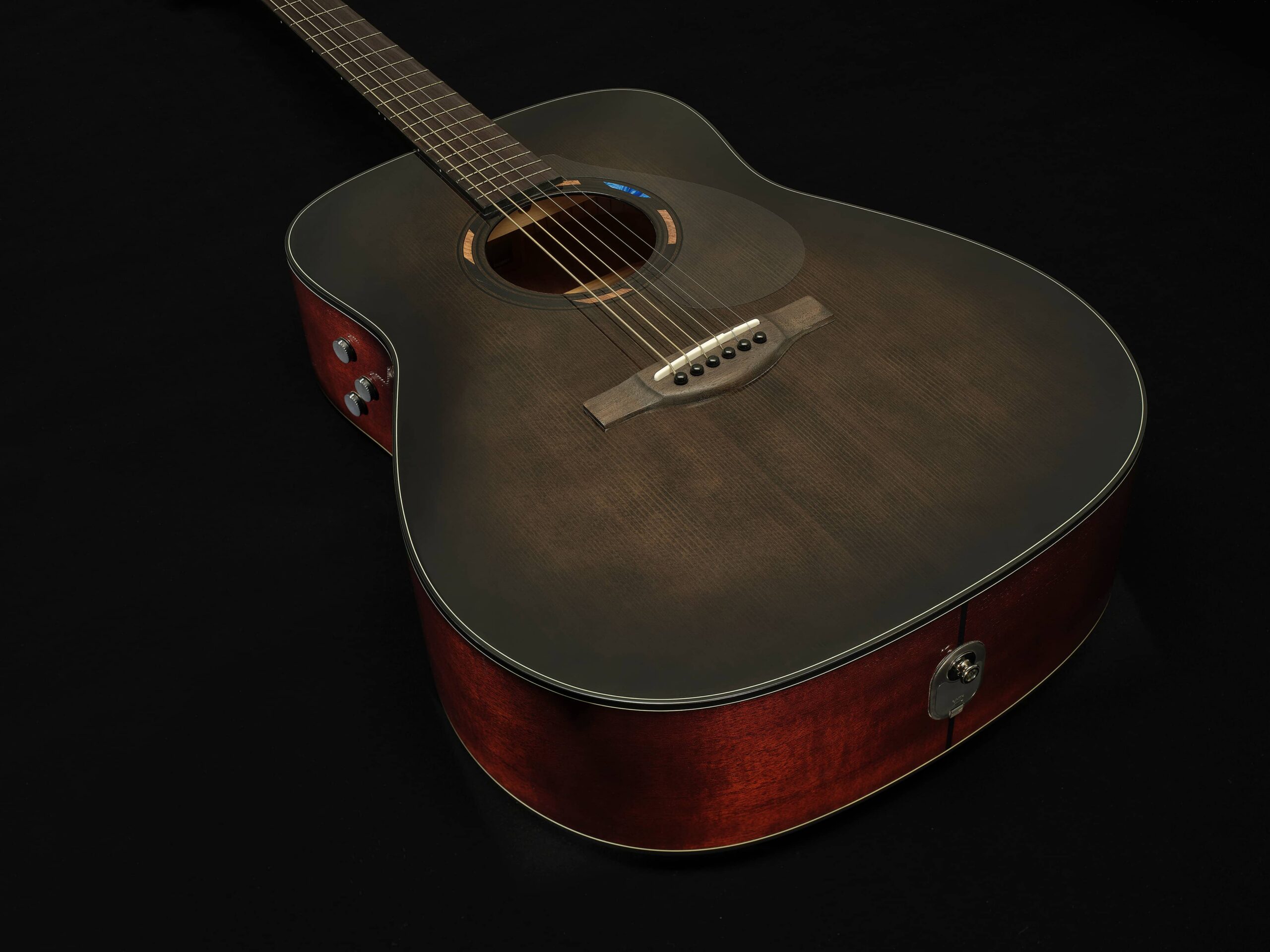
Both the TAG1E and TAS1E are available in a variety of distinctive finishes. The TAG1E I’m playing in the video below has a Translucent Black finish on its solid spruce top, as well as on its mahogany back and sides. This allows the natural red of the mahogany wood to blend beautifully with the shading of the top for a really classy overall appearance. The satin-finished mahogany neck is solid black, and the body is bound with a black and white binding that adds a subtle definition to the curves.
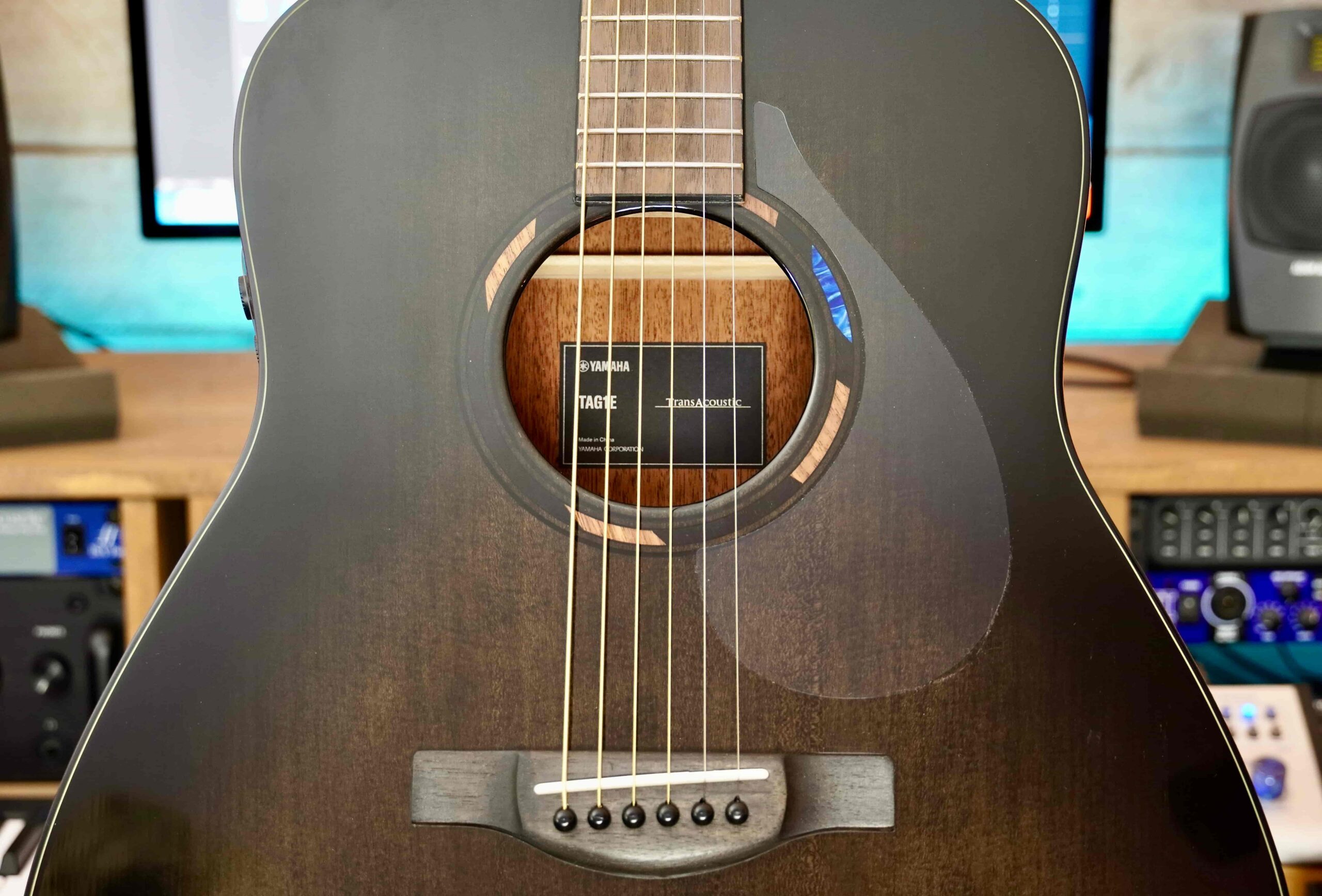
The walnut fretboard has a naturally soft grey / brown hue that really makes it stand out against the deeper coloring of the body. The fretboard doesn’t have any fret position markers, which keeps the flow of the playing area clean and unobstructed. You can always use the dot position markers on the side of the neck to check note placements.
The sound hole rosette adds a special touch with its cobalt blue and tan marquetry inlays. Quite the centerpiece set inside the solid spruce backdrop!
THE PICKUP SYSTEM
Like all TransAcoustic guitars, the TAG1E and TAS1E are equipped with a pre-amp and an under-saddle piezo pickup system. The control panel is all part of this pre-amp system, allowing effects as well as the main signal to be amplified through the end-pin 1/4″ jack socket.
TONALITY
The solid spruce top of the TAG1E / TAS1E offers a rich midrange and low-frequency response, with the mahogany back and sides yielding a slower transient response, making for a warm and woody tone with strong midrange. Building upon first-generation TransAcoustic guitars, these newer models combine a sleek modern design with fuller body volume and newly optimized effects.
The wide variety of tones you can get from these guitars is demonstrated in the audio clips below, all created with a blend of a condenser microphone and a send from the instrument’s end-pin jack. All the effects come from the guitar itself, with no external amplification or processing used.
1. Finger-style part
I added a touch of the onboard hall reverb and a subtle chorus to this double-tracked guitar part, which serves as the intro to the video below.
2. Spread chords
These double-tracked spread chords also come from the video below. I added more hall reverb and a deeper chorus effect to give them a shimmering sound.
3. Lead tone
The rhythm parts in this next audio clip provide context of how the single notes sound against the other parts in the video. I’m using a nice amount of the hall reverb for the lead guitar melodies.
The Video
This video provides a real-world piece of music that demonstrates the versatility of the TAG1E in an ensemble situation with other instruments.
I recorded the rhythm parts with an external condenser microphone and panned them to the left of the mix, then used the onboard pre-amp and piezo pickup to capture the double-tracks, which are panned hard right. The solo was captured using the pickup system only.
The fingerstyle intro has subtle onboard hall reverb and chorus. I added more onboard effects to overdubbed spread-chord accents as the composition builds, then overdubbed a melody line and solo using the onboard hall reverb.
You can best appreciate the blend of tones if you listen through good quality stereo headphones.
The Wrap-Up
Yamaha has produced two incredible instruments in the TAG1E and TAS1E. The overall aesthetic of these TransAcoustic models is stunning, with features that are totally unique on entry-level guitars.
Both play beautifully and sound amazing with either a pick or fingers … and having the option to add extra musical sheen with versatile onboard effects takes them to a whole new level of expression and inspiration. Whether you’re attracted to the big, big sound that the dreadnought body TAG1E brings or prefer the more controlled tonality of the concert body TAS1E, either instrument will allow you to experience a wide variety of world-class tones without having to break the bank.
PHOTOGRAPHS COURTESY OF THE AUTHOR.
Keep reading