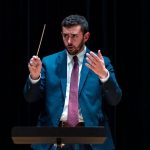
When You’re Absent
Teach students the skills they need to keep rehearsals running smoothly when you’re not there.
I dread having to miss a day of school, maybe even more than teaching when I’m sick, because writing sub plans is the worst. However, you will miss a day of school due to an illness, a festival, or just because you can’t handle it one day and you need a day off!
Don’t worry, there are ways to make sure things keep running smoothly and keep students playing their instruments even when you’re not there. I never hear the question “are we playing today?” because we always play, regardless of my attendance. No rest for the wicked! If you have the proper procedures, student leaders, and clear musical plans in place, your students can accomplish a lot.
Procedures
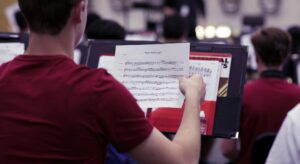
Having clear procedures is important to an effective and efficient rehearsal. These procedures must be efficient and work for you in order for them to work just as well when you’re away.
How do students come into the room? What are they expected to do to get ready for the downbeat? How do you begin your rehearsal?
For example, this is how I handle attendance, something that should be easy and not take away from rehearsal time. Well before high schools implemented cell phone bans, I found that cell phones were a huge issue with rehearsal productivity, so I linked their phones to attendance. Students are required to put their phones in phone caddies, and each slot has a unique QR code that is scanned by a student leader to take attendance. If a student’s phone wasn’t in the caddy, they were absent — either physically or mentally. For my top ensemble, they are responsible for “clocking in” to rehearsal by scanning their own QR code. The responsibility here is now on the students, not on you.
Having responsible student leaders is important to the success of your procedures while you’re away. Check out my articles on choosing student leaders and collaborating with student leaders for more about their roles in the success of your program.
Chamber Groups
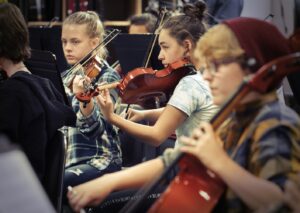
One of my favorite units is on chamber ensembles. Playing in a brass quintet was a formative time for me musically. Being able to collaborate respectfully with my peers, make decisions together, and communicate with each other while performing improved my playing and connected me with the members of my ensemble. The greatest part is that chamber ensembles rehearse themselves! Once they have the process and procedures down about who is in their group, what they are playing and where they are rehearsing, this is almost a “set it and forget it” sub plan. You can use this if you expect to be out for several classes, but the ensembles can also rehearse this way when you’re there.
I won’t lie, this does take a fair amount of preparation. Between assigning groups, picking music, and making schedules for their rehearsals, the preparation work is significant, but the reward is invaluable because of the way these skills from small ensembles transfer into your large ensemble. I explain this briefly in my article about preparing for spring concerts.
Sectionals
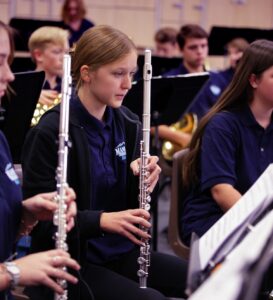
A tried-and-true student-led musical activity is the coveted sectional. If you are in the middle of a concert cycle, this is an effective way to ensure that students have learned and feel comfortable on their parts. I often send students to sectionals throughout the year while I am absent. With a 75-minute class block, surely they would get a lot done, right? No! The time was too long. Because they knew they had a lot of time, they were actually less focused and intentional in their approach.
So, I decided to give them a little more guidance and hold them more accountable for their time navigating the music on their own. Now their expectation in sectionals is to choose specific parts in their music that are giving them issues and focus their time on those sections (yes, I know that’s how sectionals work). The added component is that they must then record and submit their performance of those sections. Now that they need to submit that performance, they will (hopefully) get those difficult sections to sound really good with a lot of repetition and practice. They might work for the full 75 minutes, but they might not.
The first time I took this approach, I was frustrated. How could students end their sectionals early? Surely, they know they should have worked the whole time! However, I understood after students gave me some feedback. They found that they were far more productive than they usually were because they had a clear goal and directive as opposed to being told to “go and work.”
Student-Led Rehearsals
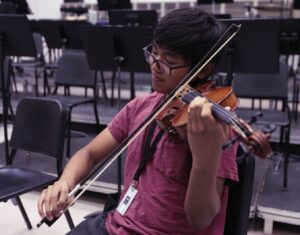
A student conductor or a drum major who can run rehearsals offers many benefits. Your exceptional student gets podium time, which is valuable if they are planning to go into music education. The rest of your students receive feedback from another set of ears that you trained through your own teaching. Overall, students enjoy and have a lot of fun with a peer on the podium. Students will respect the right leader, but it’s also like letting the inmates take over the prison. It might be chaotic, it might be goofy, but if your expectations are clear, your students will get something done.
Students can also collaborate on the music together like a large chamber ensemble. While I have only done this process with my group under my supervision, there is no reason that they can’t be successful if they have the right tools. Learn more about this in my article about letting students take control during rehearsals.
Individual Practice
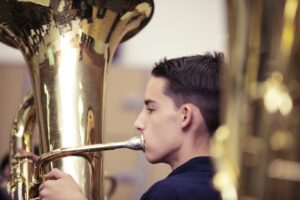
Another option is to have your students practice individually. Students will do their work in groups, and then are encouraged to practice individually on their music. If you want to get creative, have students create and try out a practice plan. I believe that many students do not practice because they do not know how to. I don’t know how to do origami, so I usually don’t unless I’m crumpling up some important document.
Make students write down a practice plan for various time lengths (10 minutes, 30 minutes, 60 minutes) that includes a warm-up and specific plans for their repertoire with timespans. Then they should try it!
Students will be surprised that they can’t warm up with all 12 major and minor scales around the circle of fifths and also in 3rds in two minutes. They also find out very quickly that they need more than two minutes to warm up for a one-hour practice session! With this activity, they learn how to practice efficiently and effectively, and you tricked them into practicing during class time!
________________________________________
These are just a few ways that your students can be productive and still play their instruments without you present at rehearsal. Don’t give your students a day off because there is already so little time, and my philosophy is that my students always play in class. Although they may not admit it, that’s what they want to do!
I linked to a number of other articles that I’ve written, not in an effort of self-promotion, but because many of these topics have led to my students being autonomous and my program being a machine that continues to run uninterrupted when I’m away from it. One of the biggest compliments I receive from substitute teachers is that subbing for me is easy because my students know what to do and take care of themselves.
Keep reading