When You Are the Entire Music Program
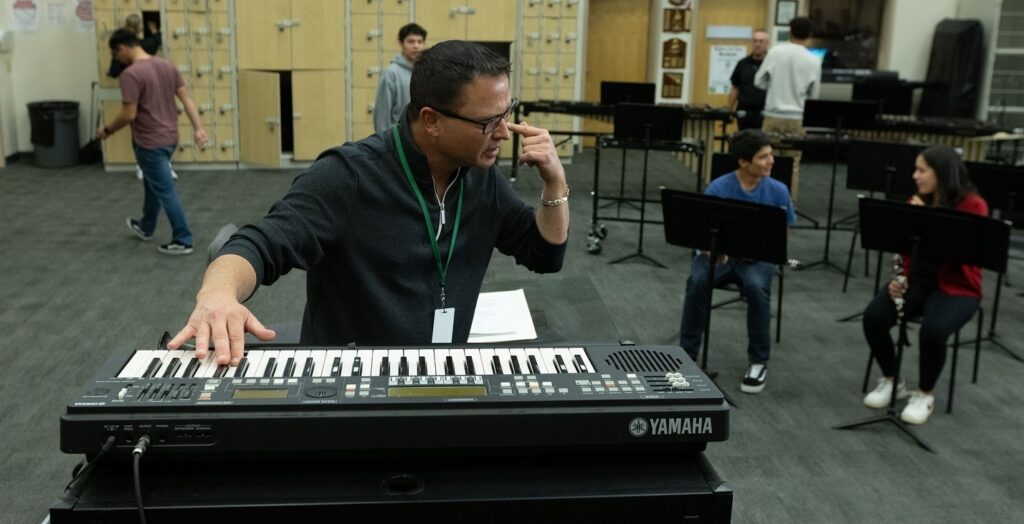
“Let’s start with a concert F,” I said. It was my first day at a new school. I was a late hire.
Immediately a student raises his hand. I thought I knew what he was going to ask. “Concert F is your G,” I explained as the resident musical expert.
“Oh, OK,” he said. “I was actually going to ask how to hold this.”
Well, we’re certainly not starting where I thought we were. I had a plan for day one. It involved some warm-up and technique. Sightread our December program. This, of course, would lead to our Midwest Clinic recording session, followed by a guest appearance with all major collegiate and professional wind ensembles.
That plan lasted for about four seconds. Instead, we spent the period figuring out how things fit together. Where to sit. How to sit. How to enter the room.
I walked in expecting a band. What I actually had were the ingredients for a band. They just weren’t combined yet. The kids weren’t behind. I was just the first music teacher most of them had ever had.
Your Program Is Different — That’s the Whole Point
Some programs have a system with a lot of moving parts. Kids start with a specialist in elementary school. They move up to middle school with a larger ensemble. By high school, they know how to “band.” There’s a handoff. Someone else already did the early work.
Then there are the schools where you are the only music teacher for 20 miles in any direction, teaching every grade from K to 12. There is no feeder program, no private lesson studio down the road, and no way for kids to see a live performance without a long drive.
If you try to measure your program against those that inherit years of experience, you will feel like you are constantly behind. That’s not a fair — or useful — comparison.
Your job is different. Not worse. Just different.
The Hidden Curriculum
There’s a whole set of things that some programs don’t have to teach. In other programs, you might have to teach basic instrument care to upperclassmen. Or, you might have to teach beginners how to rehearse in an ensemble — if you don’t have homogeneous instrument classes.
Some of your students can’t practice at home. They share space, share instruments or have responsibilities that take priority. So, you build repetition into class. You plan rehearsals as if they are the only opportunity for students to play.

Slow Down on Purpose
At some point, you will feel pressure to speed up. You’ll hear another program’s recording and think, “We should be further along.”
Slowing down isn’t lowering standards. It’s teaching to the reality you work in.
- Fewer rehearsals.
- Mixed experience levels.
- Limited access to instruments.
- Interruptions you can’t control.
I’ve done too much, too soon before. It goes fine for a week, then tone, confidence and musicianship fall apart. I end up reteaching everything I already taught. The slow and methodical way works better.
Your students may need more repetitions, more modeling, more time just to get comfortable making a sound. That’s not a flaw in your teaching. That’s the process. Progress is still happening. It just doesn’t happen on someone else’s timeline.

Redefine What Success Looks Like
In your setting, success may look different. Sometimes very different like:
- A student who comes back next week.
- A section that sets up without chaos.
- Tone that improves (even a little).
- Someone who barely played last month is now actually trying.
- Kids who continue with music.
Some of my most successful concerts weren’t just about the music — they were also about better attendance, kids sitting up with pride and everyone finally wearing black socks.
Once students buy in, our main goal — retention — becomes attainable.
Mixed Ages, One Room — Use It
You might have a 6th grader and a senior sitting 10 feet apart. Ideal? No. Can we work with it? Absolutely!
Older students can model. Tone, posture, how to sit in rehearsal, how to respond when the director stops. Younger students see what’s possible. And sometimes, the older students step up in ways you didn’t plan for, because they realize someone is watching them.
Programming music for this setup can be particularly challenging. Lean into flex band arrangements and section/solo features. Consider having older students conduct or lead with some of the beginning pieces.
Teaching In a Sports-First Community
When you plan your band calendar, you may feel like you’re competing with a hierarchy:
- Football
- Basketball
- Track
- Testing dates
- Prom
In some places I taught, the list was much shorter: just football.
You’ll find out quickly which events matter most to the community. And, fighting it head-on usually doesn’t go well. I’ve scheduled performances opposite big games. It didn’t end in a philosophical win. It ended in low attendance.
Sports aren’t the enemy. They’re part of the ecosystem your program lives in. So, you adjust. You schedule around big conflicts when you can. You look for ways to coexist instead of competing.
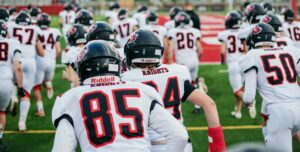
What does this look like? The full marching band performing at halftime is wearing a mix of marching band, football and cheerleader uniforms.

Geography
If you’re in a rural or isolated setting, distance isn’t just inconvenient. It changes how everything works. A broken instrument might take weeks to fix. A missing part isn’t a quick trip to the music store — it’s an order, a wait, and sometimes a student who sits out for a month over one small piece. Clinics, festivals and basic supplies all require extra time, money and planning.
You learn to plan differently. You keep backups when you can. You get creative. Sometimes you just adjust the plan for the day because something didn’t come in and there’s nothing else to do about it. This is how you work with what you have to make your program succeed.
Working With What You Have
Here are what these situations have looked like for my colleagues and me — and what we did about it.
No Nearby Private Lesson Teachers? Connect with university music programs. Many music education students need observation or practicum hours and can do virtual or periodic in-person lessons. It’s not perfect, but it’s something they wouldn’t have otherwise.
No Music Store Nearby? Run a monthly instrument maintenance class. Teach students and parents how to handle minor repairs — stuck slides, leaky pads, broken reeds. Regular checkups mean you’re catching problems early instead of losing a student for two months because of a broken instrument.
No Second Director to Split the Load? Most classrooms have teaching assistants — they just happen to be students. Older or more experienced players can be in charge of setup, filing music and leading section warm-ups. It builds leadership in them and takes real tasks off your plate.
Students Can’t Practice at Home? Operate as if your classroom is the only time they get music. Build repetition into every rehearsal. Front-load the things that matter. Don’t penalize for what happens outside your walls — focus on what you can control inside them.
Sports Dominate the School Calendar? Don’t fight the hierarchy — work inside it. Schedule around the big games when you can. Look for moments where music fits naturally into the community calendar rather than competing with it. The goal isn’t to win a turf war. It’s to keep students involved in something that matters to them.

You Are Building Access, Not Just Teaching Repertoire
It’s easy to look at your program and see what it isn’t yet. What it doesn’t sound like. What it doesn’t have. If you’re the only music teacher these students will ever have, this is the whole experience. There’s no handoff. No next director who will build on what you started.
For a lot of your students, this is it. So, change your goals:
- Get them to show up.
- Get them to try.
- Get them to stay long enough to improve.
Over time, things start to build. A few kids stick. A section starts to sound like a section. The program runs a little smoother than it did before.
At some point, you realize you’re not just filling a gap. You’re the program they had.
Keep reading