


Nylon-String vs. Steel-String Guitars
With the start of another new year, we often make resolutions to lose weight, start a workout regime, learn a new language, or take on an exciting hobby that we’ve always wanted to try.
While learning to play the guitar won’t help you shed the extra holiday pounds, it will immerse you in the resonant frequencies of a beautiful art form that enhances overall health and the joyous pursuit of musical self-expression. Music is also an incredible language with global appeal, understanding and appreciation.
Is it easy to learn the guitar? Well, it can be, depending on your dedication to the process and utilization of the right educational tools. But probably the biggest factor is choosing the guitar that’s best suited to your personal needs. There are three main types of six-string guitar: electric, acoustic steel-string, and acoustic nylon-string. Of course, certain musical styles lend themselves to certain guitar types. (Trying to play heavy metal on a nylon-string acoustic guitar, for example, may not be the best way to go.) That said, pretty much everything you learn as a guitar player can be articulated on any of the three.
In this posting, we’ll concentrate on the two acoustic guitar types and explore the physical and musical differences between them. A good understanding of this will allow you to make a better-informed decision when you’re ready to buy your first — or your next — guitar.
Physical Attributes
Steel-string guitars
Acoustic steel-string guitars come in a variety of body sizes, neck widths and scale lengths. The shorter the scale length (that is, the shorter the distance between the nut and the bridge), the less tension there will be on the strings, which is definitely a good thing for beginners.
Steel-string guitars range in size from parlor size (the smallest) to orchestra, concert, grand auditorium, dreadnought and Jumbo (the largest). Choosing the right body size for your physical frame is very important for a beginner. If the guitar overpowers you in volume and size, consider choosing a smaller body style like a parlor or concert body guitar. Conversely, if the guitar feels too small for you and the strings seem too close together for your fingers and hands, consider a larger guitar body size and neck width.
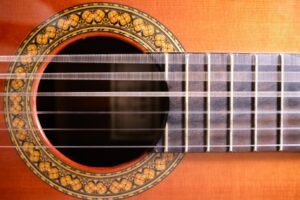
Acoustic steel-strings have two plain (unwrapped) strings: the high E and the B. The remaining four strings are wound with a bronze or phosphor bronze winding. Wound (wrapped) strings have a light ridge and texture to them, as opposed to unwrapped strings, which have no ridge and a smooth texture.
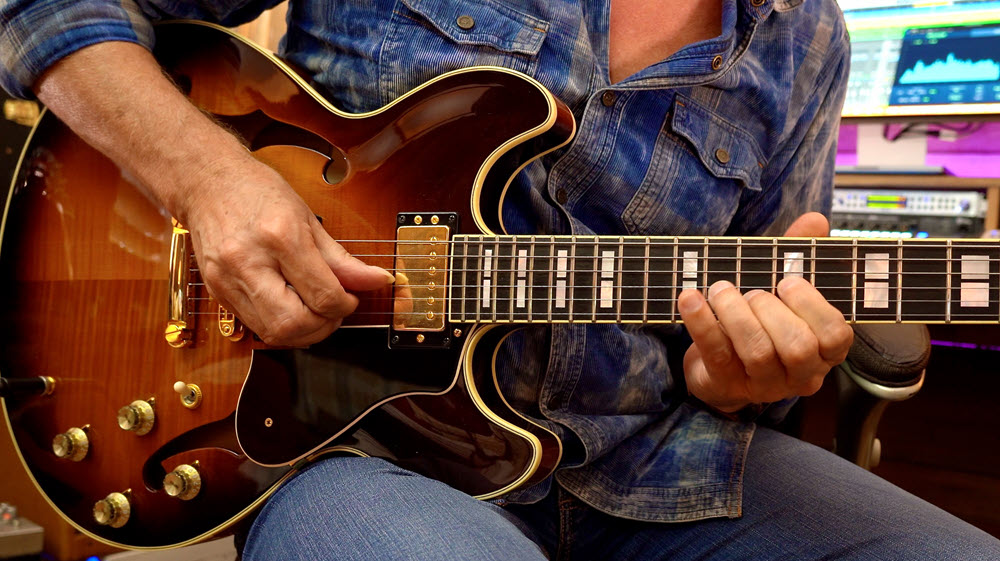
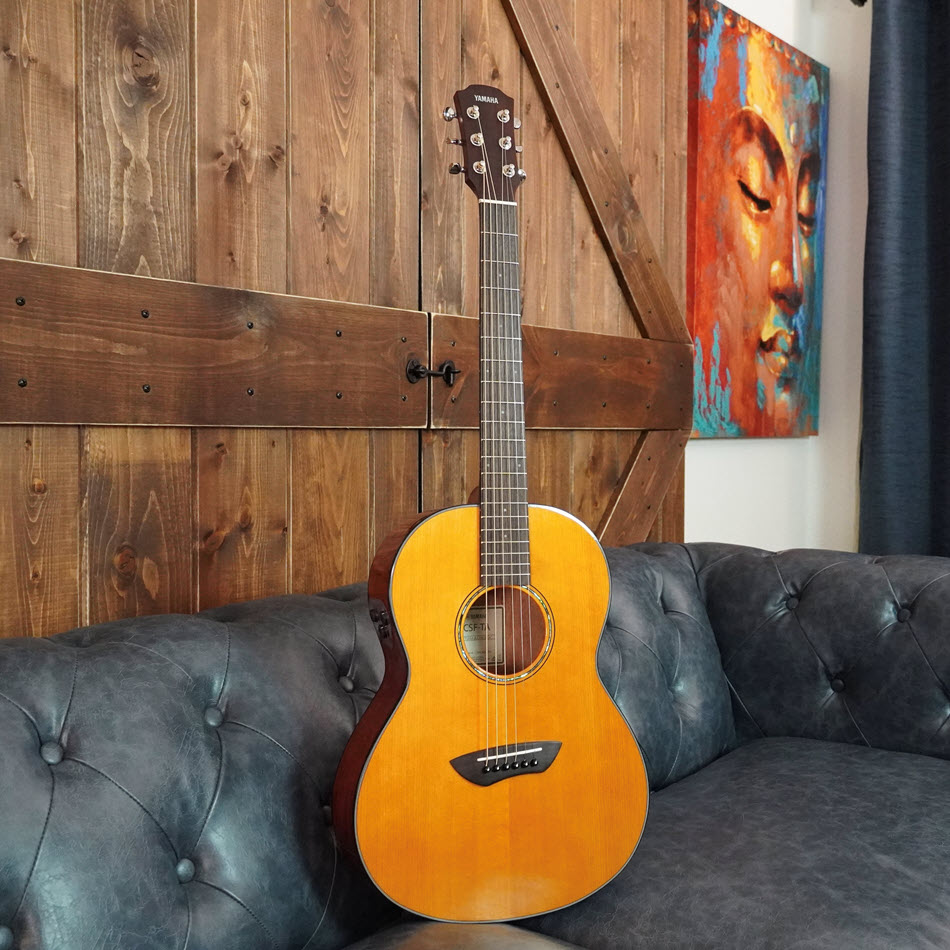
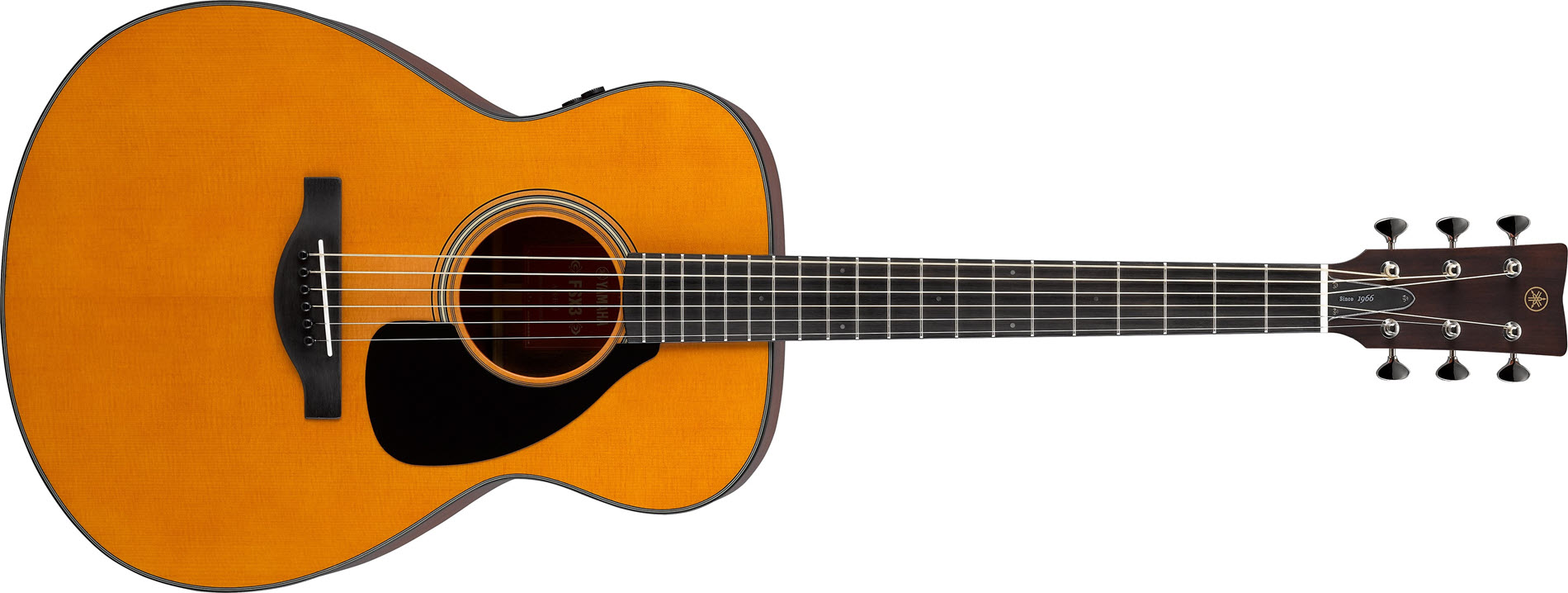
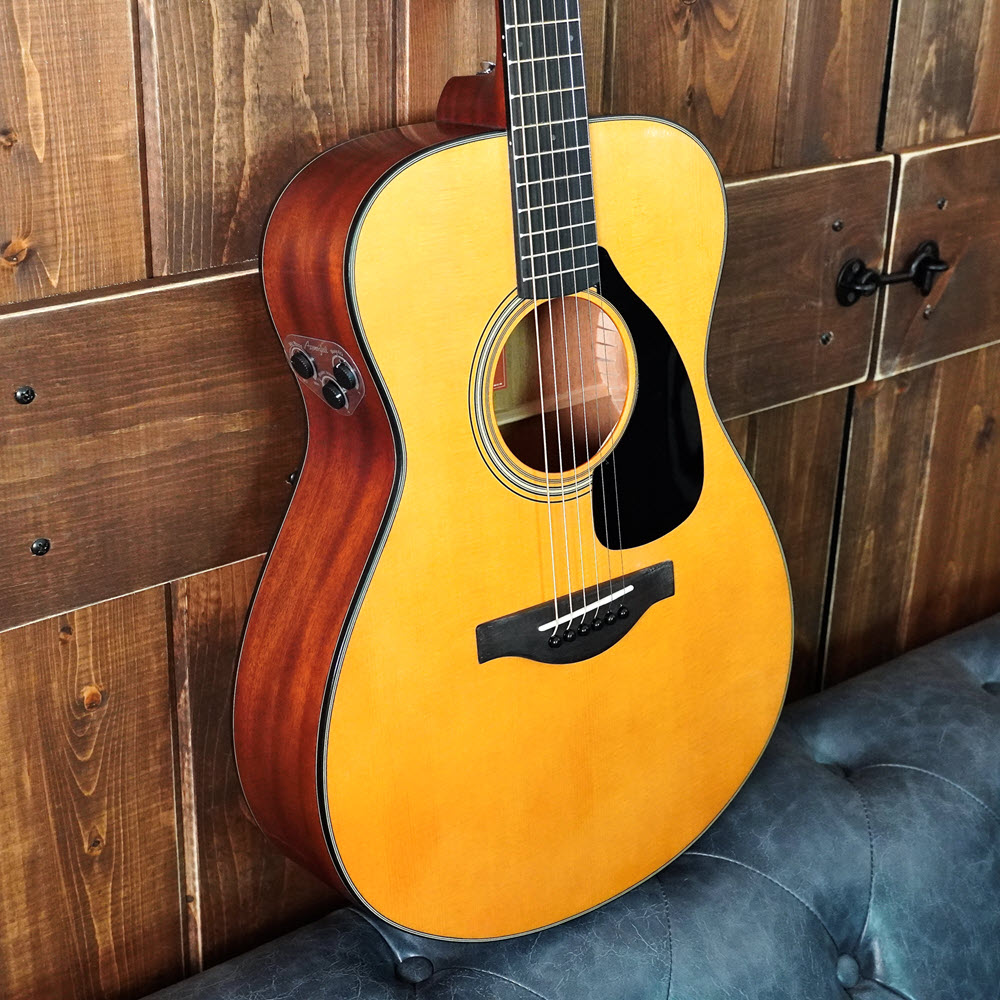
Steel-string guitars have a higher string tension than their nylon-string counterparts, and this may initially make them harder to play, especially if you’re using thick string gauges and the instrument is not set up correctly. Ideally, you’ll want to find a guitar that has low action, meaning that the strings are close to the fretboard, allowing your fingers to easily press them down onto the frets, so the notes sound clean without your having to exert too much pressure or effort. Players with small hands may opt to choose a steel-string with a slimmer neck profile, such as Yamaha CSF Series guitars.
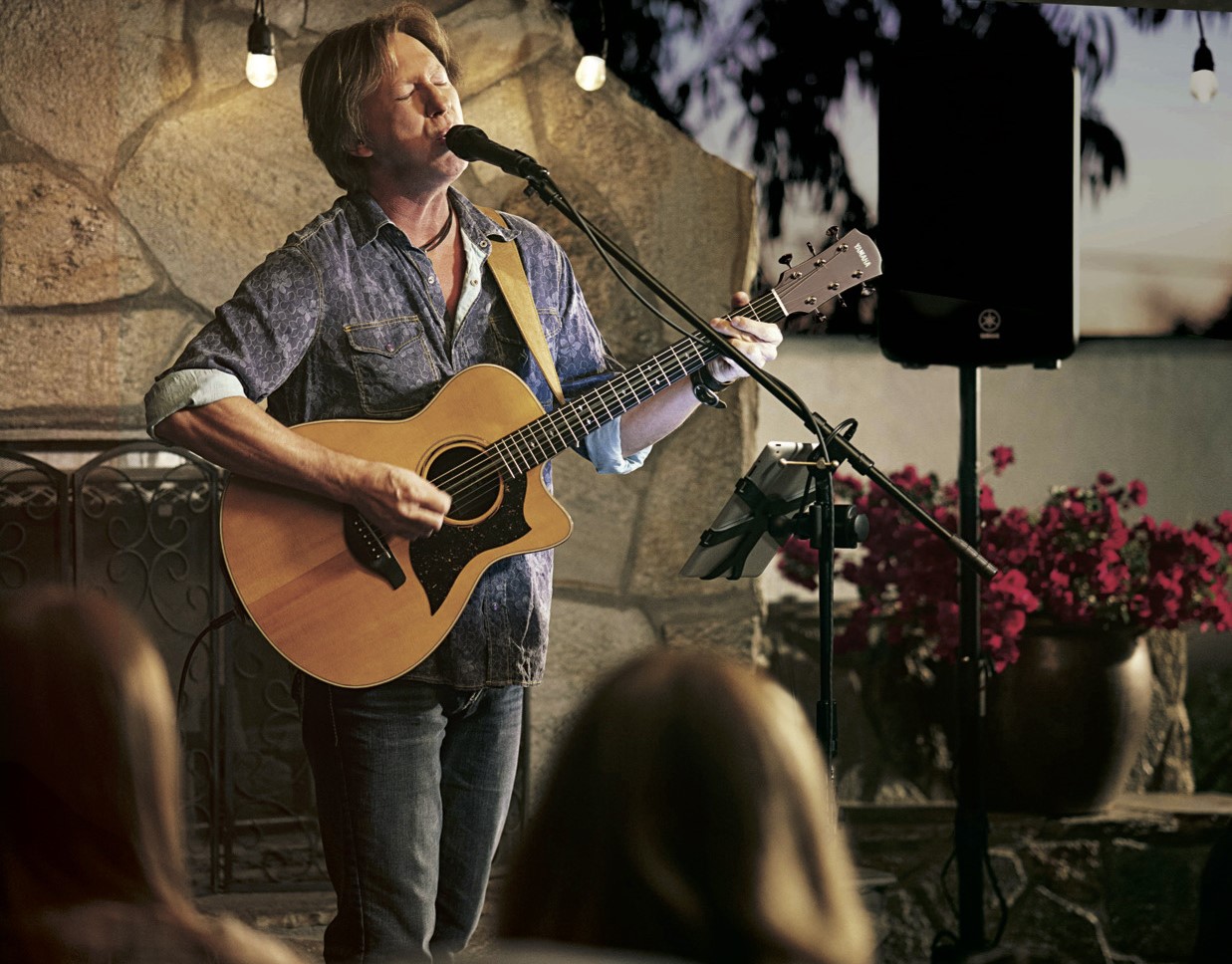
Steel-string guitars are usually played with a plectrum (guitar pick), which adds a nice percussive sound to the rhythmic delivery of chordal passages and lead lines. As you progress as a player, you’ll also want to learn how to use your fingers to pick individual strings — a technique appropriately enough known as fingerpicking.
Nylon-string guitars
Beginners often find nylon-string guitars (also known as classical or Spanish guitars) easier to play and physically more manageable than steel-string guitars. Unlike steel-string guitars, nylon-string guitars are predominantly the same size and generally have the same scale length. If set up correctly, a shorter scale length (and lower string tension — see below) will definitely help the beginner in playing single notes as well as chord shapes.
On these instruments, the top three strings (high E, B and G) are made of nylon and have a low tension, so they require a softer touch than their steel-string counterparts. The lower three strings (D, A, low E) are lightly wound, so they offer a lower tension and have a lighter ridge and smoother texture than wound steel-string versions.
The overall volume of nylon-string instruments will almost always be softer than that of a steel-string, and players often adopt a fingerstyle approach on these guitars. You can strum a nylon guitar, but generally this is done with the nails on the picking hand, not a pick. The overall sound will be percussive in nature, but it will be gentler and less defined than that of a steel-string acoustic.
Traditional classical nylon-string guitars also have a wider fretboard, with a flat fingerboard radius. Having more room between the strings may help players with larger hands. Smaller students may opt for a nylon-string guitar with a non-traditional neck width such as Yamaha NTX Series instruments.
Sonic Differences
As mentioned previously, all musical genres can be performed on either steel-string or nylon-string guitars. However, each will lend itself toward specific types of music due to the tone and feel those guitars elicit.
Typical genres played on nylon-string acoustic guitars would be:
-
- Pop
- Jazz
- Latin
- Classical
- Flamenco
Typical genres played on steel-string acoustics include:
-
- Pop
- Rock
- Blues
- Country
- Bluegrass
- Folk
My advice is that you take into account the sound, playability and overall musical approaches you lean towards before making a final decision on the guitar that might work best for you.
I also suggest finding a nylon- and steel-string guitar of the same body size to try side-by-side. Hold each instrument and see which one feels more comfortable in your hands. If you’re not able to play guitar yet, have the store staff audition the instruments for you, and ask them to demonstrate the differences we’ve discussed here before making a purchase.
The Videos
Here are two videos that demonstrate the tonal differences and breadth of styles these instruments can achieve.
Nylon-String Demo
Nylon-string guitar is perfect for the classical Spanish flavor of the music in this video. Playing this on a steel-string could work, but would sound less authentic and be slightly harder to play.
Steel-String Demo
A blues tune always sounds so good on a steel-string acoustic! There’s just something pure, raw and unapologetic about the emotional content in this genre. Playing slide on a nylon-string guitar just wouldn’t work. The extra string tension and crisp tone of the steel strings allow the slide to really sing out in a musically satisfying way.
The Guitars
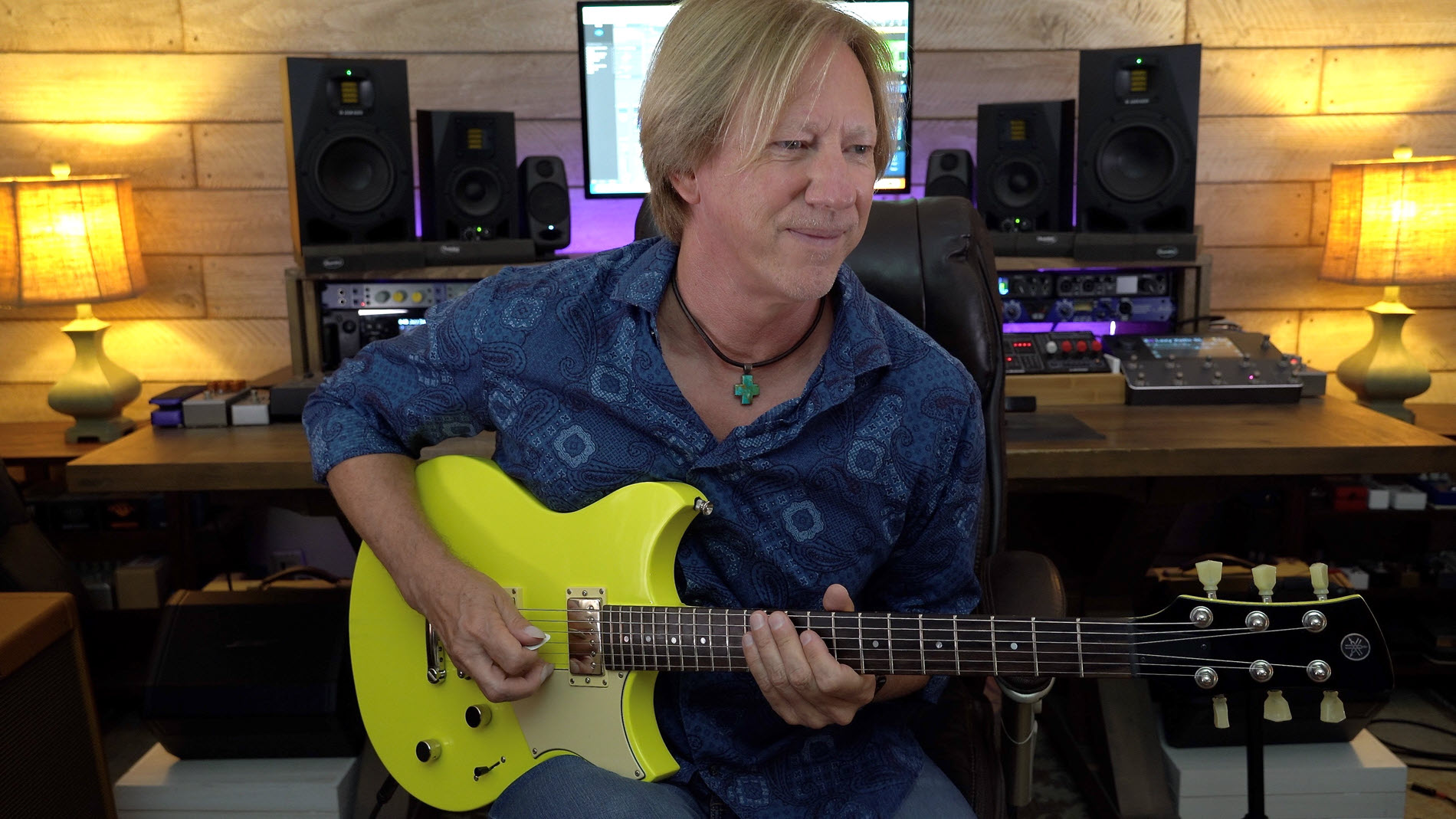
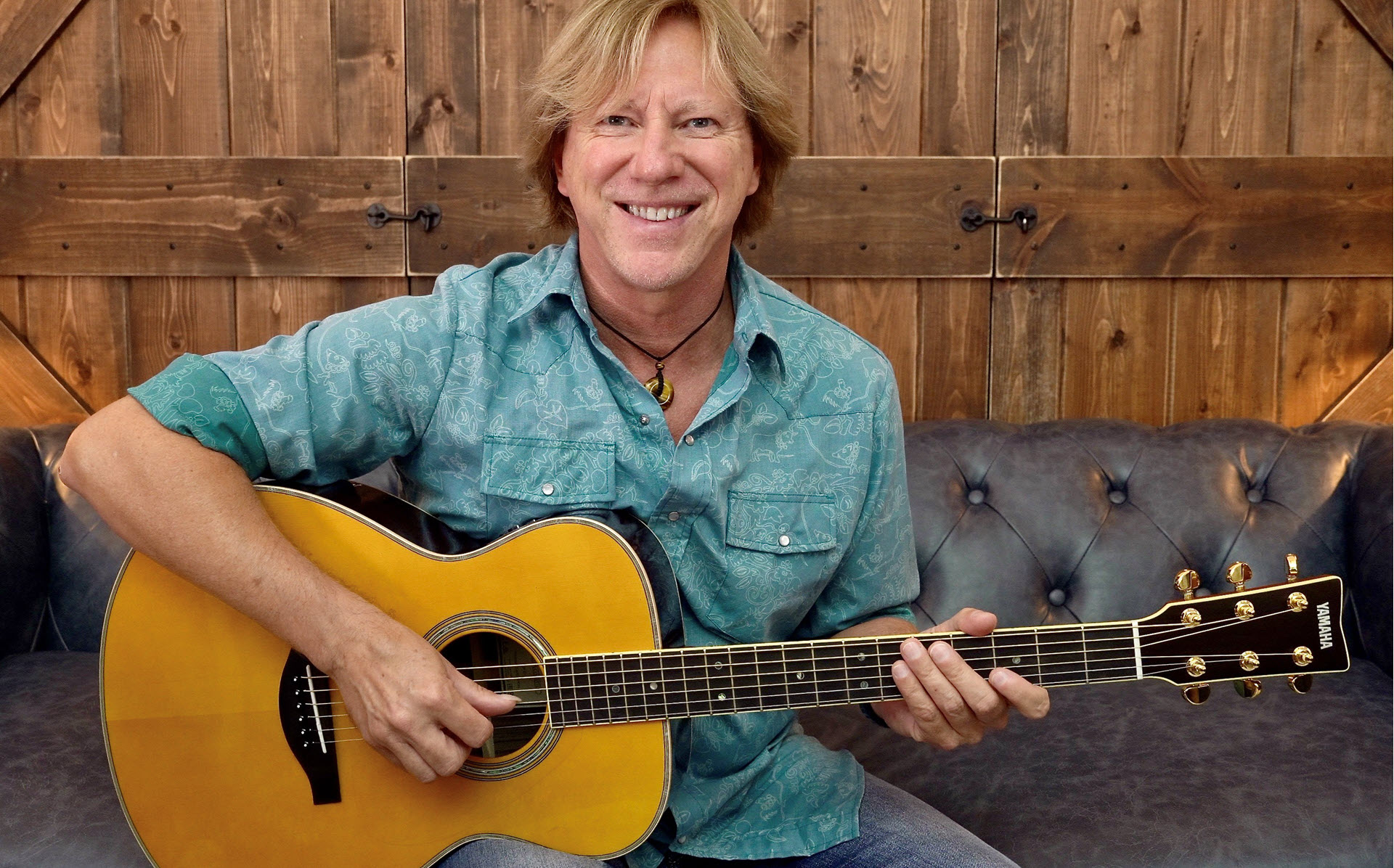
The Yamaha CG-TA TransAcoustic nylon-string and the CSF3M steel-string guitars featured in these videos are roughly the same size, so I thought that would make for a fair comparison, while displaying the vast difference in tone and musical style of each instrument.
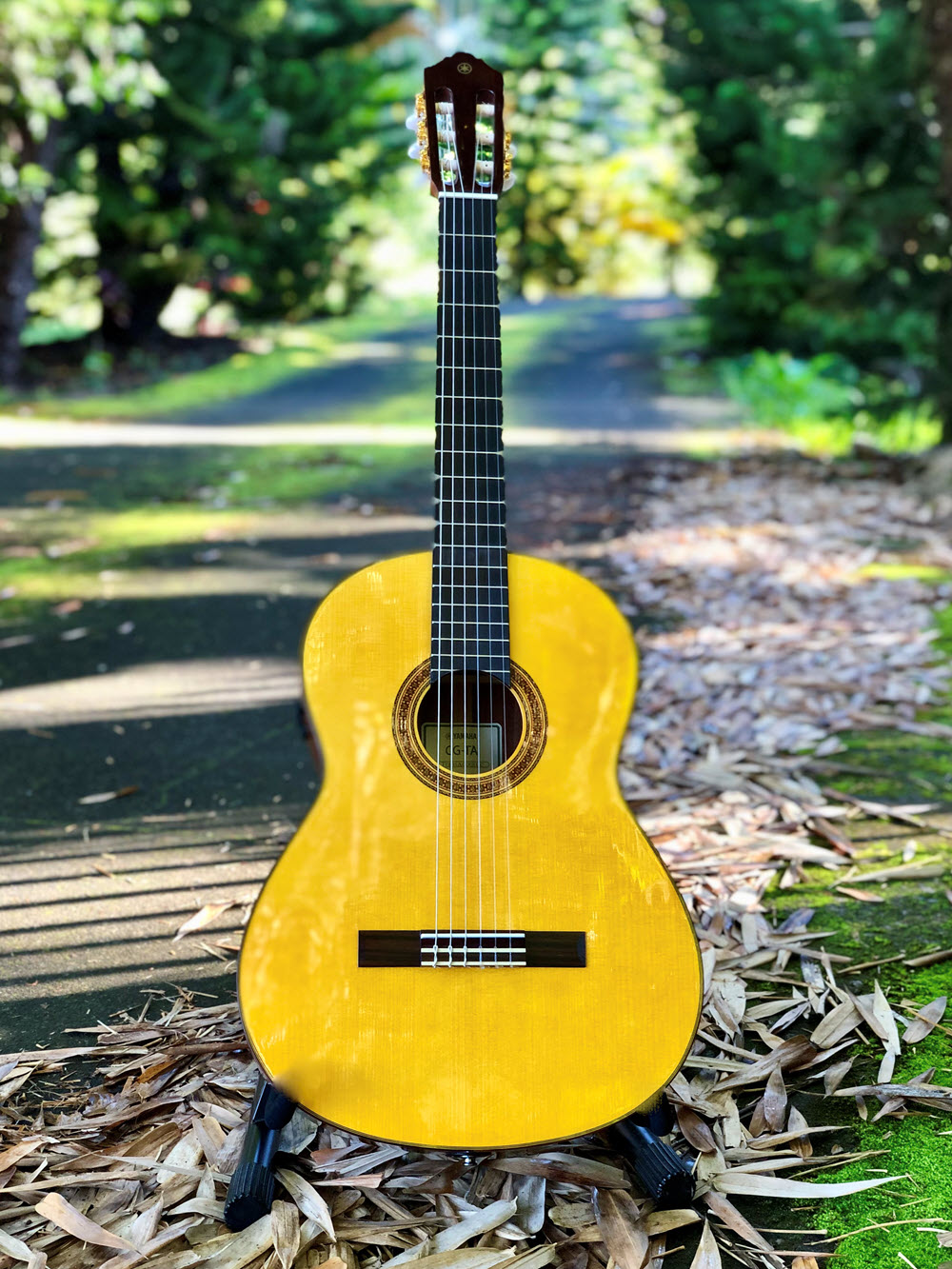
The CG-TA features ovangkol (similar to African rosewood) back and sides, a solid spruce top and wonderful onboard reverbs and chorus. This classical guitar has a traditional-width rosewood fretboard.
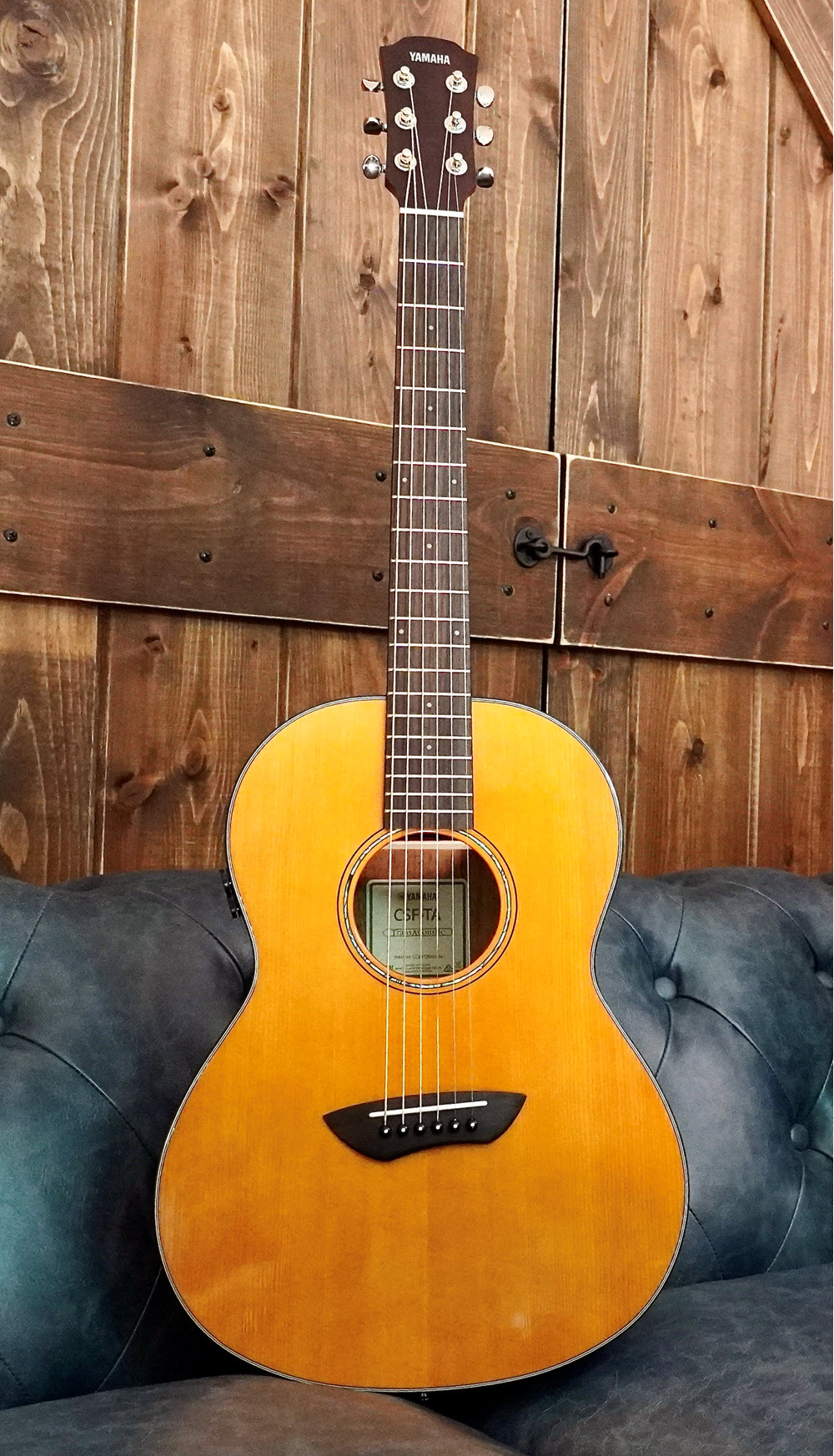
The CSF3M features a solid mahogany back and sides, solid Sitka spruce top and a slim rosewood fingerboard.
Both guitars have a passive undersaddle piezo pickup for recording or live performance.
The Wrap-Up
In my opinion, choosing a guitar that suits you best may be the most important decision you make when you’re first starting out. Fortunately, there are many excellent choices for the beginner. If you can, spend a little more on the right instrument, as the guitar you select may well stay with you throughout your entire lifetime of musical progression.
If the guitar you are trying to learn on is too hard to play, it will seriously impair your ability to learn, create frustration and ultimately cause you to give up before you even begin. But if you choose a playable, inspiring and musically resonant instrument from the get-go, you’ll want to play more, and the resultant practice time will lead to logical progression and personal growth as a musician.
PHOTOGRAPHS COURTESY OF THE AUTHOR













































































































































 Creating:
 Edit in notation software (like
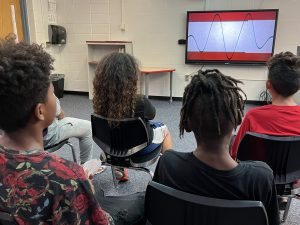
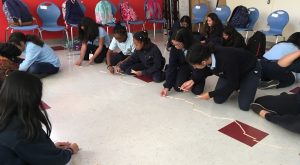
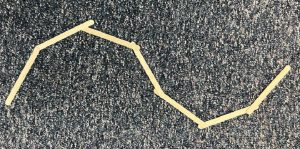
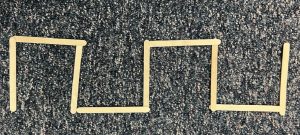
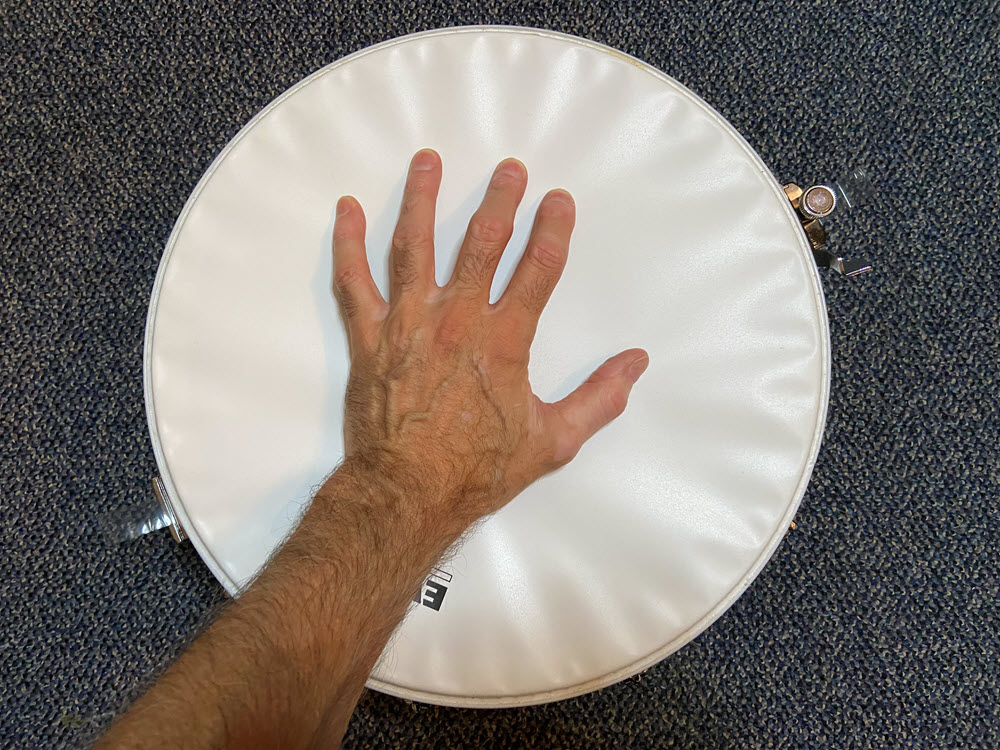
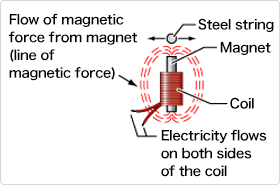
 1) Begin with the question, “what is sound?” As students guess, slowly navigate them toward the answer: “vibrations in the air.” Next ask, “What is actually vibrating when we hear sound?” The answer should be “air molecules.” Feel free to use the following explanations below alongside diagrams or photos in a slideshow presentation.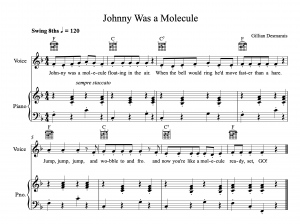


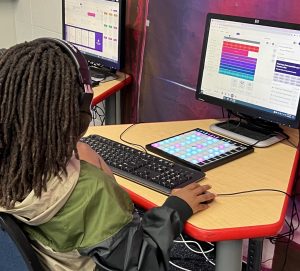
 2) Have a project open in your DAW and encourage students to view the sample browser/loop browser. From here, differentiate audio loops by their “audio icon” (see below) and drag and drop one into the timeline. See some examples below for reference.

 I would like to begin this series by sharing what is one of the core tenets of building and sustaining school music programs: recruitment. As a music educator in the age of data-driven decision making, I have tried to leverage administrator demands for data by providing evidence of how students, parents and staff make the program shine, as outlined in Roger Mantie’s “
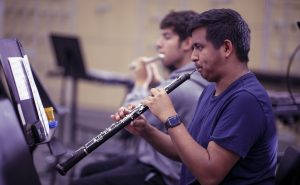 Recruitment has no real beginning or end. It is a continuous process fueled by active recruiting strategies, culturally relevant curricula and student ownership of the process, according to Daniel J. Albert’s “
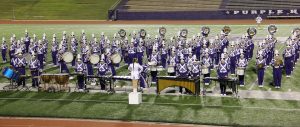 Performance is a great way to showcase your students’ abilities, and it also serves as a chance to connect with potential recruits. Whether we performed at a sporting event, seasonal concert, performance assessment or a community event, I always made sure to provide space for recruiting. Students shared their experiences in the music program, and I had flyers, handouts and contact information ready to give out to students and parents who might be interested in signing up.
 There are several ways to look at and set your enrollment targets. Some look at what percentage of the total school population is enrolled in a particular program, while others look at numbers of new recruits versus retention of prior classes. And there are still others who look at historic trends and set targets based on those.









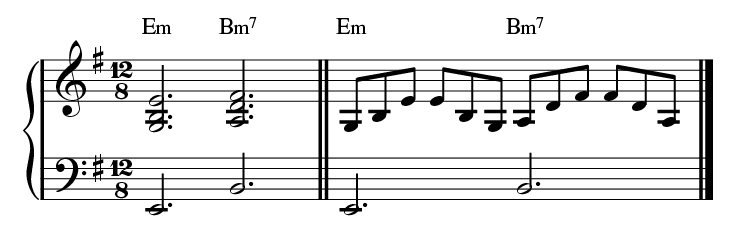


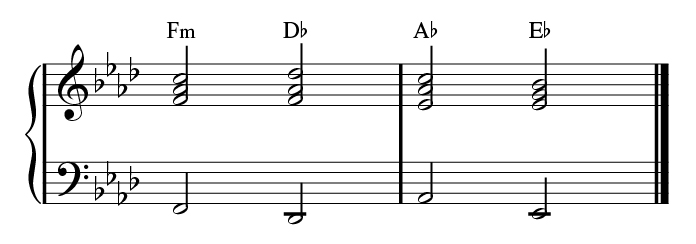




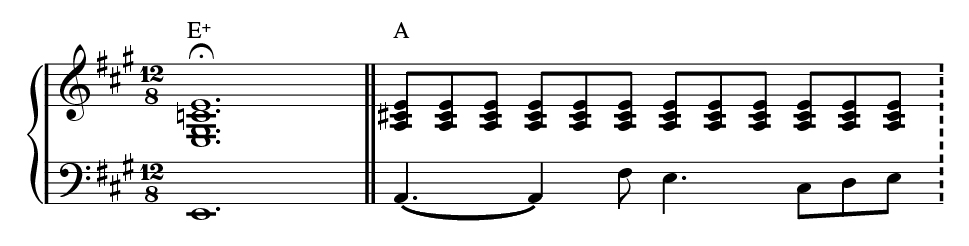








 You can’t rush the good stuff. Whether you’re waiting for the ensemble to gel or for that one kid to finally get it — patience is key. Many of my mentors echoed this sentiment. And trust me, those seeds you’re planting? They will grow. You just have to give them time.
 This was a quote that my college band director, Dr. Charles Menghini, said in passing that I’ve never forgotten. “Sometimes the money’s not in the budget, but that doesn’t mean it’s not out there.”
 Give your students some skin in the game by letting them help select pieces or lead warm-ups. When I started incorporating student input, the atmosphere shifted from “us vs. them” to “we’re in this together.” And the best part was that performances were better for it. Besides, I’m the only director at my school, and I need the help!
 What you choose to play shapes not just the musical experience for your students, but also their emotional and intellectual development. What we play may be the most important curricular decision we make. And sometimes it’s also OK to program things that the kids like! Keep an ear out for what your kids warm-up on before rehearsal begins, and you instantly will know what works.
 This is an original: Complain about something twice, and you either need to fix it or let it go. It’s a principle that has served me well and has kept the rehearsal room positive and proactive.
 I catch myself with this one. If you’re using the word “should” too much, you’re not in the moment, and that’s a problem. Or, you have not accepted either what your situation is or where your control may be. I learned early on to adapt, reassess and keep it moving. “We shouldn’t have to invite the principal to our concert — they should just attend!” This, and other items, are not always how things work.
 Good or bad, tomorrow is another chance. Each new day presents a clean slate to try again, to be better, to make music. Embrace it.
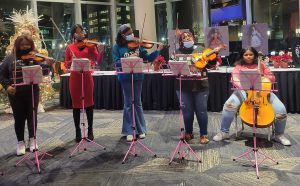
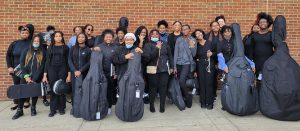
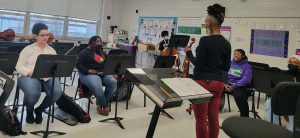
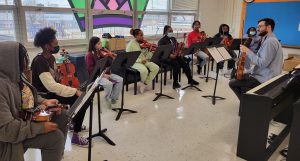
 Teaching music, for Burdette, is not just a job. It’s her passion. It’s her calling.



 5:45 a.m.
 6:30 a.m.
 8:30 a.m.
 Noon
Noon 4 p.m.



 Wigglesworth says that taking all these classes together was making the students not just better performers and musicians, but also better overall learners. Though these students have now graduated, their legacy includes their inspiration for the Performing Arts Academy. “These alumni, they were hungry, they wanted this,” Wigglesworth says. “They started to paint a picture of what could be a reality — and that was the academy.”
 Students involved in the Performing Arts Academy must fit all their private lessons and extra performances into their existing school schedules, which include all traditional school requirements. “Their schedules are pretty jam-packed,” Wigglesworth says.
 Because West Covina is located in Southern California, faculty have developed working relationships with professionals from






 You easily can play complex chords on them. Many chords require just one or two fingers, which allows students to play their favorite pop and Disney songs without the insane stretches that might be required on the guitar (something that is great for kindergartners and students with small hands). Because of the ukulele’s unique tuning and its smaller fretboard, suspended and 7ths chords are easier to learn.
 Don’t start teaching with the instruments already in students’ hands. Instead, create a presentation on how to properly hold and use ukuleles, including examples of what not to do. Tuning, maintenance and how to put the instrument away should all be addressed a day before the instruments are put into their hands.
 If you don’t already have ukes in your classroom, you’ll need to do a bit of research. Most entry-level ukuleles cost around $50 to $60. Anything less than this are likely not high quality instruments. Entry-level ukuleles are usually made of wood or plastic. Most classroom sets are plastic, although there are a handful of economical wooden ones (such as those by Makala), but instruments made of wood require more care and are more susceptible to damage.
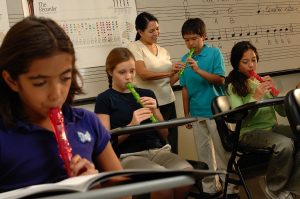 I’m supportive of using both ukuleles and
 I enjoy live music, but hearing exceptional groups reduced my confidence. Still, it was important to continue this exposure, not only to continue getting examples of what I wanted, but for my own enjoyment as well.
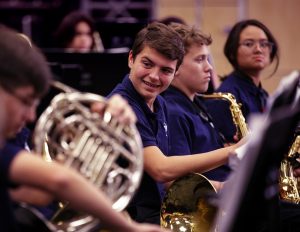 We know when something doesn’t sound like we want it to, but what do we do when we’re in the middle of rehearsal? If something sounds off but you can’t put your finger on it, start separating the parts. Break down complex pieces to understand them better.
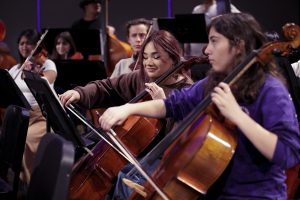 Whether they sound off or not, make a habit of tuning specific notes and chords to ensure uniformity. I started by picking one student to play a note. I then played my instrument and tuned to them. This showed an example of what “in tune” sounded like. Later, we started having kids tune to each other — just a couple each day.
 Delve deep into the music, studying one line at a time. I’m serious. Take a piece and plunk out every single instrument line on the piano, or grab an instrument and play through. Go through every line and see what your kids are actually playing. Then do it again. Then one more time.

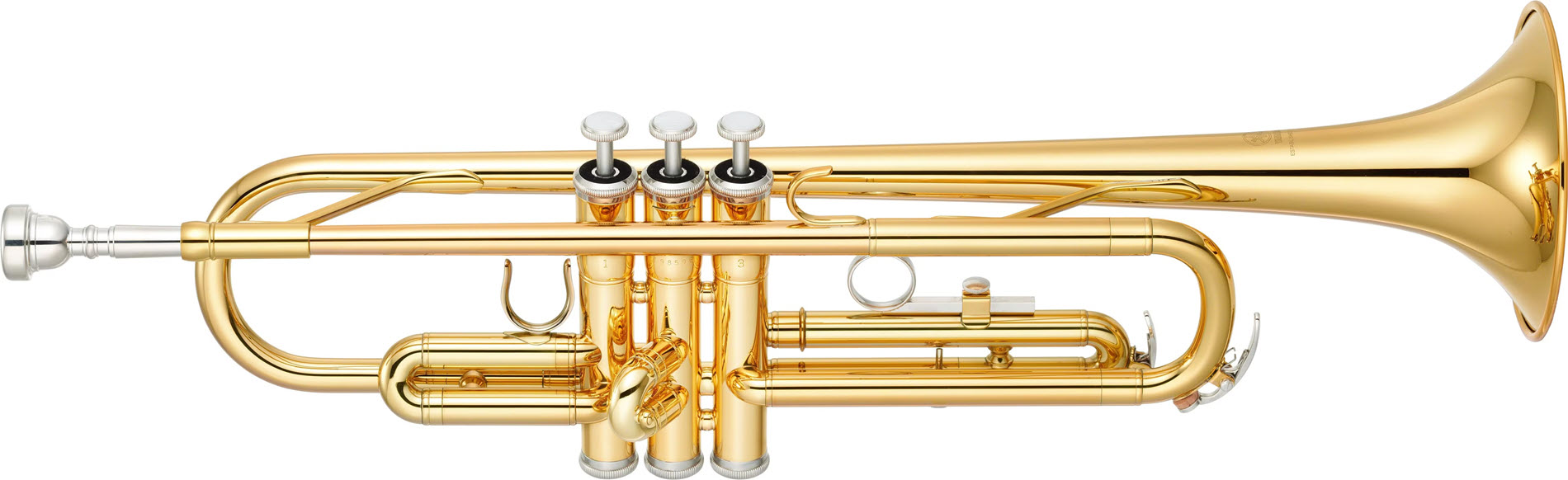
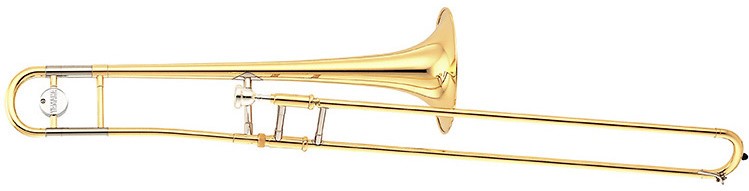
 Directions: Assign an instrument to your students and, with the help of their parent or guardian, ask students to search online to answer a given set of questions. Some of these answers might be hard to find, but they’ll end their journey knowing a few more fun facts. Students can present these facts to the class, or the answers can be used to create an interactive round of
  Directions: Ask your students to craft a make-shift microphone, turn down the lights and throw their own karaoke night in the living room with their friends or family. Whether they use Disney singalongs or




 Recently, I took my students at
  Share Circle


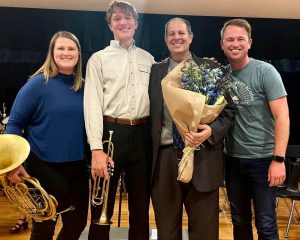
 My favorite students are those who are always enthusiastic or engaged during my rehearsals, even when I knew they didn’t want to be there. The kids who made it easy for me to teach when maybe I didn’t want to be there. Kids tend to see their teachers as superhuman and expect us to always be at our best. On my most challenging days, the few kids who went out of their way to smile and say good morning or check in with me, made all the difference.
 I remember how it started in 2021 during the post-COVID re-boot. We were all looking for ways to boost morale and confidence. At a rehearsal early on during spring training, Gino tested the microphone. The kids couldn’t hear it from the field, so they started to scream “What?! What?! What?!” until Gino yelled, “Checking the microphone!” at a volume they could hear. They all cheered and screamed exuberantly.
 Greet your students daily — at the door or before your rehearsals. Say, “Good morning” or “Good afternoon” while making excellent eye contact, smiling and projecting. If students don’t respond, don’t take it personally. Teenagers mumble. You can inspire them to respond with your energy or teach them to respond.
 If a normally cheerful student looks sad or is acting out of sorts, take a second to investigate. “Hey, you normally answer many questions in rehearsal, but you seemed quiet today. Is everything ok?” When students have bad body language in rehearsals, don’t assume it’s a response to you, the rehearsal or even that the student realizes they have bad body language. We can help students learn the power of their body language through coaching and raising awareness.


 She made a youthful executive decision: “I’m not only going to become a music educator, but I’m also going to work in schools that have predominantly Black and brown programs.”
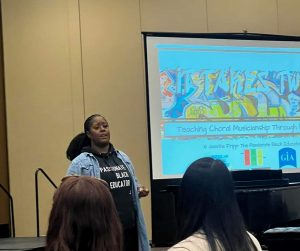 Soon after her post traveled wide, Fripp was speaking on podcasts and headlining conferences. Additional social media posts followed, and she signed one as “A Passionate Black Educator.” Since then, the name stuck.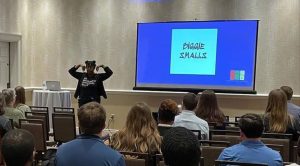
 She offers some tips to fellow music teachers. For people of color, she says, be proactive and speak up about your needs by getting involved with professional organizations and attending board meetings. “Don’t be afraid to use your voice, because you’re giving voice to the voiceless.” Fripp says.


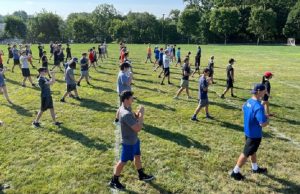 I highly value my music department teammates, but I had to learn how to be an effective member of the team. I had to open my mind to the concept that the success of my colleagues’ programs was just as important as mine. I came to recognize that many stakeholders view the department holistically and the success of any aspect of our music program was a reflection of our team. I learned how much we had to follow the motto of the Three Musketeers: “One for all and all for one.” Most notably, I realized that like most things in life, what we put into the team is what we will get out of it.
 Your presence alone at a concert sends a clear message to your colleagues that you support them, their students and music education as a whole regardless of which ensemble or grade level is performing. Although showing up is meaningful, a great teammate takes it to the next level by assisting their colleagues during those stressful performances.
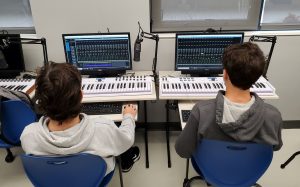 Over the past several years, one of the greatest intrinsic benefits of attending performances throughout the district is connecting and advocating with administrators! Take the opportunity to highlight for a principal, superintendent or school board member some of the excellent music learning occurring throughout your district. Mentioning the growth of an ensemble or program is much more impactful to an administrator when the group is sitting on stage with big smiles.
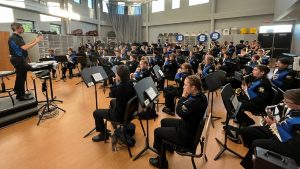 Offering collaboration as part of being a team player is cliche. In fact, suggesting collaboration alone doesn’t offer much value because all educators must collaborate throughout the day to do their jobs. What I’m suggesting is that great teammates collaborate creatively beyond the routine collective tasks and events we do as colleagues.
 The relationships you have with your colleagues matter! Everyone you work with doesn’t need to be a personal friend, but great team players work toward building healthy relationships with their peers. One of the best ways to do this is to gather with your colleagues outside of school. My department meets at least bi-yearly to share in fellowship as a districtwide music educator community.
 Embarrassingly, I didn’t learn about commissions until I went to college and met composition majors. People asked these composers to write music for them. What? That can happen?! As I became friends with some composers, I started to think about commissioning. Imagine being able to help my friends do what they love by doing what I love.
 I have heard a lot of music teachers say, “I only program good music.” However, we all know what that means: They only program the status quo because it is too much work to find something else. If this continues to happen, then music as an art form would never advance because people are afraid to challenge what we already know.
 The beauty of a commission is that it is created for you and your group. It is like that new suit that took the tailor an hour to fit just for you, and when you get the finished product, it fits perfectly — and, boy, do you look good! With a commissioned piece, you can even share it with your colleagues who might have similar instrumentation.
 We are all artists. We know how difficult it can be to make a living by following your passion. Music is an undervalued and underappreciated profession. When you purchase music from a large music distributor, the composer probably is not making that much money from that purchase. I don’t think this is breaking news to anyone.
 I have a few different processes for finding the right composer. My first commission was with a composer named

 Tran, who recently left his job to begin a doctoral program in choral conducting at the
  “I always like to think of it as if you’re going on a trip: You want to put the address into your GPS, so you know where you’re going,” Tran says.
 “Person” and “Process” feedback are two types of responses that affect mindset. Person feedback says: “You’re a great musician.” which praises the ability. Process feedback, by contrast, acknowledges effort: “You did really well on the solo during the concert because you were practicing that.”
 Students should review what they have accomplished and the feedback they have received to assess their performance. When Tran does one-on-one check-ins with students, the rest of the class engages in self-reflection.
 The Tough Teacher: This is the teacher who kids dread seeing, but the one they think about when they’re adults. These teachers are like Batman — the hero that they deserved but not the one they thought they needed at the time. As students, we resist these teachers because they take us out of our educational comfort zone. Then one night when we’re in our 20s, 30s, 40s or older, we wake up and think, “They were right.”
 The Sage or Mentor: You know these teachers — the ones who drop in with a one liner that you’ll never forget. Sages are similar to the tough teacher, but their timing is impeccable. They have an air of mystery — you don’t interact with them a lot, but when you do, you know something impactful is about to happen. Some of the most profound advice and teachings I have received were from people I rarely saw.
 In recent years, we’ve had a much-needed push toward being kinder — this is great! However, I’ve noticed that some people begin confuse kindness with being unable to deliver direct feedback when needed. As teachers, we can be just as concerned with being fair and insistent as we are with being kind or nice.
 The first year I wrote these notes, I had 40 students in the band. The next year, I had 75, and eventually, I had 120. At this point, I was looking forward to not writing these notes anymore. Two days before our first concert, a freshman band member came to me after rehearsal and said, “Mr. Stinson, I can’t wait to see what you write on my concert program! We kept hearing in junior high that everyone gets one!”
 Balance
 Other examples may have a more layered effect. If we don’t care about poor behavior, then we may be sending a message that we don’t care about the kids who are contributing positively. These students may then wonder what’s the point in contributing to a system that may end up having diminishing returns.





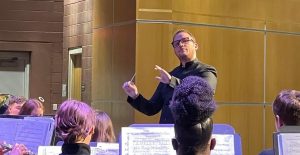 Sims first encountered GRR as a pedagogy during his college years, and then began developing his approach more with each teaching job. “I was a super nerd in college, so I read everything I could get my hands on,” he says with a laugh.
 Once students have mastered analyzing their own performances during warmup, Sims starts letting them guide exercises in method books. Here, transfer of knowledge is key. Students learn to apply their critiques from the warmup to their analysis of the actual rehearsal. “Sometimes, kids will get stumped,” he says. “I can ask leading questions like, ‘During the warmup, you said tuning was an issue. What did we do during the warmup?’ And then [they fix it] almost immediately.”
 Middle school students are often in a developmental stage that blends high energy with social uncertainty. To keep his classroom running efficiently, Sims sets high expectations for his students’ maturity level. “Depending on the kid or the age level, sometimes it takes a little while to teach the maturity behind making intelligent musical comments,” Sims says. “Some students have a tough time either giving constructive criticism or receiving it.”
 By making an intentional effort to engage students with one another, Sims breaks down typical preteen cliques, helps students come out of their shells and builds the band into a cohesive unit. “What’s awesome is, whenever kids come into the band room for the first time, they’re all in these little friend groups,” Sims says. “As the year progresses, you’ll see them with a different group.”




















 According to Griffin, there has been a noticeable lapse in the preservation of Cajun and Creole culture from her grandparents’ generation to her own. “I feel like our culture has just been slowly taken away from us, and we’re paying the price,” she says.
 Griffin earned a bachelor’s degree in music education at the
 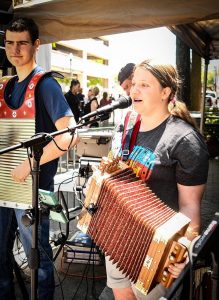 Two summers ago, Griffin along with her husband, Gregg, and another district music educator, started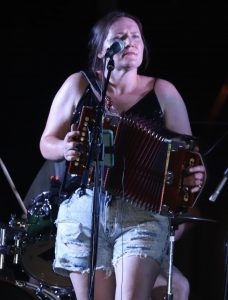
 “Louisiana’s music culture is so rich with jazz and all these things that come from our state,” she says. “But in our school programs, our kids play mostly western, classical and noncultural music.”

 The good news is that there are many ways to create music for video games, so you can find what works best for you.
 Many short, repeated themes must be written. Video game composers specialize in incidental music, which is music written for something that isn’t music-centric (such as a symphony you’d buy tickets to see).