The Prince Piano At NAMM
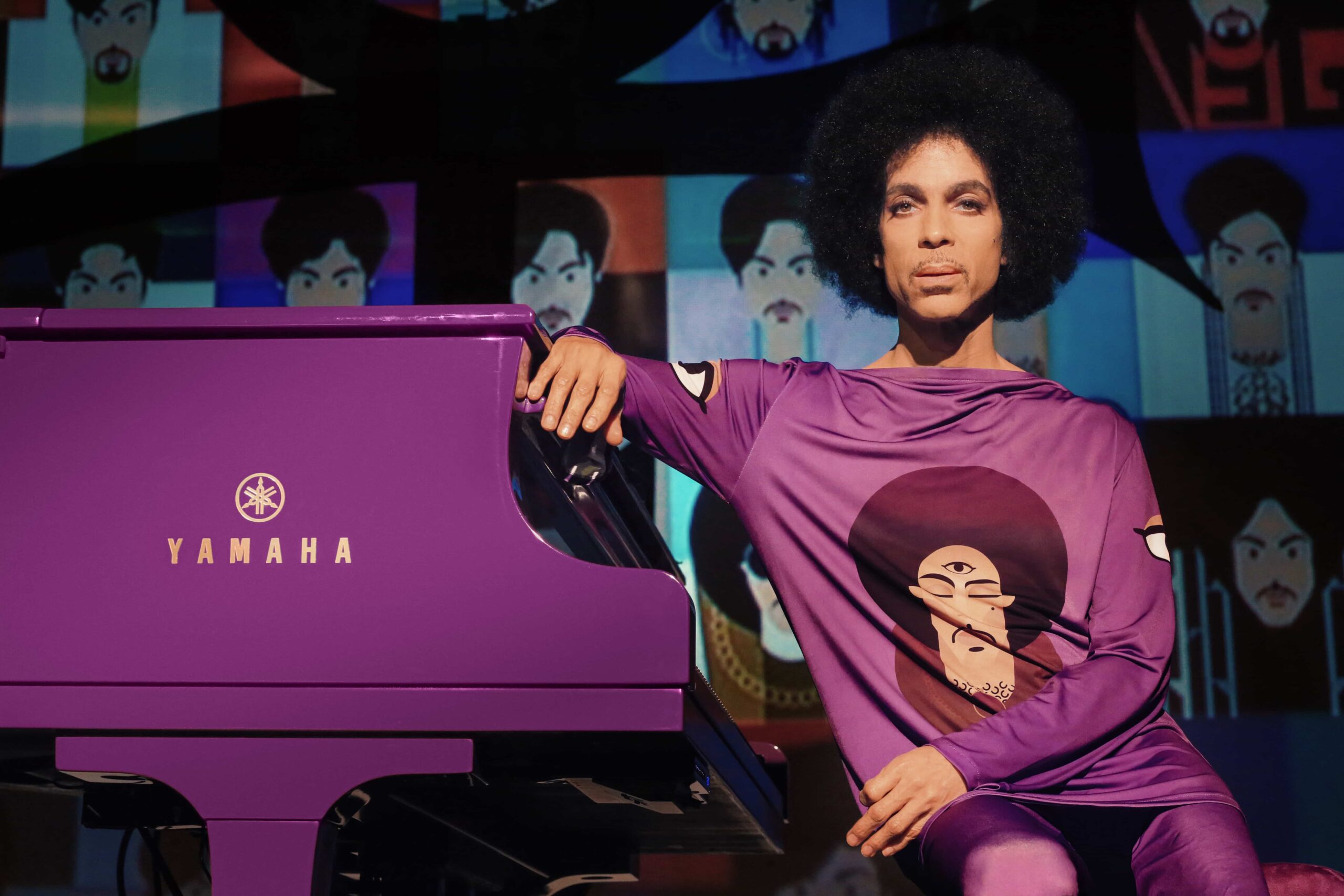
In early 2016, a call came in to Yamaha Entertainment Group in Nashville with an extraordinary request: “Prince wants you to make him a purple piano.” So began a whirlwind journey that ended up with Yamaha delivering a one-of-a-kind grand piano to Paisley Park in Minnesota.
In celebration of the artist known as Prince, this is the story of that project and how a piano transcended its role as a musical instrument.
Background
Prince (born Prince Rogers Nelson) was well known throughout his lifetime for his singing, songwriting, guitar playing, recordings and live performances, but he was also a phenomenal keyboardist; in fact, piano was his first instrument. Prince’s father was a professional jazz pianist, and a great musical influence on Prince early in life.
Early in his career, Prince was not often seen playing a piano or keyboard in concert, but he often played them on his demo recordings. In 1983, he recorded a free-form performance at the piano, likely just a rehearsal capture of song ideas to be worked on more fully later on. This was eventually released in 2018, entitled Piano & A Microphone 1983. The title came from a limited series of concert performances Prince undertook in early 2016 to flesh out a concept he had for a solo tour that would feature him performing alone at the piano. These performances would also include him reminiscing about his life, his music, and his thoughts on a wide range of subjects.
It was during the early prep for what was planned to be a much larger-scale tour that Prince and his friend/confidante/sometime-drummer Kirk Johnson discussed the idea of using a custom-colored purple piano, and Johnson reached out to Yamaha to make it a reality. “We wanted a combination of a great acoustic piano that had an awesome look and had great sounds that could be manipulated,” recalls Johnson.
In previous live shows, Prince had often used one of the onboard faders of his Yamaha Motif synthesizer to fade up strings behind the grand piano sound he was playing. “He was doing that for sustain,” explains Scottie Baldwin, who served as Prince’s Front of House engineer during tour dates. “He was using it as a means of sustaining a chord so he could change keys and things like that. Sometimes he would do it during a song, but often he would use it at the end of a song, knowing that a grand piano only sustains for so long, but a string patch would carry on until he made his next move and decided what song he was going to play next.”
The Project Is Defined
Once Yamaha vetted that the inquiry was genuine, Chris Gero, one of the company’s directors and Chief Artist Relations Executive, got involved. As he relates, “Our relationship with Prince goes back to the mid-’90s — he often contacted us to try out and buy products, ranging from digital mixers to synths, and he had bought six grand pianos for his studio. But he didn’t believe in endorsements, and so we helped him out but never did any type of promotion with him. I had met him a few times at Grammy® and other industry events, and I would say our relationship was friendly, but not close.”
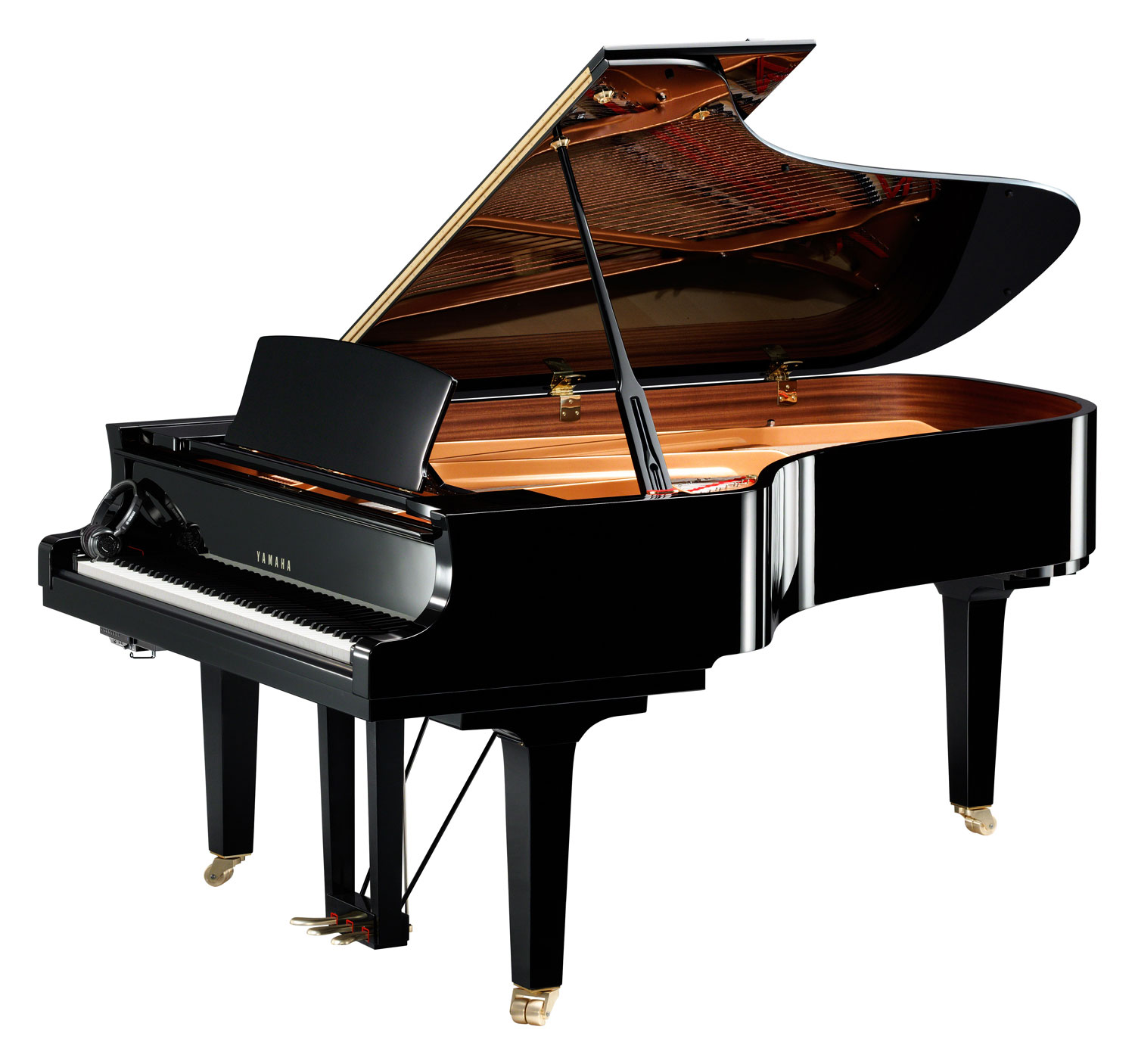
But now that was changing, and Prince wanted Yamaha to make a custom-colored purple version of the C7X SH SILENT Piano™, which he had been using for the tour dates and at his studio.
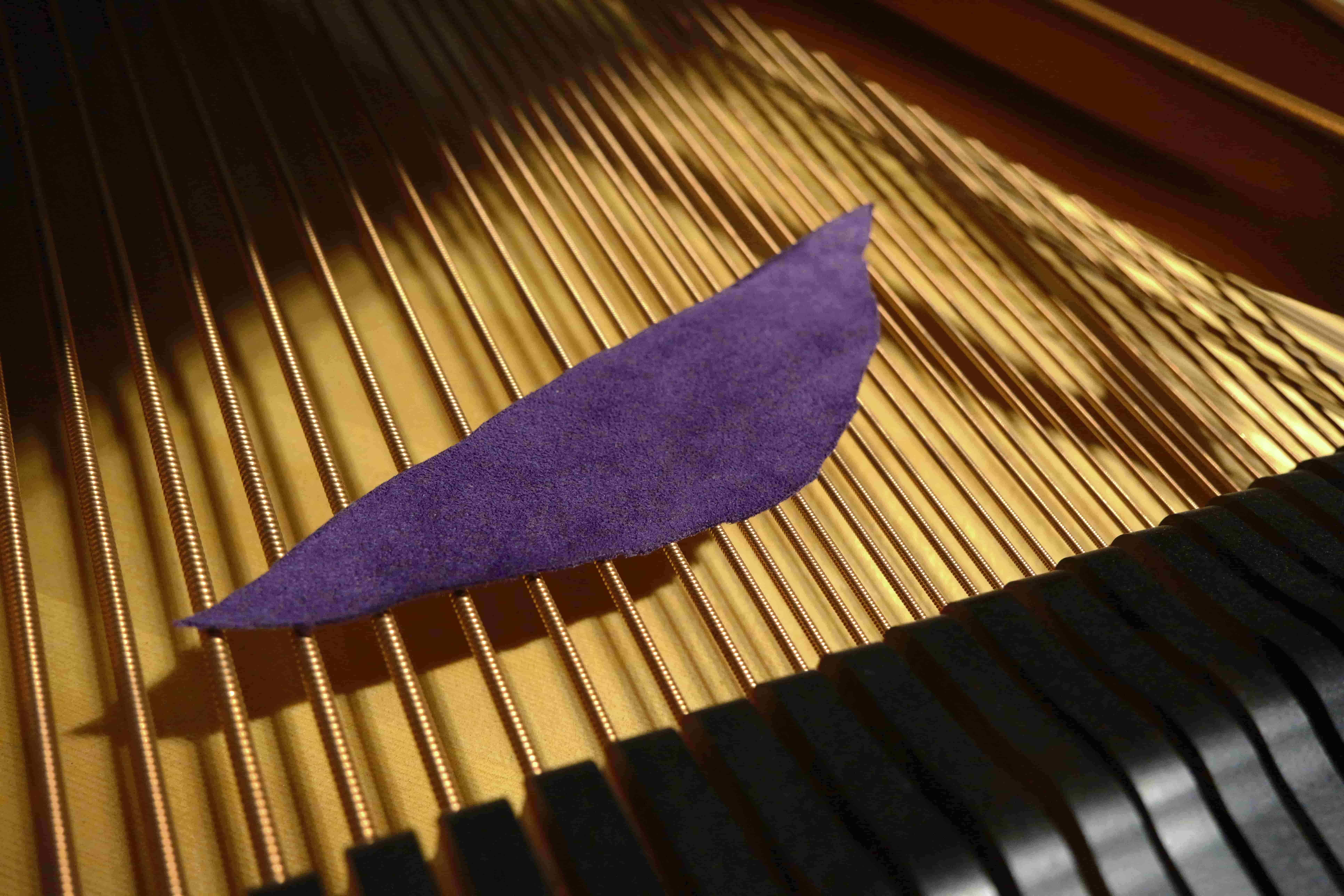
Prince was very specific about the shade of purple he wanted. “He and I walked around the Paisley Park building and picked the couch color he liked best,” says Johnson, “and that’s the swatch he sent to Yamaha.”
Prince had seen some documentary films that Gero had created over the years and wanted him to produce the concert opener film sequence to play before his live shows. In essence, Prince was asking Yamaha to partner with him both technically and creatively to realize his vision for the planned full tour. This massive collaborative effort led to Prince greenlighting the first endorsement deal of his career. Per Prince’s request, papers were drawn up and sent over for sign-off on this historical partnership with Yamaha.
Yamaha Goes Into Action
Gero realized that exactly matching a custom color and painting the piano in a way that would hold up under the rigors of touring was a tall order, but he had the perfect partner for the job: Justin Elliott. In addition to being a master piano technician, Elliott and his wife have forged a unique career cosmetically modifying pianos to match décor, special needs and events. Needing to find a type of paint that would stand up to the wear and tear of touring and look good under stage lights, Elliott decided to use enamel car paint. After many experiments and communication back and forth with Prince directly, they finally got the color to his satisfaction. (“He loved it!” says Johnson.) The final color ended up being adopted by Pantone as a new addition to their portfolio, entitled Love Symbol #2.
With the color selected and the piano painted, it was shipped from Elliott’s studio in Florida up to Nashville so Gero and his team could shoot the first part of the film. Chris recalls: “Prince and I came up with the concept of showing the piano being prepared and painted, and he wanted it to be sexy, and to ‘represent me.’ So we put together the concept, and had only a day and a half to shoot it. But I think the film came out well, and Prince was very happy with it. The second part of the concept was to be filmed with him when the piano was delivered to his studio.”
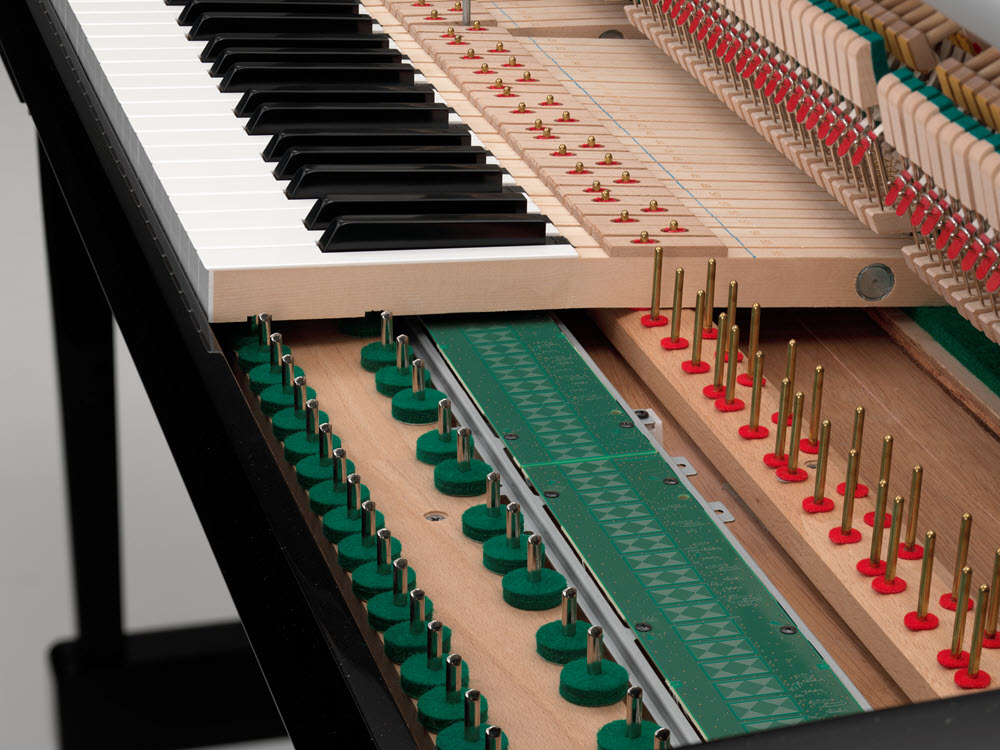
Another aspect of the project had to do with the sound engine that was built into the piano. Each Yamaha SILENT Piano has a mechanism built in to stop the hammers from hitting the strings and instead trigger an internal sound engine via MIDI technology, for private practice or an expanded tone palette. As he had done with his Motif synthesizer, Prince wanted to be able to play piano layered with strings to provide a fuller, more sustaining sound for certain songs, but he had a very specific string sound he wanted. In a very short period of time, Yamaha sound designers in Japan were able to create this custom sound to load into the piano before it was shipped. “In order to get the effect of fading strings in, he’d manually switch between the Grand Piano sound and the Grand Piano / Strings patch,” explains Baldwin.
The last request was to put the symbol that Prince had taken to using to represent himself on the piano. After some discussion, everyone agreed to place the graphic on the fallboard of the piano, right above the keys, as shown in the tweet below.
Done and Delivered
When the piano arrived at Paisley Park, Prince took to it right away, often playing it for hours on end. Here was his tweet:
BOOM (FROM LOTUSFLOWER) ON THIS NEWLY ARRIVED PURPLE PRESENT FROM YAMAHA…. “RESOUNDING!” pic.twitter.com/cXwRPi1wzG
— Prince (@prnlegacy) April 12, 2016
After about a week with the piano, Prince decided to hold an event to showcase the new instrument. Chris Gero remembers it well. “On April 16, 2016, Prince invited a small crowd to a music party at Paisley Park,” he says. “The piano was covered with a purple cloth. Then he dramatically pulled the cloth off the purple piano. He played chopsticks first, then a few minutes of classical music without singing. He finished with the piano and did not play again publicly.”
The Prince Piano Today
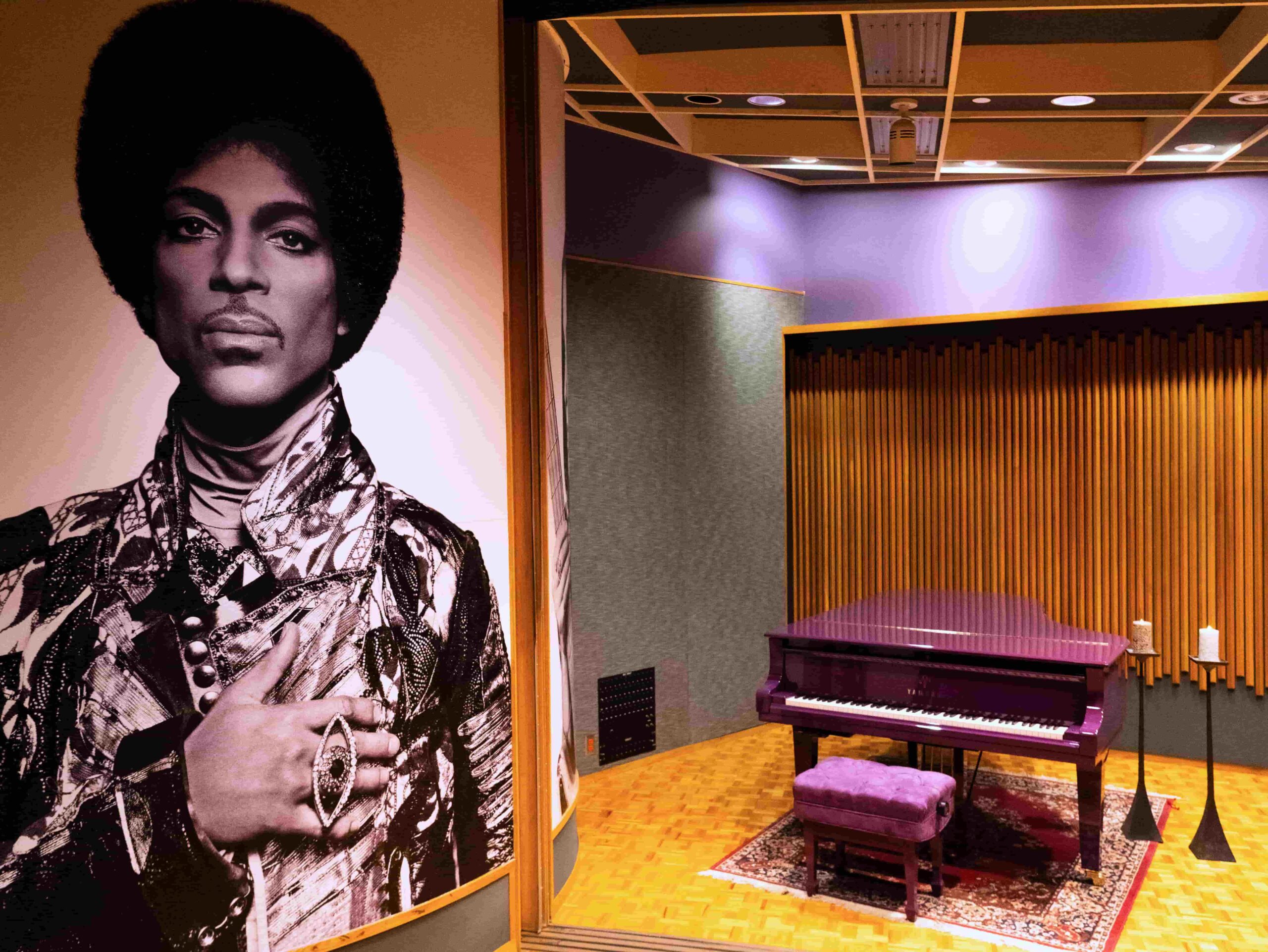
Since that time, the piano has remained in Studio B at the Paisley Park complex in Chanhassen, Minnesota, near Minneapolis. This massive facility served as Prince’s creative playground for over 30 years, and now, as per Prince’s original vision, it has been opened to the public as a museum, a recording facility and an event venue. Makayla Elder, Museum Collection Manager, explains: “Studio B is a spot on the tour that is only for ticketed VIP and Ultimate Experience guests, so it’s an upper level part of the tour. While it’s blocked off by purple ropes, it’s the only area where visitors get that close-up and personal with an instrument. It’s also the only place they get their picture taken, and the piano is right behind them, with the now-iconic logo that Prince used clearly visible in the shot.”
And now, for the first time since it was delivered to Prince, this one-of-a-kind instrument will be moved from Paisley Park and brought to Winter NAMM 2024 to be displayed in the Yamaha booth. “2024 is the 40th anniversary of Purple Rain,” states Charles F. Spicer Jr., a managing member of Prince Legacy LLC and longtime friend of Prince’s. “This event will be the stepping stone to a year’s worth of celebration of Prince’s life, and the phenomena we know as Purple Rain, both the album and the film. It is only fitting that we recognize the partnership between Yamaha and Prince that created this instrument, so starting at NAMM we plan to turn the world purple again.”
Check out this behind the scenes video showing the making of the Prince piano.

































































































































 Creating:
 Edit in notation software (like
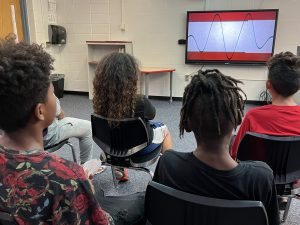
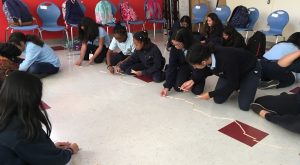
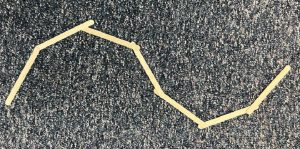
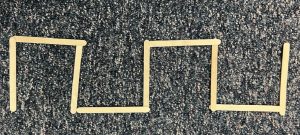
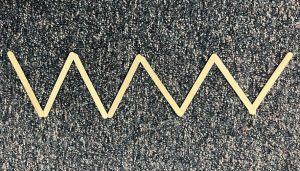
 1) Begin with the question, “what is sound?” As students guess, slowly navigate them toward the answer: “vibrations in the air.” Next ask, “What is actually vibrating when we hear sound?” The answer should be “air molecules.” Feel free to use the following explanations below alongside diagrams or photos in a slideshow presentation.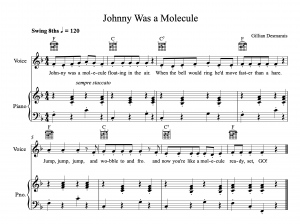

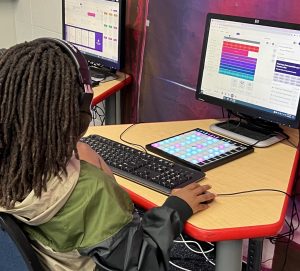
 2) Have a project open in your DAW and encourage students to view the sample browser/loop browser. From here, differentiate audio loops by their “audio icon” (see below) and drag and drop one into the timeline. See some examples below for reference.

 I would like to begin this series by sharing what is one of the core tenets of building and sustaining school music programs: recruitment. As a music educator in the age of data-driven decision making, I have tried to leverage administrator demands for data by providing evidence of how students, parents and staff make the program shine, as outlined in Roger Mantie’s “
 Recruitment has no real beginning or end. It is a continuous process fueled by active recruiting strategies, culturally relevant curricula and student ownership of the process, according to Daniel J. Albert’s “
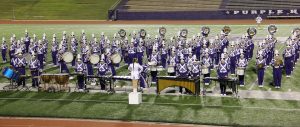 Performance is a great way to showcase your students’ abilities, and it also serves as a chance to connect with potential recruits. Whether we performed at a sporting event, seasonal concert, performance assessment or a community event, I always made sure to provide space for recruiting. Students shared their experiences in the music program, and I had flyers, handouts and contact information ready to give out to students and parents who might be interested in signing up.
 There are several ways to look at and set your enrollment targets. Some look at what percentage of the total school population is enrolled in a particular program, while others look at numbers of new recruits versus retention of prior classes. And there are still others who look at historic trends and set targets based on those.























 You can’t rush the good stuff. Whether you’re waiting for the ensemble to gel or for that one kid to finally get it — patience is key. Many of my mentors echoed this sentiment. And trust me, those seeds you’re planting? They will grow. You just have to give them time.
 This was a quote that my college band director, Dr. Charles Menghini, said in passing that I’ve never forgotten. “Sometimes the money’s not in the budget, but that doesn’t mean it’s not out there.”
 Give your students some skin in the game by letting them help select pieces or lead warm-ups. When I started incorporating student input, the atmosphere shifted from “us vs. them” to “we’re in this together.” And the best part was that performances were better for it. Besides, I’m the only director at my school, and I need the help!
 What you choose to play shapes not just the musical experience for your students, but also their emotional and intellectual development. What we play may be the most important curricular decision we make. And sometimes it’s also OK to program things that the kids like! Keep an ear out for what your kids warm-up on before rehearsal begins, and you instantly will know what works.
 This is an original: Complain about something twice, and you either need to fix it or let it go. It’s a principle that has served me well and has kept the rehearsal room positive and proactive.
 I catch myself with this one. If you’re using the word “should” too much, you’re not in the moment, and that’s a problem. Or, you have not accepted either what your situation is or where your control may be. I learned early on to adapt, reassess and keep it moving. “We shouldn’t have to invite the principal to our concert — they should just attend!” This, and other items, are not always how things work.
 Good or bad, tomorrow is another chance. Each new day presents a clean slate to try again, to be better, to make music. Embrace it.
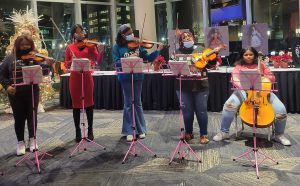
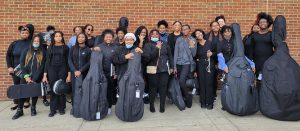
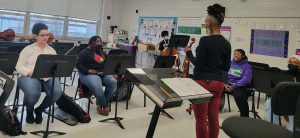
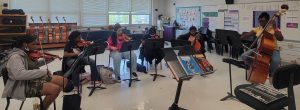
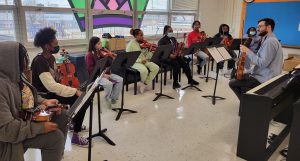
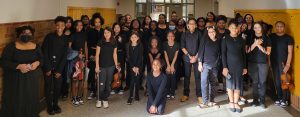 Teaching music, for Burdette, is not just a job. It’s her passion. It’s her calling.



 5:45 a.m.
 6:30 a.m.
 8:30 a.m.
 Noon
Noon 4 p.m.



 Wigglesworth says that taking all these classes together was making the students not just better performers and musicians, but also better overall learners. Though these students have now graduated, their legacy includes their inspiration for the Performing Arts Academy. “These alumni, they were hungry, they wanted this,” Wigglesworth says. “They started to paint a picture of what could be a reality — and that was the academy.”
 Students involved in the Performing Arts Academy must fit all their private lessons and extra performances into their existing school schedules, which include all traditional school requirements. “Their schedules are pretty jam-packed,” Wigglesworth says.
 Because West Covina is located in Southern California, faculty have developed working relationships with professionals from

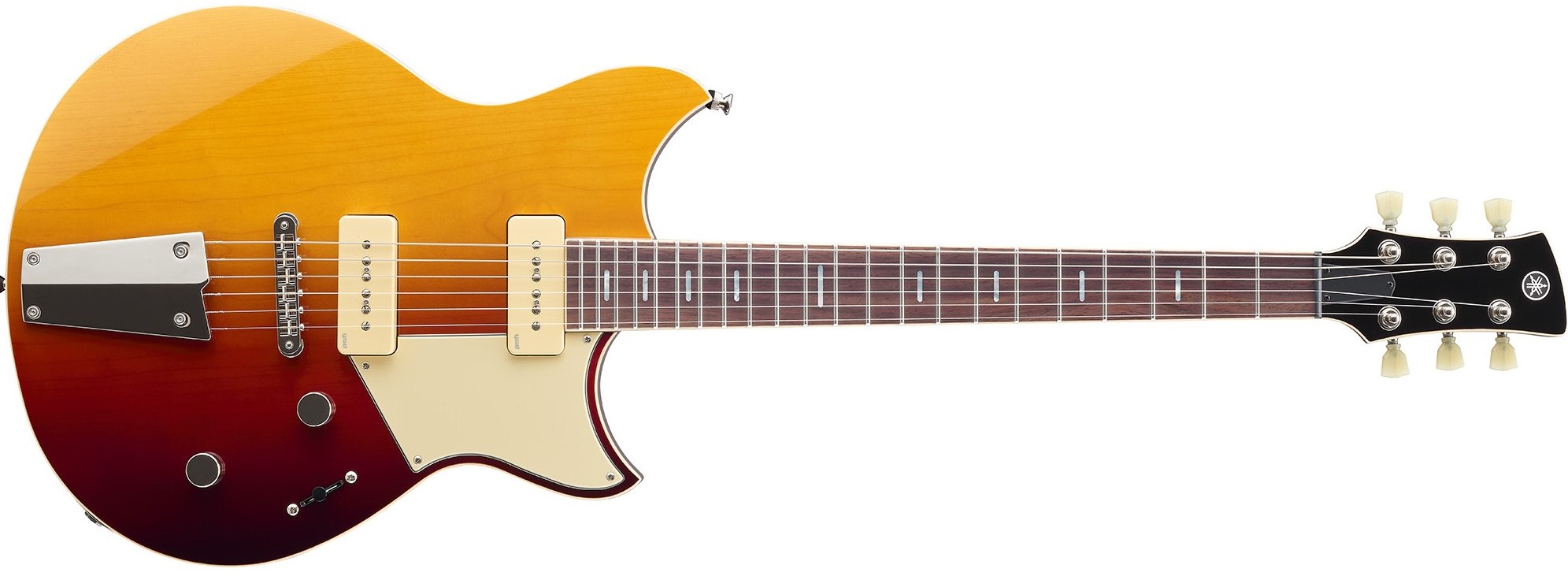
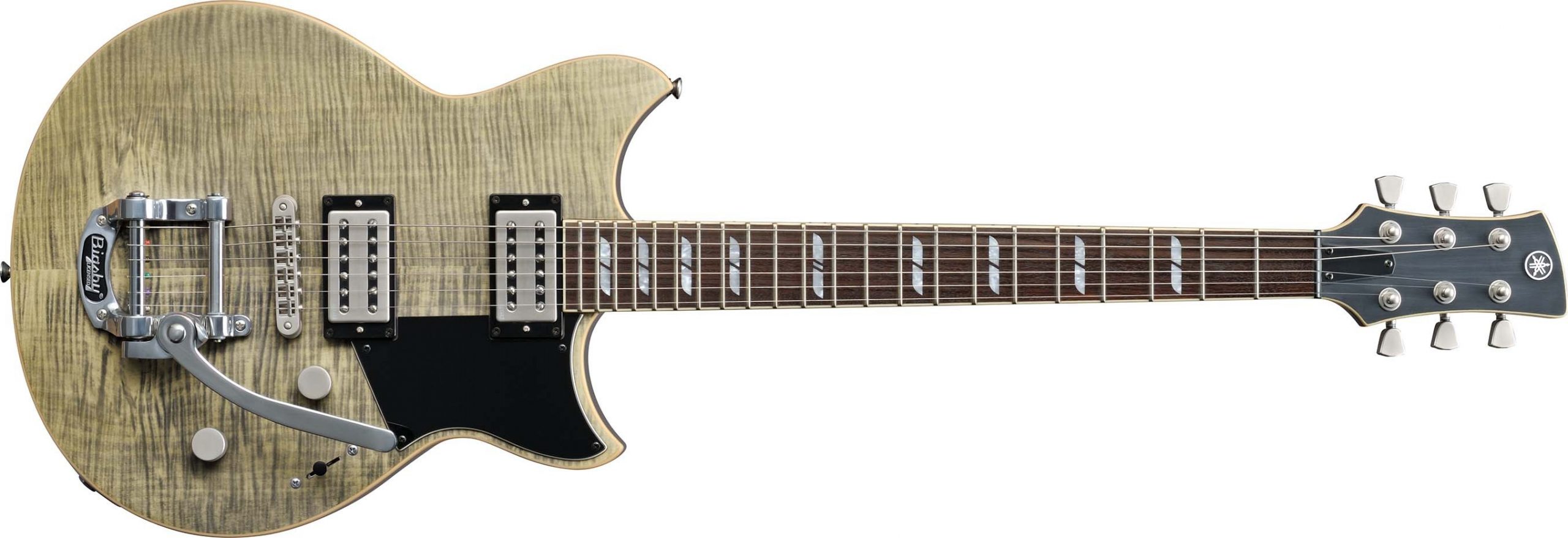
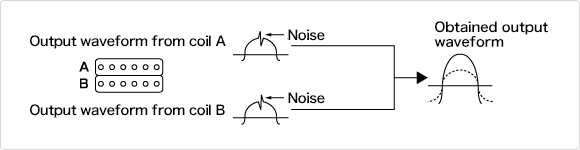
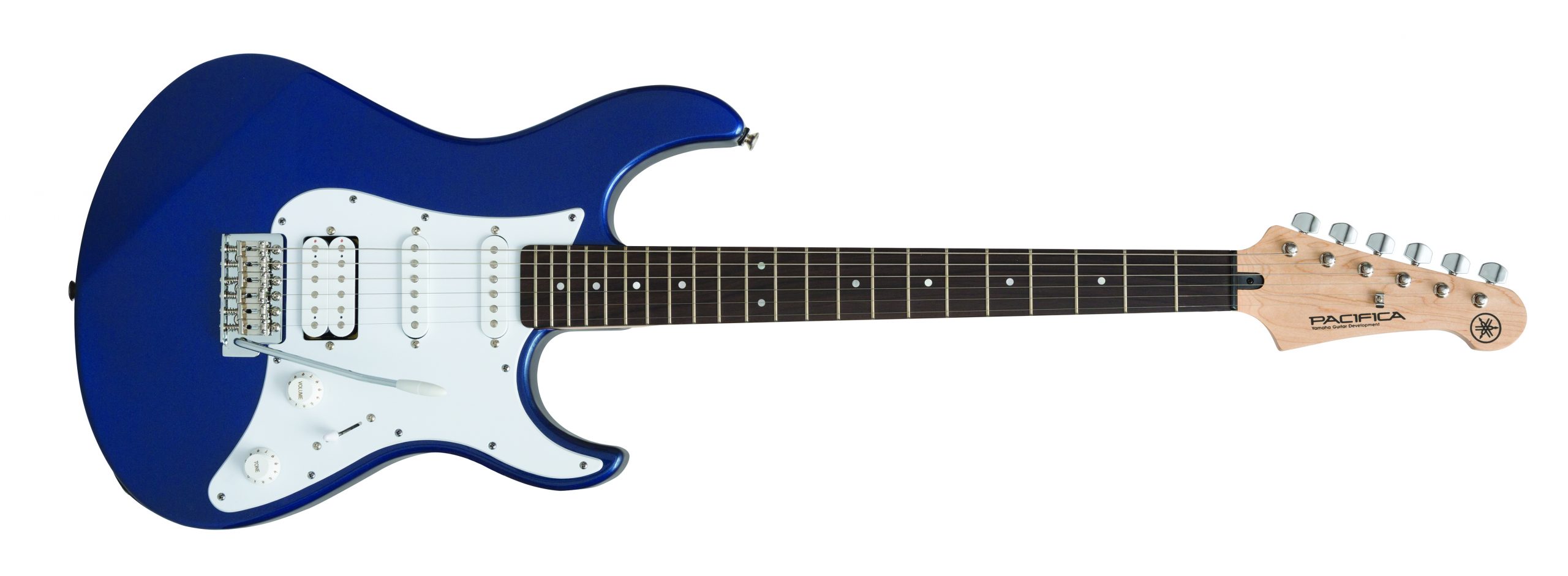



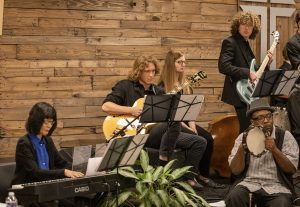


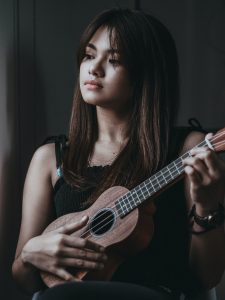 You easily can play complex chords on them. Many chords require just one or two fingers, which allows students to play their favorite pop and Disney songs without the insane stretches that might be required on the guitar (something that is great for kindergartners and students with small hands). Because of the ukulele’s unique tuning and its smaller fretboard, suspended and 7ths chords are easier to learn.
 Don’t start teaching with the instruments already in students’ hands. Instead, create a presentation on how to properly hold and use ukuleles, including examples of what not to do. Tuning, maintenance and how to put the instrument away should all be addressed a day before the instruments are put into their hands.
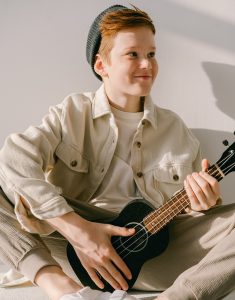 If you don’t already have ukes in your classroom, you’ll need to do a bit of research. Most entry-level ukuleles cost around $50 to $60. Anything less than this are likely not high quality instruments. Entry-level ukuleles are usually made of wood or plastic. Most classroom sets are plastic, although there are a handful of economical wooden ones (such as those by Makala), but instruments made of wood require more care and are more susceptible to damage.
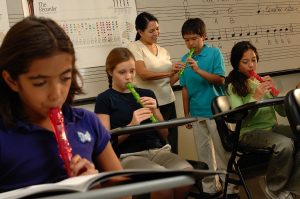 I’m supportive of using both ukuleles and
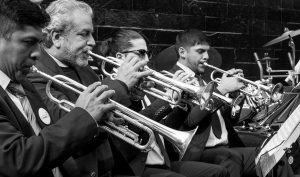 I enjoy live music, but hearing exceptional groups reduced my confidence. Still, it was important to continue this exposure, not only to continue getting examples of what I wanted, but for my own enjoyment as well.
 We know when something doesn’t sound like we want it to, but what do we do when we’re in the middle of rehearsal? If something sounds off but you can’t put your finger on it, start separating the parts. Break down complex pieces to understand them better.
 Whether they sound off or not, make a habit of tuning specific notes and chords to ensure uniformity. I started by picking one student to play a note. I then played my instrument and tuned to them. This showed an example of what “in tune” sounded like. Later, we started having kids tune to each other — just a couple each day.
 Delve deep into the music, studying one line at a time. I’m serious. Take a piece and plunk out every single instrument line on the piano, or grab an instrument and play through. Go through every line and see what your kids are actually playing. Then do it again. Then one more time.

 Directions: Assign an instrument to your students and, with the help of their parent or guardian, ask students to search online to answer a given set of questions. Some of these answers might be hard to find, but they’ll end their journey knowing a few more fun facts. Students can present these facts to the class, or the answers can be used to create an interactive round of
  Directions: Ask your students to craft a make-shift microphone, turn down the lights and throw their own karaoke night in the living room with their friends or family. Whether they use Disney singalongs or




 Recently, I took my students at
  Share Circle


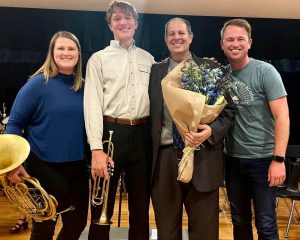
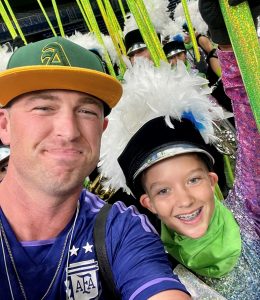 My favorite students are those who are always enthusiastic or engaged during my rehearsals, even when I knew they didn’t want to be there. The kids who made it easy for me to teach when maybe I didn’t want to be there. Kids tend to see their teachers as superhuman and expect us to always be at our best. On my most challenging days, the few kids who went out of their way to smile and say good morning or check in with me, made all the difference.
 I remember how it started in 2021 during the post-COVID re-boot. We were all looking for ways to boost morale and confidence. At a rehearsal early on during spring training, Gino tested the microphone. The kids couldn’t hear it from the field, so they started to scream “What?! What?! What?!” until Gino yelled, “Checking the microphone!” at a volume they could hear. They all cheered and screamed exuberantly.
 Greet your students daily — at the door or before your rehearsals. Say, “Good morning” or “Good afternoon” while making excellent eye contact, smiling and projecting. If students don’t respond, don’t take it personally. Teenagers mumble. You can inspire them to respond with your energy or teach them to respond.
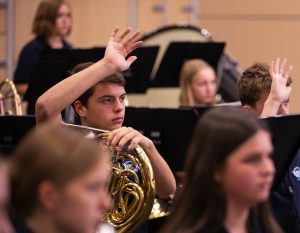 If a normally cheerful student looks sad or is acting out of sorts, take a second to investigate. “Hey, you normally answer many questions in rehearsal, but you seemed quiet today. Is everything ok?” When students have bad body language in rehearsals, don’t assume it’s a response to you, the rehearsal or even that the student realizes they have bad body language. We can help students learn the power of their body language through coaching and raising awareness.


 She made a youthful executive decision: “I’m not only going to become a music educator, but I’m also going to work in schools that have predominantly Black and brown programs.”
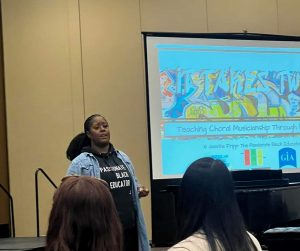 Soon after her post traveled wide, Fripp was speaking on podcasts and headlining conferences. Additional social media posts followed, and she signed one as “A Passionate Black Educator.” Since then, the name stuck.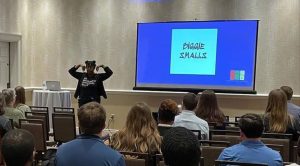
 She offers some tips to fellow music teachers. For people of color, she says, be proactive and speak up about your needs by getting involved with professional organizations and attending board meetings. “Don’t be afraid to use your voice, because you’re giving voice to the voiceless.” Fripp says.


 I highly value my music department teammates, but I had to learn how to be an effective member of the team. I had to open my mind to the concept that the success of my colleagues’ programs was just as important as mine. I came to recognize that many stakeholders view the department holistically and the success of any aspect of our music program was a reflection of our team. I learned how much we had to follow the motto of the Three Musketeers: “One for all and all for one.” Most notably, I realized that like most things in life, what we put into the team is what we will get out of it.
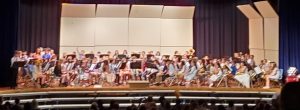 Your presence alone at a concert sends a clear message to your colleagues that you support them, their students and music education as a whole regardless of which ensemble or grade level is performing. Although showing up is meaningful, a great teammate takes it to the next level by assisting their colleagues during those stressful performances.
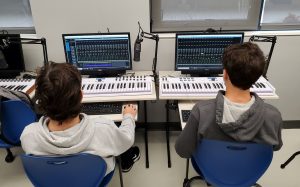 Over the past several years, one of the greatest intrinsic benefits of attending performances throughout the district is connecting and advocating with administrators! Take the opportunity to highlight for a principal, superintendent or school board member some of the excellent music learning occurring throughout your district. Mentioning the growth of an ensemble or program is much more impactful to an administrator when the group is sitting on stage with big smiles.
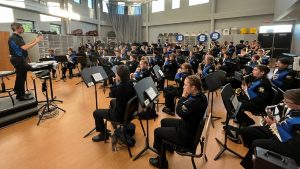 Offering collaboration as part of being a team player is cliche. In fact, suggesting collaboration alone doesn’t offer much value because all educators must collaborate throughout the day to do their jobs. What I’m suggesting is that great teammates collaborate creatively beyond the routine collective tasks and events we do as colleagues.
 The relationships you have with your colleagues matter! Everyone you work with doesn’t need to be a personal friend, but great team players work toward building healthy relationships with their peers. One of the best ways to do this is to gather with your colleagues outside of school. My department meets at least bi-yearly to share in fellowship as a districtwide music educator community.
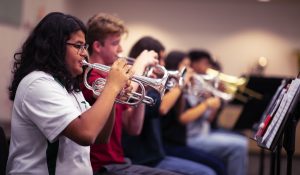 Embarrassingly, I didn’t learn about commissions until I went to college and met composition majors. People asked these composers to write music for them. What? That can happen?! As I became friends with some composers, I started to think about commissioning. Imagine being able to help my friends do what they love by doing what I love.
 I have heard a lot of music teachers say, “I only program good music.” However, we all know what that means: They only program the status quo because it is too much work to find something else. If this continues to happen, then music as an art form would never advance because people are afraid to challenge what we already know.
 The beauty of a commission is that it is created for you and your group. It is like that new suit that took the tailor an hour to fit just for you, and when you get the finished product, it fits perfectly — and, boy, do you look good! With a commissioned piece, you can even share it with your colleagues who might have similar instrumentation.
 We are all artists. We know how difficult it can be to make a living by following your passion. Music is an undervalued and underappreciated profession. When you purchase music from a large music distributor, the composer probably is not making that much money from that purchase. I don’t think this is breaking news to anyone.
 I have a few different processes for finding the right composer. My first commission was with a composer named

 Tran, who recently left his job to begin a doctoral program in choral conducting at the
  “I always like to think of it as if you’re going on a trip: You want to put the address into your GPS, so you know where you’re going,” Tran says.
 “Person” and “Process” feedback are two types of responses that affect mindset. Person feedback says: “You’re a great musician.” which praises the ability. Process feedback, by contrast, acknowledges effort: “You did really well on the solo during the concert because you were practicing that.”
 Students should review what they have accomplished and the feedback they have received to assess their performance. When Tran does one-on-one check-ins with students, the rest of the class engages in self-reflection.
 The Tough Teacher: This is the teacher who kids dread seeing, but the one they think about when they’re adults. These teachers are like Batman — the hero that they deserved but not the one they thought they needed at the time. As students, we resist these teachers because they take us out of our educational comfort zone. Then one night when we’re in our 20s, 30s, 40s or older, we wake up and think, “They were right.”
 The Sage or Mentor: You know these teachers — the ones who drop in with a one liner that you’ll never forget. Sages are similar to the tough teacher, but their timing is impeccable. They have an air of mystery — you don’t interact with them a lot, but when you do, you know something impactful is about to happen. Some of the most profound advice and teachings I have received were from people I rarely saw.
 In recent years, we’ve had a much-needed push toward being kinder — this is great! However, I’ve noticed that some people begin confuse kindness with being unable to deliver direct feedback when needed. As teachers, we can be just as concerned with being fair and insistent as we are with being kind or nice.
 The first year I wrote these notes, I had 40 students in the band. The next year, I had 75, and eventually, I had 120. At this point, I was looking forward to not writing these notes anymore. Two days before our first concert, a freshman band member came to me after rehearsal and said, “Mr. Stinson, I can’t wait to see what you write on my concert program! We kept hearing in junior high that everyone gets one!”
 Balance
 Other examples may have a more layered effect. If we don’t care about poor behavior, then we may be sending a message that we don’t care about the kids who are contributing positively. These students may then wonder what’s the point in contributing to a system that may end up having diminishing returns.



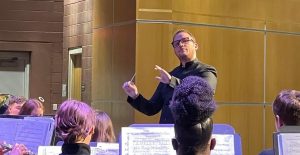 Sims first encountered GRR as a pedagogy during his college years, and then began developing his approach more with each teaching job. “I was a super nerd in college, so I read everything I could get my hands on,” he says with a laugh.
 Once students have mastered analyzing their own performances during warmup, Sims starts letting them guide exercises in method books. Here, transfer of knowledge is key. Students learn to apply their critiques from the warmup to their analysis of the actual rehearsal. “Sometimes, kids will get stumped,” he says. “I can ask leading questions like, ‘During the warmup, you said tuning was an issue. What did we do during the warmup?’ And then [they fix it] almost immediately.”
 Middle school students are often in a developmental stage that blends high energy with social uncertainty. To keep his classroom running efficiently, Sims sets high expectations for his students’ maturity level. “Depending on the kid or the age level, sometimes it takes a little while to teach the maturity behind making intelligent musical comments,” Sims says. “Some students have a tough time either giving constructive criticism or receiving it.”
 By making an intentional effort to engage students with one another, Sims breaks down typical preteen cliques, helps students come out of their shells and builds the band into a cohesive unit. “What’s awesome is, whenever kids come into the band room for the first time, they’re all in these little friend groups,” Sims says. “As the year progresses, you’ll see them with a different group.”


















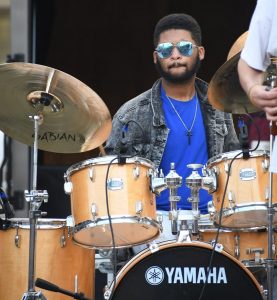
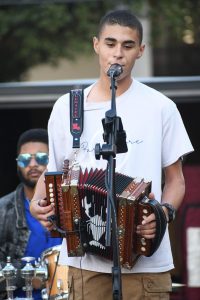 According to Griffin, there has been a noticeable lapse in the preservation of Cajun and Creole culture from her grandparents’ generation to her own. “I feel like our culture has just been slowly taken away from us, and we’re paying the price,” she says.
 Griffin earned a bachelor’s degree in music education at the
 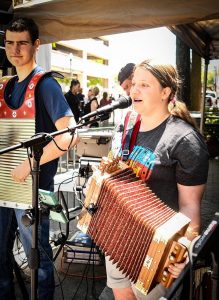 Two summers ago, Griffin along with her husband, Gregg, and another district music educator, started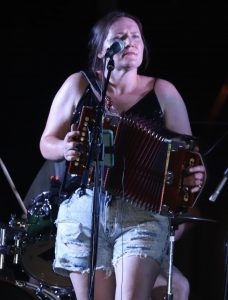
 “Louisiana’s music culture is so rich with jazz and all these things that come from our state,” she says. “But in our school programs, our kids play mostly western, classical and noncultural music.”
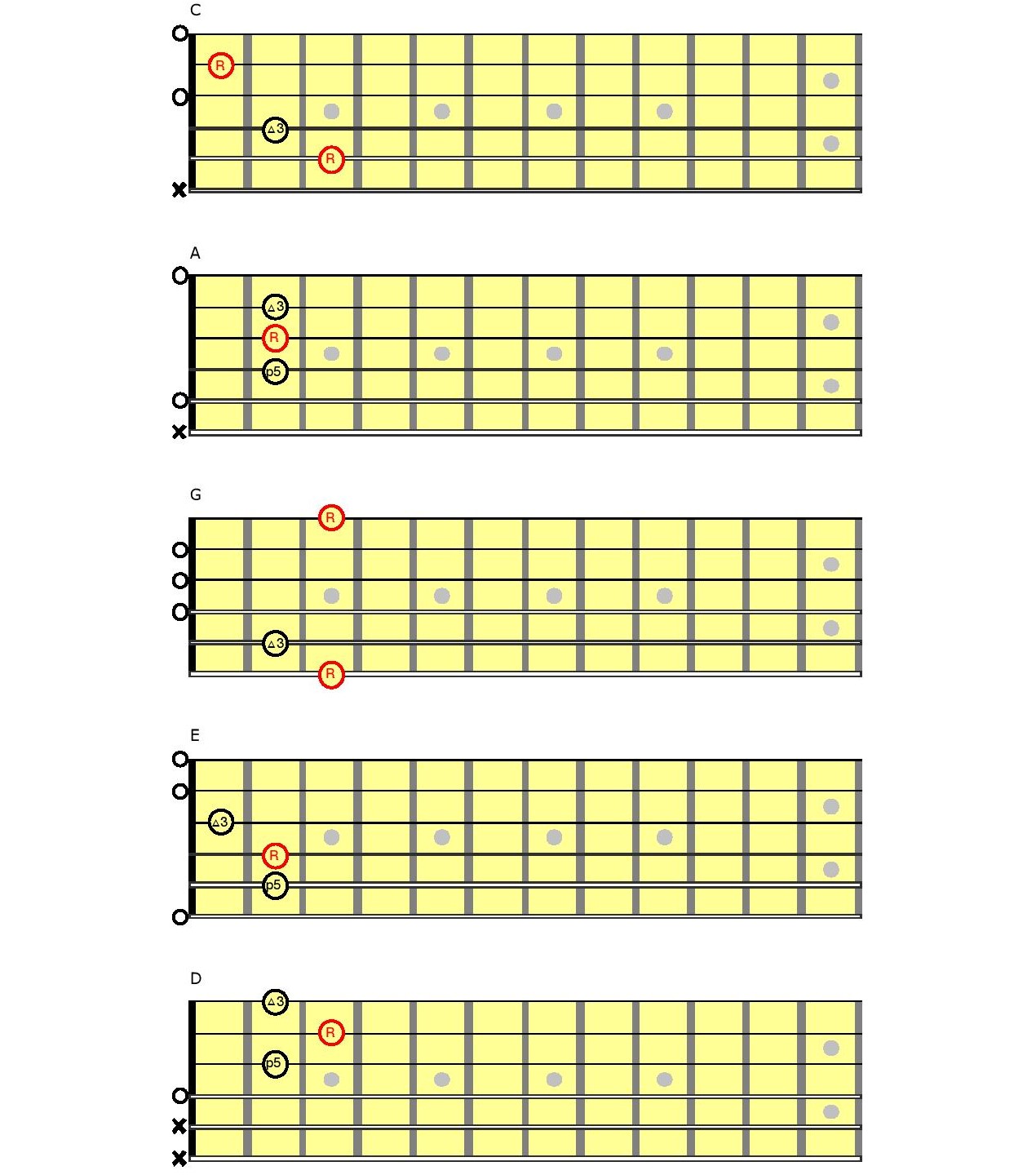
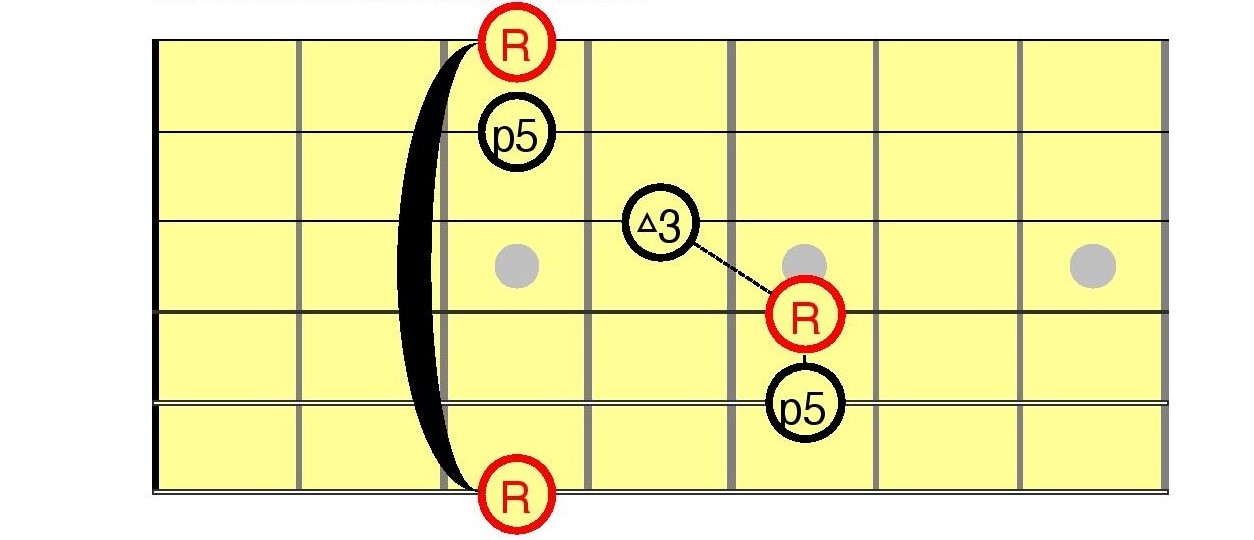

 The good news is that there are many ways to create music for video games, so you can find what works best for you.
 Many short, repeated themes must be written. Video game composers specialize in incidental music, which is music written for something that isn’t music-centric (such as a symphony you’d buy tickets to see).